

For an Australia-bound home-storage product, a country-of-origin claim should be checked against the product’s actual manufacturing route and the complete impression created by its words, images and packaging. An importer needs SKU- and revision-specific facts from the factory before approving a product page, package or retailer listing. Buyers searching for an Australia country of origin claims homewares importer guide need a clear evidence handoff, not a factory slogan. Those facts help the buyer and its Australian adviser assess the proposed wording; they do not, by themselves, determine whether a particular claim is legally available.
Three questions are easy to mix together: what a marketing claim communicates under Australian Consumer Law (ACL), whether a particular imported good must carry a trade description at import, and whether the good qualifies for a preferential tariff rate under a free trade agreement (FTA). They use different rules and may involve different decision-makers. This guide focuses on the buyer-to-factory evidence handoff for non-food bathroom and home-storage hardware.
Start by identifying the type of origin question
Before asking a supplier for a certificate, identify the decision the business is trying to make. Is the product page or carton intended to say “Made in Australia,” “Product of Australia,” “Designed in Australia,” or something else? Does the importer want to describe the product’s manufacturing location, comply with a product-specific import marking rule, or claim an FTA duty preference? Each question requires a different review.
The ACCC explains that origin claims can be explicit or implied. Words are only one part of the impression: a flag, map, national colors, local place name, brand identity or packaging image may also suggest that a product is connected with a country. A claim that seems narrow in a spreadsheet may read differently when it appears next to an Australian address or a prominent national symbol.
The ACCC also says the ACL does not require non-food products to carry country-of-origin labels, while other laws may apply. That is not a blanket exemption from checking import marking rules. The Australian Border Force (ABF) says certain goods or classes of goods require trade descriptions before import and that not all imported goods require labelling. The importer should check the product’s classification and the applicable rule for the actual SKU rather than assume either that every homeware needs a label or that none do.
FTA origin is a separate customs question. ABF Origin Advice addresses whether specified goods meet the requirements for a preferential rate under an FTA or other preferential arrangement. An ACL marketing review does not establish tariff eligibility, and a customs origin document does not automatically substantiate every consumer-facing marketing impression.
What should an importer ask the factory to confirm?
Ask for factual manufacturing information that can be traced to the actual product, not a generic statement such as “made in our factory.” For a metal shelf, towel rack, wire basket or shower caddy, request the operations that took place, their locations, the product revision they apply to and the records that support them.
The route may include material sourcing, cutting or stamping, wire or sheet forming, welding, grinding, polishing, coating or plating, assembly, inspection and packing. Some steps may be outsourced or performed at different facilities. The supplier should identify what it knows and what it has confirmed with subcontractors. Do not treat a sales invoice, factory address or shipping document as proof that every manufacturing operation happened at that address.
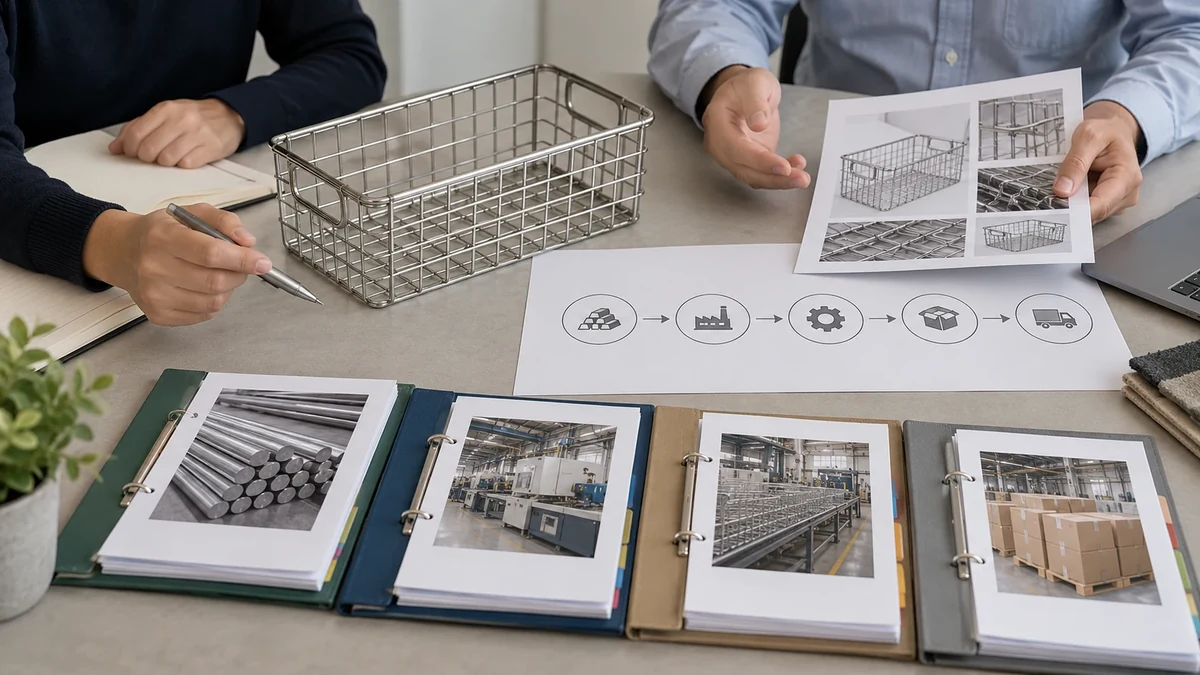
A practical evidence request can include:
- The exact SKU, drawing revision, sample reference and date covered by the response.
- A step-by-step process route, with the country and facility for each operation.
- The identity and origin information available for significant components, materials and bought-in assemblies.
- Any outsourced cutting, welding, finishing or assembly, including the supplier’s confirmation and relevant change date.
- Dated drawings, purchase records, production travelers, subcontractor declarations or other records that support the stated route.
- The name or role of the person who checked the information and the limits of what they could verify.
These are sourcing records to support a buyer’s assessment, not a universal legal checklist. The appropriate evidence depends on the proposed wording, the product, how it is made and the legal test being considered. If the factory cannot verify a component’s origin or a subcontracted process, record it as unknown instead of replacing it with an assumption.
Why “Made in” needs a product-specific review
The ACL provides defined safe-harbour conditions for certain country-of-origin representations. For a “made in,” “manufactured in” or “originates in” representation, the statutory test generally looks to whether the goods were last substantially transformed in the country claimed. The ACCC describes substantial transformation in terms of a significant change that makes the final product fundamentally different in identity, nature or essential character from its imported components.
That is a legal test applied to the actual goods and process. A buyer should not decide it from the number of steps performed locally, a supplier’s broad label, a percentage copied from a food-origin explainer or the country where the final carton was packed. Nor should the buyer assume that assembly, finishing or packaging necessarily has the same effect for every product. The precise facts and proposed representation matter.
The phrase “Product of” has a distinct safe-harbour test that considers the origin of each significant component and whether all or virtually all relevant processes occurred in the country claimed. Other phrases and visual presentations may still create an overall impression that must not mislead. The ACCC guidance explains these concepts, but a product-specific conclusion belongs with a qualified Australian adviser reviewing the full facts and artwork.
Review all words and visuals together
An origin review should cover every place a buyer communicates the claim: retail packaging, carton labels where relevant, instruction sheets, product inserts, marketplace copy, retailer data, advertising images and social content. The same SKU may be described differently across channels if each owner works from a different document version.
List the exact words and visual elements. Include country names, flags, maps, colors, “local” or “Australian” language, design or engineering statements, company addresses, and any badge or mark. Then compare each element with the verified route and the impression the complete layout may create. A logo or brand name may be accurate as a business identifier yet still contribute to a broader product-origin impression in context.
Record the artwork file name and revision, the product/SKU set it covers, the person who approved the factual record, and the adviser’s disposition of the proposed claim. If the wording changes, preserve the earlier approved version and route the new text and visuals through the same review. Do not treat a prior approval for one product or process route as automatic approval for another.
Keep three reviews in separate lanes
For reliable handoffs, keep the following questions distinct in the buyer’s compliance file:
| Review lane | Pregunta del comprador | Typical evidence or reviewer |
|---|---|---|
| Consumer-facing claim | What will a reasonable customer understand from the full words and visual presentation? | Final artwork and listing, SKU-specific process evidence, Australian legal adviser |
| Import trade description | Does this product class require a marking, and what must it say and where must it appear? | Product classification, current ABF guidance and applicable regulation, customs or compliance adviser |
| FTA preferential origin | Do the goods meet the origin rule for a preferential duty rate under the relevant agreement? | Product-specific origin records and the applicable FTA rule; customs broker or ABF Origin Advice |
The table helps assign work; it does not replace legal or customs advice. A single factory record may support more than one review, but the conclusion and responsible decision-maker should be documented separately.
Control changes after the first approval
Country-of-origin evidence can become stale when a supplier changes a component, moves finishing to a subcontractor, changes an assembly location, revises the product design or consolidates production. Link the approved claim to the configuration it describes. At minimum, define which changes require the factory to confirm a new process route and which changes require the buyer to reopen artwork or legal review.
One workable change record contains the old and new revision, the affected SKU or product family, the changed component or operation, each location involved, the supporting supplier documents, the package and listing versions, and the person who approved the next action. When facts are incomplete, hold the relevant claim for review rather than let an outdated statement roll into a reorder.
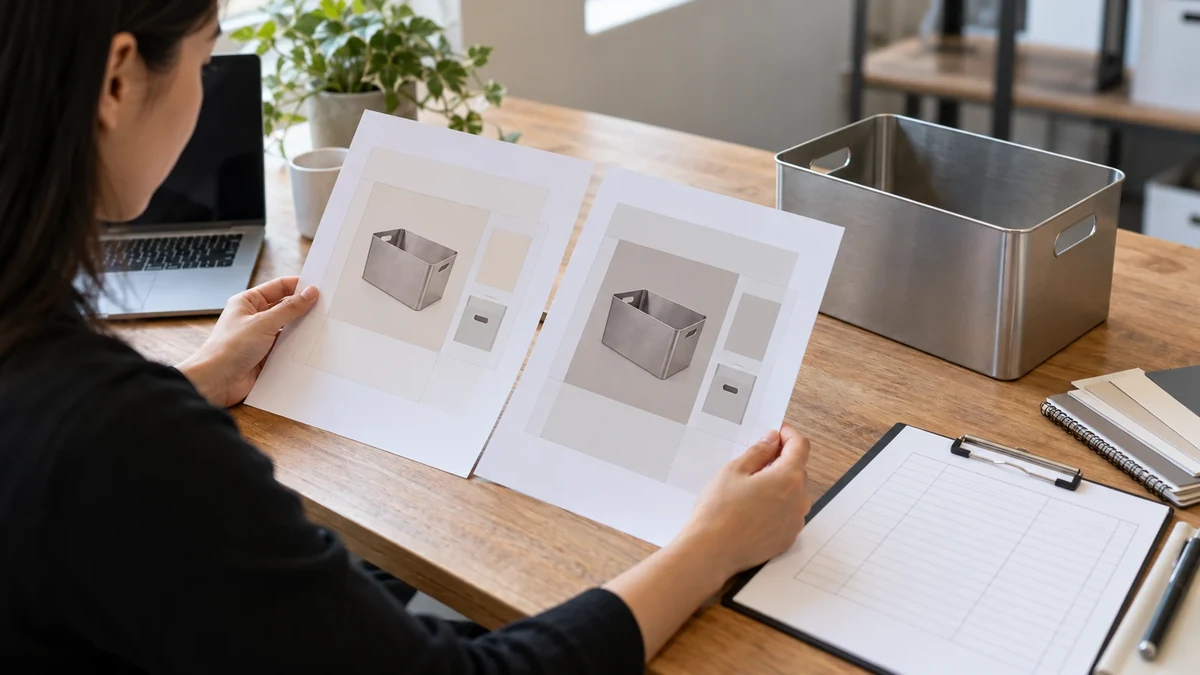
A release checklist for Australian homewares buyers
Before approving a product page, retail listing or package, confirm that the team can answer these questions:
- What exact origin phrase or impression is proposed, and where will customers see it?
- Does the proposed claim concern consumer marketing, an import trade description or preferential tariff origin?
- Which SKU, drawing revision and manufacturing route does the factory response cover?
- Which operations and facilities are confirmed, outsourced or still unknown?
- What dated records support each important manufacturing fact?
- Has the full package and digital presentation been reviewed, including symbols and imagery?
- Has the importer checked whether a product-specific import marking rule applies?
- Has a qualified adviser reviewed the exact wording and facts where the legal test is uncertain?
- Which supplier, product or artwork changes trigger a fresh review?
- Can the buyer retrieve the approved wording, evidence and decision owner for a later reorder?
Preguntas frecuentes
Do Australian non-food homewares always need a country-of-origin label?
The ACCC says the ACL does not require non-food products to carry country-of-origin labelling, but other laws may apply. ABF guidance covers certain goods and classes that require trade descriptions. Check the specific product and applicable rule before deciding whether a marking is required.
Does a factory address prove where a product was made?
No. An address identifies a location, not the full process route. Ask which operations took place at each facility and request records tied to the SKU and revision. Identify outsourced work and unknown component facts explicitly.
Is an FTA certificate the same as proof for a “Made in” marketing claim?
No single document should be assumed to answer both questions. FTA preferential origin concerns tariff eligibility under a specific agreement. A consumer-facing origin claim is reviewed under the applicable marketing and consumer-law rules and the complete presentation.
Can a supplier choose the origin wording for the importer?
A supplier can confirm facts about processes and locations it controls. The importer remains responsible for how its own package, listing and advertising communicate a claim. Have an Australian adviser assess the actual product and wording when needed.
When should a buyer request new origin evidence?
Recheck when material or significant components, outsourced work, finishing, assembly location, product design or package artwork changes. Define triggers in the supplier change-control process and retain the revision that each approved claim covers.
Official references and limits
- ACCC: Country of origin claims
- Competition and Consumer Act 2010, current version
- ABF: Labelling requirements to import goods
- ABF: Origin Advice for preferential tariff treatment
This Australia country of origin claims homewares importer guide provides an importer-to-factory evidence workflow, not legal advice or a determination that a specific product qualifies for an origin claim, import marking treatment or tariff preference. Verify current rules and obtain advice on the exact SKU, route, wording and presentation before release.
For related production context, see Koitor Hardware’s OEM manufacturing information o contact the factory team to confirm project-specific process facts where records are available. This Australia country of origin claims homewares importer checklist keeps the supplier evidence tied to the approved product revision.
Confirm the Manufacturing Facts Behind Your Product
Share the approved SKU or drawing revision and ask the supplier to confirm the operations and locations it can verify. Have an Australian adviser review the proposed origin claim before artwork or listing release.
OEM / MARCA BLANCA
Convierte esta guía de abastecimiento en un resumen del producto
Indícanos el producto que deseas, el tamaño, el acabado, la cantidad del pedido y los requisitos de embalaje. Tu equipo recibirá un análisis práctico de la viabilidad de fabricación antes de recibir el presupuesto.
 English
 Español
 Português
 Français
 Deutsch
 العربية