
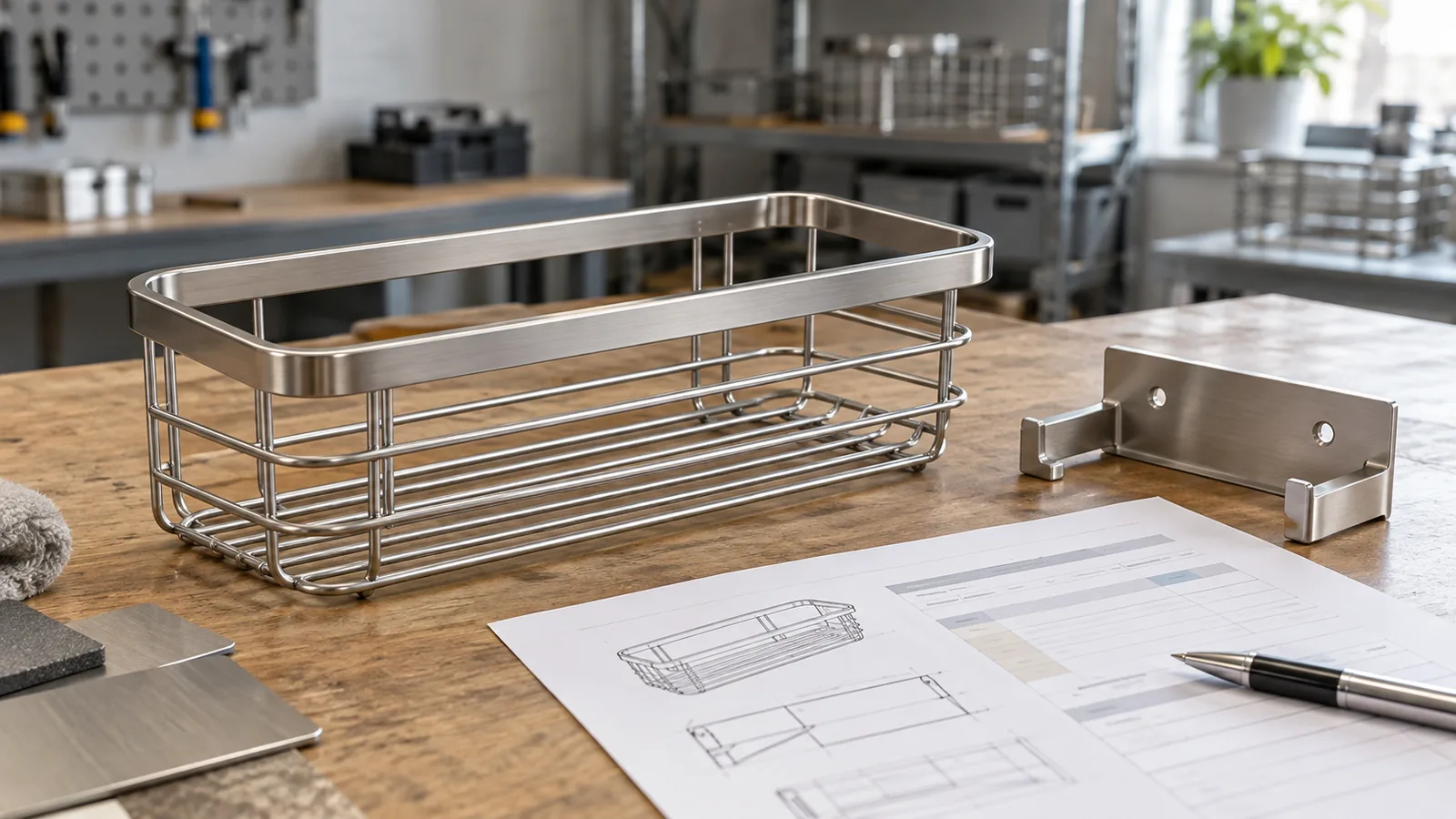
For a custom metal rack or bathroom accessory, DFMEA PFMEA distinction metal hardware development comes down to the question being asked. A design FMEA examines how the product or its design could fail to meet intended functions. A process FMEA examines how a manufacturing or assembly step could create a nonconforming product or allow a defect to escape. Buyers need the two views to connect: design requirements should become identifiable process controls, and process findings that expose an unworkable design should return to the design owner for review.
The names are not interchangeable forms to request as paperwork. A document called “FMEA” is useful only when its scope, product revision, process boundary, responsible owners, and follow-up actions are clear. For bathroom and home-storage hardware, this can mean distinguishing a basket that cannot hold its intended items because its geometry is unsuitable from a basket whose wire spacing changed during forming. The first is a product/design question; the second is a process-control question. A project may need both, and a buyer should not assume either analysis proves the product safe, compliant, reliable, or ready for production.
This article is a buyer framework, not a claim that Koitor maintains a particular FMEA format for every project. Koitor’s confirmed capabilities include metal forming, welding, finishing, assembly, packaging, and drawing/sample development; the project’s actual design authority, process route, quality documents, and responsibilities must be agreed for each order.
What does each analysis evaluate?
Design FMEA (DFMEA) starts with the product, system, component, or design function in scope. It asks what could go wrong with that design, what effect the failure could have, what design feature or condition may cause it, and what design-related prevention or detection action is appropriate. For a wall-mounted storage basket, a design discussion might examine whether the mounting interface, basket dimensions, and intended installation conditions are defined well enough for the buyer’s use case. It should not invent a load rating or assume a particular wall type if neither is in the approved specification.
Process FMEA (PFMEA) starts with the manufacturing sequence. It considers how each operation could fail to produce the intended requirement, how that failure might affect the next operation or customer, and what controls prevent or detect it. A process view for a wire basket could examine cutting, bending, welding, surface finishing, assembly, or packing only where those steps are actually part of the supplier’s route. A generic operation list without failure modes, causes, controls, owners, and follow-up does not give a buyer a meaningful view of risk.
The AIAG & VDA FMEA Handbook is described by AIAG as guidance for developing Design FMEA, Process FMEA, and supplemental FMEA. It is a formal reference, particularly in automotive supply chains; a buyer should confirm whether the customer’s contract or sector requires a specific method, edition, or format before invoking it. AIAG’s Quality Core Tools overview identifies the handbook and its scope. A buyer of bathroom hardware can use the conceptual distinction without claiming automotive compliance or importing an automotive requirement that the purchase contract does not contain.
PTC’s overview similarly frames DFMEA around product design and PFMEA around manufacturing processes. PTC’s DFMEA and PFMEA overview is useful as a general explanation, not as a substitute for the licensed handbook, a customer-specific procedure, or engineering judgment. The practical purchasing task is to state what decision the analysis must support and who owns the decision.
Why the distinction matters in an OEM project
In custom development, a buyer may send a drawing, a physical reference sample, or a concept with incomplete dimensions. The supplier can identify manufacturability concerns, but that does not automatically transfer design authority. The brand or appointed design owner normally defines the product’s intended function and approves changes to controlled requirements. The supplier explains process feasibility, identifies process risks, and proposes controls for the route it will use. The exact contractual responsibility may differ, so it should be recorded rather than assumed.
Confusing the two analyses causes predictable gaps. If a mounting feature is poorly defined, a PFMEA cannot repair the missing design intent by adding an inspection checkpoint. If a sound drawing is repeatedly missed because a forming fixture is unstable, a DFMEA update alone will not control the production operation. If the supplier changes the welding sequence, fixture, finish source, or pack method, that change may affect a process-risk review and could also affect a product-level assumption. The team should assess the impact instead of merely changing a document title.
An analysis is not a promise that a failure will never occur. It is a structured way to surface potential failure modes, make ownership visible, select actions, and review whether those actions were completed and effective. The underlying inputs can be incomplete; a risk table can be stale; a control can be written but not implemented. Buyers should look for a traceable link between the released product definition, the approved process, and objective evidence from the representative sample or production lot.
A metal hardware example: mounting fit versus forming variation
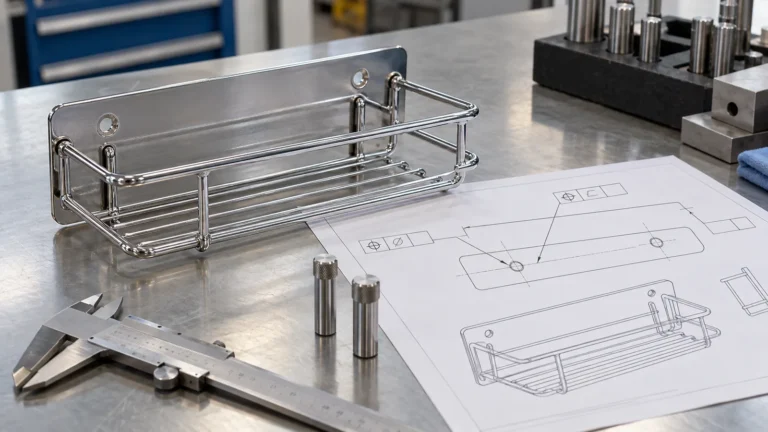
Consider a wall-mounted wire basket with two mounting points. On the design side, the team should state the functional relationship: which surfaces or features locate the basket, what mating hardware is included or purchased separately, what installation condition is assumed, and which dimensions or orientation requirements are critical to assembly. The design owner should resolve ambiguity in the controlled drawing or specification. A supplier may suggest a practical design adjustment, but should not silently revise a hole, bracket, wire path, or finish requirement.
On the process side, the supplier should identify how its actual route could cause a mounting feature to shift, a bracket to distort, a joint to be missed, a component to be assembled in the wrong orientation, or a finish/pack step to obscure or damage a feature. These are examples to assess, not a statement that a particular defect has occurred at Koitor. The relevant prevention or detection control depends on the route: it could be a setup check, fixture confirmation, first-piece review, defined inspection, assembly verification, or another control accepted by the responsible quality owner.
The important bridge is the characteristic. The drawing or approved sample identifies what the product must be; the process review names where that characteristic could be lost; the control plan or inspection instruction says how the supplier checks it; and the evidence record identifies the revision, lot, sample, method, result, and disposition. If the process cannot repeatedly satisfy the intended design, the response may require a process change, a design review, or both. A single pass/fail record does not identify which source of variation was addressed.
| Pregunta del comprador | DFMEA view | PFMEA view | Evidence to connect them |
|---|---|---|---|
| What is being analyzed? | Product function, interface, component, or design choice | Actual manufacturing and assembly steps | Matching product and process scope statements |
| What can fail? | The design may not meet an intended function under stated conditions | A process step may create or miss a specified defect | Named feature, failure mode, effect, and cause |
| Who leads? | Design authority or appointed product-development owner | Supplier/process owner with the buyer’s quality input as agreed | Named owners and approval roles |
| What action fits? | Clarify or change a design requirement, interface, material, or geometry | Improve an operation, fixture, setup, sequence, control, or inspection | Action owner, due point, revision, and closure evidence |
| What does it not prove? | Production capability or process execution | Adequacy of the product’s intended design | Separate design approval and production evidence |
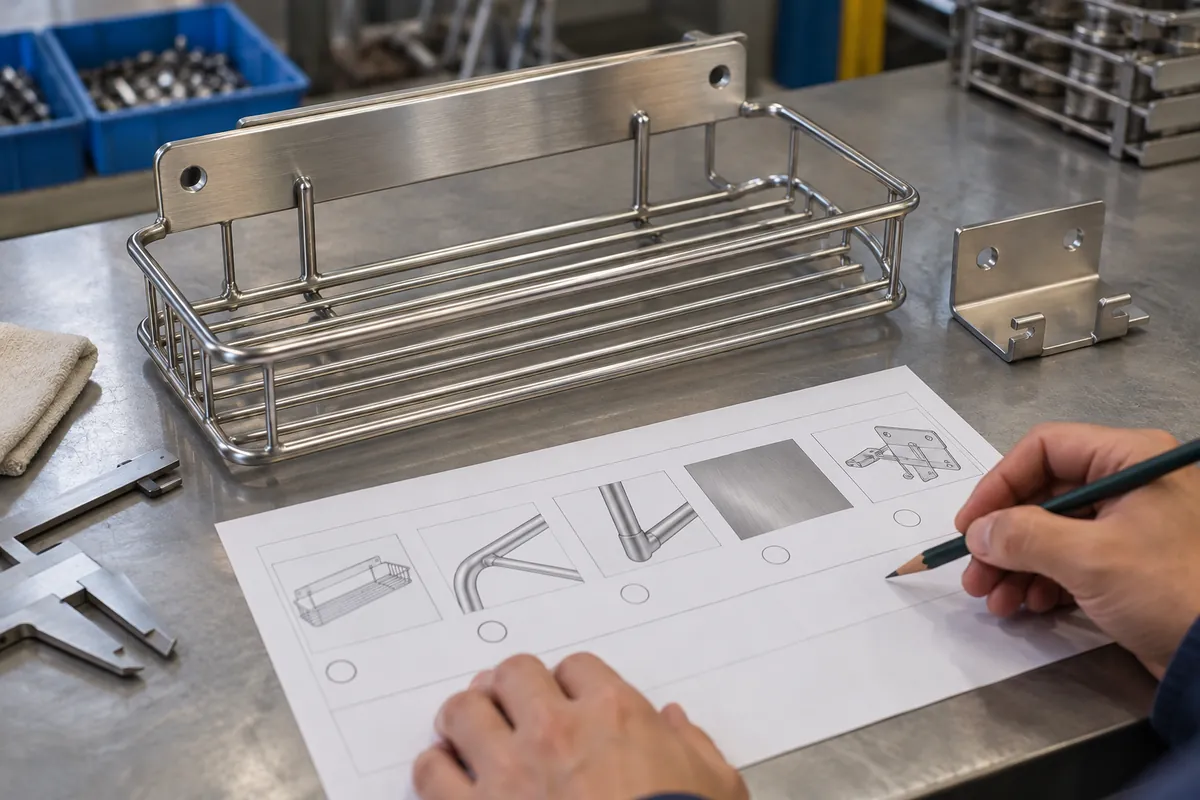
How should buyers review the interface between DFMEA and PFMEA?
Start with the product revision and the boundary of the supplier’s work. Record whether the supplier is making to a complete buyer drawing, developing a design from a brief, modifying a sample, or manufacturing an approved design. Identify who can approve a design change and who can change a process without changing product requirements. A buyer should also identify purchased components, outside finishing, or packaging operations that sit outside the direct factory route, because a process review may otherwise stop before a relevant handoff.
Next, choose the product characteristics that matter to the intended function and buyer acceptance. Do not copy every drawing dimension into a high-risk list by default. Identify which interfaces, appearance zones, assembly features, finish requirements, or packaging conditions could materially affect the buyer’s decision. The design authority owns the requirement and acceptance condition; the supplier should explain how its process can produce and verify it. If either party lacks enough information, record the uncertainty and assign a question owner before sample approval.
Then trace representative failure modes across both documents. A design failure mode might be “mounting interface does not align with the approved mating arrangement.” A process failure mode might be “formed bracket position shifts during a defined operation.” These are deliberately stated as hypothetical examples. The key is that the terms are not simply duplicated: the process cause should lead to a practical control, and the design owner should review whether the product requirement remains feasible when process evidence reveals a limitation.
Ask for actions in a form that can be verified. “Train operator” or “be careful” is weak unless the project explains who will do what, on which revision or operation, by when, and how completion will be confirmed. Actions might involve clarifying a drawing note, locking a fixture revision, adding a setup verification, defining a first-off sample, or agreeing a packaging check. Do not accept a numerical risk score as proof that the action is sufficient; scoring methods and thresholds vary by customer procedure and should be interpreted in context.
Finally, confirm that the action changed the real production evidence. A closed action should point to the updated controlled document, approved process revision, training or setup record where relevant, and an appropriate sample or lot verification. If the change affects a buyer-controlled design feature, obtain the design owner’s written approval. If it changes only the supplier’s process while maintaining the approved product definition, determine what process revalidation the purchase plan requires. Keep those approval paths separate.
What belongs in the RFQ, development plan, or approval package?
The request should be proportionate to product complexity, change risk, and the buyer’s contract. A small repeat-order item may not need a full cross-functional FMEA pack. A new private-label design, a new mounting interface, or a supplier process transfer may warrant a more explicit risk review. Rather than asking only for “FMEA,” define the deliverable and its decision purpose.
Buyers can include these questions in a development brief:
- Which product revision, sample, and intended use are in scope?
- Who owns product design intent, process planning, buyer acceptance, and change approval?
- Which operations and outside suppliers are included or excluded from the process analysis?
- Which functional interfaces or finish/packaging requirements need traceability across design and process reviews?
- How will the supplier flag a design ambiguity or a process step that cannot reliably meet the released requirement?
- Which actions require buyer approval, and what evidence will close them?
- What changes require reassessment before the next sample or production run?
- What document version, meeting record, or control-plan reference will be retained with the approval package?
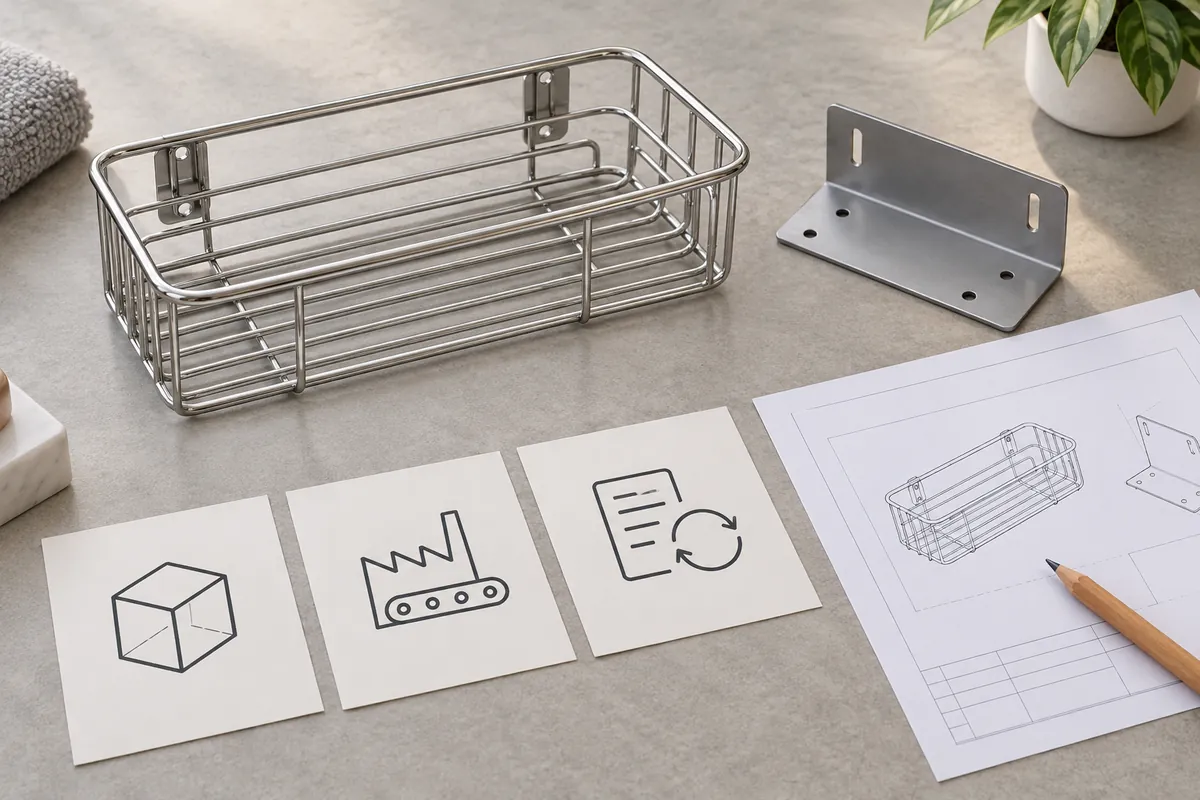
The buyer should also decide whether to request a summary or a controlled detailed analysis. Full FMEA tables can contain supplier-sensitive process details; a practical review may need the relevant failure modes, action owners, key controls, and open risks rather than an unrestricted transfer of proprietary information. Agree what can be shared, how it is stored, and which version is authoritative. A spreadsheet attachment with no revision status is not a reliable change-control system.
Common handoff failures to prevent
One handoff failure is a design requirement that exists only in an email or a sample photo. The supplier may interpret it differently during production, especially after personnel or tooling changes. Move accepted requirements into the drawing, specification, or controlled approval record. Another is a process analysis written against a proposed route that differs from the route used for the production-intent sample. Ask the supplier to identify the actual sequence and external process steps used for the sample.
A third failure is closing an action because a document was updated, without verifying the change on a representative part. Document control matters, but an updated procedure does not by itself establish that the product now meets the buyer’s condition. A fourth is treating the buyer’s inspection as a substitute for supplier process controls. Incoming checks can support acceptance, but they do not automatically prevent recurring upstream causes. The appropriate responsibility split should be defined in the quality agreement or purchase documentation.
Another recurring weakness is copying risk language from a different product. A shower basket, towel bar, and mounting plate may share operations while having different functional interfaces and failure effects. Reuse a template for consistency, but re-evaluate the design intent, materials, geometry, finish, assembly, and shipping context for each product revision. Do not claim that a risk list is product-specific unless it reflects the actual product and process in scope.
A practical buyer review sequence
Before concept or quote approval, confirm the function, intended buyer use, interfaces, supplied components, material/finish assumptions, and named design authority. Resolve unclear requirements before treating a supplier’s feasibility response as a commitment. During design or sample development, review the major product-level failure questions and capture supplier feedback where manufacturability affects the design.
Before production approval, verify the actual process route and its key failure modes. Ask how those process controls correspond to the characteristics already agreed in the drawing, how outsourced work is covered, and which evidence will be available for the production-intent sample. Review open actions and approve design changes through the right owner. The approval record should identify the sample and revision, not merely record that “FMEA completed.”
At repeat order or change, compare the approved state against the new material, tooling, process source, drawing, supplier, or packaging change. Not every change requires a complete restart, but each needs a documented impact decision by the appropriate owner. A buyer can request a short change-impact note that identifies affected assumptions, required verification, and whether DFMEA, PFMEA, inspection controls, or sample approval need an update.
For a flexible OEM supplier relationship, the goal is useful communication early enough to prevent an expensive mismatch—not paperwork volume. A clear design/process split helps an importer understand which questions belong to the brand’s engineer, which belong to the manufacturer, and which require joint approval. This DFMEA PFMEA distinction metal hardware development should be tied to the specific product revision and process route, not treated as a generic paperwork request. Koitor’s OEM home-storage hardware manufacturing page describes the company’s confirmed product-development and manufacturing context. Buyers can Ponte en contacto con Koitor with a drawing or sample and the project-specific risk-review question; that conversation does not replace the buyer’s design approval or quality procedure.
Buyer questions
Is DFMEA the buyer’s responsibility and PFMEA the factory’s responsibility?
That is a common working split, but it is not universal. Contractual design responsibility, supplier-development scope, purchased-part ownership, and customer procedures can change the arrangement. Record the design authority and process owner for the specific project, and identify where joint review or buyer approval is required.
Does a supplier PFMEA prove the design is suitable?
No. PFMEA considers manufacturing/process risks within its stated route and scope. It does not establish that the product requirements are appropriate or that the design will perform in every intended use. Design approval and product validation are separate decisions under the applicable project plan.
Does DFMEA replace incoming inspection or supplier controls?
No. A design-level risk review does not prove that production followed the approved route. Buyers should define supplier controls, incoming evidence, and acceptance methods proportionate to the requirement and purchase agreement.
Should a buyer require FMEA for every bathroom hardware order?
Not automatically. Scale the request to the novelty of the design, consequence of failure, process changes, customer requirements, and available evidence. A short documented risk review may be more useful than a full template for a stable low-change repeat item.
What should trigger a review update?
Use the project’s change-control rules. A new drawing revision, material/finish source, manufacturing route, tooling or fixture, outsourced operation, assembly method, or packaging condition may change an assumption. The responsible owners should document whether the change affects product risk, process risk, or both.
Can the buyer accept a closed action without a new sample?
Sometimes, if the action is administrative or otherwise verified by suitable evidence. If it changes a product characteristic or an operation that affects acceptance, the project should define an appropriate confirmation method. Do not assume a new sample is always necessary—or never necessary—without reviewing the change and the approved plan. This is a practical DFMEA PFMEA distinction metal hardware development: design-impact actions and process-control actions need the right owners and evidence.
Discuss a metal hardware project’s design and process risks with the drawing revision, intended use, and manufacturing route clearly identified.
OEM / MARCA BLANCA
Convierte esta guía de abastecimiento en un resumen del producto
Indícanos el producto que deseas, el tamaño, el acabado, la cantidad del pedido y los requisitos de embalaje. Tu equipo recibirá un análisis práctico de la viabilidad de fabricación antes de recibir el presupuesto.
 English
  Español
  Português
  Français
  Deutsch
  العربية