
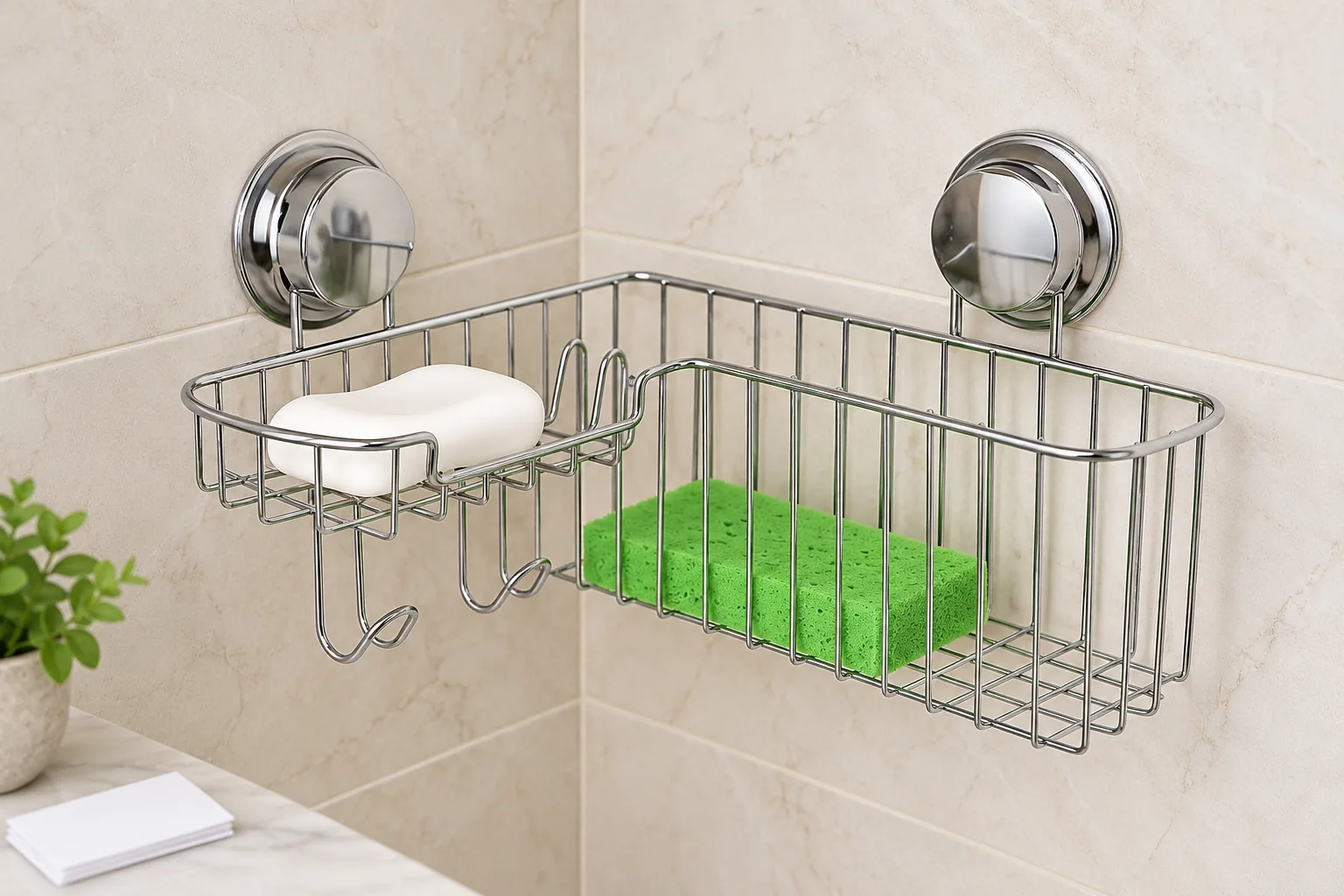
As of 23 October 2026, an importer should screen bathroom and home-storage products against the current EU CBAM goods list by the product’s confirmed Combined Nomenclature (CN) code—not by a broad description such as “steel bathroom accessory.” The phrase CBAM bathroom hardware CN code is a reminder to start with SKU identity, have the EU customs classification confirmed, and compare that code with the current legal annex. Only after scope is confirmed should the importer assess the current mass threshold and request the relevant supplier information.
The Commission says the definitive regime has applied since 1 January 2026. Regulation (EU) 2025/2083 sets a single threshold of 50 tonnes of net mass, accumulated per importer and calendar year across covered goods in iron and steel, aluminium, fertilisers and cement. This is not a threshold per order or per SKU. A separate proposed downstream expansion for 2028 is still in the legislative process as of this article’s check date; do not treat a proposal or Parliament’s negotiating position as current law. This is a planning guide, not a customs classification or legal opinion.
Start with the SKU and the current legal list
A buyer’s product name, material description or supplier catalog category does not itself decide CBAM coverage. “Bathroom basket,” “metal shelf,” “towel holder” and “steel home-storage product” are commercial descriptions. The legal screening process uses customs nomenclature and the products listed in Annex I of Regulation (EU) 2023/956, as amended. The importer must establish which code applies to the actual imported good and then determine whether that code is in the current list.
That classification can depend on objective characteristics of the imported article, its function, construction, materials and the applicable classification rules. Two products that buyers group together for merchandising may not necessarily use the same customs code. Likewise, two products made mostly of steel are not automatically within CBAM simply because their material is similar. Never infer a code from a product photo, supplier shorthand, search result, competitor page or this article.
For each SKU, assemble the product description, function, material and construction information, drawings or photographs, dimensions where they help distinguish the article, bill of materials when available, and the intended import presentation. Give those facts to the responsible customs broker or classification specialist. Ask for the final classification basis and date in writing. The EU’s TARIC and customs classification resources can support the review, but a buyer-facing blog cannot replace a binding tariff decision or advice from the competent authority.
After the code is confirmed, compare it with the current Annex I, using the version applicable on the planned import date. The original CBAM Regulation lists goods by CN code, and Regulation (EU) 2025/2083 amended the regime. A code that is not listed in the relevant current annex should not be treated as covered merely because an adjacent code is listed. Conversely, a product should not be presumed outside scope because its catalog wording sounds like a consumer accessory. Keep the product facts, code confirmation and annex version together so another team member can reproduce the decision.
Use a SKU-level screening register
A practical importer register should make the basis for each decision visible. Avoid a single line that says “all steel accessories: CBAM no.” Track each distinct SKU or customs line and make uncertainty explicit.
For a CBAM bathroom hardware CN code check, the register should preserve the confirmed code and current Annex I comparison as separate fields; the commercial SKU name is not a substitute for either record.
| Register field | Qué grabar | Por qué es importante |
|---|---|---|
| SKU and product revision | Internal SKU, supplier item and current design revision | Prevents a changed product from inheriting an old review |
| Product facts | Plain-language function, construction, materials and relevant images or drawing | Gives the broker facts needed to classify the imported article |
| Importing entity | Legal importer of record and its relevant customs representative | The threshold is applied by importer, not just by supplier or shipment |
| Confirmed CN code | Code, classification source, reviewer and effective date | The legal list is code-based |
| Current Annex I match | Yes, no or unresolved; note the legal version and code line checked | Separates present coverage from assumptions and future proposals |
| Net mass tracking | Net mass for covered goods and the importer’s calendar-year running total | Supports the single annual threshold check |
| Supplier information owner | Factory contact for product, material or emissions information when applicable | Assigns an actual owner instead of sending vague requests |
| Next review trigger | Import date, annual review or legal change event | Makes regulatory updates operational |

Use “unresolved” when product facts are incomplete or the broker has not confirmed the classification. That status is more useful than an unsupported yes/no answer: it identifies the import line that needs attention before a purchase order, entry or compliance assertion depends on it. The importer remains responsible for resolving the classification and confirming applicable obligations with its customs professional.
Apply the 50-tonne rule only after scope is established
For the current regime, Regulation (EU) 2025/2083 establishes the single mass-based threshold at 50 tonnes of net mass. The law aggregates total net mass across all relevant CN codes per importer and per calendar year for covered iron and steel, aluminium, fertiliser and cement goods. It is therefore not a fresh allowance for each purchase order, product family, supplier, port or customs representative. The regulation also provides that once the importer exceeds the threshold during the year, obligations apply to the emissions embedded in the covered goods imported during that year, including earlier imports in that year.
The key sequence is: confirm which imported goods are in the current Annex I; identify the importer of record; aggregate the net mass of the currently covered goods under all relevant codes for that importer and calendar year; then ask the broker or compliance owner whether the threshold has been crossed or is expected to be crossed. A single bathroom SKU should not be counted merely because it contains metal if it is not a listed covered good. Do not count future proposed downstream goods as current covered goods until an enacted rule actually applies to them.
This single mass threshold does not apply to electricity or hydrogen, which have separate treatment under the amended regulation. That distinction is unlikely to describe an ordinary bathroom-accessory shipment, but it illustrates why teams should read the legal rule and product scope rather than repeat a simplified threshold summary.
The Commission’s current CBAM communication states that the first annual declaration for 2026 covered imports is due by 30 September 2027. If the importer expects to cross the threshold, it should plan the authorization and data workflow early with its customs representative and responsible authority. Do not wait until a shipment is held or a year-end total is reconciled to identify who owns the annual calculation.
Keep the 2028 downstream proposal separate
The European Commission proposed extending CBAM from 1 January 2028 to selected steel- and aluminium-intensive downstream products. The proposal includes possible household-article lines, but its proposed code list is not the current Annex I just because a product category appears in the proposal. On 15 September 2026, the European Parliament adopted amendments to the proposed extension and the matter was referred back to the committee responsible for interinstitutional negotiations. The Council had agreed its position on 12 June 2026. These are legislative developments, not proof that a particular bathroom basket or home-storage SKU is already covered.
For import planning, keep two columns in the register: “current-law result” and “future proposal watch.” In the first, record the status under the currently applicable legal text. In the second, record whether a proposed code or product description may become relevant, the legislative file and the date checked. Do not merge them into one “CBAM yes” status. The 2028 target date may move, the product list may change during negotiations, and the final law may differ from both the Commission and Parliament texts.
Set a review trigger for a signed interinstitutional agreement, an adopted amending regulation, publication in the Official Journal or a material update from the Commission. Before an import date near an expected change, ask the customs broker to confirm which legal text and code list will apply on that date. A watchlist is a planning control, not an early application of a proposal.
Request factory information for a defined purpose
Once a customs code is confirmed and the importer determines that a SKU is covered, the importer and broker should identify exactly what supplier data is needed under the applicable reporting route. Start with product and order identity: SKU, revision, quantity, net mass, material composition and the production site or operator information needed to connect evidence to the imported goods. Make the request specific to the product and period; do not ask every supplier for an unrestricted “carbon certificate” when the current legal step does not require that document.
The European Commission explains that importers may report using Commission default values or actual values under the rules. If an importer chooses actual values, the producer outside the EU must provide verified emissions data for embedded emissions as required by the applicable methodology. That is a defined data path, not proof that every factory has verified emissions information ready. Confirm the current rules and timing with the importer’s CBAM compliance owner or verifier before promising that data can be supplied.
Koitor’s role, where relevant and confirmed for a project, is to clarify product construction and manufacturing inputs within the company’s verified records. Koitor does not determine an EU customs code, act as the importer’s customs broker, certify product emissions or guarantee that a buyer’s SKU is in or out of CBAM. A buyer should tell the factory what product and data need to be connected, why the information is required and which format is accepted, after the customs and compliance specialists have defined the requirement.
Build a repeatable buyer-to-broker workflow
For each product family, the importer can use a controlled handoff rather than relying on scattered emails:
- Freeze the SKU, drawing, materials and revision to be imported; identify whether variants differ in a way relevant to classification.
- Prepare the product facts and ask the customs broker or classification specialist to confirm the EU CN code and legal basis.
- Check that code against the current CBAM Annex I and save the legal version and date reviewed.
- Mark the line covered, not covered or unresolved. Do not let an unresolved code flow into a final landed-cost or compliance claim as if it were decided.
- If covered, add the line’s net mass to the importer’s calendar-year register across all relevant covered goods and codes; reconcile entries and representation arrangements with the broker.
- Confirm whether the importer expects to cross the threshold and what authorization, declarations, emissions information and deadlines apply.
- Request only the required supplier evidence, using the agreed SKU, revision, site and reporting period.
- Review the legal register before each planned import and whenever an official change is published; preserve the prior decision for audit trail rather than silently overwriting it.
The sequence separates three questions that often get conflated: “What is the product’s customs code?”, “Is that code included in current CBAM scope?”, and “Has this importer crossed or is likely to cross the current threshold?” Each has a different evidence owner. A factory can help describe the good and provide confirmed product information, but the importer and its customs/compliance advisers own the classification and regulatory decision.
What to document when the answer is uncertain
Retain the exact product description sent for classification, the drawing or photo, the supplier and importer identifiers, the broker’s code reasoning, any customs decision or ruling, the Annex I text checked, the reporting-year mass calculation, the supplier information request and the date the register was reviewed. If a broker gives a preliminary code, label it preliminary until the importer accepts the classification basis. Store any alternate code considered and why it was rejected, if the responsible adviser provides that analysis.
Re-open the review when the physical product changes, the primary function changes, materials or assembly are revised, the SKU is split or combined, the import presentation changes, the classification rules are updated or the CBAM legal annex changes. A marketing rename alone should not overwrite the physical product facts; a real construction change should not be dismissed as a harmless name update. Make the review owner and due date explicit.
For annual planning, reconcile the register to customs-entry data rather than relying only on purchase orders or factory invoices. Imports may be split across suppliers or representatives; the threshold is aggregated for the relevant importer. Agree with the broker how corrections, returned goods, adjustments and importer-of-record changes are handled under current rules. These are questions for the customs professional, not calculation assumptions to fill in from a blog.
Buyer questions to resolve before shipment
Does a steel bathroom accessory automatically fall under CBAM?
No. Material alone is not enough to decide. Confirm the customs code for the actual imported good, then check that code against the current Annex I. Product facts and classification rules determine the code; a general description such as “steel accessory” is not a tariff classification.
Is the 50-tonne threshold counted per SKU or order?
No. The current single mass threshold is cumulative per importer and calendar year across all CN codes for the covered iron and steel, aluminium, fertiliser and cement goods. It is not a per-order allowance. Keep electricity and hydrogen’s separate treatment in view if those goods are relevant to an importer’s wider portfolio.
Are household articles covered because the 2028 proposal mentions them?
Not solely on that basis. As checked on 23 October 2026, the downstream extension remained in the legislative process. Use the current enacted Annex I for present-scope decisions and keep the proposal in a separate watchlist until an amending regulation is adopted and applies.
Should the factory calculate the importer’s CBAM mass threshold?
The importer’s register must aggregate the relevant imports for the legal importer and calendar year. A factory can provide accurate product and shipment information requested for the project, but the importer and its customs or compliance professionals should own the legal scope decision and aggregate calculation.
Practical takeaway for importers
For a CBAM bathroom hardware CN code review, begin with one actual SKU, confirm its EU customs classification, and compare that code with the current Annex I. Only then decide whether the product is a covered good, how its net mass fits into the importer’s annual total and which supplier information is needed. Keep current law distinct from the proposed downstream extension and date every decision.

This article was checked against official EU sources on 23 October 2026. CBAM rules and legislative status can change; reconfirm the current text and code applicability with the competent customs or compliance professional before importing. Koitor can discuss verified manufacturing information for its product scope, not customs classification or legal advice.
Prepare a Clear Bathroom Hardware Brief
Share the product drawing, material details, SKU revision and buyer-side data requirements. Koitor can discuss confirmed bathroom-accessory manufacturing scope; customs classification remains with the importer and its adviser.
OEM / MARCA BLANCA
Convierte esta guía de abastecimiento en un resumen del producto
Indícanos el producto que deseas, el tamaño, el acabado, la cantidad del pedido y los requisitos de embalaje. Tu equipo recibirá un análisis práctico de la viabilidad de fabricación antes de recibir el presupuesto.


 English
 Español
 Português
 Français
 Deutsch
 العربية