

How to remove chrome plating depends on what coating is present, which layers must be removed, and what substrate lies underneath. A qualified finishing supplier selects a compatible chemical or electrochemical route for the identified part; mechanical removal may also be considered, but can change the surface or geometry. Decorative nickel-chromium plating, hard chromium and chrome-like finishes are not one interchangeable stack. For an importer, the key decision is to specify the removal endpoint and rework evidence, not to choose a universal stripping recipe or treat a shiny surface as proof that the work is complete.

What does chrome plating removal mean for a buyer?
“Remove the chrome” is an incomplete rework instruction. It may mean removing only a chromium top layer, removing multiple metallic layers down to the substrate, stripping a local area while protecting other surfaces, or preparing a part for a new coating system. Those outcomes are different. The buyer should identify the part, its known or suspected coating stack, the surface that may be affected, and the reason the work is being considered.
In decorative finishes, chromium can sit above nickel, and copper may also be present as part of a multi-layer deposit. Other product constructions can differ. Hard chrome is used in a different context and should not be assumed to have the same stack or removal requirements as decorative plating. A coating described as “chrome look” may use another finish entirely. The material name in a catalog or a bright appearance is not enough to establish the actual deposit.
The practical buyer question is therefore: which layer or layers must the finisher remove, where, and what condition must remain afterward? When deciding how to remove chrome plating on a particular item, the buyer should ask the responsible finisher to state the proposed endpoint and any substrate-specific limits. A finisher may offer a route intended to remove chromium while retaining nickel under specific product conditions. Another job may require removing more of the stack. A supplier’s technical data sheet describes that supplier’s process under its stated limits; it does not create a universal method for every component.
This guide is for professional procurement, product and quality teams coordinating a metal hardware rework decision. It is not a do-it-yourself chemical procedure. It intentionally omits bath formulations, chemical concentrations, electrical settings, operating temperatures, exposure times, neutralization instructions and handling steps. Chemical or electrochemical stripping should be assessed and carried out only by a qualified specialist under its current process controls and applicable workplace requirements.
Which coating layers may be present?
The word “chrome” often refers to appearance, but the buyer must distinguish a surface description from a verified coating structure. A decorative finish may contain a chromium top layer over nickel, with copper or another intermediate layer depending on the product and specification. A hard-chrome deposit has its own process context. Some plated parts may use a different substrate or coating sequence. Do not infer a complete layer stack from a supplier’s shorthand.
| Buyer term or observation | What it may describe | What still needs confirmation |
|---|---|---|
| Bright chrome appearance | A visible finish that may include chromium over another metallic layer | Actual coating system, layer sequence, substrate and intended removal depth |
| Decorative nickel-chromium | A decorative coating system that commonly includes nickel beneath chromium | The exact layer set, thickness records if available, affected areas and acceptance endpoint |
| Copper/nickel/chromium stack | One possible multi-layer decorative arrangement | Whether copper is present on the actual part and whether it must remain or be removed |
| Hard chromium | A functional deposit used in a different application context | Actual substrate, deposit specification and process capability of the responsible finisher |
| Chrome-like or bright finish | A marketing or appearance description | Whether the finish is chromium, another metallic coating, a physical-vapor-deposited layer, paint or a different system |
| Bright surface after stripping | An observed appearance that may reflect an exposed underlayer | Which layer remains, whether the requested endpoint is met and whether the substrate is undamaged |
The distinction between layer removal and substrate preservation is central. If chromium is removed while nickel remains, the part can still look metallic and bright. That appearance does not prove that all plating has been removed. Conversely, a dull or irregular surface does not by itself prove which layer was reached. The buyer needs the process description and inspection evidence agreed for the actual part.
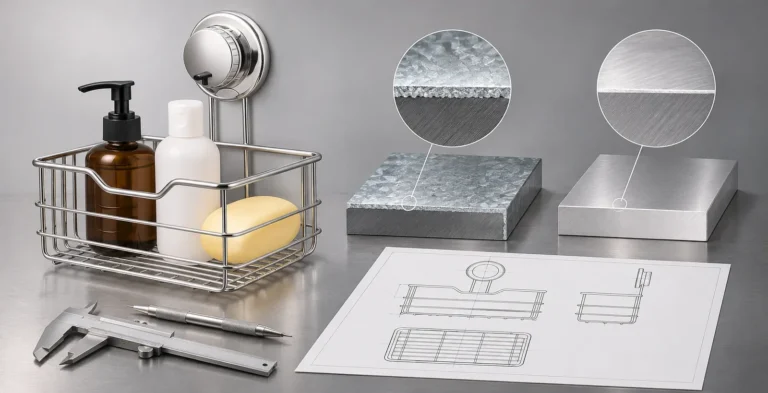
A useful way to explain the scope to a supplier is to mark up a drawing or representative sample with affected surfaces, surfaces to protect, critical edges or holes, and the intended endpoint. If the stack is unknown, write that it is unknown and ask the supplier how it will identify or assess the part before quoting. Do not convert an assumption into a confirmed material or coating fact.
What professional routes are used to strip chrome?
Qualified suppliers may use chemical or electrochemical methods selected for the deposit and substrate. Mechanical removal can be considered in some cases, but it may remove base material, alter a surface profile or affect critical dimensions. The correct route depends on the actual part and agreed endpoint; there is no safe universal sequence that a buyer can prescribe from a generic article.
Specialist technical data illustrates why scope matters. A supplier may describe an electrochemical product intended to remove a chromium deposit while leaving an underlying nickel layer under its own specified conditions, and may restrict the work to trained technicians. That does not prove that another supplier, another coating stack or another geometry will behave the same way. Product-specific directions, safety information and process controls belong to the responsible finisher.
Some systems require separate treatment decisions for chromium, nickel or copper, while selective stripping may be relevant when only a region is to be changed. In other projects, the buyer may decide that stripping is too risky or uneconomic and choose another disposition. These are commercial and technical decisions, not a menu of universal procedures. A supplier may recommend a controlled trial, reject the part for rework, or request more information before determining feasibility.
The buyer should ask the supplier to state:
- Which coating layers it believes are present and what evidence supports that assessment.
- Which layer or layers it proposes to remove and which should remain.
- Whether the proposed scope is full-surface, selective or limited to specified zones.
- What substrate and features may be exposed or affected during the work.
- Whether the supplier needs a representative part, a sample, a drawing or prior process records.
- What the supplier considers a successful endpoint and how it will document it.
- Which later process, if any, is included in the quote and which is the responsibility of another supplier.
These questions define a request for information. They do not direct the supplier to use a particular chemical or operating parameter. The finisher must assess the actual part, select its controlled method and determine whether it can accept the work.
Why can a stripped part still look plated?
A stripped part may remain bright because a lower metallic layer is still present. Removing chromium is not necessarily the same as removing nickel, copper or every metallic layer down to the substrate. Color and gloss are visual observations; they cannot identify every hidden layer or prove that the agreed endpoint was achieved.
For example, a hypothetical bathroom fitting has a visible defect in one plated area. The importer asks a finisher to remove the chromium layer before considering replating. If the part becomes bright and silver-colored, the buyer still needs to know whether the target chromium was removed, whether nickel was intentionally retained, and whether the substrate or critical surface was affected. A photograph may record appearance, but it cannot establish composition or confirm an undocumented process endpoint.
The same issue matters in selective removal. A surface can appear visually consistent while a protected boundary, recess or edge has a different coating condition. If a mask or exclusion area matters, it should be shown on a controlled drawing and included in the proposed rework scope. See the project guide to selective plating and masking boundaries for the separate question of where a coating is intended to stop.
Before approving a replated part, the buyer should agree the evidence needed for the relevant attributes. That might include an approved appearance sample, dimensional checks at defined features, a written supplier record identifying the process scope, or other project-specific verification selected by the responsible technical team. No single photo, surface color or generic certificate should be treated as proof of every layer, substrate condition, adhesion, corrosion behavior or future service life.
What risks should be considered before replating?
Stripping and replating can affect more than appearance. A process may expose a substrate, change the surface profile, affect edges or features, or make an already defective part unsuitable for another finishing cycle. The risk depends on the actual coating, substrate, geometry, previous condition and controlled process. No universal number of rework cycles or guaranteed recovery result applies to every part.
Potential buyer concerns include:
- Unknown substrate or coating stack. If the base metal and layer sequence are not established, the finisher may need to inspect or trial a representative item before it can quote reliably.
- Critical dimensions. Stripping and renewed coating can change a fit or surface dimension. Identify the critical features and require the responsible supplier to advise what can be measured before and after the work.
- Pits, pores or exposed defects. A coating may conceal defects in a substrate. A source supplier notes product-specific concerns for exposed pits in zinc die-cast parts; that warning should prompt assessment, not a claim that every such part will fail.
- Cosmetic faces and edges. A rework route can change the visible surface or boundaries. Identify cosmetic surfaces and agree how an acceptable result will be judged.
- Selective boundaries. If some regions must remain coated, confirm the masking boundary and inspection evidence on the drawing. Do not rely on an informal verbal description.
- Process responsibility. Plating, stripping, inspection and replacement coating may involve different suppliers. State who owns each step and who releases the part after rework.
- Disposition risk. Some parts should be rejected, replaced or redesigned instead of stripped again. A sunk finishing cost is not a technical reason to approve an unsuitable component.
An importer should separate “can a supplier attempt this?” from “should the buyer accept the result?” A supplier may technically remove a layer, but the commercial team still has to decide whether the remaining substrate, geometry and new finish satisfy the product requirement. A rework step does not automatically correct the cause of the original defect.
| Rework question | Evidence to request or define | Why the distinction matters |
|---|---|---|
| What is being removed? | Layer endpoint and affected area, stated by the responsible finisher | “Remove chrome” can refer to different layer scopes |
| What is underneath? | Available material/coating records or a supplier assessment | A visible finish does not identify the substrate or full stack |
| What must remain protected? | Drawing or marked sample showing boundaries and critical features | Selective work depends on a controlled scope |
| What must be checked afterward? | Dimensions, surface condition, finish sample or other agreed method | Appearance alone may not establish the acceptance criteria |
| Who releases the item? | Named process owner and a traceable rework record | Prevents responsibility gaps between suppliers |
How should an importer prepare a rework request?
Prepare a controlled request before sending a sample or authorizing production rework. Include the original product identity, the issue that triggered review, the quantity and lot information, the known finish specification, and the requested disposition. Attach photos that show the defect and full part; label them as observations rather than a diagnosis if the cause is unknown.
The request can include a short scope table:
| Campo «Solicitud de presupuesto» | Buyer entry |
|---|---|
| Part and revision | Product code, drawing revision, finish reference and lot/sample ID |
| Observed issue | Location and appearance of the concern; distinguish fact from suspected cause |
| Existing finish information | Known stack, prior records or “unknown—supplier assessment requested” |
| Desired endpoint | Chromium only, a specified stack, selective area or another agreed condition |
| Protected areas | Drawing callouts for surfaces, edges, threads, holes or fit features to preserve |
| Replating scope | Included, excluded or to be quoted as a separate operation |
| Acceptance evidence | Method and records required for the project-specific release decision |
| Supplier boundary | Responsible stripper, plater, inspector and party approving final use |
Ask for a feasibility response before issuing a bulk rework instruction. The supplier may need to inspect a sample or confirm whether records identify the finish. If its answer relies on a proprietary process, the buyer does not need to demand an unsafe recipe; the relevant questions are the controlled scope, responsible supplier, limitations and evidence that can be shared. Any safety data or regulatory documentation required for the transaction should be handled through the supplier’s established process.
The buyer should also preserve the chain of identity. Keep the original defect photos, drawing revision, supplier correspondence, sample label and disposition decision together. If only selected units are reworked, the returned parts should be distinguishable from untouched product. Where a lot is mixed, segregate affected and unaffected items according to the buyer’s approved quality process rather than relying on appearance alone.
How can the buyer judge the reworked sample?
Judge the sample against criteria agreed before the work. Do not accept “looks fine” as the entire record if the required endpoint includes layer removal, dimensional fit or protected areas. The supplier’s report should state what operation was performed within the supplier’s disclosure limits and which observations or measurements were made. The buyer should compare those records with the project requirement and the physical sample.
An orderly review can proceed through these checkpoints:
- Identity: confirm the part, sample or lot, drawing revision and rework authorization match the request.
- Scope: compare the stated removal endpoint and affected surfaces with the agreed drawing or written instruction.
- Substrate and geometry: review the features the responsible team identified as critical, using the agreed measurement method.
- Estado de la superficie: compare visible appearance with the approved reference under consistent review conditions. A visual match alone does not prove composition or hidden properties.
- Replating: if included, review the replacement finish against its own agreed specification and sample. Stripping acceptance and final plating acceptance are related but separate decisions.
- Records: retain supplier identification, work date or lot reference where provided, approved deviations and disposition decision.
- Release: approve only the specific product and scope reviewed. Do not extend the sample decision to a different substrate, coating stack, geometry or process without review.
If the sample fails a criterion, document the specific mismatch and ask the responsible supplier for a corrective proposal. Do not keep cycling parts through a process without understanding why the previous result was rejected. Depending on condition and project economics, replacement, a design change or a different supplier route may be more appropriate than another rework attempt.
What common mistakes should buyers avoid?
- Assuming every chrome finish has the same stack. Ask what coating and substrate are actually present; identify uncertainty explicitly.
- Treating a bright result as complete removal. An underlayer can remain bright. Confirm the agreed endpoint and evidence.
- Using a supplier’s product-specific TDS as a universal recipe. Its stated conditions and restrictions apply to that supplier’s method, not to every plated component.
- Authorizing work before agreeing the boundary. Mark the areas to strip and protect, and identify critical dimensions and cosmetic faces.
- Assuming stripping restores the original part. Material loss, exposed defects or changed geometry may make the part unsuitable for replating.
- Combining stripping and replating into one vague acceptance. Define acceptance for removal and for the replacement finish separately.
- Allowing an unqualified party to handle hazardous processes. Chemical or electrochemical work belongs with a capable specialist under its controls; this article provides no DIY operating steps.
- Omitting traceability. Connect the returned item to the original part, approved scope and sample or lot record.
- Assuming rework proves the original defect cause. It addresses a part’s condition; it does not automatically identify or remove the upstream cause.
These controls protect both product quality and the commercial decision. They keep the buyer from demanding a process outcome that has not been defined and help the supplier respond with the information necessary to assess feasibility.
Buyer checklist before authorizing chrome plating removal

- [ ] Is the finish confirmed as chromium-containing, hard chrome, nickel-chromium or another identified system?
- [ ] Is the substrate known, or is it explicitly marked unknown for supplier assessment?
- [ ] Does the request say which layer or layers should be removed and which should remain?
- [ ] Are selective areas and protected surfaces marked on a controlled drawing?
- [ ] Are critical dimensions and cosmetic faces identified?
- [ ] Has the responsible specialist confirmed its scope and limitations before bulk authorization?
- [ ] Is the sample or lot traceable to the original part and drawing revision?
- [ ] Are stripping acceptance and new-finish acceptance recorded separately?
- [ ] Does the buyer know which supplier performs and releases each operation?
- [ ] Is the disposition decision based on agreed evidence rather than color alone?
Frequently asked questions about how to remove chrome plating
Can I remove chrome plating at home?
This guide does not provide a home-removal method. Chrome stripping can involve hazardous chemical or electrochemical processes, substrate-specific risks and controlled handling. The responsible finisher should determine whether the exact part can be processed and under what professional controls.
Does removing chrome also remove nickel?
Not necessarily. Some approaches are intended to remove chromium while retaining nickel under specified supplier conditions; other projects may seek a different endpoint. The exact stack and process determine the result. Agree the target layer with the finisher.
Why does a stripped part still look shiny?
A bright underlayer, such as nickel, may remain after chromium removal. Appearance alone cannot identify the remaining layer or prove the requested endpoint. The buyer needs the supplier’s scope and agreed verification record.
Is mechanical stripping suitable for every plated part?
No. Mechanical removal may affect the underlying surface, edges or dimensions, and suitability depends on the part. A qualified supplier should assess the actual substrate, geometry and required endpoint.
Can every plated part be replated after stripping?
No universal recovery guarantee applies. The substrate condition, geometry, original defect, coating stack and proposed process can affect whether rework is acceptable. Some parts may need replacement or a different disposition.
Does a successful stripping step prove the new plating is acceptable?
No. Removal and replacement coating are different operations with separate acceptance criteria. Evaluate the new finish against its own approved specification and sample.
What should a buyer send to a stripping supplier?
Send the part identity, drawing revision, defect record, known finish and substrate information, requested endpoint, affected and protected areas, critical dimensions, quantity and proposed acceptance evidence. Label unconfirmed assumptions clearly.
Can Koitor remove chrome plating?
This article does not claim that Koitor provides chemical or electrochemical stripping. Koitor Hardware can discuss confirmed custom metal hardware scope, drawing/sample communication, finish requirements and packaging preparation; any specialist stripping operation and responsible supplier must be confirmed for the actual project.
Trabaja con Koitor Hardware
For a plated bathroom or home-storage metal component, keep the original sample, drawing revision, defect evidence and finish requirement connected. Koitor Hardware is a family-owned custom metal hardware factory; project scope, supplier responsibilities and any specialized finishing work must be confirmed rather than assumed.
Discuss a Metal Hardware Drawing or Finish Requirement
Share the actual part or drawing, known finish information, defect observation and unresolved acceptance question. The responsible supplier and available scope can then be confirmed for the project.
OEM / MARCA BLANCA
Convierte esta guía de abastecimiento en un resumen del producto
Indícanos el producto que deseas, el tamaño, el acabado, la cantidad del pedido y los requisitos de embalaje. Tu equipo recibirá un análisis práctico de la viabilidad de fabricación antes de recibir el presupuesto.


 English
 Español
 Português
 Français
 Deutsch
 العربية