
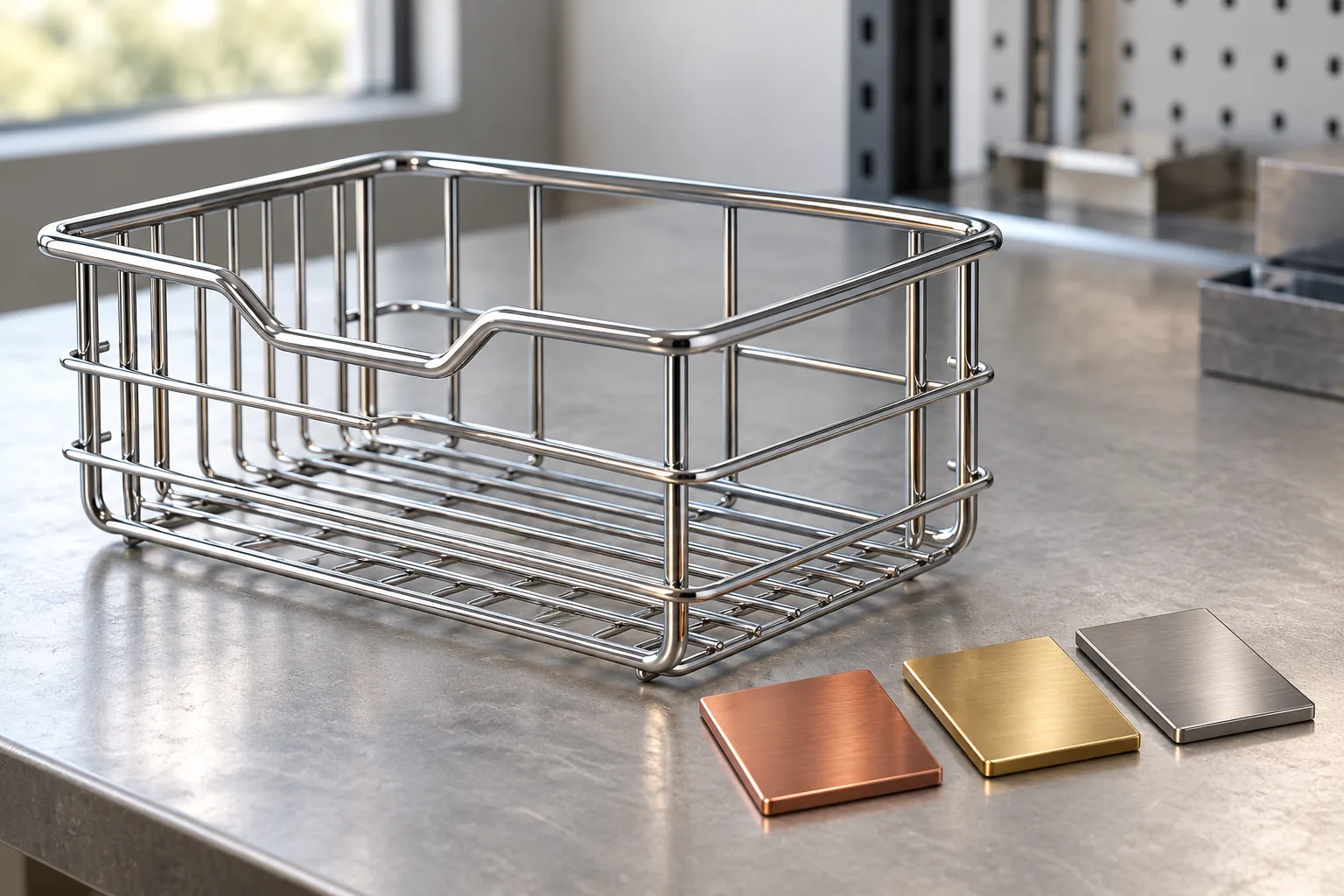
Laser welding reflective copper brass joint feasibility requires evidence for the actual alloy pair, component geometry and proposed laser process. A supplier’s ability to laser weld stainless steel does not establish that it can join a copper or brass fitting in the same way. Buyers should identify both materials, surface condition, joint function and the supplier’s available route before authorizing trials. Approve representative joint and finished-product evidence, while keeping unconfirmed equipment or material capability clearly open.
Which hardware development decision does this guide support?
This guide helps an importer or product developer decide whether a proposed copper or brass connection merits a laser-welding feasibility trial. The application could be a bought-in decorative fitting or another metal component associated with bathroom and home storage hardware. These are conditional development examples, not declarations that Koitor currently manufactures those fittings or uses a specific reflective-metal welding system.
First clarify what must be joined. Copper-to-copper, brass-to-brass and a copper-alloy component joined to steel are different material combinations. A photograph showing similar-colored parts can conceal the actual grades, coatings and interfaces. The supplier needs traceable material information or an agreed identification step before treating the assembly as a known welding application.
Then identify the joint’s function. Is it a visible attachment, a structural connection, a positioning feature or something else? Which appearance, assembly and service requirements apply? Avoid adopting criteria from electronics or another industry unless they are appropriate to the hardware project. The buyer’s product requirement should govern the proposed trial.
General laser-welding capability is a starting point for discussion. It does not answer whether the available source, optics, fixturing and process knowledge suit the specific material pair. The buyer should ask the supplier to explain its current capabilities and limitations, including whether external development or a different joining route is needed.
The outcome can be a feasible trial, a request for more material information, a design alternative or a decision not to pursue that route. A documented negative feasibility decision is useful when it prevents unplanned tooling or an unsupported production promise.
Why should copper and brass be assessed separately?
Copper and brass should not be grouped solely because both are reflective copper-based materials. Brass is an alloy family, and its constituents can introduce additional joining considerations. The actual grade, delivered form and mating material matter more than an informal description such as “yellow metal.”
TRUMPF’s copper-welding application information describes green-wavelength technology for copper and other reflective materials. Its application demonstrates that laser-source characteristics can matter. It does not establish that a supplier with a different laser can reproduce the result, that Koitor owns that system or that the same configuration applies to a brass-to-steel hardware joint.
TWI’s discussion of brasses and bronzes identifies zinc-related porosity as a fusion-welding consideration for brasses and notes differences among alloys. Use this general material guidance to ask the process owner how the actual grade is assessed. Do not transfer an arc-welding recommendation or a numerical limit directly into a laser-welding specification.
The supplier should identify whether surface reflectivity, heat transfer, alloy constituents, dissimilar-material behavior or another factor needs investigation in the proposed route. The buyer should record which concerns are based on known material information and which remain hypotheses. A broad claim that “laser welding works on copper” is not a complete feasibility assessment.
Distinguish the substrate from its finish
A brass-colored finish may cover steel, zinc alloy, brass or another substrate. A copper-colored surface can also be a coating rather than the whole component. Identify the substrate and surface treatment separately. Ask whether joining occurs before or after that treatment and which condition the trial represents.
If a coating must be removed or locally managed, include that operation and the subsequent finish restoration in the proposed route. Do not assume the photograph of the final fitting reveals the material available at the joint. The condition actually joined should be linked to the material record.
What should the supplier’s feasibility proposal contain?
A proposal should describe the material pair, joint design, available process and evidence needed to decide feasibility. It should distinguish an established application from a new development trial. Buyers should avoid authorizing production tooling on the strength of a generic machine brochure.
Start with the supplier’s stated process capability for the actual combination. Ask whether it has representative application evidence and what differs from the new design. If the supplier has not joined that combination, record the proposal as exploratory. That honesty is more useful than converting general metalworking experience into a specific performance claim.
The proposal should identify relevant joint geometry, access, support, surface preparation, filler if proposed and post-joining operations. Ask which inputs can be held consistent in production and which require development. The buyer need not prescribe a laser power or focus setting without a validated basis.
| Proposal or evidence | What it supports | What it cannot establish alone | Acción del comprador |
|---|---|---|---|
| General laser capability | Availability of an identified process family | Suitability for the actual copper/brass material pair | Request an application-specific review |
| Material supplier record | Declared substrate grade and delivered condition | Complete joint behavior or coating compatibility | Identify both mating materials and finish |
| Representative previous trial | Feasibility under the reported conditions | Transfer to changed geometry or equipment | Record the differences and remaining work |
| New coupon trial | Initial response of the evaluated combination | Finished assembly access or function | Define the next product-level sample |
| Finished assembly evidence | Result against the agreed hardware requirements | Unexamined locations or changed production inputs | Approve scope and change-control boundary |
Ask what the trial is meant to decide
A trial might answer whether the materials can be joined under the proposed route, whether a joint can meet a particular product requirement, or whether a production-intent arrangement is practical. These are related but different decisions. Define the purpose so the supplier does not deliver a small feasibility coupon while the buyer assumes production approval is complete.
List the unresolved items before the trial begins. These could include a material designation, access condition, post-finish appearance or appropriate evaluation method. The trial can resolve some uncertainties while leaving others open. Record that boundary rather than declaring the whole product validated because one sample joined.
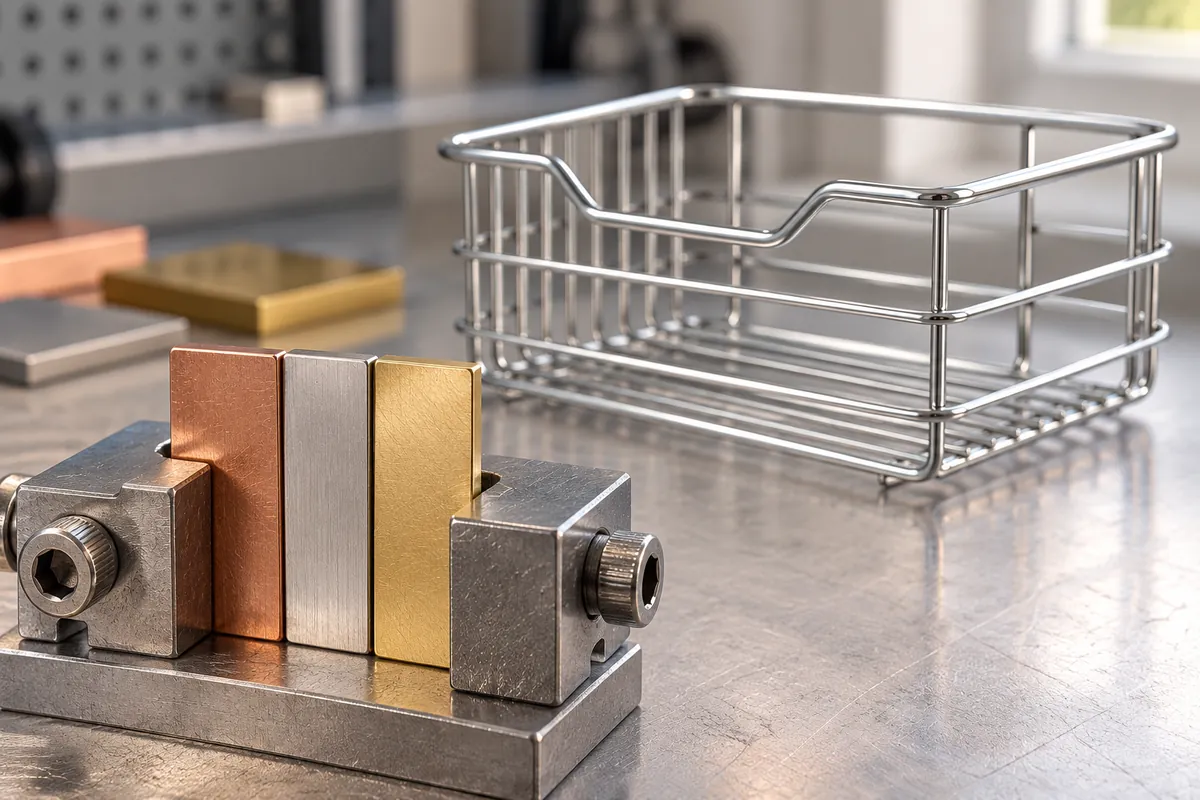
Which trial samples and acceptance evidence are relevant?
Use samples made from identified materials in the condition intended for joining. Where the component is purchased from another supplier, confirm that the trial sample represents the proposed supply grade and finish. A generic copper coupon may be useful for an initial discussion but cannot establish a brass fitting’s product-specific result.
Identify sample IDs, component revision, material records, joint geometry and the relevant process route. If several alternatives are compared, describe which inputs change and which are constant. A complete route comparison may be useful, but it should not be interpreted as isolating one variable when several differ.
Evaluate the requirement that matters to the hardware. Appearance-sensitive joints need agreed final-surface criteria. Assembly interfaces need suitable fit and dimensional evidence. Where joint integrity is required, define an appropriate test or examination method with qualified personnel and relate acceptance to the product specification. No universal weld strength, penetration depth or allowable pore size is provided here.
The final finishing sequence should be represented where it can affect the buyer’s decision. An unfinished joined coupon may establish an early feasibility result, but it does not show whether the delivered decorative surface or assembly interface will be acceptable. Ask what remains to be evaluated after the initial trial.
Keep interpretation within the method’s limits
A surface photograph documents the visible sample. It does not prove the internal condition of a joint. A section shows the selected section location and preparation, not every point on the component. A mechanical test represents its sample and setup. Choose the evidence to answer the buyer’s question and preserve its limits in the record.
If specialist examination or independent testing is needed, identify the responsible provider and scope. Do not describe the hardware manufacturer as a testing laboratory or imply it owns specialist equipment unless confirmed. The supplier’s process knowledge, an external report and the buyer’s acceptance decision are separate responsibilities.
Resolve a failed feasibility trial before committing further cost
Ask the supplier to record what was observed, what the trial established and why the route did not meet the intended decision. The next step may be a revised geometry, different material, another joining approach or stopping development. It should follow the actual evidence rather than a promise that more laser power will solve every problem.
When a trial is revised, identify the changes and retain the earlier record. If the materials or available process have changed substantially, the supplier should explain which earlier evidence remains relevant. This prevents a sequence of unconnected samples from being mistaken for a controlled development program.
What should buyers put in an RFQ and decision checklist?
An RFQ for laser welding reflective copper brass joint feasibility should ask for an honest application review before a production commitment. Provide material and product information, then request a proposal with a defined trial scope and acceptance responsibility.
- Product drawing, assembly revision and the function of the proposed joint.
- Substrate grade and delivered form for both mating components.
- Coatings, plating or other treatments at the joining stage.
- Joint geometry, relevant dimensions, access and support constraints.
- Finished appearance, fit, service and joint-integrity requirements.
- Supplier’s confirmed process availability and application experience.
- Proposed trial purpose, identified samples and remaining uncertainties.
- Evaluation method, appropriate technical responsibility and acceptance basis.
- Post-joining finishing or assembly operations included in the trial.
- Cost, timing and change-control boundaries for further development.
Compare alternatives against the same product requirement
A mechanical connection, brazed route, revised material pair or redesigned fitting may deserve review if laser welding is impractical. Do not rank alternatives solely by the joining-process name. Compare function, visible appearance, access, finishing, inspection, service requirements and the evidence needed for each proposal.
An alternative can introduce different concerns. A fastened design may change assembly or appearance, while a different material may change the finish or supplier chain. The responsible technical team should assess those implications. This guide does not claim any alternative is universally safer, cheaper or suitable for the product.
Keep the buyer’s requirement stable during comparison where possible. If the requirement changes, document the revision and reassess the earlier proposals. Otherwise, the least expensive option can appear preferable simply because it was evaluated against a different product standard.
Allocate development cost and supply responsibilities
Distinguish material identification, coupon trials, fixtures, product samples, specialist evaluation and recurring production steps in the quotation. Agree what happens if the trial fails or an unresolved input changes. Buyers should avoid paying for production tooling before understanding which feasibility questions remain open.
For bought-in fittings, identify who provides material information and who controls substitutions. If a fitting supplier changes the alloy or coating, the hardware manufacturer’s earlier joining trial may need review. A familiar part number or appearance is not sufficient evidence that the material pair remains unchanged.
Define what Koitor can confirm for the project
Koitor Hardware is a family-owned custom metal hardware factory supporting bathroom and home storage products, drawing or sample development and approved metalworking processes including laser welding. That general capability does not establish a specific copper/brass route, laser wavelength, bought-in fitting program or specialist testing capability. Those details must be confirmed before quotation or trials.
Buyers can discuss Accesorios de almacenamiento doméstico OEM o Fabricación a medida de accesorios de baño with the actual assembly and material information. The useful first request is a manufacturability review that identifies what is feasible, what needs further evidence and which specialized work would require another provider.
Preguntas frecuentes
Does a supplier’s stainless laser-welding capability prove copper feasibility?
No. Ask whether the available process and experience suit the actual material pair and geometry. A process-family claim is not an application-specific approval.
Can copper and brass be treated as the same material?
No. Identify the exact grades, substrate and surface treatment. Alloy constituents and the mating material can change the questions that need evaluation.
Does a green-laser application page establish the supplier’s route?
It shows an application of a particular technology. Confirm what the supplier actually has available and obtain representative evidence rather than transferring a manufacturer’s result to a different system.
What if the first coupon looks acceptable?
Record what the coupon represents and which requirements were evaluated. Further product-level access, finishing, assembly or integrity evidence may still be needed before production approval.
What is the final sourcing decision?
For laser welding reflective copper brass joint feasibility, approve a supported route for the identified materials and product requirement, or choose a justified alternative. Keep unknown capability and unresolved trial items open until evidence supports the decision.
Review Your Hardware Drawing and Sample Requirements
Send Koitor the drawing or physical sample, known material and finish, joint location and the approval evidence your buyer team needs. Our family-owned factory can discuss manufacturability and small-batch OEM options; specialized routes and results require project confirmation.
OEM / MARCA BLANCA
Convierte esta guía de abastecimiento en un resumen del producto
Indícanos el producto que deseas, el tamaño, el acabado, la cantidad del pedido y los requisitos de embalaje. Tu equipo recibirá un análisis práctico de la viabilidad de fabricación antes de recibir el presupuesto.
 English
  Español
  Português
  Français
  Deutsch
  العربية