
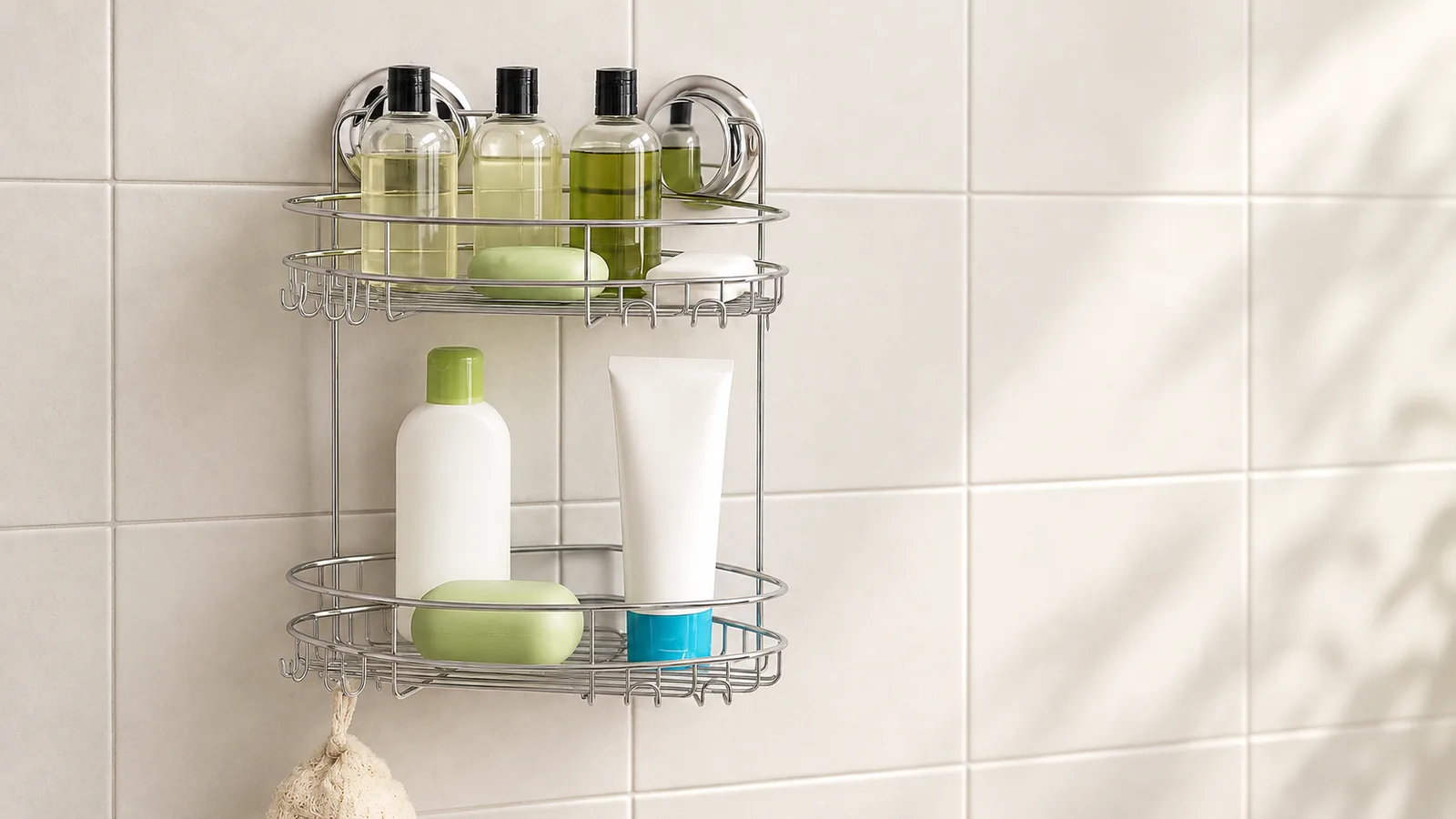
For an EU-bound bathroom hardware product, an importer should first determine whether a relevant article contains a Candidate List substance above the SCIP threshold, then request product- and component-level evidence from its supply chain. A SCIP notification is not the same thing as a generic “REACH compliant” statement, a material certificate, or a promise from an overseas factory that it has filed a record. The practical job is to match the buyer’s SKU and revision to the relevant article hierarchy, substance information, and responsible EU-market actor before making a legal determination or submitting data.
The European Chemicals Agency (ECHA) says the notification obligation covers articles placed on the EU market that contain a Candidate List substance above 0.1% by weight, and identifies EU producers/assemblers, importers, distributors, and other relevant supply-chain actors placing affected articles on the market as supplier roles. The actual obligation depends on the product, substance, concentration, market placement, and the organization’s role. An importer should use current ECHA guidance and qualified regulatory advice for its own assessment—not infer a filing duty or exemption from a supplier’s short declaration.
For a metal storage basket, shower caddy, towel rack, or assembled bathroom accessory, the useful supplier request is therefore a traceable evidence package: product identifiers, component structure, the scope and date of the substance review, supporting records, and a clear account of what remains unknown. It helps the importer assess the product; it does not transfer the importer’s legal responsibilities to a non-EU factory.
What does a SCIP notification cover?
A SCIP notification concerns information about an affected article or complex object placed on the EU market. ECHA describes the trigger as a Candidate List substance in an article above 0.1% w/w. That threshold is assessed at the relevant article level; it should not be treated as a whole-product average that automatically clears every component in an assembled product.
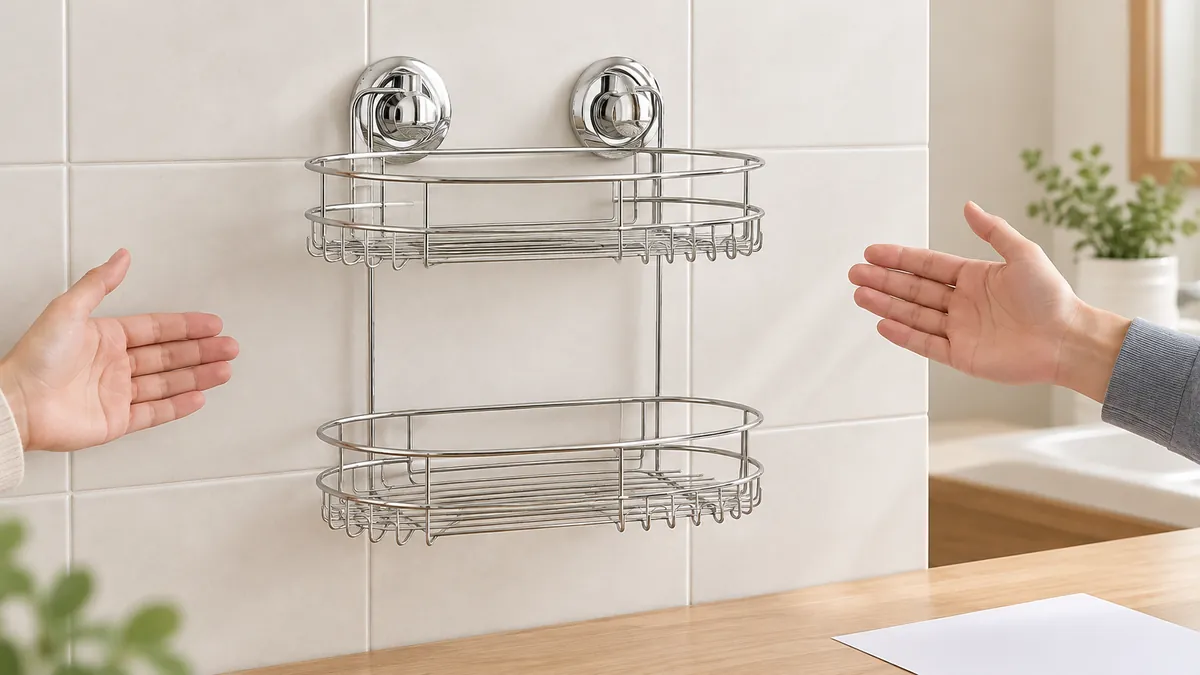
Bathroom hardware can consist of more than one article. A wall-mounted basket, for example, may include a formed or welded metal body, a separate mounting plate, screws, polymer caps, an adhesive pad, or a suction component. This is an illustrative product breakdown, not a statement about any particular Koitor bill of materials. A complex object can contain component articles that need to be represented in the information hierarchy when a relevant substance is identified. The buyer’s request should make it possible to connect the supplier’s answer to the actual SKU, component, material, finish, and revision under review.
The public ECHA database is useful for looking up information that has been submitted and disseminated. A database result is not a blanket product approval, a test report, or proof that every item in a buyer’s assortment is covered. Similarly, the absence of a convenient search result does not by itself prove that no notification was required. The importer needs to establish its scope and retain the evidence supporting its decision.
ECHA’s current guidance for suppliers of articles explains the roles and threshold, while the SCIP database and notification factsheets explain the information that may be visible for notified articles. Always use the latest requirements rather than copying fields from an old supplier questionnaire.
Is a supplier’s REACH statement the same as a SCIP notification?
No. A supplier’s REACH statement may describe the scope of a substance declaration or a supplier’s understanding of a product, but it is not, by itself, evidence that the responsible party assessed SCIP scope or submitted a notification. SCIP is established under the Waste Framework Directive and uses product/article information associated with Candidate List substances; REACH communication duties and other chemical requirements are related but distinct questions.
Ask what the statement actually covers. Does it name the finished SKU, components, materials and finish? Is it tied to a drawing or product revision and a date? Does it identify the Candidate List version or review basis? Does it say which materials or bought-in parts were excluded? A document labelled “REACH compliant” that does not answer these questions may still be useful as one record, but it should not be treated as a completed SCIP assessment.
This distinction also matters for buyers who source several finishes or mounting options under one product family. A chrome-plated version, a powder-coated version, and a version with a different polymer insert may not have identical component or substance information. Do not assume a report for one SKU or revision automatically covers every variant. Ask the supplier to state the exact scope and route unresolved questions to the responsible compliance reviewer.
For broader product development, a buyer may also review the manufacturer’s stated product scope and customization process through Koitor’s custom bathroom hardware manufacturing page. That page is a sourcing reference, not a chemical-compliance declaration.
Which party should file, and what should the overseas supplier provide?
The EU-market duty holder must assess its own role. ECHA lists EU importers among the supplier categories that may have to notify ECHA for affected articles placed on the EU market. A non-EU factory can be asked to provide product and component information, but its location alone does not make it the EU importer or establish that it has submitted the importer’s notification.
The buyer should separate three responsibilities in this supplier-data handoff:
- The overseas manufacturer or upstream supplier supplies accurate, product-scoped material and component information it can substantiate.
- The EU importer or other relevant EU-market actor evaluates its role, the current Candidate List, article-level threshold, and applicable reporting duties.
- The importer’s designated regulatory reviewer or adviser resolves legal interpretation and confirms whether a notification or other action is required.
Record who owns each action, who approves the evidence, and who retains the final decision. This prevents a chain of assumptions such as “the factory said compliant,” “the distributor has the database number,” and “the brand thought the importer handled it” from being mistaken for a completed process.
| Pregunta del comprador | Ask the supplier for | Importer-side check |
|---|---|---|
| Which item is covered? | SKU, part number, product name, drawing/sample revision, finish and market variant | Match the answer to the purchase order and the item placed on the EU market |
| What is the product made of? | Component list or hierarchy, material/part identifiers, and scope of the supplier’s review | Identify article boundaries and whether a component needs separate evaluation |
| What substance evidence exists? | Substance identity and concentration/location information where known, plus the source and date of the record | Compare evidence with the current Candidate List and current ECHA information requirements |
| What changed? | Dated confirmation of changes to material, coating, adhesive, insert, supplier or revision | Decide whether the change affects the previous assessment or record |
| Who takes the next step? | Named supplier contact for clarifications and outstanding data | Assign the legal assessment and any required submission to the responsible organization |
What information should a buyer request from a bathroom hardware supplier?
Start with a compact request tied to one product revision rather than a generic questionnaire that asks for every possible chemical document. Tell the supplier the target market, item identifiers, drawing revision, finish, options, and the date by which the evidence is needed. Ask the supplier to answer “known,” “not applicable,” or “not available” explicitly instead of leaving blank cells that could be misread as “none present.”
For each relevant product or component, ask for:
- Identity: commercial SKU, part number, supplier part number, component name, product revision, and finish or color variant.
- Product structure: a simple assembly/component list showing which items are separate articles or components in a complex object. For a basket this could include the basket body, mounting hardware, caps, pads, and accessories, if those parts are actually present.
- Material and process scope: the material or material category used for each component and whether a coating, plating, adhesive, or incorporated mixture is part of the reviewed scope.
- Substance information: any identified Candidate List substance, applicable concentration-range and location information available to the supplier, and the basis of the statement. Do not ask a supplier to invent a concentration when it has no substantiated data.
- Evidence references: declaration or material records, source supplier or component reference, review date, and limitations. Ask for a supporting document where available, while recognizing that a document may not prove more than its stated scope.
- Use and end-of-life information: any safe-use or disassembly information relevant to the article and current ECHA requirements, if applicable.
- Control de cambios: a commitment to notify the buyer when a covered component, material, finish, supplier, or product revision changes, with a process for rechecking evidence.
This is a buyer-side information request, not a claim that every listed field is legally mandatory in every case. The current ECHA information requirements determine the actual submission fields. Their SCIP support materials include information requirements, data-preparation guidance, and technical resources; use the current versions when preparing a notification.
How should an importer review the supplier’s response?
Review the package for traceability before trying to interpret chemical conclusions. A well-organized answer lets the buyer connect each declaration to the right SKU, revision, component and finish. If the evidence is generic, undated, or tied to a different product family, return it for clarification rather than silently extending its scope.
Use a short review sequence:
- Confirm the market and responsible organization. Identify the EU-market actor and have the compliance owner determine which rules apply to the transaction and product.
- Match the item. Compare supplier part numbers, drawing revision, finish, color, option list and quantity unit against the buyer’s current specification.
- Check the article/component hierarchy. Verify that the response addresses the finished product and any relevant subcomponents, including bought-in hardware or finish systems where information is available.
- Check evidence scope and date. Record the reviewed material, declaration date, Candidate List basis, evidence source and exclusions. A supplier statement is not automatically a laboratory result.
- Identify gaps and uncertainty. Ask for corrections where data is missing or contradictory. Route uncertain legal interpretations to the importer’s qualified reviewer; do not substitute an assumption for missing evidence.
- Record the importer’s conclusion. The responsible EU organization should document whether additional investigation, a notification, a reference to existing data, or another action is applicable under current requirements.
An importer may find that a supplier cannot provide every requested detail immediately. That is a data-quality issue to manage, not automatic proof of non-compliance or proof that a notification is unnecessary. Agree on an owner and deadline for each missing item. If the supplier uses multiple upstream component sources, request the relevant source statement or an appropriately scoped declaration instead of asking for commercially sensitive information that is not needed for the assessment.
What should change-control records capture?
Tie the evidence package to the version-controlled product record. At minimum, retain the buyer SKU, supplier part number, drawing revision, finish, component list, supplier response date, evidence reference, importer reviewer and final decision. Keep the original supplier file and the buyer’s interpretation separate so an auditor or colleague can distinguish source evidence from internal conclusions.
Reopen the review when a change could affect the scope or the evidence: a different component supplier, material, coating or plating system; a new adhesive or polymer part; a changed assembly; a revised product drawing; a new market; or a newly updated Candidate List. These are triggers to assess, not automatic findings that a filing is required. The compliance owner decides whether the existing record remains applicable under current rules.
For private-label programs, the buyer should also ensure that the external SKU, internal product code and supplier revision stay aligned across packaging artwork, purchase orders and compliance records. A barcode or brand label can help identify a product, but it does not demonstrate its chemical composition. Koitor’s private-label bathroom accessories resource can help buyers frame product and packaging discussions; it does not replace the importer’s compliance review.
Common mistakes in SCIP data requests
The most common process failures are mismatched scope and unclear ownership, not a missing decorative document. Avoid these shortcuts:
- Requesting a generic “REACH certificate.” Ask which product, revision, components and Candidate List review the document covers. Do not call a supplier declaration a certificate unless that is what the record actually is.
- Treating every bathroom SKU as in scope. The SCIP trigger is conditional. Determine whether the article and substance meet the current scope and threshold before concluding that a notification is required.
- Assuming the overseas factory files for the importer. Confirm the organization’s role and filing responsibility under current ECHA guidance. Supplier data support and submission ownership are separate.
- Using one declaration for an entire product family without scope. Variants, coatings, accessories and purchased components may differ. Record which configurations were reviewed.
- Interpreting “no SCIP number” as proof of no duty. Ask whether a determination was made, what evidence was used, and who made it. The absence of a supplied reference is a question to resolve, not a legal conclusion.
- Copying old forms without checking the current data model. ECHA’s support pages and technical requirements can change. Refresh the request template and reviewer instructions against current official material.
- Putting confidential material or supplier details in a public record unnecessarily. Coordinate the information needed for a valid assessment with the responsible reviewer and follow applicable confidentiality and data-handling rules.
A reusable buyer request template
An importer can send a concise request with the order or product onboarding package:
Please review the attached product and component list for the stated EU market and product revision. For each component in scope, identify the part/material and finish, confirm the date and basis of your Candidate List review, and provide any substantiated information about Candidate List substances and their location or concentration range where available. Identify excluded components, assumptions, supporting records, and any data that is not available. Please notify us before changing a covered material, finish, component supplier, or product revision. Our EU compliance owner will determine the applicable SCIP assessment and submission steps.
Adapt the request to the actual product and the current ECHA information requirements. The wording does not make the supplier responsible for the importer’s legal determination and should not be used as a substitute for a technical or regulatory review. For a wall-mounted metal basket, attach the current assembly drawing and list the actual hardware and finish variants; do not include imagined components simply because they are common in other designs.
Preguntas frecuentes
Does every bathroom hardware product need a SCIP notification?
No. The scope depends on whether an article placed on the EU market contains a Candidate List substance above 0.1% w/w and on the responsible organization’s role. The importer should check the current ECHA guidance and product-specific evidence rather than assume every SKU is covered or exempt.
Does a non-EU factory have to submit the importer’s SCIP notification?
Do not assume so. ECHA identifies EU importers among supplier roles with notification obligations for affected articles. A non-EU supplier can provide the product and component information the importer needs, but the importer should determine who is legally responsible for the market placement and submission.
What if a supplier gives a REACH statement but no SCIP reference?
Ask what the statement covers, whether the product’s relevant article/component data were reviewed, which Candidate List version/date was used, and who assessed the EU-market obligation. A generic statement or missing reference alone does not resolve the SCIP question.
Does a database listing prove a product is compliant or safe?
No. A database entry provides information that was submitted for an article or complex object; it is not a general product approval, a test report, or a guarantee about every variant. The importer must interpret the relevant record and applicable requirements.
When should the buyer ask for an updated supplier response?
Request a review when the product revision, component supplier, material, finish, adhesive, assembly, target market or relevant Candidate List basis changes. The compliance reviewer should determine whether the previous assessment still applies.
Reviewing supplier information for a bathroom hardware SKU?
Share the product scope, drawing revision and data questions for a manufacturing-side discussion. Regulatory conclusions remain with the responsible importer and its adviser.
OEM / MARCA BLANCA
Convierte esta guía de abastecimiento en un resumen del producto
Indícanos el producto que deseas, el tamaño, el acabado, la cantidad del pedido y los requisitos de embalaje. Tu equipo recibirá un análisis práctico de la viabilidad de fabricación antes de recibir el presupuesto.



 English
 Español
 Português
 Français
 Deutsch
 العربية