
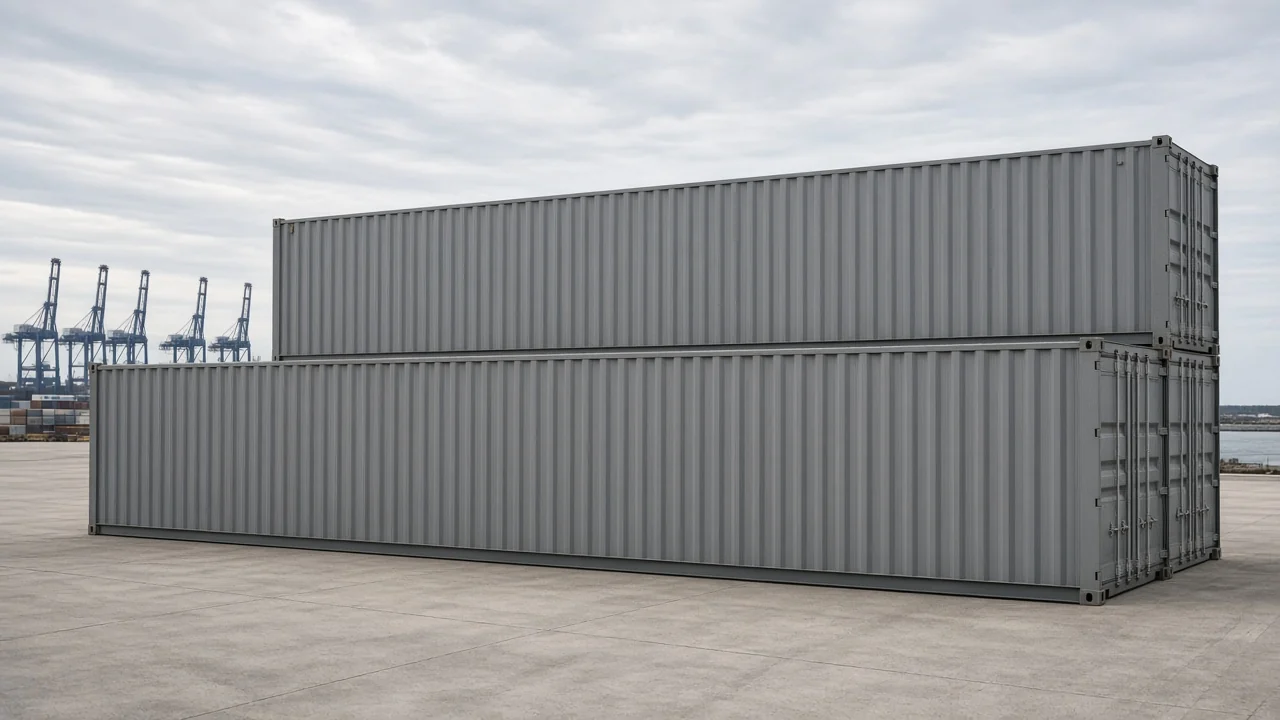
The common shipping container sizes are the 20 ft standard, the 40 ft standard and the 40 ft high cube. Under ISO 668, nominal external lengths are about 6,058 mm for 20 ft and 12,192 mm for 40 ft, with a width of 2,438 mm. Standard containers are 2,591 mm (8 ft 6 in) tall, and high cubes are 2,896 mm (9 ft 6 in).
Those external numbers are the start, not the answer. What a load planner needs are the internal length, width and height, the door opening and the weight limits of the actual container the carrier supplies. Those vary by carrier, manufacturer and container age, so they should come from the carrier’s data sheet or the forwarder.
This guide is for importers, sourcing managers and product teams planning hardware shipments by sea. Koitor Hardware is a family-owned China OEM manufacturer; packaging preparation is one of our processes. We do not lease or book containers. Container selection, booking and payload limits belong to your forwarder and the carrier.
Several live guides cover neighbouring questions. Container types such as open top, flat rack and reefer are explained in types of shipping containers. Choosing between shared and full container loads is covered in hardware shipment LCL vs FCL handling and consolidation. Volume calculation is covered in how to calculate CBM.
What are the standard shipping container sizes?
The most common dry containers in international trade are the 20 ft standard, the 40 ft standard and the 40 ft high cube. ISO 668 sets their nominal external dimensions. Other sizes exist, such as 45 ft high cube and 10 ft units, but they are less common for general cargo on main routes and availability varies by region.
The 20 ft container is the reference unit for counting container capacity. One 20 ft container equals one TEU, or twenty-foot equivalent unit, and a 40 ft container counts as two TEU. TEU is a counting unit for ships and terminals, not a measure of what fits inside a box.
The 40 ft standard has twice the nominal length of a 20 ft, with the same width and height. It offers more volume, but its maximum payload is often similar to or only modestly higher than a 20 ft, because the container’s own weight and road limits constrain it.
The 40 ft high cube is the same length and width as the 40 ft standard but about one foot taller. A high cube is a height variant, not a different length class. The extra height helps with light, bulky cargo and tall loads, but it may matter for road height limits on some routes.
| Container | Nominal external length | External width | External height | Note |
|---|---|---|---|---|
| — | — | — | — | — |
| 20 ft standard | 6,058 mm (19 ft 10.5 in) | 2,438 mm (8 ft) | 2,591 mm (8 ft 6 in) | 1 TEU |
| 40 ft standard | 12,192 mm (40 ft) | 2,438 mm (8 ft) | 2,591 mm (8 ft 6 in) | 2 TEU |
| 40 ft high cube | 12,192 mm (40 ft) | 2,438 mm (8 ft) | 2,896 mm (9 ft 6 in) | 2 TEU; height variant |
The table shows external nominal dimensions only. Internal dimensions, door openings, tare weight and maximum payload are published by each carrier for its own equipment. For example, Hapag-Lloyd publishes data sheets for its 20 ft standard container and its 40 ft high cube container.
Container sizes are also expressed in feet and inches in many markets, which causes confusion. The 8 ft 6 in and 9 ft 6 in heights are external. Someone quoting “a 9 ft 6 container” is describing the high cube’s outside height, not the space available for cargo. Converting to the carrier’s internal millimetre figures avoids that mistake.
Why does a 20 ft container measure less than 20 feet?
The nominal 20 ft length allows a small gap between two 20 ft containers so that they can occupy the same slot as one 40 ft container on ships and chassis. That is why the 20 ft external length is about 6,058 mm rather than exactly 6,096 mm. The difference is a design feature of the system.
How do internal container dimensions differ from external sizes?
Internal dimensions are smaller than external ones because walls, floor, roof, corner posts and doors take space. They also vary between carriers and container builders. A load plan should use the internal length, width and height, and the door opening, from the data sheet for the actual equipment, not the nominal external size.
Walls and corrugation reduce width. Container side walls are corrugated steel, and their inside surfaces sit inside the external width. The internal width is therefore noticeably less than 2,438 mm, and the exact figure depends on the design.
Floor and roof reduce height. The floor structure and the roof take height, so the internal height is less than the external height. The door opening height is usually smaller again because of the door header and frame. Tall loads must clear the door, not just the interior.
Doors reduce effective length at the end. The door gear, seals and the need to close the doors mean the last few centimetres of internal length may be hard to use for rigid cargo. Cartons are flexible enough to adapt, but pallets and crates need attention.
Container age and condition matter. Dents, repairs and floor wear can reduce usable space or create uneven surfaces. Inspecting the actual container before loading catches these issues, a subject covered in the live guide on mixed SKU metal hardware container loading and carton tally.
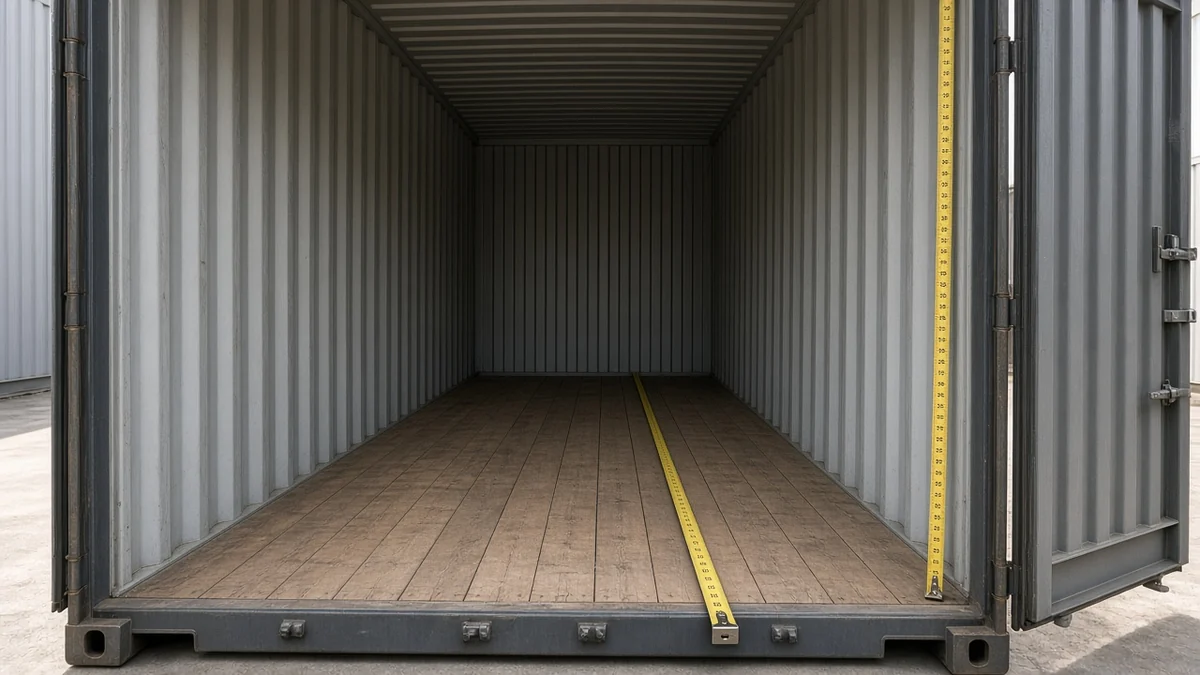
Internal volume figures in brochures are usually calculated from internal length, width and height. They describe the empty box, not how much cargo can be loaded. Cartons never fill every corner, and dense cargo hits the weight limit first, so planners should treat published volume as an upper bound and plan from actual carton dimensions instead.
Which internal dimension limits a hardware load most often?
For dense metal hardware, weight usually limits the load before volume does. For long items such as shelf uprights or rails, internal length and the door opening can limit carton length. For light, bulky cartons, internal height determines how many layers fit, which is where a high cube can help.
How do you choose between 20 ft, 40 ft and 40 ft high cube?
Choose by both weight and volume. Calculate the shipment’s total gross weight and total volume, then compare them with the payload and internal volume of each container type from the carrier’s data. Dense cargo often suits a 20 ft because weight fills it first; light, bulky cargo often suits a 40 ft or high cube.
Weight first for metal hardware. Steel shelving, wire baskets and stainless towel racks are dense. A 40 ft container loaded only to its weight limit may be half empty by volume, while a 20 ft may be full by both measures. The forwarder can compare costs for each option.
Volume next for light products. Packaging-heavy items, such as boxed bathroom sets with foam inserts, take up space without much weight. For those, a 40 ft or 40 ft high cube may be more economical per unit shipped.
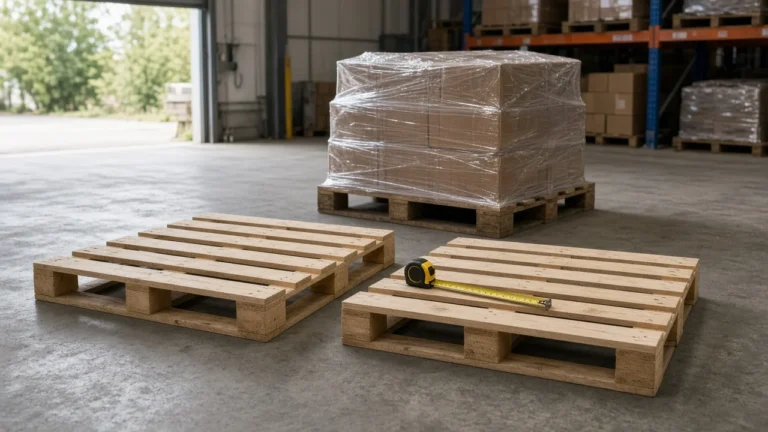
Height matters for pallets and tall cartons. When a destination requires palletised goods, the pallet plus load height must fit the internal and door height. The batch guide on standard pallet size explains why pallet footprints differ by region and how that affects floor fit.
Road and rail limits can affect the choice. Some inland routes restrict overall vehicle height or gross weight. A high cube on a chassis is taller than a standard, and a heavy 20 ft may still exceed local road weight limits. The forwarder should check the full route, not just the sea leg.
Weight must also be declared accurately. Under SOLAS rules, a container’s verified gross mass must be provided before loading on a ship. The live guide on SOLAS verified gross mass, method 1 and method 2 explains the shipper’s responsibility.
Availability is a practical factor. On some routes and at some times, one container type is easier to obtain than another. Forwarders often know which equipment is plentiful at the origin port. A plan that works in either a 40 ft standard or a high cube gives more flexibility when equipment is short.
Splitting a shipment is another option. When a load slightly exceeds one container, the choice between a larger container, two smaller ones, or moving part of the order to a shared consolidation can change cost noticeably. The forwarder can compare these, and the factory can advise which products pack most efficiently together.
Shipment frequency also influences the choice. A buyer ordering small volumes every few weeks may find shared consolidation more practical than waiting to fill a container. A buyer placing large seasonal orders may benefit from full containers. The live LCL vs FCL guide explains the handling trade-offs that come with each.
Is a high cube always better value than a 40 ft standard?
No. A high cube offers more volume for a similar or slightly higher rate on many routes, but dense cargo cannot use the extra height without exceeding weight limits. It helps light, bulky cargo and tall loads. For heavy metal hardware the extra height may go unused.
How do you plan hardware cartons for a container?
Start from the internal dimensions and door opening of the chosen container, then plan carton sizes and layers so that whole cartons fill the width and height with little waste, staying within the payload. For dense hardware, check floor loading and weight distribution, and secure the load so it cannot shift during transit.
Width use is the first check. Carton widths that fit an exact number of cartons across the internal width reduce gaps. Small gaps can be filled with dunnage or airbags. Large gaps let cargo move and should be avoided.
Height use is the second. The number of carton layers depends on carton height, compression strength and the internal height. Dense cartons may reach the weight limit before the roof, which is normal. Light cartons may use the full height.
Length use is the third. Cartons fill the length in rows. The last row near the doors should be stable and secured, because that is where cargo falls when doors open. The live loading guide covers tally and securing practices.
Long items need special attention. Shelf uprights, rails and long towel bars may need cartons near the container’s internal length or loaded diagonally in rare cases. Checking the longest carton against both internal length and door opening before production avoids discovering at the loading dock that the cartons must be repacked.
Blocking and bracing keep the load in place. Gaps between cartons and walls, or at the door end, should be filled with dunnage, airbags or bracing so the load cannot shift when the ship rolls or the truck brakes. Shifted metal cargo can crush cartons, damage finishes and even push against doors.
Weight distribution matters for heavy loads. Weight should be spread along the floor and centred, not concentrated at one end. Heavy point loads on the container floor can exceed what the floor is designed to carry, a topic covered in the live guide on container floor point loads.
Volume calculation supports the plan. The batch guide on how to calculate dimensional weight and the live guide on CBM explain how carton dimensions translate to volume and chargeable weight for the different parts of the journey.
Humidity is a hidden risk for metal goods. Containers can experience condensation during long voyages, which can mark or corrode metal products. The live guide on shipping container condensation and metal hardware explains packaging and desiccant considerations.
From Koitor’s packaging preparation side, the most useful early information is the container type the forwarder intends to use and whether goods ship palletised or floor-loaded. Carton sizes chosen with those facts in mind usually load more efficiently than cartons designed only around the product.
- Get internal dimensions, door opening and payload from the carrier data sheet.
- Calculate total gross weight and total volume before choosing a container type.
- Fit carton widths to the internal width with minimal gaps.
- Check layer weight and carton compression for dense metal goods.
- Spread weight evenly along the floor and secure the door-end rows.
- Plan for condensation risk on long voyages.
What do container door markings tell you about size?
The doors of a container carry markings that identify it and state its limits. They usually include the owner code and serial number, a size and type code, maximum gross mass, tare weight and maximum payload. A safety approval plate records structural approval. Reading these at loading confirms the box matches the booking.
The size and type code is a short alphanumeric code under ISO 6346. The first character indicates length and the second indicates height and width group; the remaining characters indicate type. For example, 22G1 commonly identifies a 20 ft, 8 ft 6 in general purpose container, 42G1 a 40 ft standard, and 45G1 a 40 ft high cube.
Weight markings are the most practical. Maximum gross mass is the most the loaded container may weigh, tare is the empty container’s weight, and payload is the difference. These figures are for that specific container. They can differ from the generic figures in a brochure, so the loading team should check them.
The safety approval plate, often called the CSC plate, shows that the container design was approved and that the box is within its examination programme. Loading teams generally check that it is present and current. Its details belong to the container owner and are not something a shipper changes.
Height warnings appear on high cubes. Many high cube containers carry a striped band or a marking near the top to warn of the extra height. That helps terminal and trucking staff, and it is a quick visual check that the box delivered is the one booked.
Why check markings if the booking already states the size?
Because equipment substitutions happen. A depot may release a different box from the one expected, or a high cube may arrive when a standard was booked. Checking the door markings before loading prevents a load plan built for one container from being forced into another, and confirms the payload figure used for weight planning.
What should a buyer confirm before booking a container?
Confirm the container type and size, the carrier’s internal dimensions, door opening, tare and maximum payload, the shipment’s gross weight and volume, whether goods ship palletised or floor-loaded, destination height and weight rules, route restrictions, and who is responsible for verified gross mass. Each item prevents a different kind of loading or delivery problem.
Container type and size should be named precisely. “40 ft” can mean standard or high cube. The booking should state which. If a special type is needed, such as open top for tall items, it should be requested explicitly, as availability varies.
Data sheet figures should be in hand. Internal dimensions and payload vary by carrier and equipment. Asking the forwarder for the data sheet for the specific booking avoids planning on generic figures that do not match the box that arrives.
Palletised versus floor-loaded should be agreed. Floor loading usually fits more cartons, while palletising speeds handling at destination. The choice affects carton plans and costs, and the consignee may require one or the other.
Destination rules should be checked. Some warehouses limit pallet height, require specific footprints or have dock height constraints for high cubes. Knowing these before loading avoids repacking.
Loading supervision is worth agreeing too. Some buyers send a loading inspector, others accept photos at key stages: empty container, half loaded, fully loaded and sealed. Either way, agreeing in advance what evidence of loading will be provided makes later claims easier to assess.
Responsibility for verified gross mass should be clear. The shipper named on the bill of lading is responsible for providing it, often with help from the forwarder or loading site. The method used should be agreed in advance.
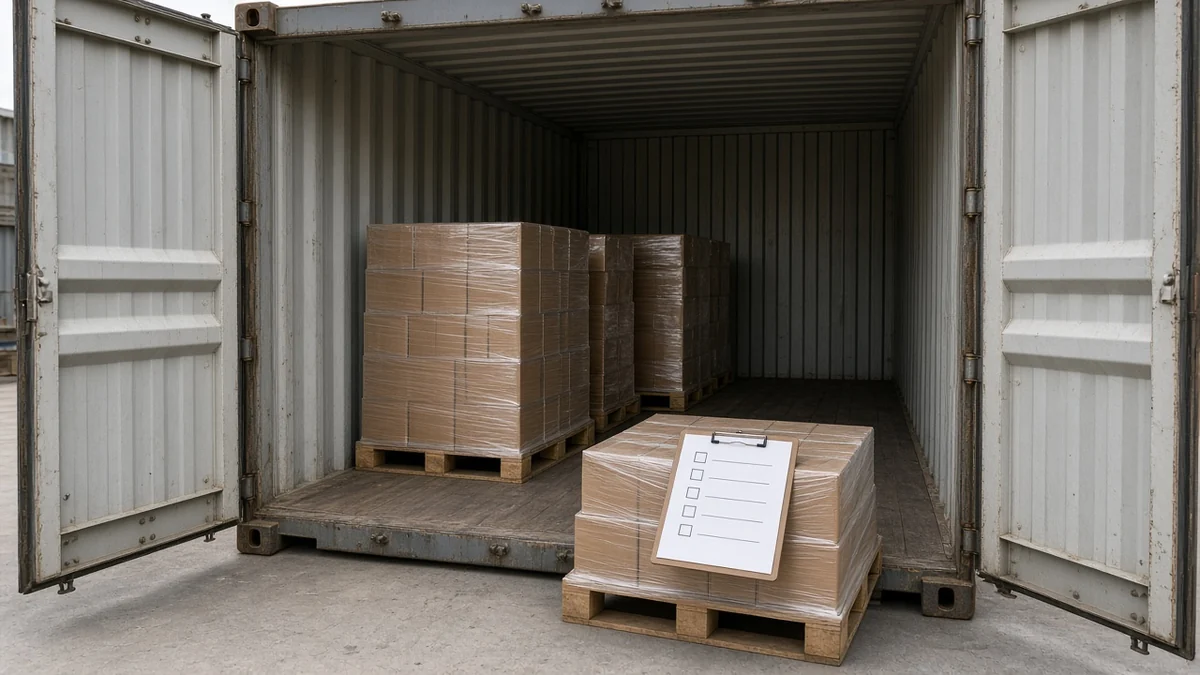
Container booking checklist for hardware shipments
- Container type and size stated, including standard or high cube.
- Carrier data sheet with internal dimensions, door opening and payload obtained.
- Shipment gross weight and volume calculated from carton data.
- Palletised or floor-loaded decision made with the consignee.
- Destination height, footprint and dock rules confirmed.
- Road and rail restrictions on the full route checked.
- Verified gross mass responsibility and method agreed.
- Condensation protection considered for metal goods.
Preguntas frecuentes
What are the dimensions of a 20 ft container?
Under ISO 668, a 20 ft container has a nominal external length of about 6,058 mm, a width of 2,438 mm and a height of 2,591 mm (8 ft 6 in). Internal dimensions, door opening and payload vary by carrier and should be taken from the carrier’s data sheet.
What are the dimensions of a 40 ft high cube container?
A 40 ft high cube has a nominal external length of 12,192 mm, a width of 2,438 mm and a height of 2,896 mm (9 ft 6 in). It is the same length and width as a 40 ft standard but about one foot taller. Internal dimensions vary by carrier.
What does TEU mean?
TEU means twenty-foot equivalent unit. One 20 ft container is one TEU and a 40 ft container is two TEU. It is a counting unit for ship and terminal capacity, not a measure of internal space or clearance.
Can a 40 ft container carry twice the weight of a 20 ft?
Usually not. A 40 ft has about twice the volume, but its maximum payload is often similar to or only somewhat higher than a 20 ft because of the container’s own weight and road limits. Check the carrier’s payload figures.
Are container internal dimensions the same for all carriers?
No. Internal dimensions, door openings and tare weights vary by carrier, container builder and age. Use the data sheet for the equipment you are booking rather than a generic figure.
Which container is best for metal hardware?
It depends on the products. Dense items such as steel shelving often fill a 20 ft by weight first. Light, bulky boxed products may suit a 40 ft or high cube. Calculate weight and volume and ask the forwarder to compare options.
Trabaja con Koitor Hardware
Review carton planning for a container shipment
Send the product list, the container type your forwarder plans to use and any pallet or height rules at destination. We can review carton sizes and packaging preparation for that load. Container booking, payload limits and loading rules stay with your forwarder and carrier.
OEM / MARCA BLANCA
Convierte esta guía de abastecimiento en un resumen del producto
Indícanos el producto que deseas, el tamaño, el acabado, la cantidad del pedido y los requisitos de embalaje. Tu equipo recibirá un análisis práctico de la viabilidad de fabricación antes de recibir el presupuesto.

 English
 Español
 Português
 Français
 Deutsch
 العربية