
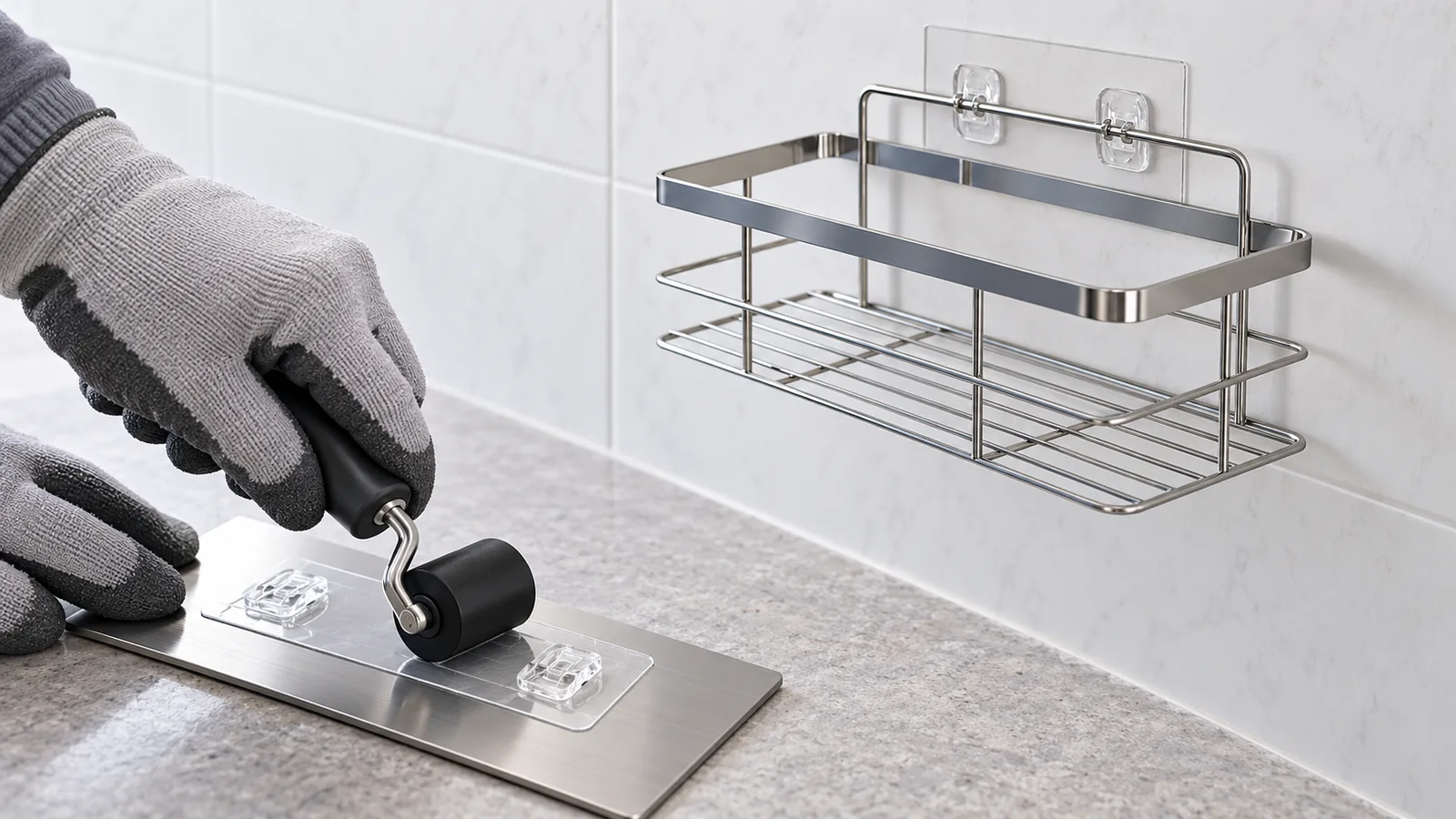
Acrylic foam tape compression application roller pressure should be specified as part of a controlled application method, not reduced to a generic force number copied from another product. Buyers need to identify the tape construction, both substrates, bond geometry, application tool, pressure method, and representative sample condition. The goal is to establish consistent surface contact under the tape maker’s guidance and verify it on the actual part. Pressure, dwell, temperature, surface preparation, and fit can interact; one parameter does not guarantee a durable bond.
For a no-drill wall organizer or mounting pad, distinguish factory application to the product from end-user installation onto a wall. A roller used to apply tape to a component is not necessarily the tool or instruction used when the consumer mounts the finished product. The product design, adhesive system, installation surface, and use conditions require separate evaluation. The example here is a buyer-approval framework, not a claim that Koitor’s referenced basket uses a particular tape or has a validated adhesive load rating.
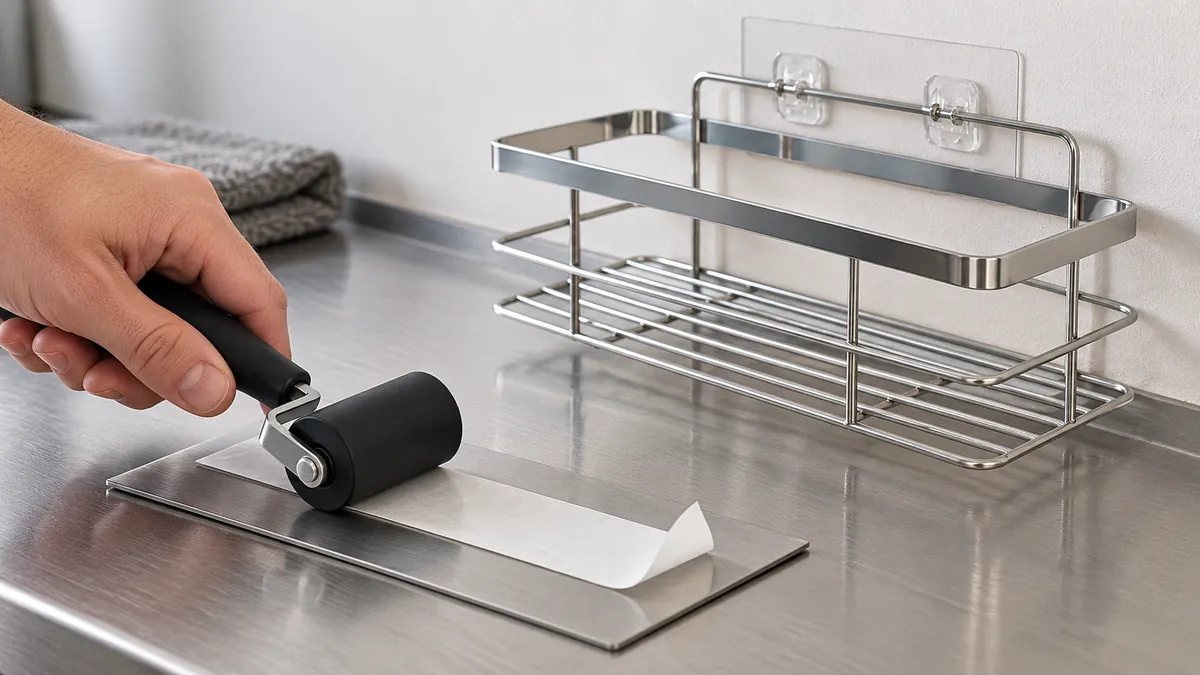
Why does application pressure matter for acrylic foam tape?
Pressure helps bring the tape adhesive into contact with the substrate. If contact is inconsistent, the bond may not develop as intended. The amount, duration, and method needed depend on the tape product, surfaces, geometry, and manufacturer’s application instructions. A roller is one possible tool; it is not a substitute for selecting the correct tape or preparing the surfaces.
3M’s product information for its T Handle Clutch Roller describes a tool intended to help achieve consistent wet-out of certain 3M Acrylic Foam Tapes, with a spring-loaded mechanism. The stated pressure on that product page is specific to the tool and its intended OEM automotive application. It is not a universal setting for bathroom hardware, every tape, every roller, or a consumer installation. Buyers should consult the current instructions for the selected tape and tool.
The meaningful procurement question is therefore not “what pressure does a roller use?” It is “what application method does the tape maker recommend for these substrates and this joint, and how will the supplier demonstrate that the method is repeatable?” The specification should preserve the maker’s units and definition if a pressure target is required. It should also state how pressure is controlled—by a tuned tool, equipment setting, documented technique, or another approved method—without inventing a number.
Which assembly variables must be controlled with pressure?
Pressure cannot be reviewed in isolation. Tape performance depends on the whole interface and process. A clean, dry surface with appropriate fit may be necessary for the selected system, but preparation and surface requirements vary by product. The buyer should use the tape maker’s technical instructions rather than assume a generic solvent, primer, temperature, or waiting period.
Identify the actual bond pair: coating or metal finish on one side, and tile, plastic, paint, glass, or another mounting surface on the other. State the tape family, thickness and width under review, application sequence, overlap, curvature, edge condition, and any local gap. Include whether the tape is applied to a component in a factory fixture or whether the finished item is installed by an end user. Those are different processes with different controllable inputs.
The supplier’s work instruction or sample plan should make clear:
- Surface condition and any approved cleaning or preparation procedure.
- Tape designation and revision, including any liner or orientation controls.
- Bond area, location, overlap, edge proximity, and allowed part variation.
- Roller type or application equipment and the specified pressure method.
- Number and direction of passes if required by the tape maker’s procedure.
- Application temperature, dwell or conditioning only as defined by current technical instructions.
- Sample identity and the evidence used to confirm contact and assembly condition.
Not every project needs a numeric control for every item. The design owner and tape supplier should agree which variables are critical and how they will be recorded. A checklist that simply says “roll firmly” may be insufficient if different operators apply different techniques. Conversely, an unnecessary numeric requirement can be misleading if no practical tool or method measures it consistently.
How should buyers distinguish roller pressure from dwell time?
Application pressure and dwell time describe different parts of a bonding process. Pressure is applied to establish contact during assembly; dwell describes time after application or between defined process stages, depending on the specific tape instructions. Some tape systems develop adhesion over time, but buyers must not use dwell as a substitute for the prescribed application pressure or assume an immediate sample represents final bond behavior.
3M’s product pages and application information are product-specific. For example, 3M describes application pressure as a means of achieving intimate contact for its acrylic foam tapes, while its general instructions also relate pressure type, level, and duration to material and part geometry. These details show why buyers should request an application method rather than copy an isolated number. They do not establish a schedule for a different tape or non-automotive product.
| Process factor | Ce qu'il contrôle | What the buyer should specify | What it does not prove by itself |
|---|---|---|---|
| Application pressure | Contact between adhesive and the specified surface during application | Tool/method, applicable instruction, and how consistent application is demonstrated | Long-term service performance or correct tape selection |
| Dwell/conditioning | Time-dependent stage defined by the selected tape procedure | When the sample is evaluated and the relevant time condition | That insufficient contact was corrected after application |
| Préparation de la surface | Condition of each bonded substrate | Approved preparation and traceable process where required | That the tape fits the geometry or load path |
| Joint design | Bond area, thickness, edge and substrate geometry | Drawing revision and representative sample configuration | That an operator followed the method consistently |
| End-user installation | Application of the finished product to the final surface | Clear instructions and a separately approved installation condition | Factory bonding quality or suitability for every wall material |
When comparing suppliers, ask them to show how the proposed process addresses each factor. A photograph of a roller is not an application record. A time stamp is not proof of pressure. A product data sheet is not evidence that the actual part followed the described process.
What should a representative sample demonstrate?
The sample should match the intended tape, substrate finish, component geometry, and application sequence as closely as practical. Record the acrylic foam tape compression application roller pressure method used for that exact sample. Identify if it is a flat coupon, a mounting pad, a finished organizer, or a complete installation mock-up. A flat coupon may help compare surface preparation or handling, but it may not represent curvature, edge conditions, constraints, or a consumer’s wall substrate.
Record the tape designation and lot where traceability is required, sample ID, part revision, surface preparation, application tool, operator or controlled process station, and the approved pressure method. If the process requires a waiting or conditioning interval, identify when the sample was inspected and what the method says about that timing. Avoid recording only “pass” without stating the condition and acceptance criteria.
Review visible coverage and alignment against the drawing or sample plan. If the purpose is to evaluate a functional bond, define the qualified test or assembly check with the tape supplier and responsible design authority. Do not infer a load rating, service life, moisture resistance, or temperature limit from a visual check. Testing should match the intended product and use case, and acceptance limits must come from qualified project evidence.
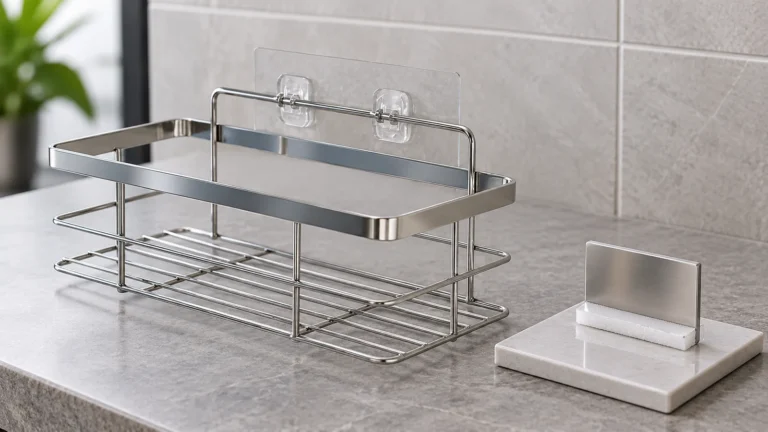
For an organizer with two attachment points or a larger mounting sheet, evaluate the whole mounting arrangement rather than assuming pressure was equal at every contact area. Confirm that the application tool reaches the complete bond footprint and that the component is supported during the operation. The exact structure should be taken from the approved product drawing or reference sample; an illustrative image is not the specification.
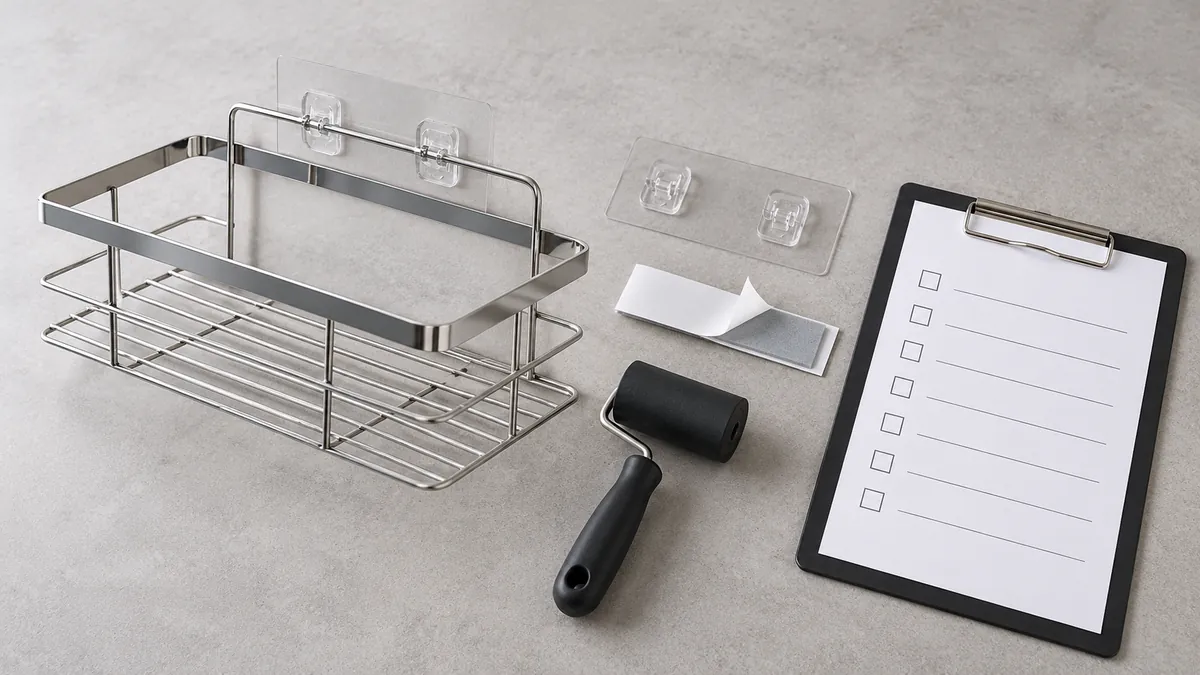
What changes require the application process to be reviewed?
Reassess the process when a change can affect the interface or contact method. Potential triggers include a different tape product, substrate or coating, component geometry, bond area, roller/tool, surface preparation, application station, supplier, or installation instruction. A change to the consumer-facing substrate or environment may also need separate review. These are potential triggers to assess, not proof that every change invalidates approval.
The change-control plan should identify the buyer or design authority who approves substitutions and the evidence required. If the roller is changed, compare the new tool’s contact width and application method with the approved process. If the part geometry changes, check whether the tool can still reach the bond area and maintain the specified application. If a supplier proposes a different tape, obtain technical data for that exact construction and assess the substrate pair again.
Keep the approved method connected to the sample and product revision. A work instruction should not silently inherit a pressure value from another program. If a tape maker updates its guidance, determine whether the change affects the project method before adopting it. Record proposed deviations and approvals instead of relying on verbal settings that cannot be reconstructed during a supplier audit.
Which points belong in the RFQ and approval checklist?
Buyers can use this checklist to turn the application question into a controlled decision:
- Identify the selected tape and both bonded surfaces, including actual finish condition.
- Show bond geometry, location, area, curvature, and the part revision.
- Separate factory tape application from end-user mounting and define which process is in scope.
- Obtain current tape-maker instructions for surface preparation, application pressure, tool, and timing.
- State how the supplier will control or demonstrate the applicable roller-pressure method.
- Define representative sample type, ID, application condition, and review timing.
- Identify visual, dimensional, assembly, or performance evidence required, with acceptance ownership.
- Record changes that require notice, technical review, or renewed sample approval.
The phrase acrylic foam tape compression application roller pressure should appear in the buyer’s technical discussion only as shorthand for a specific controlled process. It should not become a fabricated pressure requirement. If the selected tape maker recommends a quantified target, copy the value and units only with its exact scope and method, then confirm that the supplier can measure or reproduce it.
What should buyers not infer from a roller or datasheet?
A roller demonstrates a possible application tool; it does not prove the correct tape was chosen or that the full part received consistent pressure. A datasheet describes a product in its stated context; it does not guarantee performance on an unlisted substrate or geometry. A specification for one tape or a tuned OEM roller should not be generalized to all acrylic foam tape or consumer-mounted products.
Do not treat a supplier’s statement that the tape is “pressed firmly” as a validated process unless the buyer has agreed what that means and how the result is controlled. Do not claim that dwell time corrects poor application contact or that a smooth visible liner proves the adhesive interface is complete. Keep product-level claims within tested and approved conditions.
For private-label programs, be especially careful to distinguish the factory-applied bond from the consumer’s installation step. The finished product may be assembled with a mounting pad, while the user later attaches that pad to a wall. Those are separate interfaces. Any installation advice or performance statement should be validated for the actual wall surfaces, preparation, and use conditions, not inferred from the factory’s roller process.
Foire aux questions
Does higher roller pressure always create a better bond?
Not as a universal rule. Use the selected tape maker’s instructions and confirm the method is suitable for the actual substrates and geometry. More pressure should not be substituted for correct surface preparation, fit, or tape selection.
Can buyers copy a pressure value from a tape-tool product page?
Only within the specific tool and application scope stated by its maker. The cited 3M roller is intended for certain 3M acrylic foam tape OEM applications; a value on that page is not automatically a requirement for bathroom hardware.
Is a hand roller sufficient for a production process?
That depends on the part, approved method, and required consistency. A manual tool may be appropriate in some processes, but the buyer should verify reach, contact, operator method, and repeatability on representative samples.
Does dwell time replace pressure during application?
No. They are different process conditions. Follow the exact tape-maker instructions for application and subsequent conditioning, and evaluate samples at the agreed stage.
Should the factory validate the consumer’s wall installation?
Factory application and end-user installation are separate. If the product’s performance depends on the user attaching it to a wall, that installation method and surface scope need their own product-specific evaluation and instructions.
Discuss an adhesive mounting specification with Koitor
Share the drawing or sample, the tape and substrate details, and the application evidence your team expects. Koitor can clarify the metal-hardware and sourcing inputs within confirmed capabilities; tape selection and adhesive qualification should be confirmed with the tape maker or responsible product engineer.
Clarify the sample application method
Send the part geometry, substrate information, and proposed application instructions for a focused OEM sourcing review.
Fabrication pour compte de tiers / Marque de distributeur
Transformez ce guide d'approvisionnement en cahier des charges
Indiquez-nous le produit souhaité, ses dimensions, sa finition, la quantité commandée et vos exigences en matière d'emballage. Votre équipe recevra une analyse pratique de la faisabilité de la fabrication avant l'établissement du devis.
 English
  Español
  Português
  Français
  Deutsch
  العربية