
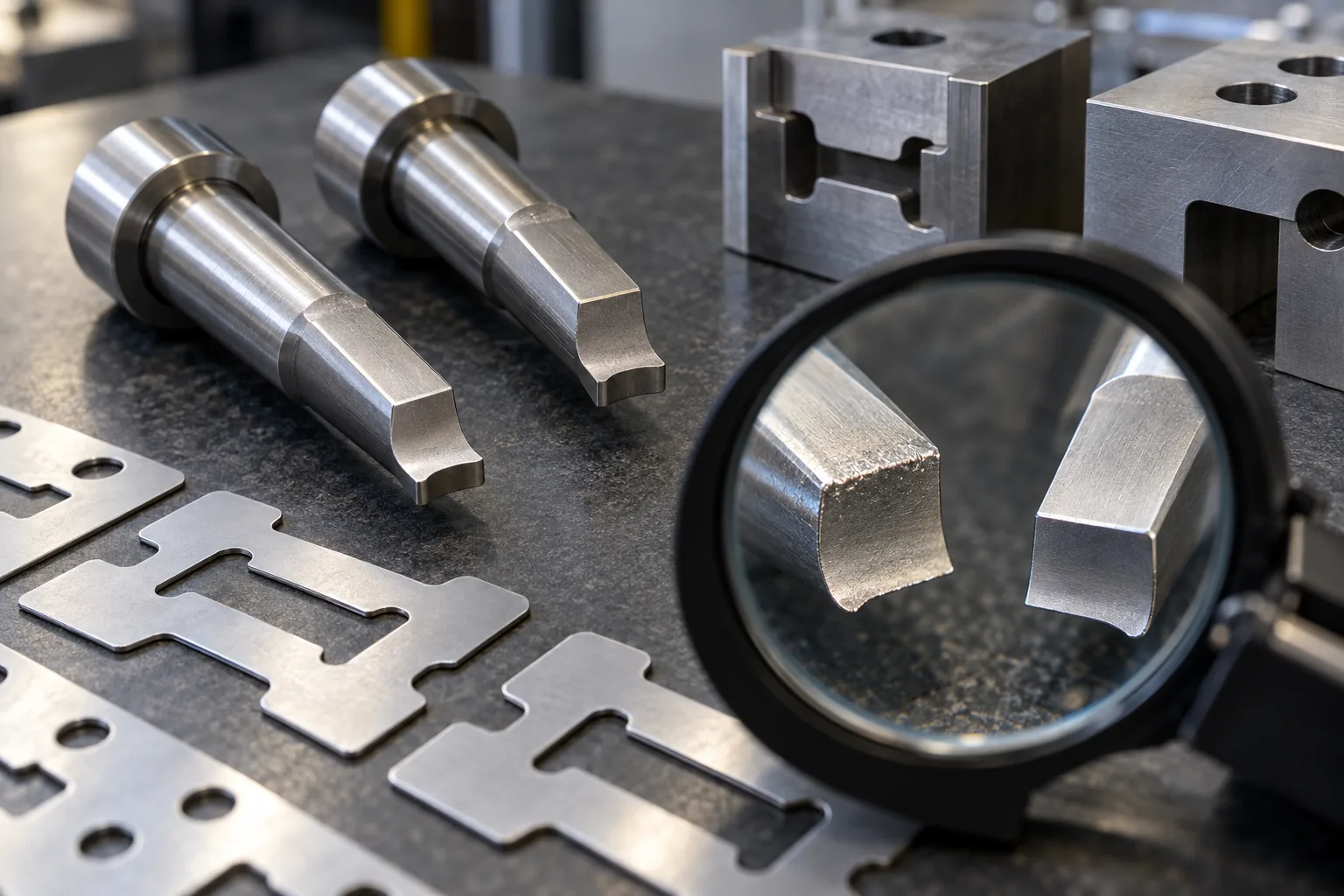
Punch tooling D2 M2 tool steel wear chipping decisions should be tied to the stock material, part geometry, press conditions and tool-maintenance plan—not to a claim that one steel grade is always superior. Buyers commissioning stamped bathroom or home-storage hardware should ask the tool supplier to explain the expected wear mode, edge maintenance and risk of chipping for the actual punch design, then validate the choice through production-representative samples.
What Problem Does This Article Help Buyers Solve?
Punch edges gradually wear during repeated cutting. Wear can change burr height, hole size, edge quality and the consistency of a formed part. In other conditions, a tool edge can chip or fracture, causing sudden defects and downtime. The tool material and heat treatment are part of that risk, but they do not act alone: clearance, punch shape, alignment, stock hardness, lubrication and press setup also matter.
D2 and M2 are both tool-steel designations that may appear in punching discussions, but buyers should not choose between them by name alone. A tooling manufacturer’s technical guide can help explain available material families and their intended uses; the selected toolmaker must confirm suitability and treatment for the specific job. See the CONIC punch-press tooling material guide.
What Should Importers Check First?
Ask the die supplier for the complete tool specification: punch and die material, heat treatment or hardness range if relevant, coating if any, geometry, clearance, sharpening method and inspection interval. These values should be selected by the tooling engineer for the actual stock and press. A buyer should avoid inserting generic numbers without a validated process basis.
Then identify the production risk that matters: gradual burr growth, dimensional drift, chipping, edge rollover, punch breakage or unexpected sharpening downtime. Establish what the supplier will monitor and what condition triggers maintenance. Include tool changes and sharpening in the part’s quality plan so the buyer can distinguish normal wear from a process deviation.
How Do Material, Geometry, and Tool Care Affect Tool Life?
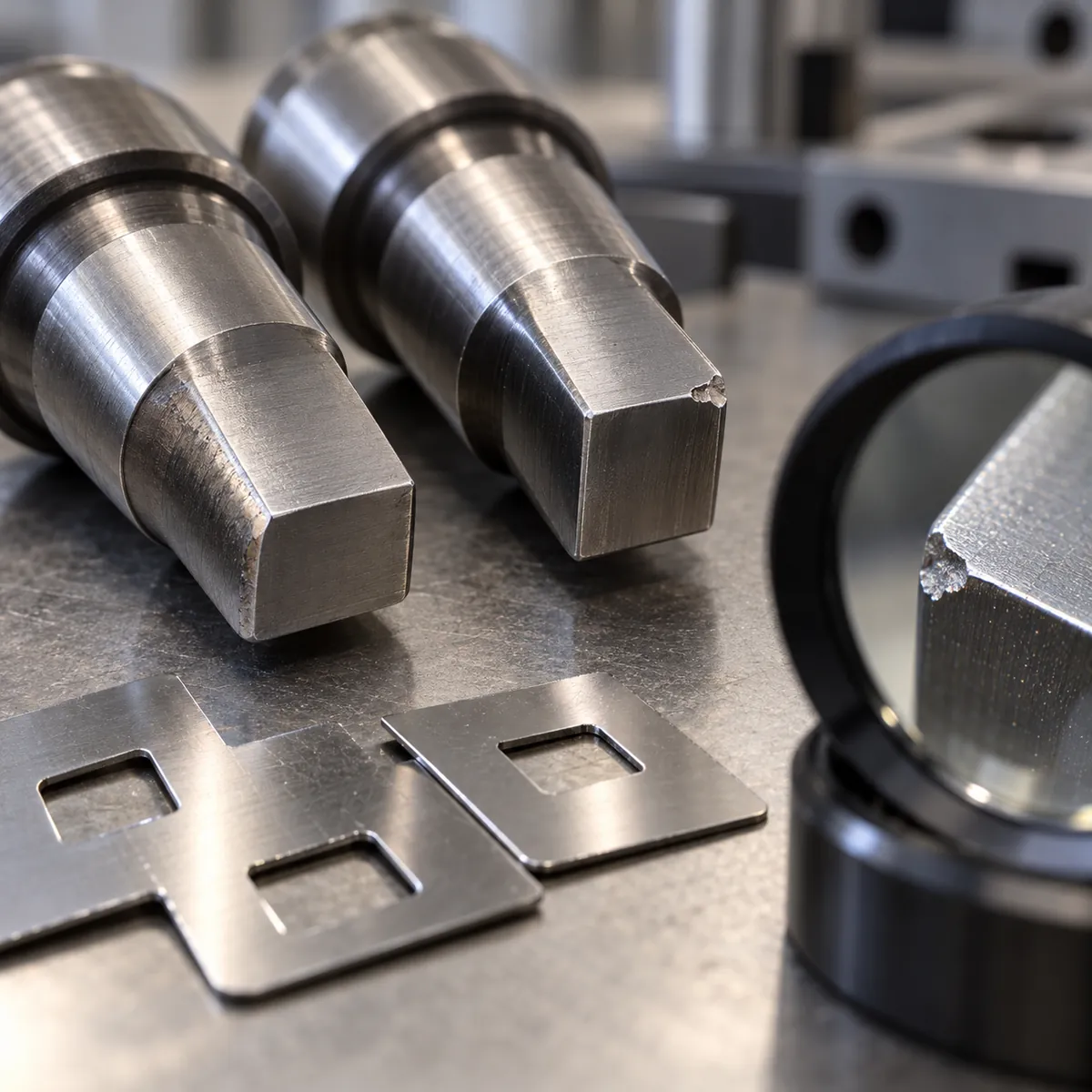
A punch works under repeated contact and shear, so the cutting edge must balance wear resistance with resistance to impact or fracture. Tool-steel families differ in composition and intended service characteristics, while actual performance depends on heat treatment, section size, edge geometry and operating conditions. A hard edge may resist wear but can still fail if misalignment, poor clearance or a shock condition concentrates stress.
Stock material also matters. Higher-strength or abrasive sheet, a change in thickness, different lubrication, burr orientation and contamination can increase load or accelerate edge deterioration. If production uses multiple material lots, agree how incoming material condition is documented and what occurs when the stock deviates from the approved range. Coatings or surface treatments may help in some tool applications, but they must be confirmed with the die maker and should not conceal a design or setup issue.
| Buyer Requirement | What to Check | Why It Matters |
|---|---|---|
| Tool material | Grade for punch and die, heat treatment, coating | Connects the choice to the actual job |
| Stock condition | Grade, thickness, hardness range and lubrication | Affects cutting load and wear |
| Tool geometry | Edge shape, clearance, alignment and support | Influences both wear and fracture risk |
| Maintenance | Inspection points, sharpening trigger and change record | Helps control gradual drift |
| Part evidence | Burr, hole size, edge quality and sampling record | Shows the customer-facing result |
How Should Buyers Compare D2 and M2?
Use the material names as a starting point for a toolmaker discussion. D2 is commonly considered in cold-work tooling where wear behavior is important; M2 is a high-speed tool-steel family often selected where its particular combination of hot hardness and toughness is appropriate. Those broad descriptions do not determine the correct punch grade. Supplier specifications, heat treatment, geometry and operating conditions must be checked for the specific tooling application.
| Decision factor | What to ask the tool supplier |
|---|---|
| Wear mode | Which part feature is expected to drift as the edge wears? |
| Chipping risk | What geometry or setup conditions can create edge impact? |
| Heat treatment | What condition is supplied and how is it verified? |
| Maintenance | Can the punch be sharpened, replaced or requalified? |
| Total cost | How do tooling cost, service interval and downtime affect the order? |
A low tool purchase price may not be the lowest total cost if parts require frequent correction or the supplier cannot keep tooling condition stable. Conversely, an expensive grade is not automatically a better choice. Compare evidence and lifecycle control for the actual job.
What Are Common Mistakes When Sourcing This Product?
Do not specify “use D2” or “use M2” without a tool design review. Do not assume a chipped punch proves the steel grade was wrong; investigate clearance, alignment, tool support, press conditions, heat treatment and stock. Another mistake is measuring only first-off samples and ignoring drift after a sharpening or tool change.
Buyers should avoid using burr limits or inspection frequency copied from an unrelated part. Set criteria from the drawing, customer function and validated process. Ask the stamping supplier to retain a tooling change log so repeat orders can be compared fairly.
How Can a Small-Batch OEM Factory Help?
A custom metal hardware manufacturer can help translate a stamped part’s use into critical dimensions, edges and assembly interfaces that should be monitored. Koitor can discuss buyer requirements and manufacturing context for metal storage hardware, but this article does not claim that Koitor owns a D2/M2 die shop or supplies a particular tool steel. The actual toolmaker and production supplier should confirm their process and material.
For a trial or repeat order, identify the approved part drawing, stock specification, tool ownership, sample condition and notification rules for tooling changes. Request evidence of first-piece checks after tool repair or sharpening when critical dimensions may be affected. See the Koitor OEM manufacturing page and send a project question through the contact page.
Compare Tool Steels in the Actual Punching Application
D2 and M2 are tool-steel designations associated with different property balances; their names alone do not decide which is right for a punch. Buyers should ask the toolmaker to consider the stock material, thickness, clearance, punch geometry, production volume, maintenance plan and failure history. Wear resistance is only one part of tool performance. A punch that resists abrasion but chips at a fragile edge may not be suitable, while a tougher option may require a different maintenance interval. Heat treatment, hardness, section size and grinding quality also matter, so a grade comparison without processing information is incomplete.
Describe the observed failure mode precisely. A rounded cutting edge, gradual dimensional drift, adhesive pickup, galling, corner chipping and sudden fracture point to different conditions. Provide photographs and the affected part dimensions, but also retain the failed tool if possible. The toolmaker should examine where the damage starts, whether it repeats at a consistent station, and whether the stock or lubrication changed. A generic request for “harder steel” can worsen brittle failure if the underlying issue is alignment, clearance or impact.
The punch and die should be assessed as a pair. Cutting clearance, edge condition, alignment, die support and slug evacuation can contribute to wear or chipping. The stock may also contain hard scale, coatings or material variation that changes the load. A sourcing specification should identify the controlled stock grade and thickness and ask the tooling supplier which process assumptions are included. It should not demand a specific steel solely because another product used it successfully under different conditions.
Approve a Tooling Trial and Maintenance Plan
For a new or revised punch, agree what the trial will demonstrate: edge quality, feature size, burr condition, tool condition after a defined production interval, or another measurable outcome. Identify the sampling points and inspection method before the trial begins. A trial that only produces a few acceptable setup parts may not reveal the wear pattern seen over a longer run. The required quantity and interval depend on the product and economics, so the buyer and manufacturer should set them based on risk rather than copy a universal cycle count.
Ask for a practical maintenance plan that distinguishes routine sharpening from repair or replacement. Record the tool condition that triggers service, how much material may be removed, and which dimensions must be rechecked after maintenance. Regrinding can affect punch length or geometry; replacement components may need alignment checks. These are supplier process details, but buyers benefit when they know how maintenance is tied to part acceptance and how tool changes are documented.
When evaluating cost, compare total operating consequences rather than purchase price alone. A lower-cost punch may need more frequent service; a more wear-resistant grade may cost more or introduce chipping risk if the geometry is unsuitable. Include downtime, scrap, inspection burden and spare-part availability in the discussion. Avoid presenting a predicted tool life as guaranteed unless the supplier has evidence under the same stock and setup.
If a supplier proposes changing D2 to M2 or the reverse, request the reason in terms of the observed failure and expected trade-off. The proposal should identify what stays constant—geometry, clearance, heat treatment target, stock and press setup—and what will be evaluated. A controlled comparison on the actual part gives the buyer a more useful basis for approval than a generic material chart. Preserve the approved revision and require review if the tool design or material route changes again.
How Buyers Can Review a Tooling Corrective Action
When a tooling issue affects delivery or part quality, request a concise record of the symptom, containment, investigation, correction and effectiveness check. State the affected part numbers and lots, when the condition was observed, the measured feature, and any production or material changes around that time. This helps the toolmaker distinguish a one-time setup issue from progressive wear or recurring damage. The buyer does not need to prescribe the steel grade before the failure mechanism is understood.
Ask what evidence supports a proposed change. If the supplier changes tool steel, hardness, clearance and geometry at once, the trial may not show which factor helped. Where practical, isolate variables and compare samples made under controlled conditions. The plan can include edge inspection, part dimensions, burr condition and tool condition after an agreed run. The supplier should explain why the sample quantity and run interval are representative for the application; avoid treating an arbitrary short run as proof of long-term tool life.
Review whether the corrective action affects spare parts or future maintenance. If replacement punches are purchased separately, identify the approved grade and processing requirements on the controlled drawing or order specification. Ask how replacement tools are matched to the existing die and how installation checks are performed. A good corrective action should reduce the chance of recurrence without creating a hidden variation between the original and spare tooling.
For the sourcing record, use punch tooling D2 M2 tool steel wear chipping as a searchable problem label, then tie it to the observed failure and chosen control. The phrase itself does not establish that either grade is always preferable. A documented engineering decision should state what was compared, what remained unchanged, the sample result and any remaining uncertainty. This gives purchasing a defensible basis for repeat orders and supplier discussions.
In short, punch tooling D2 M2 tool steel wear chipping must be evaluated against the observed failure mode and actual stock and tooling conditions.
Buyer Checklist Before Requesting a Quotation
- Identify stock grade, thickness and critical punched features.
- Ask for the toolmaker’s rationale for punch and die material selection.
- Confirm heat treatment, coating and geometry controls where relevant.
- Define how burrs, hole size and edge condition are checked.
- Request maintenance and sharpening triggers.
- Record changes to tools, stock or setup and recheck critical features.
- Compare lifecycle evidence, not tool-grade names alone.
Foire aux questions
Is D2 always more wear resistant than M2 for every punch?
No universal ranking should be applied without the toolmaker’s design and process context. The grade, heat treatment, edge, stock and operating conditions all affect performance.
Does a harder punch always last longer?
Not necessarily. Hardness is only one property. Edge support, impact, alignment, clearance and material condition influence wear and chipping.
What should buyers monitor as a punch wears?
Use the part drawing to identify relevant indicators such as burr, hole size, edge quality and feature position. The supplier should define a practical inspection and maintenance plan.
Does Koitor provide D2 or M2 punch tooling?
No specific tool-steel inventory or die-making capability is claimed here. Confirm the tool supplier, process and evidence for each project.

Collaborez avec Koitor Hardware
Planning a Stamped Hardware Order?
Share the drawing, stock specification, critical edges and sample approval needs. Koitor can discuss OEM metal hardware requirements; tool-steel choice and die performance should be verified with the responsible tooling supplier.
Fabrication pour compte de tiers / Marque de distributeur
Transformez ce guide d'approvisionnement en cahier des charges
Indiquez-nous le produit souhaité, ses dimensions, sa finition, la quantité commandée et vos exigences en matière d'emballage. Votre équipe recevra une analyse pratique de la faisabilité de la fabrication avant l'établissement du devis.
 English
  Español
  Português
  Français
  Deutsch
  العربية