
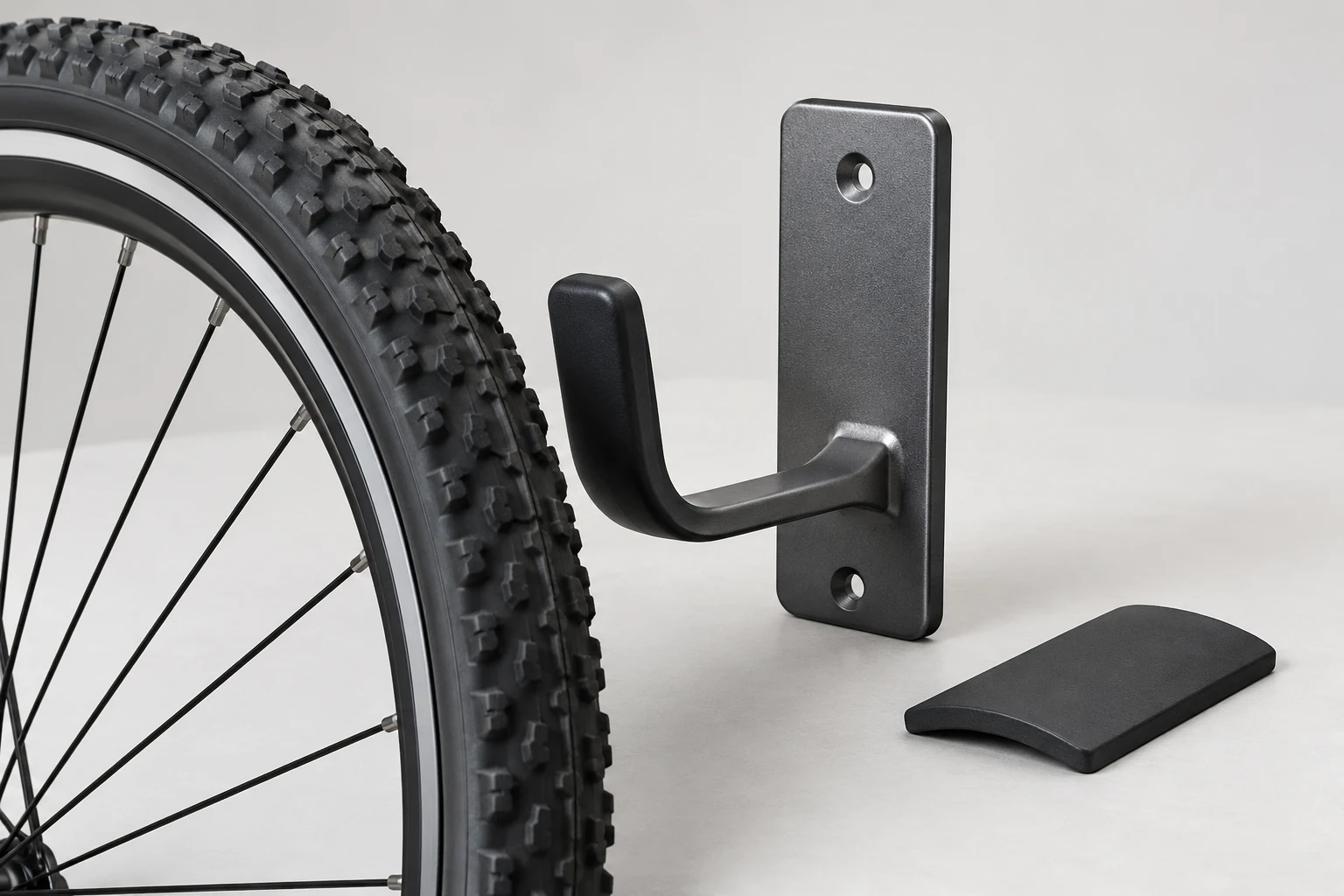
A bike wall mount rack should be specified around a named bicycle and wheel/tire envelope, its support and contact points, the mounting configuration, included parts, and the evidence required for sample approval. Importers should not rely on a generic “fits most bikes” statement: a wheel hook, frame support, pedal support, or tire tray creates different fit questions. Define the intended configuration in the RFQ, then check the actual sample against the same drawings, components, and claims planned for the retail pack.
A product listing can make a wall-mounted bicycle holder look simple, but the buyer still needs to decide what the rack contacts, which bicycles it is intended to fit, what is included, and what the supplier has actually checked. A product name alone does not communicate whether support comes from a wheel, frame, pedal, top tube, or a combination of parts. Those distinctions affect the buyer’s fit brief, sample review, packaging description, and the evidence needed before a product claim is approved.
This guide is for importers, category managers, and private-label teams preparing an indoor bicycle-storage product brief. It does not assess a particular rack, establish a safe load, or give household installation instructions. Consumer forum questions can reveal practical issues such as tire-width mismatch, fender interference, contact wear, and handlebar overlap, but isolated experiences are not proof of prevalence or engineering performance. Treat them as prompts for a better RFQ.
The primary keyword is product-led and broad. Ubersuggest reports substantial US search activity for “bike wall mount rack,” but that figure does not establish importer or OEM demand. The buyer-facing article therefore addresses a narrower question: what should an importer define and verify before approving a supplier’s sample?
What should buyers define before requesting a quotation?
Start with the product architecture, not an assumed universal fit range. Describe whether the bicycle is supported by its wheel, frame, pedal, top tube, or another defined contact surface. If the concept includes a tray, lower stabilizer, pivot, folding part, or removable hook, identify each component and its intended function. Ask the supplier to confirm the proposed configuration in a drawing or specification sheet rather than leaving those decisions implicit in a product photo.
Next, define representative bicycles. Record the wheel size and the dimensions that matter to the chosen support method: tire width and overall wheel envelope for a wheel hook; frame or top-tube section and finish for a frame-contact design; or pedal shape and clearance for a pedal hook. Note fenders, racks, disc-brake hardware, unusual rim profiles, and other features only when they are relevant to the intended assortment. If the assortment spans multiple bicycle types, list representative models or provide dimensioned samples. Do not convert a single sample fit into a universal claim.
The RFQ should also state whether the product is sold as one mount or as a multi-bike system, what accessories and fasteners are included in the retail unit, and which finish and protective components are part of the quoted configuration. Identify the carton, labels, instructions, and pack-out as separate deliverables. These inputs make supplier quotations comparable and help prevent a sample from silently differing from the version planned for sale.
| RFQ input | What to define | What the sample review should answer |
|---|---|---|
| Support architecture | Wheel, frame, pedal, top tube, or defined combination | Does the actual product contact the intended bicycle at the agreed points? |
| Fit envelope | Representative wheel/tire, rim, frame, or pedal dimensions | Do named bicycles fit without interference in the intended orientation? |
| Contact interface | Hook shape, pad, sleeve, tray, or other protective part | Is the contact surface present, correctly located, and consistent with the drawing? |
| Mount configuration | Product parts, mounting plate, supplied hardware, and revision | Does the sample match the quoted product and included-parts list? |
| Assortment layout | Single or multiple mounts; intended spacing and orientation | Can intended bicycles be placed and removed without the identified collisions? |
| Retail pack | Carton, inserts, labels, instructions, and claims | Does the packed version match the approved sample and evidence? |
The table is a checklist of decisions, not a universal dimensional standard. Values must come from the buyer’s chosen assortment and product design.
How should buyers review wheel, tire, and support fit?
Check the boundary conditions that determine fit, rather than accepting a broad compatibility label. For a wheel-support design, record the largest and smallest intended wheel/tire combinations, the measured dimension used, and the position at which that dimension was taken. “Tire width” alone may not describe the complete envelope if a fender, tall tread, deep rim, or support geometry changes clearance. For a frame-support design, identify the frame section and the exact contact zone; for pedal support, record the pedal geometry and the way the bicycle approaches the support.
Review insertion and removal as well as static placement. Ask the supplier to show how a representative bicycle is placed into and taken out of the sample in the specified orientation. Check whether the user action is obstructed by an adjacent bicycle, a tray edge, a pivot, or another product part. This is a fit and use review, not a load or safety test. Keep claims about permitted use separate until the appropriate evidence has been reviewed.
A useful sample record includes the bicycle or gauge used, measured dimensions, the sample revision, the product orientation, the contact points, observed interference, and the decision. If one bicycle does not fit, record the mismatch and decide whether the design, target assortment, or compatibility statement must change. Do not resolve a mismatch by broadening a supplier’s “fits” claim without retesting the revised configuration.
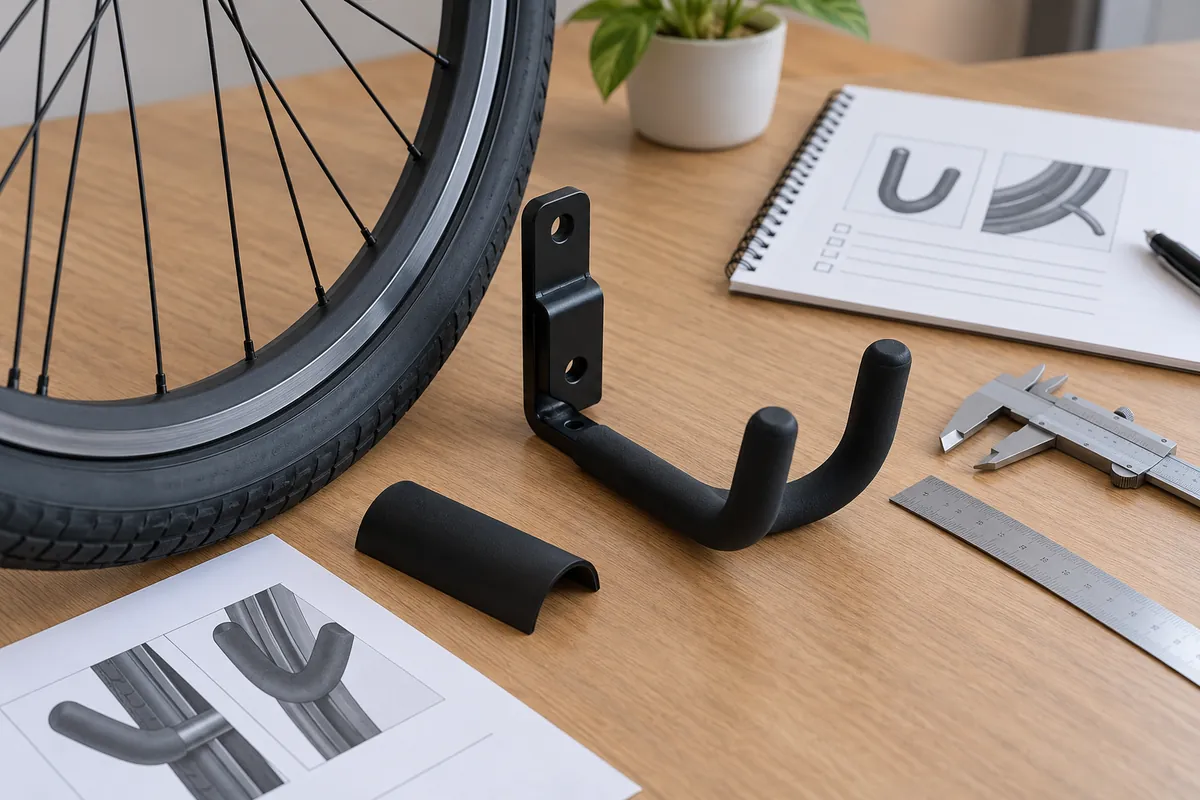
Product pages show why model-specific limits matter. Topeak’s Swing-Up Bike Holder page publishes particular wheel/tire dimensions and lists a model-specific limitation. Feedback Sports’ Velo Hinge FAQ describes fit variation and gives guidance for spacing that depends on the bicycles involved. These examples are not universal requirements or independent test standards; they illustrate why an importer should tie every fit statement to a named product and configuration.
Which contact, finish, and protection details belong in the sample brief?
Identify every surface that touches a bicycle and every part intended to protect that surface. Depending on architecture, the contact may be a coated metal hook, a polymer pad, a sleeve, a wheel tray, or a padded frame rest. The supplier should identify the material and attachment method for each component in the quoted build. If a pad is bonded, removable, or replaceable, record that configuration rather than treating “rubber protected” as a complete specification.
Inspect edge transitions, seams, burrs, exposed fasteners, and finish coverage where contact occurs. These observations help a buyer check workmanship and compare samples; visual review alone does not establish wear life, adhesion, corrosion performance, or long-term compatibility with every frame and rim finish. If the buyer needs a durability or repeated-contact claim, define a product-specific method, sample condition, cycle or exposure, and acceptance criteria before asking for evidence. Do not substitute a generic material name or a single visual check for a stated result.
Also check whether protective parts can shift during handling or transit. A contact pad that is correctly located in a sample may be displaced in the packed product if the carton allows parts to move. Ask the supplier to show the production-intent arrangement and inspect the product after the agreed packaging review. The article concerns specification and evidence requests; it does not state that any particular coating or pad is suitable for every bicycle.
What mounting and load information should the RFQ request?
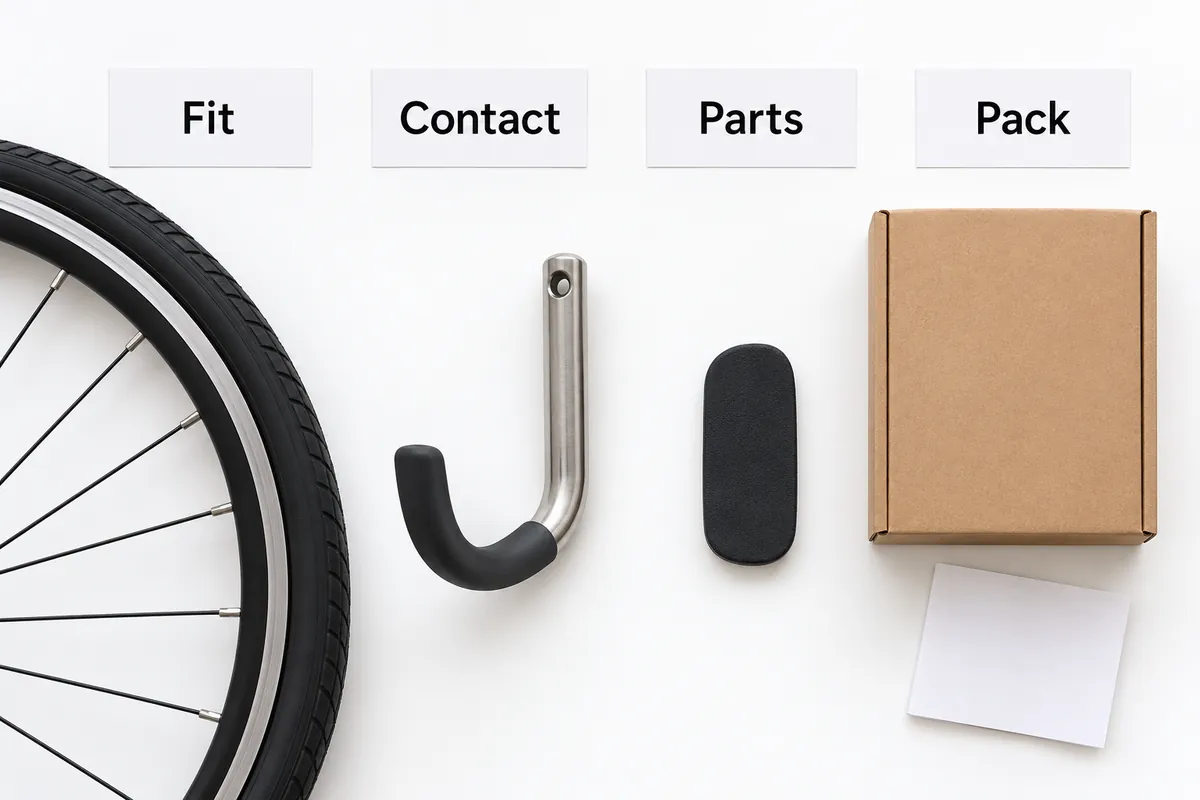
Separate the product’s mounting interface from the building surface and fastener choice. The importer should record the rack’s mounting plate or attachment geometry, the components included in the retail pack, and the mounting assumptions that the supplier used when evaluating the product. Avoid translating that information into consumer installation advice. A buyer should not infer compatibility with drywall, masonry, timber, or another substrate from a product photograph or from hardware being present in the box.
If the product will carry a stated load, ask what exact configuration the result covers: product revision, load position and direction, support architecture, fastener, substrate or fixture, test method, conditioning, duration or cycles, and acceptance criteria. Clarify whether the evidence covers only a component or the assembled product and mounting interface. A load figure without that context may not support the intended retail claim. This article does not provide a load rating or say that any bicycle mount is safe for a particular use.
For a multi-bike system, also define the layout being assessed. Record the number of products, orientation, planned spacing, and representative bicycle or handlebar envelopes. Review placement and removal in that configuration. A single mount sample cannot answer every multi-bike interference question, and a layout that fits one set of bicycles may not fit another.
How can a small-batch OEM factory support an adjacent product brief?
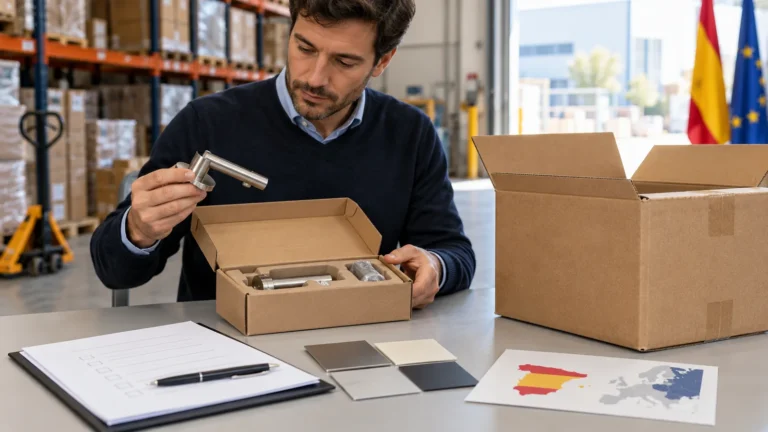
Koitor Hardware is a family-owned factory and specialized OEM manufacturer focused on bathroom and home-storage hardware. Its approved company information supports general drawing and sample discussion for metal storage products; it does not establish current bicycle-rack production, bicycle-specific tests, capacity, or certifications. Importers should present a bicycle-mount request as a new scope for capability review, not assume it is an existing Koitor product.
For a metal product that falls within a factory’s confirmed scope, small-batch production can be useful when a buyer is validating an assortment or refining a private-label specification. A drawing or physical sample gives both sides a concrete reference for dimensions, contact points, joins, finish, included components, and packaging. Manufacturing review can then identify questions about bends, joints, access for finishing, assembly order, or protection in the carton. The product-specific design and available equipment still determine what can be made and what evidence is appropriate.
Koitor’s established bathroom and home-storage work may be relevant to a broader metal hardware discussion, but adjacency is not proof of bicycle-rack capability. A responsible first step is to send the drawing, target quantity, sample expectations, materials and finish brief, and evidence requirements for scope review. The custom metal storage rack page describes the company’s relevant category context; buyers can use the contact page to share a new project brief.
Common sourcing mistakes to avoid
- Using “universal fit” without a defined boundary. Name the bicycle types or measured envelope and state how fit was checked.
- Approving a sample that does not represent the sellable pack. Confirm the same pad, fasteners, finish, labels, instructions, and carton intended for production.
- Treating the product photo as a specification. Request dimensioned drawings, a bill of materials, and clear identification of included and optional parts.
- Mixing distinct support architectures. A wheel hook, frame cradle, pedal hook, and tire tray need different fit and contact checks.
- Transferring a claim from another brand’s product. Published dimensions and limits apply to that product version; they do not validate a different design.
- Approving a multi-bike layout from one isolated sample. Check intended bicycle placement, spacing, and removal in the actual assortment configuration.
- Accepting an unqualified load figure. Ask what the method, fixture, interface, revision, and acceptance criteria cover before using the number in marketing.
- Leaving packaging and protection until after sample approval. The pack can change part movement, surface contact, and the buyer-facing description.
These controls keep the RFQ, sample, evidence, and retail claims aligned. They also help the buyer identify which open questions belong to the product supplier, the fastener supplier, the packaging supplier, or the importer’s own verification plan.
How can buyers keep RFQ and sample decisions aligned?
Buyer checklist before approving a bike wall mount rack
- Specify the intended bicycle assortment and representative models or samples.
- Define the support architecture and its contact points.
- Record the relevant wheel, tire, rim, frame, or pedal envelope for that architecture.
- Identify fenders, racks, or other features that affect intended fit.
- List pads, sleeves, trays, brackets, fasteners, and other included parts.
- Confirm drawing revision, material and finish brief, and sample configuration.
- Check insertion, removal, contact surfaces, interference, and multi-bike layout where applicable.
- Define evidence needed for any fit, load, wear, or durability claim.
- Review the production-intent retail pack, labels, instructions, and compatibility wording.
- Assign unresolved product, mounting, packaging, or claim questions to the responsible party.
Foire aux questions
Does one bike wall mount rack fit every bicycle?
Do not assume so. Fit depends on the rack architecture and the bicycle dimensions and features that interact with it. Define the intended range and verify representative cases before using a broad compatibility statement.
Should a buyer specify tire width or wheel size?
Specify the measurements that govern the chosen design. A wheel hook may need a defined wheel/tire envelope; a frame or pedal support needs different information. Include the measurement method and relevant clearance features rather than relying on a single generic label.
Do protective pads prove that a rack will not scratch a bicycle?
No. A pad is one design feature, not proof of performance across all finishes, use conditions, or repeated handling. Identify the contact material and attachment, then define a suitable product-specific review or test if the claim matters.
Can a product load figure be copied from a similar rack?
No. Load evidence must match the product revision and the configuration tested, including the mounting interface and test method. Another model’s published rating does not validate a different product.
Does Koitor currently manufacture bicycle wall mounts?
The approved company profile does not confirm bicycle-mount production. Koitor’s established focus is bathroom and home-storage hardware. A bicycle product request needs a separate scope review before any capability or supply claim is made.
Discuss a Metal Storage Product Brief
Have a new metal storage product brief?
Share a drawing or sample, intended buyer specification, target quantity and packaging requirements. Koitor can first review whether the request fits its verified manufacturing scope.
Fabrication pour compte de tiers / Marque de distributeur
Transformez ce guide d'approvisionnement en cahier des charges
Indiquez-nous le produit souhaité, ses dimensions, sa finition, la quantité commandée et vos exigences en matière d'emballage. Votre équipe recevra une analyse pratique de la faisabilité de la fabrication avant l'établissement du devis.
 English
 Español
 Português
 Français
 Deutsch
 العربية