
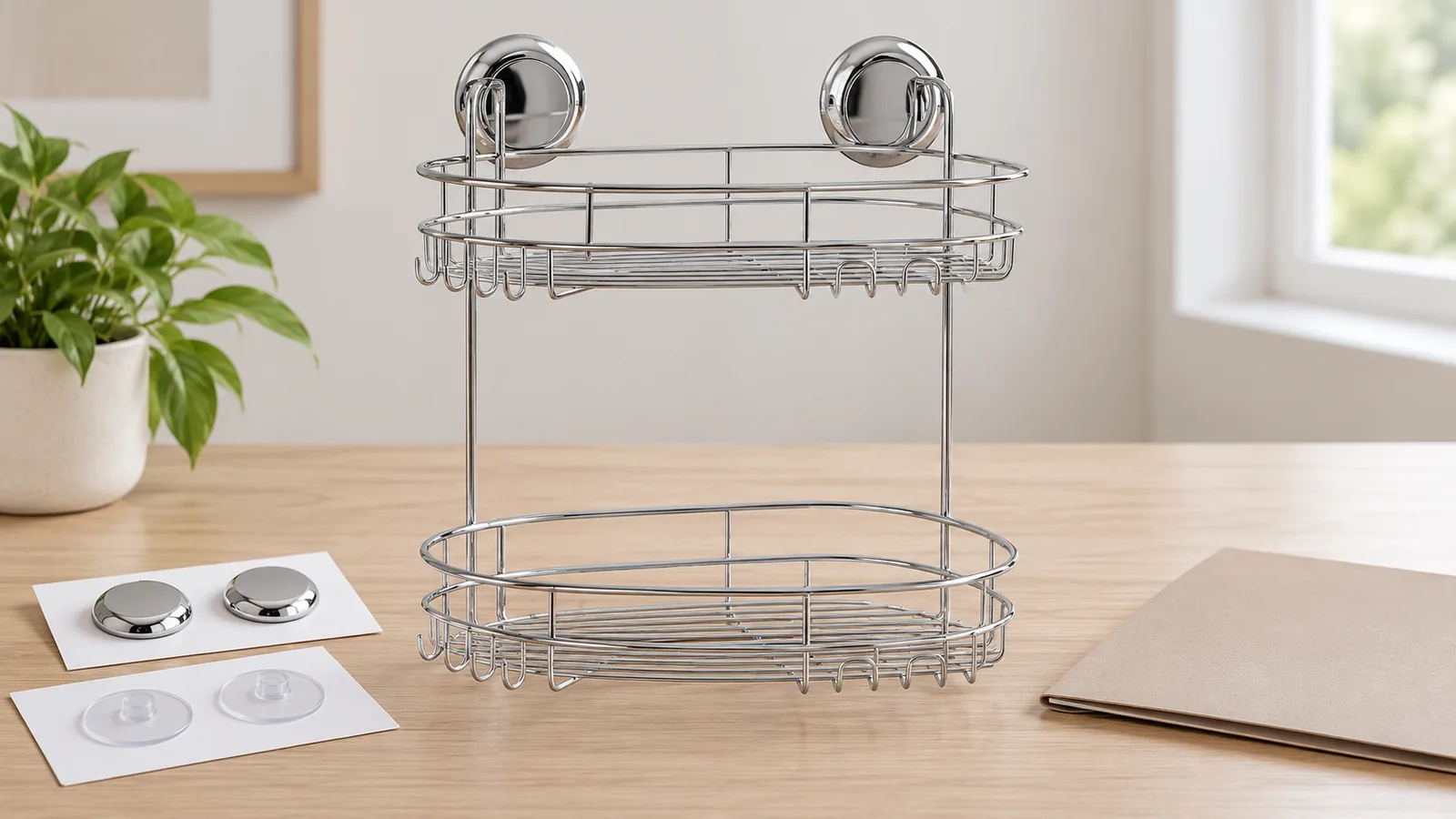
Buyers searching “California Proposition 65 metal organizers importer” need a product-specific record set—not a generic statement that an item is “Prop 65 compliant.” Before a metal bathroom or home organizer is offered in California, identify the exact SKU and revision, map its materials and components, request supplier evidence that matches that configuration, and obtain qualified exposure or legal review where needed. This guide is a sourcing handoff checklist, not a determination that any particular organizer needs or does not need a warning.
Short answer: organize evidence by SKU, not by product category
California Proposition 65, formally the Safe Drinking Water and Toxic Enforcement Act of 1986, concerns exposures to chemicals on California’s list. The relevant question for a buyer is not simply whether a listed chemical is somewhere in a material or process. The business must assess whether the product causes an exposure at a level that requires a warning under applicable rules. OEHHA’s business resources explain that responsibility is product- and exposure-specific, and that the agency’s FAQ is guidance rather than legal advice.
For an importer, a practical first step is to make the record traceable to the item that will actually be sold: its model or SKU, construction revision, finish, supplied accessories, packaging and intended California sales channel. Keep the manufacturing evidence separate from the final legal or toxicological conclusion. A factory can help identify materials, components, process changes and available reports; it cannot replace the importer’s qualified assessment or decide a product’s legal status through a generic letter.
That distinction prevents two common documentation mistakes. One is asking every supplier for a single universal “certificate” without defining the product or the question. The other is treating a material declaration or chemical-content test as proof of exposure or warning status. Each document answers only the question within its scope.
Why a generic certificate does not answer the buyer question
A supplier declaration can describe what the supplier understands about a material or component. A test report can describe a sample, test method, analytes and results. Neither automatically establishes the exposure a consumer may receive from the finished product in foreseeable use. An exposure assessment considers the substance, its location and form, potential contact, use conditions and the relevant regulatory criteria. That judgment may require a qualified toxicologist or counsel.
The same caution applies to broad phrases such as “Prop 65 tested,” “California approved” or “compliant.” Ask what product was evaluated, which revision and materials were represented, what the report actually measured, and what decision the document supports. If the supplier cannot explain that scope, treat the item as an open information gap—not as proof of a problem or proof that no further review is needed.
Testing is not a universal prerequisite prescribed for every product. OEHHA describes testing as one possible way a business may evaluate its products, while businesses can use knowledge of their operations and the chemicals involved. Whether a test, exposure assessment, supplier declaration or another form of substantiation is appropriate depends on the specific product and question. Do not order an expansive chemical screen simply because a product is metal; define the concern with a qualified professional first.
A warning is not, by itself, a complete description of a product’s risk or a finding that every unit is unsafe. Conversely, the absence of a warning on a similar item is not evidence that a different SKU has the same materials, use or exposure. Buyers should keep the determination with the people responsible for it and preserve the evidence behind the decision.
Build a product and component map before requesting documents
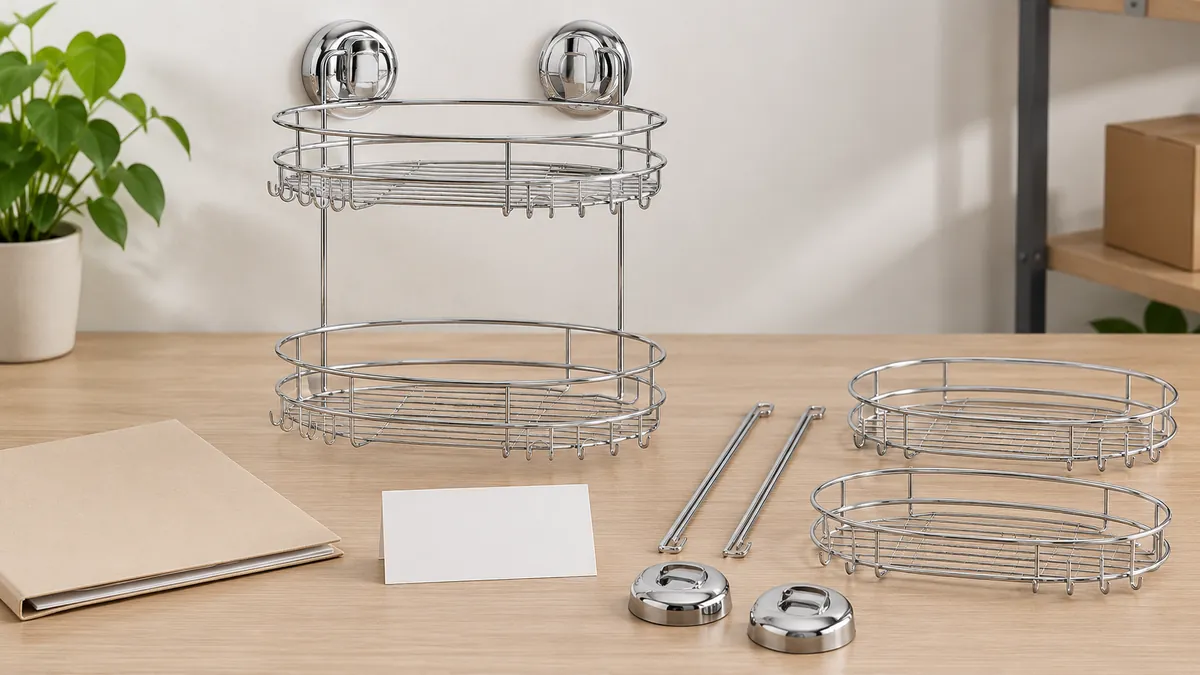
Start with a controlled product identity sheet. Include the commercial name and SKU, drawing or sample revision, sales configuration, finish, packaging version and any included installation hardware. If a product has optional hooks, screws, caps, pads, adhesives or other accessories, list them rather than treating “the rack” as one undifferentiated material.
Then map the components that matter to the supplier request:
| Record field | What the buyer should identify | Pourquoi est-ce important ? |
|---|---|---|
| Product identity | SKU, model, drawing/sample revision and date | Connects records to the version being sold |
| Metal parts | Part name, stated grade or material description, supplier and finish | Separates the frame, basket, brackets and small metal parts |
| Non-metal parts | Included pads, caps, adhesives, plastics or other components | Prevents accessories from disappearing from scope |
| Finition de surface | Plating, coating or other finish description and revision | Identifies changes that may affect the product evidence |
| Configuration | Included hardware, pack quantity and retail packaging | Matches the assessed item to the consumer-facing offer |
| Change record | Material, supplier, finish, design or process revision | Shows whether existing documents still represent the current SKU |
The map is an information-control tool, not a laboratory conclusion. Use the wording the supplier can support: for example, “material grade stated by supplier” or “finish specification on file.” Do not upgrade a supplier’s description into independently verified chemical content unless the evidence supports that claim.
If an organizer is sold in several finishes, sizes or accessory configurations, decide with the compliance reviewer whether they can share a documented rationale or need separate review. Similar appearance does not prove identical materials, process inputs or exposure. Likewise, do not assume every change requires a completely new test: ask the qualified reviewer whether the existing evidence still covers the revised product.
Request supplier evidence tied to the exact revision
A useful request explains the product, purpose and required response format. For a California Proposition 65 metal organizers importer review, send the supplier a SKU list and the controlled drawing or sample reference; ask them to identify which parts and materials their response covers. Separate a declaration of supplied material information from a report produced by a third-party laboratory and from a product exposure evaluation. The documents may be useful together, but they are not interchangeable.
For each document, record who issued it, its date, scope, sample identity, revision, method if applicable, limitations and whether it refers to a component or the finished configuration. If the report covers only one alloy or a raw material coupon, do not label it as a finished-product evaluation. If an outside laboratory report is available, preserve the unaltered report and ask a qualified reviewer whether the sampling and method answer the product-specific question.
A practical evidence request can include:
- The supplier’s material and component list for the named SKU and revision.
- Available declarations or reports, with their scope and sample identification.
- The current finish and relevant supplier/process information the factory can substantiate.
- Notice of changes to material source, finish, component, design or production configuration.
- A clear statement of what the supplier does not know or cannot verify.
The last item matters. An honest limitation is more actionable than a broad assurance. If a supplier’s report cannot be linked to the item or is missing a component, mark that gap and ask whether the supplier can provide traceable information. Avoid requesting a made-up “Prop 65 certificate” unless a retailer or counsel has specified a particular document and its purpose.

Decide with a qualified reviewer whether assessment or testing is appropriate
Once the product map and available records are assembled, route them to the person responsible for the California determination—often the importer’s compliance team and, for technical exposure questions, qualified counsel or a toxicologist. They can decide whether more information, a focused test, an exposure evaluation, a warning review or a product change is appropriate. The buyer should not infer a safe-harbor result from a material name or a test result without expertise in the applicable exposure scenario.
Ask the reviewer to state the scope of the conclusion: which SKU and revision, which components and use conditions, which evidence was considered, and what assumptions or gaps remain. If the reviewer recommends testing, clarify the question first: what chemical or material is in scope, which sample represents the sold product, what method is suitable, and how results will be interpreted. A laboratory can produce measurements; it does not necessarily make the importer’s legal decision.
If the product or a chemical changes, assess whether the earlier evidence remains applicable before relying on it. A change in finish supplier, color, coating formulation, component, packaging, or product use may or may not matter to the analysis; do not decide that from the change label alone. Document the question and let the qualified reviewer determine whether the change affects the prior rationale.
A public California Attorney General settlement record related to a named metal-and-glass organizer illustrates why product-level documentation and escalation paths are useful. It recounts allegations about a particular product; the settlement does not establish that metal organizers generally violate Proposition 65, and the parties did not treat it as an admission. Use that record only as a reminder to keep evidence connected to a SKU and to refer any notice or demand to counsel promptly.
Coordinate warning information through the retail and online handoff
The importer’s product file should record who owns each compliance task: who obtains supplier information, who commissions or reviews any assessment, who approves warning decisions and language, who supplies warning content to retailers, and who checks that online or package information is handled as required. Put responsibilities in the buyer-supplier and importer-retailer workflows, but do not assume a contract alone settles statutory responsibility.
OEHHA’s business FAQ describes responsibilities across manufacturers, producers, packagers, importers, suppliers, distributors and retail sellers. It also addresses retail sellers’ role in warning placement and maintenance, including internet sales, based on materials received from upstream businesses. Because the exact duties and warning formats depend on the facts and current regulations, confirm the current official requirements and have counsel review the specific channel and wording. This article intentionally does not provide a warning template.
A useful handoff record names the SKU and revision, the approved warning decision and version (if one is required), the package or listing locations reviewed, the recipient retailer or channel, the date supplied, and any acknowledgement or correction. For online listings, connect the product data to the correct listing and variant; do not copy a warning from a visually similar item without confirming that it applies.
If a retailer asks for a declaration or a specific evidence format, ask what decision it supports and who will review it. Share only substantiated records with clear scope. Keep the supplier’s source document intact, and make a separate note explaining how it relates to the buyer’s question rather than editing a report or extending its conclusion.
Keep a versioned file and use these buyer questions
A durable file lets a new sourcing manager understand not only what was decided but why it still applies. Store the SKU map, supplier responses, reports, assessment or counsel conclusion, approved warning handoff (if any), revision history and review date in one controlled location. Limit access to confidential formulation or supplier data as appropriate, and avoid sending unrelated customer or supplier information in a retailer packet.
Before closing the review, the importer can ask:
Does any listed chemical in a product automatically mean a warning is required?
No. Product presence and consumer exposure are not interchangeable. OEHHA’s guidance explains that the warning question concerns exposure and applicable levels; the details must be evaluated for the product and its use. A qualified professional should assess the actual evidence.
Is a warning proof that the product is unsafe?
Not by itself. A warning communicates a Proposition 65 exposure issue under the applicable framework; it does not give a complete risk assessment for a particular individual or product. For product-specific questions, ask the responsible business for information and consult qualified experts.
Must every importer obtain a laboratory test?
There is no one test that fits every item, and the cited official guidance does not make laboratory testing a universal prerequisite. The business needs a defensible product-specific basis for its decision. A qualified reviewer can determine whether existing supplier records are enough or whether targeted testing is appropriate.
Can a factory letter settle the question?
A factory letter can document what the factory knows about the supplied design, materials, finish and revision. It cannot substitute for an importer’s legal obligations or a toxicological exposure assessment. Request precise, traceable evidence rather than a blanket guarantee.
What if a supplier cannot provide the requested information?
Record the missing field, ask whether the material/component source or relevant record can be confirmed, and escalate the unresolved issue to the importer’s compliance lead. Whether the gap requires further testing, a design change, a warning or another action is for a qualified reviewer—not a blog checklist—to decide.
For current California requirements, use OEHHA’s business FAQs et Proposition 65 overview as starting points, then obtain product-specific advice. Rules and warning regulations can change, so confirm the version that applies at the time of sale. This California Proposition 65 metal organizers importer guide is a record-keeping aid, not a compliance determination.
Collaborez avec Koitor Hardware
Review Product Records for a Metal Organizer Project
Koitor can discuss manufacturing-side product identity, drawings, materials, finish revisions and supplier records for custom metal bathroom and home-storage hardware. That discussion does not replace legal, toxicological or regulatory review.
Fabrication pour compte de tiers / Marque de distributeur
Transformez ce guide d'approvisionnement en cahier des charges
Indiquez-nous le produit souhaité, ses dimensions, sa finition, la quantité commandée et vos exigences en matière d'emballage. Votre équipe recevra une analyse pratique de la faisabilité de la fabrication avant l'établissement du devis.
 English
 Español
 Português
 Français
 Deutsch
 العربية