

Ductile vs brittle describes how much plastic deformation occurs before a material separates under particular conditions. A ductile fracture is associated with appreciable deformation before separation; a brittle fracture involves little appreciable plastic deformation before separation. These terms describe behavior, not a simple ranking from weak to strong. They also do not identify the cause of a failed bathroom accessory, prove a product’s load capacity, or tell a buyer whether a part meets a requirement. To interpret a material report or failure observation, first identify the specimen, test method, conditions, and question the evidence actually answers.
What Is the Difference Between Ductile and Brittle Fracture?
Ductile fracture is associated with plastic deformation before separation. Plastic deformation means the material does not fully return to its earlier shape after the load is removed. Depending on the specimen and loading, deformation may include permanent elongation, local thinning, bending, or other changes before the final separation.
Brittle fracture involves little appreciable plastic deformation before separation. The part may appear to break with limited permanent change at the overall scale, but that broad description is not a stand-alone diagnosis. Materials and components can show mixed behavior, and the relevant response depends on the material condition, geometry, load, temperature, rate, flaws, and test method.
The U.S. Naval Academy’s EN380 materials course notes describe brittle fracture as occurring without appreciable plastic deformation and ductile fracture as involving larger plastic deformation before separation. The notes also discuss how test temperature and other fracture conditions affect behavior. This is an educational source for the general distinction, not a current product safety standard or a specification for any Koitor part.
| Comparison point | Ductile behavior | Brittle behavior | Buyer interpretation |
|---|---|---|---|
| Deformation before separation | Appreciable plastic deformation is associated with the fracture | Little appreciable plastic deformation is associated with the fracture | Observe what the test measured, not only the final appearance |
| What the label describes | A response under stated conditions | A response under stated conditions | It is not automatically a material’s universal behavior in every use |
| What the label does not establish | Product safety, a load rating, or the cause of a particular failure | Low strength, poor quality, or a failure cause | Ask what the report, specimen, and method actually cover |
| Éléments de preuve utiles | Test method, specimen, conditions, stress-strain or load-displacement record | Test method, specimen, conditions, stress-strain or load-displacement record | Keep material data separate from finished-product validation |
The essential comparison in ductile vs brittle is the relative amount of plastic deformation before fracture. A buyer should not infer that the component with more visible deformation was necessarily safer, stronger, or more suitable. Those judgments require requirements and evidence beyond the behavior label.
Does Ductile Mean Stronger or Safer?
No. Ductility and strength are related to mechanical behavior but describe different properties. Strength commonly refers to the stress or load associated with a defined point or failure under a stated test. Ductility concerns the amount of plastic deformation a specimen undergoes before fracture or another specified endpoint. A material can have different strength and ductility characteristics depending on its composition, processing, heat treatment, geometry, and test conditions.
A ductile response does not prove a finished bracket or rack will carry a specified load in use. A product includes geometry, joints, fasteners, mounting surfaces, tolerances, and load paths. A material coupon tested in tension cannot by itself establish the performance of an assembled wall-mounted product with different dimensions and connections.
Likewise, a brittle response does not automatically mean the material is weak. A component may withstand a certain load and then fracture with little plastic deformation under the tested condition. Whether that response is acceptable depends on the product function, expected loads, safety consequences, design requirements, and applicable validation method. Do not translate the adjective into a pass/fail judgment without a criterion.
Toughness is another distinct concept. In the cited course material, toughness is related to energy absorbed up to failure as represented by the area under a stress-strain curve in a defined test. It is not interchangeable with strength or ductility. Different test methods may measure different properties, and a value from one method should not be used as a substitute for another requirement.
For sourcing, request the exact property and test basis that matters. If the requirement concerns tensile strength, ask for the applicable tensile property and its method. If it concerns impact response at a temperature, identify the relevant impact method and conditions. If it concerns a complete product under a defined load, use a product-level validation plan with a clear specimen and acceptance criterion. A generic material statement does not answer all three questions.
Why Do Conditions Change the Observed Behavior?
A material does not respond in isolation from how it is tested or used. Temperature, loading rate, specimen dimensions, notch or flaw condition, material processing, and the direction of loading can affect the response that a particular method measures. The behavior label should therefore be read with the test conditions, not separated from them.
Temperature is one example discussed in the U.S. Naval Academy course notes. The notes describe temperature effects on fracture behavior and discuss transition behavior for particular steels. That information is not a universal transition-temperature rule for all steels, stainless grades, or hardware products. A buyer should not copy a temperature from a general course example into a product specification.
A notch or geometric feature can also change local stress distribution. A specimen designed for a test may intentionally contain a notch; a finished component may have holes, bends, welds, edges, or joints that create a different geometry. The tested specimen and finished hardware are not interchangeable. Even if the material specification is the same, the product geometry and loading mode may differ.
Rate and loading history matter as well. A slow tensile test, impact test, repeated load, and a sudden event are different test questions. A result from one method should not be interpreted as proof of behavior under another without a justified correlation. Ask whether the evidence represents the actual condition the buyer cares about or only a standardized comparison under specified laboratory conditions.
Manufacturing condition can influence a material’s behavior. Forming, joining, heat exposure, finishing, and local geometry may create conditions that differ from an unprocessed material certificate or coupon. This does not mean any particular operation caused a defect. It means the buyer should identify whether the evidence covers the raw material, a processed specimen, a finished component, or an assembled product.
What Can a Test Report Prove?
A report can support only the conclusion its method, specimen, conditions, and recorded result allow. Before treating a report as evidence, verify:
- The exact material or product identity and grade, where applicable.
- Whether the tested item is raw material, a coupon, a processed specimen, a component, or a complete assembly.
- The method name and revision, when specified.
- Specimen dimensions, orientation, preparation, and any notch or feature relevant to the method.
- Temperature, loading rate, environment, and other stated conditions.
- The measured output and units, not just a summary adjective.
- Acceptance criteria and who defined them.
- Whether the report corresponds to the current drawing, material lot, process, and supplier.
- Which limitations or exclusions the report states.
A report can show that a particular specimen produced a particular response under its recorded test conditions. It does not automatically show that every item in a shipment has identical properties, that a finished product meets a load requirement, or that a particular field failure had the same mechanism. Buyers should match evidence to the question rather than collect documents only because their titles sound relevant.
If a supplier sends a material certificate, confirm which material and lot it covers and which properties it reports. A material identity record is not a fracture investigation. If a lab report describes a tensile test, confirm whether the tested specimen represents the product requirement. If a finished-product validation is needed, define the assembly, mounting, load direction, duration, and acceptance measure with the responsible engineering reviewer.
A useful report review separates a descriptive statement from an acceptance decision. “The sample showed ductile behavior” describes an observation or test interpretation. “The component passes” is a decision against a requirement. To reach that decision, the buyer needs to know what was required, what was measured, how uncertainty or variation is handled, and whether the sample represents the production item. If the contract specifies a material property but not a product-level performance requirement, those are separate acceptance questions. If a supplier provides a certificate, the buyer should compare its scope with the purchase specification instead of assuming that any relevant-looking value closes the requirement.
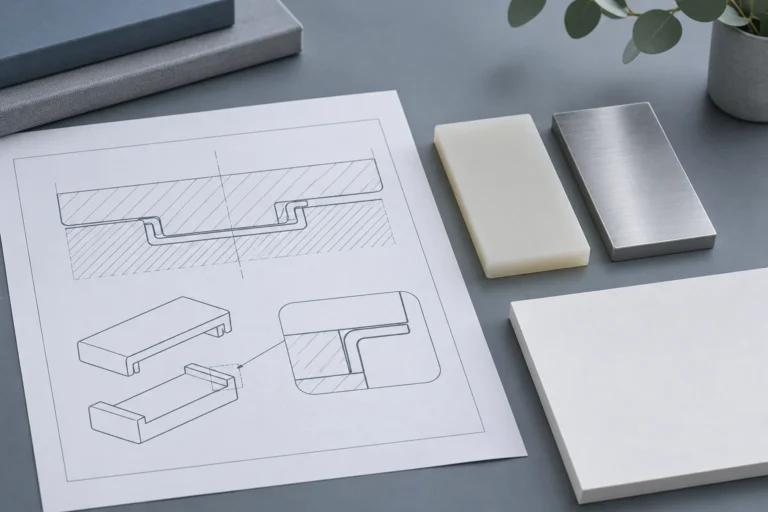
Consider a hypothetical stainless bracket. A tensile coupon could provide information about material response in a specified test, while the finished bracket might have a formed corner, weld, coating, and mounting hole. The coupon result would not by itself establish how the finished bracket behaves under a load applied through its mounting points. The buyer should identify whether the question is about the incoming material, a process effect, the assembled product, or a failure event. The responsible engineer can then determine whether additional evidence is warranted. This is a reasoning framework, not a recommendation to perform a particular destructive test.
An acceptance table can distinguish the evidence source from the decision: material specification; tested item; test method and conditions; reported result; contractual or engineering criterion; review owner; and unresolved gap. A row marked “not applicable” should include the reason, while a row marked “not available” should remain open until the required reviewer decides how to proceed. This makes the review auditable without inventing limits. Do not add a generic percentage elongation, impact-energy value, temperature, or load limit merely to make a checklist appear complete. The correct threshold depends on the actual product, material, applicable standard, and engineering decision.
Documentation also needs traceability. Record the report number, date, supplier, sample identity, drawing revision, and any deviations. If the sample was specially prepared or is not representative of production, note that limitation. An unexplained mismatch between a report and a shipment is a question to resolve, not evidence that a supplier deliberately substituted material.
Can a Buyer Identify Ductile or Brittle Failure from a Photo?
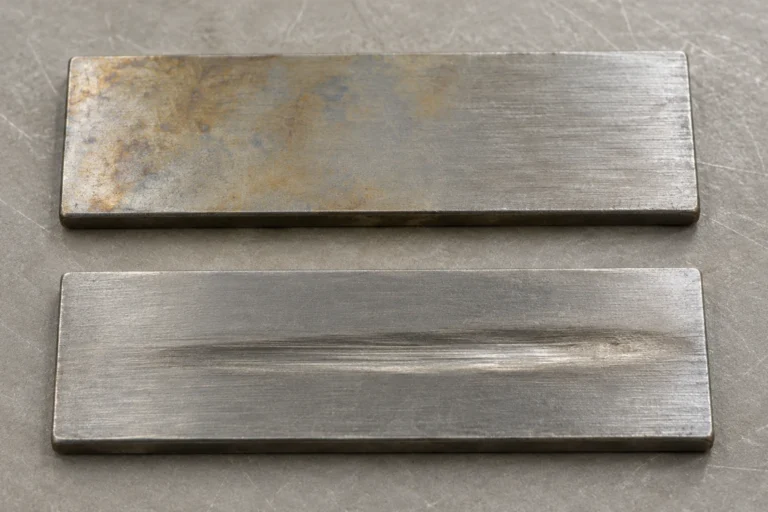
A photograph can document visible condition, but it usually cannot establish the full material behavior or failure cause on its own. A broken part may show bending, necking, surface marks, or a fracture surface, yet appearance can be affected by lighting, scale, handling after failure, secondary damage, coating, and the perspective of the image. A photo also does not provide the stress, strain, load history, temperature, material identity, or specimen preparation.
A clear photo can still be useful as an initial record. Include the whole part, a scale reference, relevant attachment points, the fracture region, product identifiers, and any deformation away from the break. Preserve the item and its packaging if an investigation may follow. Do not clean, grind, reassemble, or discard a failed item before the responsible reviewer decides what evidence is needed.
A reviewer may need the actual component, records, material information, use conditions, and a defined examination plan. Failure analysis can require specialized methods and expertise. This article does not provide a diagnostic procedure, repair instruction, destructive test recipe, or acceptance threshold. Buyers should avoid declaring “brittle failure” from a single image or attributing a cause to a process without appropriate evidence.

Le chrome-plating scope checklist for bathroom accessories covers a different distinction between deformation modes. Buyers should not confuse those forming terms with a diagnosis of a fractured product.
How Should Importers Apply the Distinction to Metal Hardware?
For a bathroom shelf, towel rack, or storage basket, start with the product’s function and the exact evidence requirement. Is the team selecting a material, reviewing a sample, investigating a returned part, or approving a finished assembly? Each question may need a different specimen and method.
When comparing material offers, specify grade, form, thickness or diameter where relevant, finish, and the product condition to which the data applies. If a supplier proposes an alternative, record the proposed grade and process, identify which product dimensions or interfaces change, and request evidence that addresses the actual requirement. Do not let “ductile” or “brittle” stand in for a complete engineering comparison.
When reviewing a sample, separate visual fit and finish from a mechanical property claim. A sample can help assess size, construction, weld position, surface, and assembly interfaces. It does not automatically establish a statistical range, production consistency, long-term performance, or a laboratory-tested fracture property. The buyer should record the sample identity, revision, and which attributes were approved.
A separate review may be needed when the concern appears near a joining or finishing operation. The buyer can document the location and condition without assuming that the weld, heat, plating, or coating caused the fracture. A visual line near a joint does not establish a crack origin, and a fracture near a surface treatment does not prove a specific material mechanism. Keep the part intact, link it to the applicable drawing and lot records, and let a qualified reviewer decide which examination is relevant. Where the approved scope includes supplier records, request them with the part identity and revision so that a reviewer can compare the record to the actual item. Do not infer that a general process statement or a photograph is equivalent to a metallurgical analysis.
When investigating a broken part, preserve the known facts: product ID, batch or order reference if available, date and location, usage history, mounting configuration, photographs, and the exact point of failure. Ask the relevant parties to identify what evidence can be collected and who will interpret it. Avoid stating a root cause until the investigation has adequate support.
A material-related concern may also involve a different mechanism. For example, the separate guide on anodizing versus powder coating guide addresses a specific failure topic; it should not be used to label a fracture without evidence that the mechanism and product context match. Similar words in a report do not prove that the same mechanism occurred.

A buyer-facing comparison sheet can include the question, material and process state, product or specimen tested, test method, conditions, measured result, criterion, source document, and limitation. If a field is unknown, mark it unknown and assign a follow-up. This helps procurement, quality, and engineering review the same evidence without implying that a descriptive material term has answered the complete product question.
What Should Buyers Ask Before Accepting a Material Claim?
Use questions that tie the statement to evidence:
- Which exact material, grade, lot, and product condition does the statement describe?
- Is “ductile” or “brittle” a measured test outcome, a general material description, or a supplier’s informal summary?
- Which method and specimen produced the result?
- What temperature, loading rate, orientation, notch, or geometry applied?
- What property was measured: elongation, reduction in area, impact energy, fracture appearance, or another quantity?
- What acceptance criterion is being compared with the result, and who approved it?
- Does the test represent raw stock, a process sample, a finished component, or an assembled product?
- What does the evidence not establish?
- If there is a field failure, what item and records should be preserved for a qualified review?
- Does the buyer need an engineer or accredited laboratory to interpret the result for a safety-critical or contractual decision?
For supplier comparison, give every respondent the same material or product revision and ask them to identify any deviation in the evidence they provide. One offer might cite a raw-material property while another cites a processed sample; those records should not be ranked as equivalent without technical review. Keep the requested evidence and the supplier’s response in a traceable comparison table, and record whether the evidence was accepted, rejected, or left open by the responsible reviewer.
This checklist is not a substitute for engineering approval. It is a way to identify missing context before a buyer relies on a material label or report summary. The relevant expert should determine which test, specification, and acceptance decision fit the product and jurisdiction.
Foire aux questions
Does brittle automatically mean weak?
No. Brittle describes limited plastic deformation before fracture under stated conditions. Strength is a separate property measured using a defined method and specimen.
Does ductile behavior prove that a finished product is safe?
No. A material response does not establish the load performance, mounting integrity, fatigue behavior, or safety of a complete product.
Can a fracture photograph establish the cause?
Usually not by itself. A photo records visible evidence but does not reveal the full material identity, loading history, test conditions, or mechanism.
Can the same material behave differently under different conditions?
A material’s fracture response can be affected by conditions such as temperature, loading, geometry, and material state. Use the actual test report and do not generalize a single result to every service condition.
Does a material certificate replace a finished-product test?
Not automatically. A material certificate may document certain properties for a material or lot. A product-level requirement may need separate validation with the relevant assembly and conditions.
Is ductile vs brittle a pass/fail decision?
No. It is a behavior distinction. A pass/fail decision requires a specified requirement, method, acceptance limit, and evidence relevant to the product.
Sources and Scope
- U.S. Naval Academy, EN380, Chapter 11: Fracture of Materials — used for the broad distinction based on plastic deformation before separation and the educational discussion that fracture behavior can depend on conditions. The course notes are not presented as a current safety standard or a Koitor product test.
- This article is general materials education. It does not diagnose a failed product, establish a load rating, prescribe a fracture test, assign cause, or claim Koitor provides laboratory failure-analysis services.
Reviewing Material Evidence for a Hardware Part?
Share the controlled drawing or sample, the material statement or report, and the exact buyer question. Koitor can discuss project scope within its confirmed custom metal hardware capabilities.
Fabrication pour compte de tiers / Marque de distributeur
Transformez ce guide d'approvisionnement en cahier des charges
Indiquez-nous le produit souhaité, ses dimensions, sa finition, la quantité commandée et vos exigences en matière d'emballage. Votre équipe recevra une analyse pratique de la faisabilité de la fabrication avant l'établissement du devis.

 English
 Español
 Português
 Français
 Deutsch
 العربية