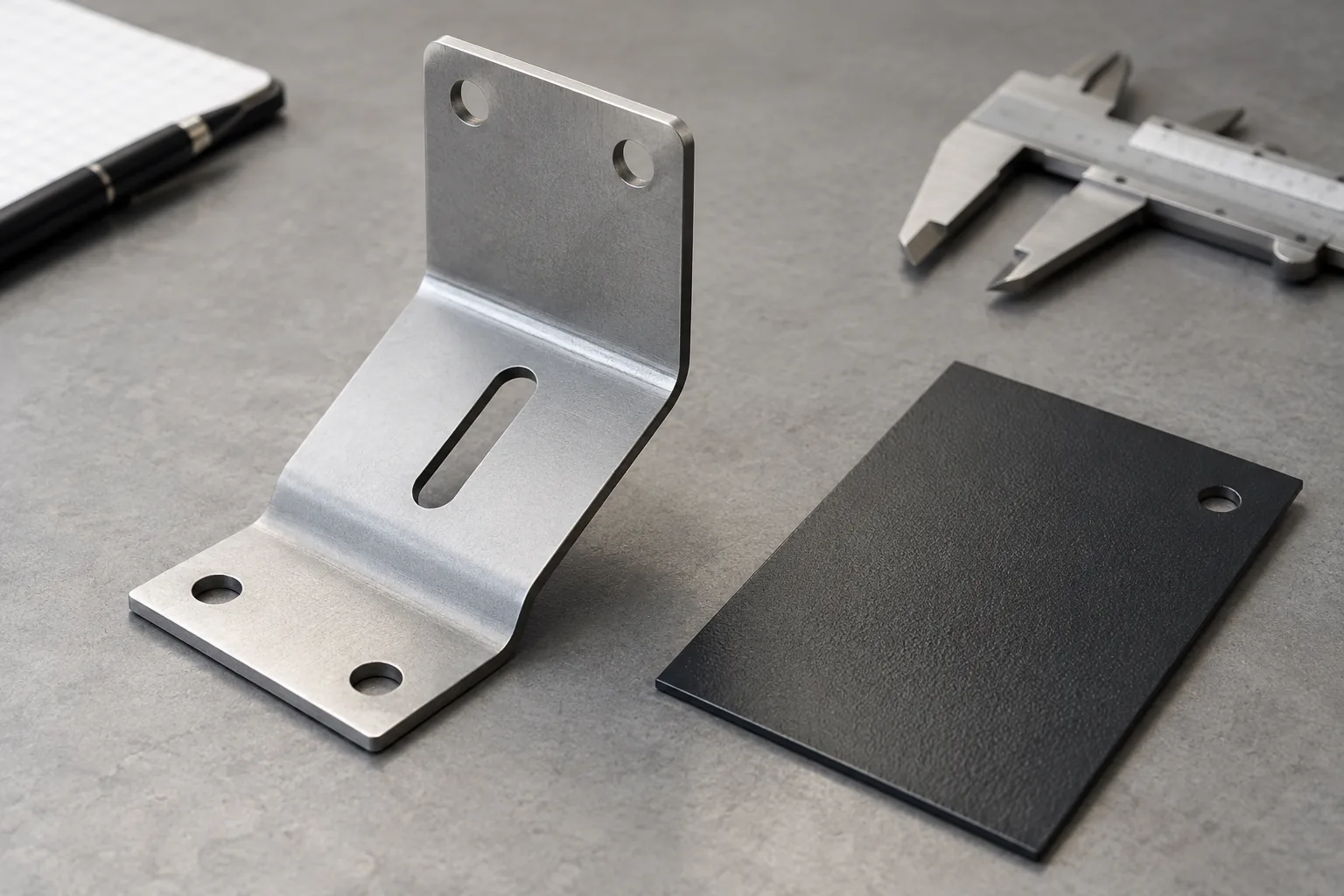
For laser cut oxide layer powder coating, OEM buyers should define the substrate, cut-edge condition, surface-preparation sequence, coating requirement, and sample evidence instead of assuming that a visible edge color proves the root cause of a coating problem. Laser cutting can create process-dependent edge conditions, but coating performance depends on the complete material, preparation, coating, cure, geometry, and handling system. The approved sample should represent the intended production route.
This article is for importers and product developers specifying coated low-carbon-steel components such as mounting plates and brackets for bathroom or home-storage hardware. It does not diagnose a specific failure or claim that Koitor uses a particular cutting or coating route for every project. Laser cutting and powder coating may be performed by different providers; identify process responsibility and validate the finished part.
What does an oxide layer at a laser-cut edge mean?
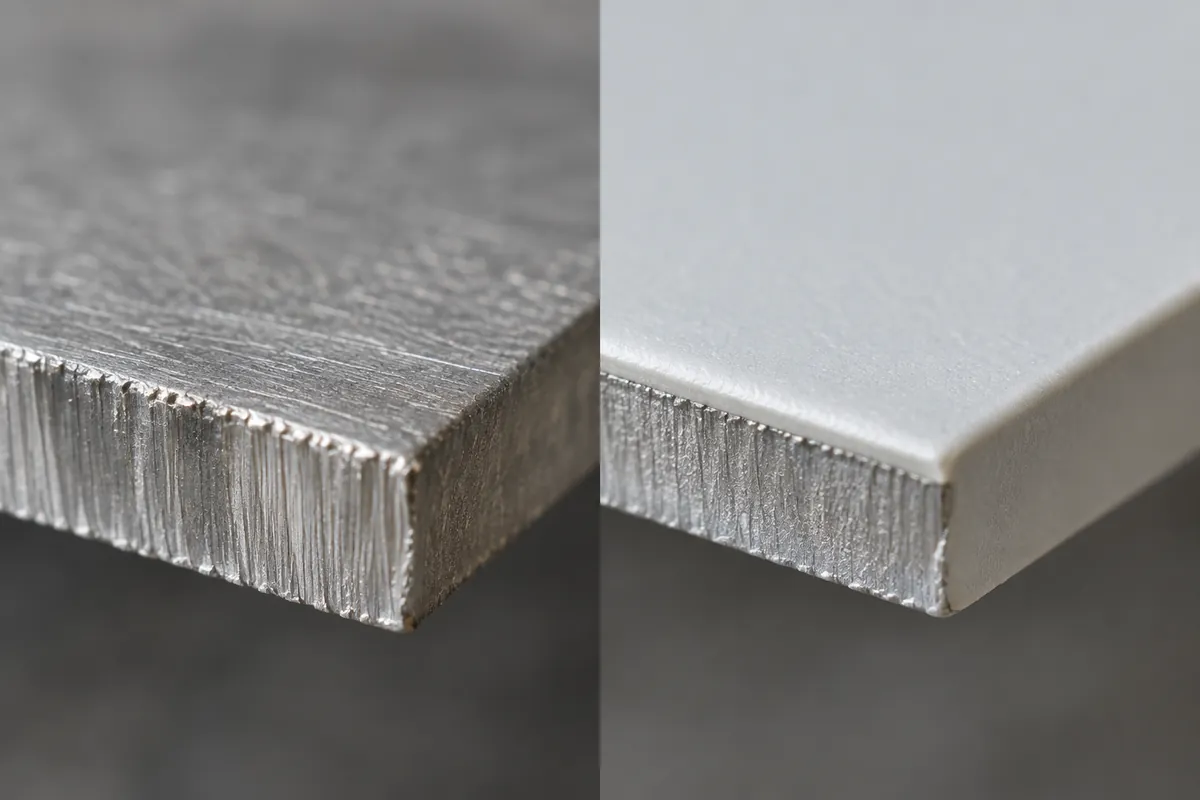
Laser cutting uses a focused heat source and assist gas to separate material. The resulting edge may reflect the material, gas, cutting conditions, thickness, and post-cut operations. A primary laser-system supplier, Bystronic, explains that assist gases influence laser cutting behavior and edge results. That supports a buyer’s need to document the cutting route, but it does not prove that a specific oxide condition will cause a coating to peel. Review Bystronic’s discussion of laser cutting and assist gases.
A visible dark or colored edge may prompt questions about oxide, residue, dross, roughness, or heat-affected surface. A photograph alone cannot distinguish these possibilities or establish a failure mechanism. Buyers should ask the supplier to identify the observed condition and the relevant preparation step. If an actual coating failure has occurred, preserve the failed sample and compare it with an approved control before changing the process.
The word “oxide” should not be used as a catch-all explanation for coating adhesion issues. Surface contamination, inadequate preparation, incompatible pretreatment, coating variation, cure conditions, handling damage, or design features that trap residue could also be relevant. These are hypotheses for investigation, not conclusions about any particular product.
Why should coating quality be assessed as a full process chain?
The final surface is influenced by the substrate and every step from cutting to shipment. A part may be cut, deburred, cleaned, pretreated, coated, cured, inspected, and packed by different process owners. A change in one step can affect appearance or adhesion, and a sample made by a different route may not represent the batch.
The buyer should map the process sequence and identify who is responsible for each stage. Ask whether the edge is deburred or otherwise prepared before coating, how parts are cleaned, and how the supplier controls contamination and handling. The buyer does not need to dictate proprietary chemistry or oven settings. The requirement is for the finished product and the evidence that the agreed process route produces it.
A coated panel coupon can establish an initial color or texture preference but may not represent a laser-cut edge, hole, bend, weld, or recessed feature. Use a production-intent part or a representative coupon that contains the same edge and preparation conditions. If the product includes multiple thicknesses or cut patterns, identify which locations are critical to the review.
What should an RFQ specify?
An RFQ should show the material designation and thickness if known, cutting geometry, visible faces, edge requirements, coating color and texture, and intended use environment. Mark critical edges and holes. State whether burrs, dross, sharp projections, discoloration, or coating holidays are acceptable and how those conditions will be evaluated. Do not rely on a general phrase such as “powder coated to good quality.”
Ask the supplier to clarify:
- – material grade and supplied form, or the proposed material assumption;
- – cutting process route and any known edge limitations;
- – deburring, cleaning, pretreatment, and coating sequence;
- – who performs each operation and who owns final inspection;
- – how the sample represents the intended production route;
- – coating appearance standard and acceptance reference;
- – edge and hole coverage expectations;
- – test method and acceptance criteria if adhesion or corrosion is contractual;
- – packaging and handling protections for coated surfaces;
- – change-notification requirements for supplier or process changes.
If the exact coating system is still open, ask the supplier to propose an option with supporting product data and sample results, subject to buyer approval. Do not treat a proposal as an approved material or as evidence of compliance with an unmentioned regulation or test.
How should buyers compare edge-preparation options?
| Review item | Buyer question | Evidence to request |
|---|---|---|
| As-cut edge | Is the observed edge condition acceptable for the specified finish? | Production-representative cut sample |
| Mechanical edge treatment | Does the process remove burrs or change the edge profile? | Finished geometry and sample review |
| Cleaning/preparation | How is residue or contamination addressed before coating? | Process flow and supplier declaration |
| Coated edge | Does the coating cover the required surfaces consistently? | Visual sample and specified inspection |
| Adhesion requirement | What method and acceptance level apply? | Agreed test report for representative construction |
| Corrosion requirement | What exposure and acceptance criteria are contractual? | Defined validation evidence |
These are review categories, not process recommendations. The appropriate preparation depends on the substrate, geometry, coating system, product environment, and supplier’s validated route. Buyers should avoid prescribing “remove all oxide” if they have not defined how that condition is identified or why it matters to the product.
How can a buyer investigate peeling or edge discoloration?
Start with evidence preservation. Keep the failed component, its packaging, part number, lot, drawing revision, and photos of the failure before cleaning or rework. Record where the issue appears: cut edge, broad face, hole, bend, weld, or contact point. Compare it with unaffected areas and an approved sample from the same or a reference lot.
Then separate observation from hypothesis. For example:
- – Observed: coating is lifting at a cut edge on one returned sample.
- – Possible hypotheses: edge preparation, contamination, coating coverage, cure, handling, impact, or a combination.
- – Needed evidence: process records, comparison samples, cut/edge condition, coating route, and an agreed test or section review if warranted.
Do not declare laser-cut oxide as the cause without confirming evidence. The supplier and buyer should examine the complete process and agree on the investigation method. If a corrective action changes preparation or coating, validate the change on production-representative samples and check the same locations where the issue was observed.
For a repeat issue, expand the review across multiple parts and lot points according to the risk. A single returned part may be an important signal, but it does not by itself establish a systemic cause. Record sample identities and distinguish confirmed findings from open hypotheses in the corrective-action report.
What tests and sample approvals are useful?
No single test automatically proves the finished product will perform in every environment. If adhesion is important, specify the test method and acceptance criteria that apply to the buyer’s product, material, coating, and geometry. If corrosion resistance is important, identify the exposure and criteria separately. Do not substitute a generic test name for the requirements, and do not claim that a coupon result proves every edge and formed feature.
Before testing, confirm the sample represents the intended substrate, cut route, edge preparation, pretreatment, coating, cure, and handling. Keep traceable records and identify deviations. If a flat coupon is used for early screening, label its limits and require a part-shaped sample before final production release.
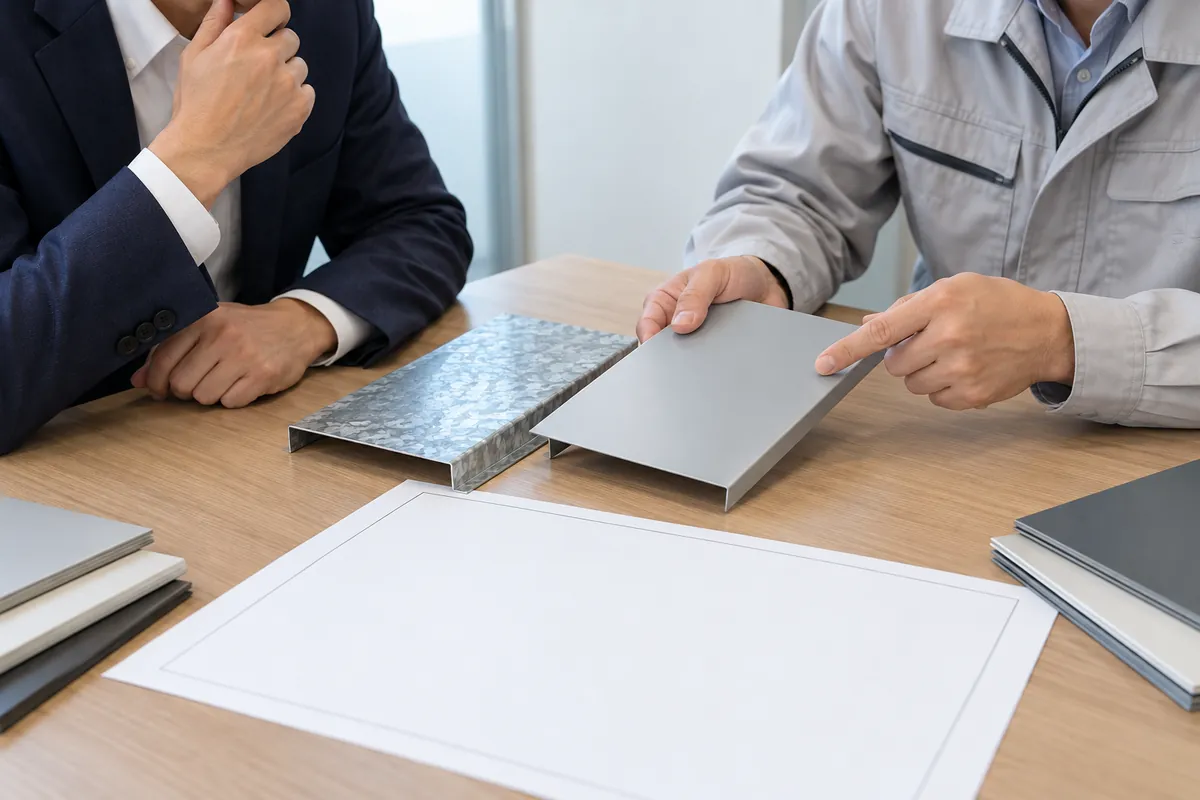
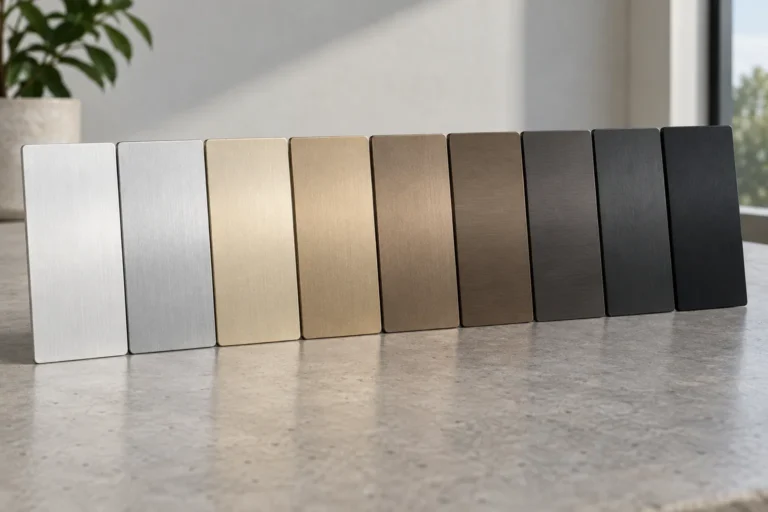
Approve color, texture, gloss, edge coverage, hole coverage, and any visible handling marks under consistent conditions. State whether the approved standard is a physical sample, controlled specification, or both. Define who retains the master and what happens when the sample is damaged or lost.
How do design and packaging affect the result?
Design features influence access for cutting, cleaning, coating, inspection, and drainage. Narrow gaps or overlapping parts can make it difficult to inspect or coat an area. A sharp corner or tightly nested component may be more exposed to impact or abrasion during transport. These are design-for-manufacturing review points; the correct geometry depends on product function and the supplier’s process.
Packaging can damage a cured finish if parts rub together, shift, or contact sharp metal edges. Approve separators, bags, carton orientation, and stack arrangement with a packed sample. Inspect the product after unpacking and assembly. A coating issue discovered after shipment may be caused by transit damage rather than the cutting or pretreatment process, so record the package condition.
For custom metal hardware context, see Koitor’s pages on fabrication sur mesure de quincaillerie de salle de bains et custom metal storage racks. The project-specific cutting and coating route must be confirmed; these pages do not assert one universal process sequence.
Buyer checklist: what should be controlled before release?
- – Substrate: record material grade/form and thickness, or state what remains open.
- – Cut edge: define acceptable geometry, burr condition, and critical locations.
- – Preparation: document the edge-treatment and cleaning sequence.
- – Coating: identify color, texture, coverage, and approved reference.
- – Process ownership: list the supplier responsible for cutting, preparation, finishing, and final inspection.
- – Sample: approve a production-representative part with cut edges and relevant features.
- – Testing: define adhesion or corrosion methods and acceptance only where required.
- – Failure evidence: preserve returned parts and separate observations from causes.
- – Conditionnement : review abrasion and impact protection on a packed sample.
- – Change control: re-evaluate changes to material, cutting, preparation, coating, or subcontractor.
How should the approval record support later orders?
The buyer should also name an owner for each open item. Product engineering may own the interface, sourcing may own price and supplier changes, and quality may own inspection evidence. Smaller teams can combine these responsibilities, but assignment still needs to be explicit. Without an owner, an open dimension or sample deviation can be mistaken for an accepted production condition.
Use sample review to close the highest-risk unknowns first. A photograph or supplier explanation can support the conversation, but a physical, production-representative sample is stronger evidence when the requirement depends on fit, finish, use, or handling. If a full test is not available before purchase, record that limitation and avoid making a performance promise beyond the evidence.For an investigation, request evidence from the same part and lot wherever possible. A generic process description cannot establish what happened on a particular returned bracket. The laser cut oxide layer powder coating review should distinguish observed edge appearance, measured coating condition, and proposed cause. Keep photographs, failed parts, and process records together until the buyer accepts the conclusion.
If corrective action changes edge preparation, cleaning, or finishing, compare the new sample with the prior approved construction. Review the same edge locations, holes, and bends where the concern occurred. Agree who performs any adhesion or corrosion test and what result constitutes acceptance before testing begins. This avoids different interpretations after the sample has been processed.
For this project, the laser cut oxide layer powder coating requirement should be recorded with the approved sample and drawing. Reconfirm the laser cut oxide layer powder coating criteria if material, process, supplier, or intended use changes.
FAQ
No. A visible edge condition alone does not establish a cause. Coating issues can involve several process and handling factors; investigate the complete route.
Should buyers require every cut edge to be ground?
Not automatically. Define the required edge condition and finish result, then ask the supplier to propose a suitable preparation route and verify it on a sample.
Can a coated flat coupon approve a laser-cut bracket?
It can support early appearance review, but it may not represent the bracket’s edges, holes, bends, and handling. Use a production-representative part for final approval.
How should peeling be investigated?
Preserve the part and records, document the exact location and lot, compare with an approved control, and evaluate multiple plausible causes before corrective action.
Does a coating test prove corrosion resistance?
Only the properties covered by the agreed method and acceptance criteria on the tested construction. Define corrosion validation separately when required.
Does Koitor operate laser cutting and powder coating for every project?
This article makes no universal capability claim. Confirm which processes are in-house or subcontracted for the particular RFQ.
Collaborez avec Koitor Hardware
Discuss a Custom Metal Hardware Project
Share your drawing, target interface, material, finish, sample needs, and buyer acceptance criteria with Koitor. Confirm exact category capability and process responsibilities for each project.
Fabrication pour compte de tiers / Marque de distributeur
Transformez ce guide d'approvisionnement en cahier des charges
Indiquez-nous le produit souhaité, ses dimensions, sa finition, la quantité commandée et vos exigences en matière d'emballage. Votre équipe recevra une analyse pratique de la faisabilité de la fabrication avant l'établissement du devis.
 English
  Español
  Português
  Français
  Deutsch
  العربية