
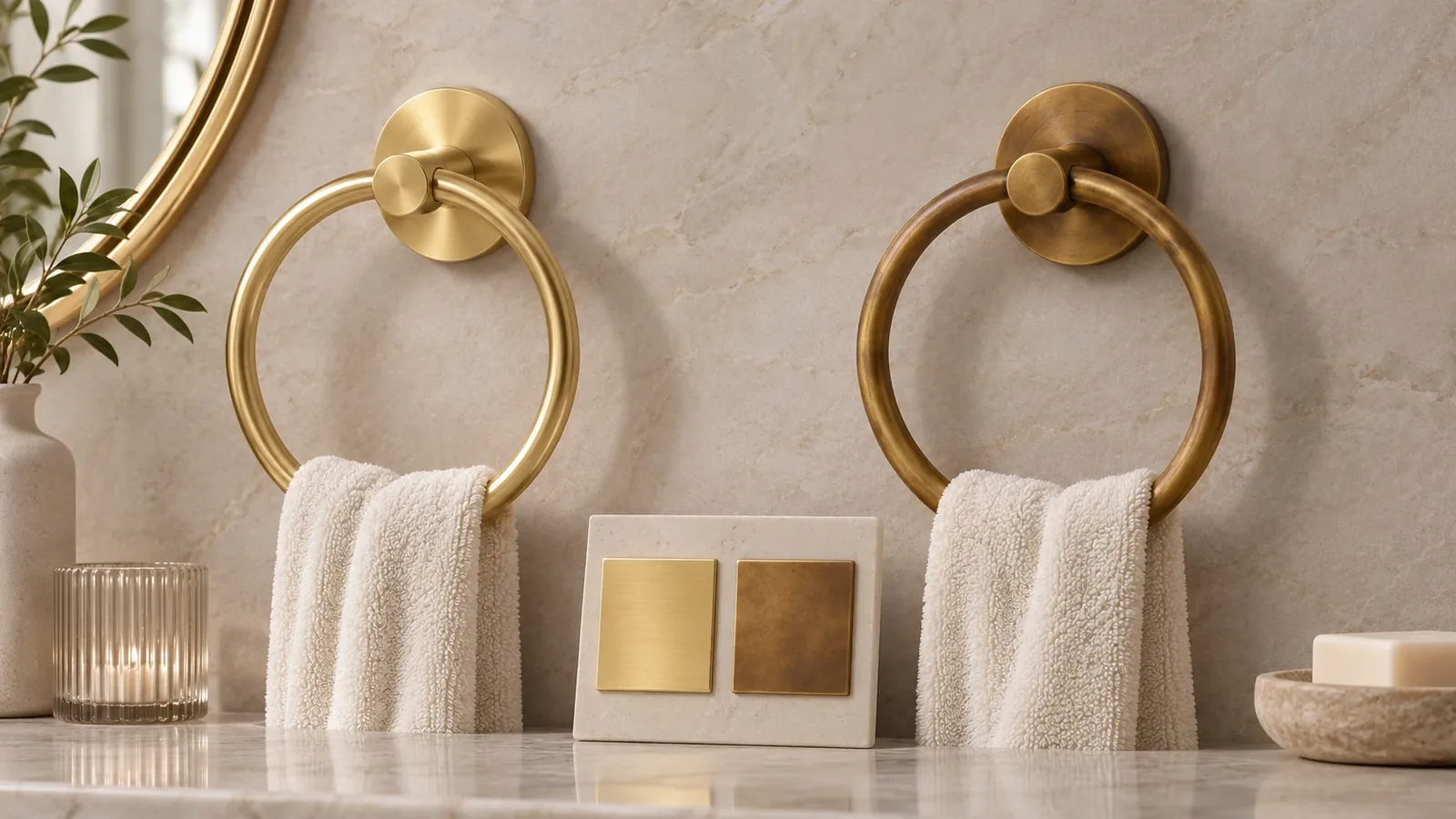
Unlacquered brass should be approved as an appearance behavior, not only as a starting color. A buyer should decide whether the assortment is intended to retain the sample’s initial look or whether a supplier-documented change in appearance is part of the product expectation. Record the exact substrate and finish identity, the selected starting reference, the maker’s description, the intended use conditions, and the copy that will reach customers. A brass-colored sample alone does not identify the base metal or the surface treatment.
This guide is a B2B finish-selection and approval framework. It does not prescribe a chemical treatment, predict a uniform future shade or aging rate, determine warranty rights, or claim that Koitor manufactures unlacquered brass or patina finishes.

What problem does an unlacquered brass finish decision solve?
The buyer must decide whether the approved appearance is a permanent visual target or a starting reference for a finish the maker describes as changing with use or exposure. If that expectation is not settled before launch, purchasing, product copy, and customer service may describe the same finish in different ways.
Bathroom accessory buyers often compare a sample, finish name, and product photograph. Those details can help identify the look at one moment, but they may not tell the buyer whether the finish is sealed, intentionally left unsealed, or described by the supplier as a living finish. Nor does a color name alone establish the underlying metal. Base material and surface treatment are separate product fields.
Allied Brass’s current guide distinguishes lacquered and unlacquered brass finishes and describes its unlacquered option as bare brass without a lacquer layer, with appearance expected to change over time. This is a maker’s explanation of its own finish context. The buyer should use it as evidence that some products are intentionally offered with an evolving appearance; it does not establish a uniform shade, timeline, performance, or warranty for all manufacturers.
Baldwin’s current warranty information provides another maker-specific example: its product terms identify “living finish” products and describe appearance change and coverage for its own product lines. Baldwin’s categories and warranty provisions apply to its products and terms. They are not a universal legal rule and should not be copied into another brand’s policy.
The decision is therefore two-part: What does this exact supplier call the substrate and finish, and what appearance behavior does the buyer intend to promise? A product can be selected for an intended change, but that expectation needs to be explicit and supported by the chosen supplier’s documentation.
What should buyers approve before launch?
Approve the intended appearance behavior separately from the initial sample color. The buyer’s record should identify the exact SKU, finish, supplier statement, starting reference, and limits of any appearance expectation.
Use an appearance-expectation record:
- Accessory identity: SKU, drawing revision, model, and product family.
- Substrate: exact base material stated by the supplier; do not infer it from the finish name or color.
- Finish identity: supplier’s full finish name and process description, where documented.
- Supplier-stated behavior: whether the finish is sealed or described as unsealed/living, and the exact source that supports that statement.
- Starting reference: approved sample or image, revision, and comparison conditions if documented.
- Buyer expectation: retain the initial look, accept supplier-described change within a defined scope, or hold pending clarification.
- Use conditions: environment or exposure information the supplier requires for its review.
- Customer-facing wording: product page, packaging, care sheet, or retailer copy approved for the selected behavior.
- Open questions: unresolved finish identity, variation, care, warranty, or performance questions assigned to their owner.
| Décision de l'acheteur | Information to capture | Do not infer |
|---|---|---|
| Base material | Supplier-declared substrate and model | A brass-colored finish means the part is solid brass |
| Surface treatment | Exact finish name and whether a protective layer is documented | One maker’s treatment from a different brand’s finish name |
| Starting appearance | Approved sample reference and revision | That all pieces or future appearances will remain visually identical |
| Intended appearance behavior | Retain initial look, accept documented change, or hold | A uniform future shade or aging rate without evidence |
| Buyer-facing promise | Approved copy and any product-specific disclosure | Universal warranty or consumer-rights conclusion |
| Supporting evidence | Current maker documentation for the exact SKU | That a finish name proves corrosion performance or care compatibility |
Three useful project dispositions are: retain initial appearance as a requirement, accept a documented appearance change within the supplier’s stated scope, or hold until the finish identity and behavior are clarified. These are buying decisions, not technical pass/fail tests. If the supplier cannot describe the finish clearly, leave the behavior unresolved instead of selecting an expectation from the color photograph.
How do lacquered and unlacquered descriptions affect the sample decision?
Use the maker’s exact wording to distinguish a sealed option from one the supplier describes as unsealed or intended to change. The buyer should not assume that every brass-colored product or every “antique” finish belongs to either group.
Allied Brass’s guide explains the distinction in its own product context: it describes lacquered brass as having a clear protective layer and its unlacquered brass as not having that lacquer layer, with a surface expected to develop a patina as it is exposed. The source also notes that the base metal and finish are separate questions. This supports a buyer’s documentation request; it does not establish a universal chemical process, exact brass composition, or the future appearance of another supplier’s hardware.
When reviewing a sample, record what you can actually observe and what the supplier states. “This sample appears bright and polished under the approved viewing conditions” is an observation. “This exact SKU is solid brass with no lacquer and is intended to change appearance” is a supplier claim that needs current documentation. “All pieces will age to the same color” is a stronger promise that should not be made without specific evidence.
The sample is a starting reference. It can help the buyer approve initial color, surface appearance, and visible workmanship. It cannot predict a uniform long-term patina, exact time to change, or similarity between parts exposed to different handling or environments. If a future appearance is part of the value proposition, the buyer should state that the supplier has described the finish as changing and avoid promising an exact future result.
| Sample review item | Record | Boundary |
|---|---|---|
| Product identity | SKU, revision, and supplier | A sample without model identity does not define a family-wide claim |
| Initial appearance | Color/finish reference and review date | A starting appearance is not a future shade prediction |
| Finish statement | Maker’s description of sealed/unsealed status | Do not infer the process from appearance alone |
| Variation expectation | What the supplier documents for the selected product | Do not promise uniform change absent evidence |
| Copy decision | What buyer-facing statement is approved | Do not borrow another maker’s warranty or care text |
How should appearance expectations travel through the supply chain?
The approved expectation should follow the product from sample approval to purchasing, packaging, and customer-facing copy. Every party should work from the same finish identity and the same boundary on future appearance claims.
At assortment selection, the category manager chooses the intended behavior. At RFQ, purchasing asks the supplier to identify substrate, finish, and relevant product documentation. At sample review, quality records the exact part and initial appearance that were accepted. At packaging and marketing review, the copy owner receives the approved language and should not invent a future color promise. If the selected SKU or finish changes, the record should be reopened.
The record can include an owner and status for each field:
| Handoff item | Owner | Handoff status |
|---|---|---|
| SKU and revision | Product/sourcing team | Confirmed / open |
| Substrate and finish identity | Supplier, reviewed by buyer | Documented / clarification requested |
| Starting sample | Quality/product team | Approved / revision needed |
| Appearance behavior | Category manager and supplier | Retain / accept documented change / hold |
| Care or chemical compatibility | Product maker | Separate evidence required; no recipe inferred here |
| Warranty language | Responsible brand or legal owner | Use only the product-specific approved terms |
| Product-page and package copy | Buyer’s content owner | Match the approved product and finish scope |
This is an editorial and purchasing workflow, not a claim that Koitor already uses this specific record. It is a way for a buyer to keep the product identity and appearance promise aligned. If a supplier changes a topcoat or treatment, the earlier approval may not apply to the revised item; ask the maker to identify the impact and update the record.
The maker’s product documents should remain attached to the SKU, not copied into a general brand statement without review. A page about one manufacturer’s lacquer or warranty does not authorize another seller to reuse its language. A retail team can link to product-specific details or create its own wording after the responsible product and claims reviewers approve it.
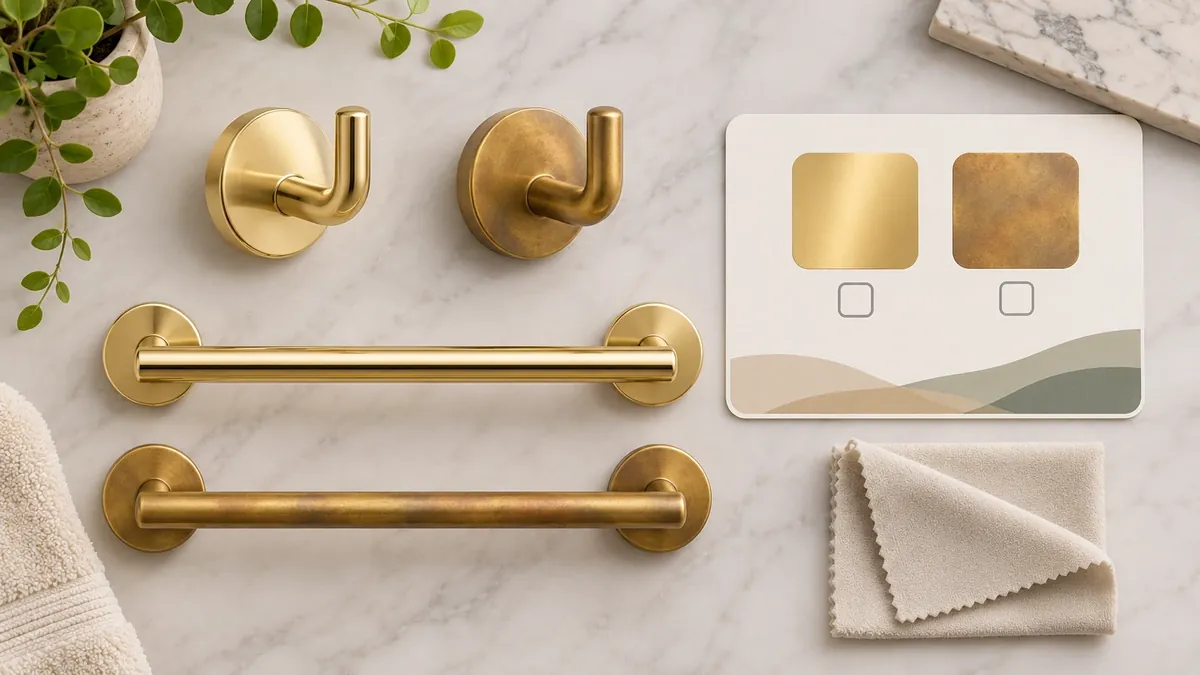
How should the changing-appearance promise be documented?
Treat appearance change as a product expectation that must travel with the SKU, rather than as a detail known only to the person who approved the sample. The buyer can maintain a short approval record with the finish description used by the maker, the sample or reference identifier, the intended starting appearance, and a plain-language statement that later appearance may differ. Identify which party supplied the finish information and which party approved the wording. This record should distinguish an intentionally unsealed finish from a coated or lacquered option without implying that every product sold under a similar color name has the same construction.
The approved sample is a reference for the condition reviewed at that time. It is not automatically a promise that the surface will remain visually unchanged, nor does it define every future mark as acceptable. If a project needs a stable visual appearance, ask the finish supplier to identify an appropriate documented option and confirm its scope for the actual product. If change is intended, describe that behavior accurately before catalog copy, product photography and packaging language are finalized. This article does not establish a particular finish’s corrosion resistance, chemical compatibility, service life or care method.
A launch handoff can carry four separate items: (1) the current approved sample or reference; (2) the maker’s finish terminology and identified product scope; (3) the approved description of expected appearance change; and (4) any open questions that need maker confirmation. Keep initial color matching separate from later appearance behavior. A buyer may approve a sample’s present tone while still needing a separate decision about what customers should expect after use. Link to the existing collection-matching review for the first question; do not reuse its sample-comparison process as proof of the second.
Give the same bounded statement to the distributor, e-commerce content owner, packaging team and customer-support team. Product images should represent the reviewed item without implying that the photographed tone is permanent. Packaging or listing text should avoid absolute promises such as “never changes” unless the responsible maker supports that exact claim. Support teams should have the maker’s current documentation and a route for escalating a question about a particular product, rather than improvising a warranty interpretation. Baldwin’s published warranty language is an example of one maker’s product-specific treatment; its classifications and terms cannot be transferred to another brand or SKU.
If the manufacturer revises the finish or construction, reopen the approval record. A name change, supplier change or visually close replacement can alter the basis of the previous statement. Ask for the revised product scope and confirm whether the existing product copy remains accurate. This is change control for a buyer-facing expectation, not legal advice and not a promise that every visible difference is covered by a warranty.
What should buyers avoid assuming?
Avoid turning an intended change in appearance into a conclusion about every later mark, performance issue, or customer remedy. A finish expectation is one product decision; it does not settle all field observations.
Do not identify the substrate from a color name. “Brass,” “brass-look,” “antique brass,” or a similar label may describe a material, a surface color, or a finish family depending on the supplier. Ask for the exact product declaration.
Do not assume a matching sample means permanent matching. An approved initial color may not describe the supplier’s intended behavior after use or exposure. Confirm whether the exact finish is meant to retain its initial look.
Do not promise a uniform future patina. The sources do not establish a predictable shade, rate, or matching result for all parts and environments. Use the maker’s bounded description rather than inventing a timeline.
Do not treat every later mark as harmless patina. A buyer must investigate a field observation against the product, finish, and supplier evidence. Do not classify rust, peeling, pitting, staining, or an unknown mark from a photograph as an intended living-finish change.
Do not generalize one maker’s warranty. Baldwin’s current terms apply to its product lines and distinguish specific categories. They are not a universal warranty rule and should not be pasted into another brand’s documents.
Do not copy a cleaner recipe from another finish guide. Cleaner compatibility belongs to the actual finish maker and its product instructions. Koitor’s existing cleaner-compatibility guide for powder-coated bathroom hardware concerns that separate finish context; it is not a chemical-care recommendation for unlacquered brass.
Do not use a living-finish label to explain corrosion on another substrate. This topic does not reinterpret rust-resistant steel, powder coating, peeling, or other finish conditions. Those issues require the relevant product and finish evidence.
Do not imply that Koitor makes the cited brass products. Koitor’s approved manufacturing information supports metal forming, polishing, powder coating, assembly, drawing, and sample communication. Brass casting, specialized lacquer lines, chemical patination, and a current living-finish product range are unconfirmed.
Buyer handoff and next steps
How can Koitor support a related bathroom hardware project?
Koitor Hardware can discuss metal drawings, sample references, approved finish scope, assembly, and packaging for its confirmed bathroom and home-storage hardware products. That does not establish capability in brass casting, specialized lacquer application, chemical patination, or a specific unlacquered-brass SKU.
For a related project, state the actual metal part and the finish expectation. Provide the drawing or sample, supplier-defined substrate and finish identity, starting appearance reference, target quantity, and packaging or copy requirements. Koitor can confirm whether the defined product and finish scope fit current capabilities before quotation.
If the product depends on a specialized brass or living-finish treatment, ask the responsible supplier to confirm the actual process and its documentation. Keep care instructions, warranty terms, and field-claim handling with their respective owners. A drawing or sample conversation does not qualify the finish or establish a future appearance result.
Small-batch OEM production can be relevant for product development within Koitor’s confirmed metal hardware scope. Feasibility depends on the selected material, finish, construction, order quantity, and packaging. Confirm the actual product route and any bought-in parts with the factory rather than inferring them from an adjacent capability statement.
Le OEM home-storage hardware scope provides company context for a defined metal-component inquiry.
Liste de contrôle à l'intention de l'acheteur avant de demander un devis
Provide the information that separates the initial look from the intended finish behavior:
- Product SKU, drawing revision, and exact bathroom accessory.
- Supplier-declared substrate and complete finish name.
- Current supplier document describing whether the finish is sealed, unsealed, or otherwise intended to change.
- Approved starting sample or image reference and its revision.
- Buyer’s selected behavior: retain the initial appearance, accept supplier-described change within scope, or hold for clarification.
- Intended use environment information requested by the supplier.
- Care, chemical compatibility, corrosion, and warranty questions assigned to their responsible product owners.
- Product-page, package, and instruction copy that must use the approved language.
- Quantity, sample plan, finish approval, packaging, and any private-label requirements.
- Open claims or field observations that need separate investigation.
Ask the supplier to identify which statement applies to the exact model and what it does not establish. Keep the accepted sample, technical file, quotation, and buyer-facing description aligned to that same finish identity.
The approval record should remain understandable to teams that did not select the original sample. Use the same model and finish wording in the purchase order, product master, listing copy and packaging reference. Where the maker calls the finish “unlacquered” or “living,” retain that maker-specific term and add a concise approved explanation of the expected appearance behavior. Do not let a distributor shorten the wording into a promise that the starting color is permanent.
If a customer asks about a later appearance difference, staff should be able to locate the approved product scope and maker documentation rather than infer the cause from a photograph. Route questions about a specific warranty, care method, corrosion issue or field condition to the responsible supplier. This article does not decide whether an individual mark is acceptable or covered. A visual change associated with an intended finish should not be used to dismiss a separate complaint without product-specific review.
When an item is photographed, use the sample identity and date as internal references. If the displayed image is updated after a finish or supplier change, confirm that accompanying copy still describes the current product. This is especially important for multi-SKU collections where a similar color name may refer to different surface constructions. Maintain distinct records rather than copying one finish explanation across the range.
Foire aux questions
Does a brass-colored sample prove that the product is solid brass?
No. A color or finish name does not by itself identify the base metal. Ask the supplier to state the substrate and surface treatment for the exact SKU.
Does a matching finish name promise that every product will keep the same appearance?
Not by itself. Confirm whether the supplier describes the selected finish as sealed or intended to change, and record the starting appearance separately from any future expectation.
Does “living finish” mean every later mark is acceptable?
No universal conclusion follows from that label. A buyer should investigate the exact observation against the product, supplier documentation, and approved requirement. Do not classify an unknown mark from appearance alone.
Can a supplier’s warranty statement be copied onto another SKU?
No. Warranty terms are maker- and product-specific. Use only the terms approved for the exact product and selling brand.
What should be passed to the packaging team?
Provide the approved substrate and finish identity, starting sample, intended appearance behavior, and customer-facing wording. Keep any care or warranty statement tied to the responsible maker’s current documentation.
Collaborez avec Koitor Hardware
Share the Finish Identity and Approved Appearance
Send the product drawing or sample, supplier-declared substrate and finish, starting appearance reference, quantity, and packaging scope. Koitor can confirm whether the defined metal hardware and finish request fits its current capabilities before quotation.
Fabrication pour compte de tiers / Marque de distributeur
Transformez ce guide d'approvisionnement en cahier des charges
Indiquez-nous le produit souhaité, ses dimensions, sa finition, la quantité commandée et vos exigences en matière d'emballage. Votre équipe recevra une analyse pratique de la faisabilité de la fabrication avant l'établissement du devis.

 English
 Español
 Português
 Français
 Deutsch
 العربية