
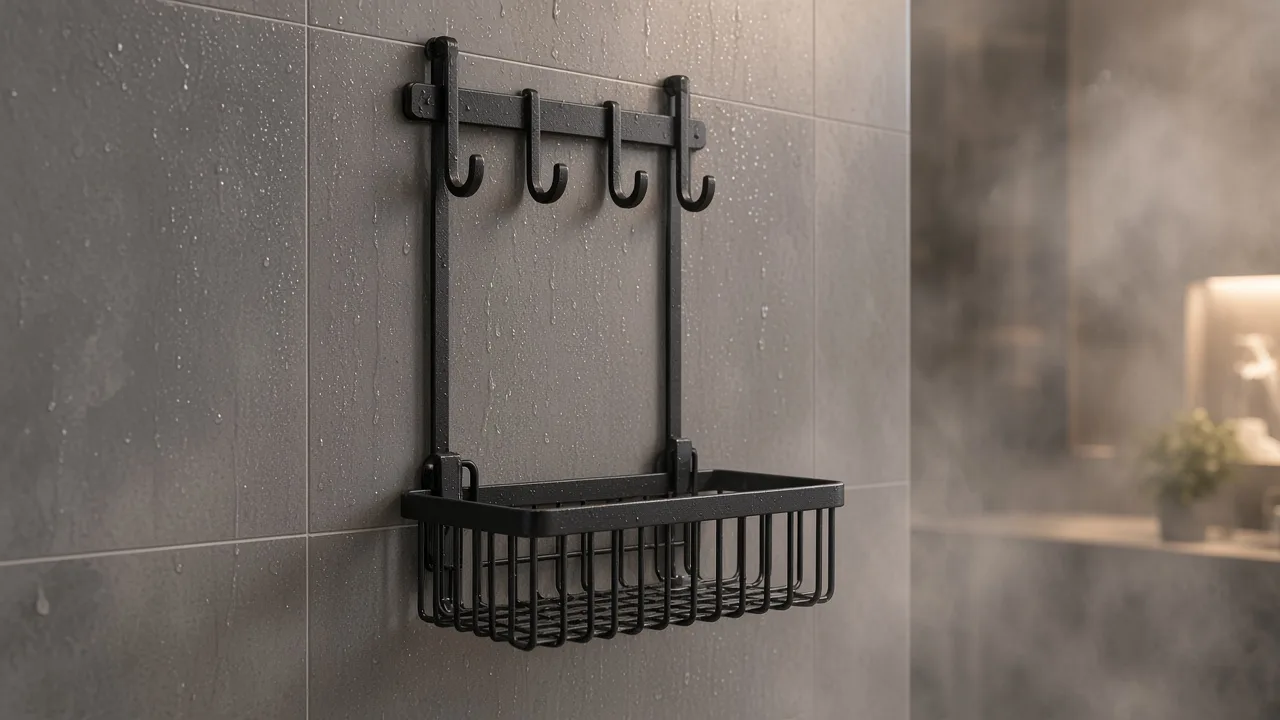
Importers who treat matte black adhesion bathroom as a casual “won’t peel” note inherit steam-cycle returns that still passed outgoing visual AQL. Matte black wet-room hardware needs frozen adhesion method, classification grades, conditioning, and edge-zone rules—not only cosmetic defect photos. This article provides RFQ and IQC language buyers can paste into powder annexes for bathroom wire and accessory programs.
It deliberately differs from powder coated shower caddy defect catalogs that list visual coating defects. Those remain complementary. This page focuses on adhesion test language for matte black in humid bathrooms. Photos are generic. Koitor Hardware supports bathroom powder programs from Jiangmen, China, with practical IQC wording for private-label teams.
In this guide
- Why Matte Black Adhesion Bathroom Specs Beat Visual-Only Defect Lists
- How to Freeze Matte Black Adhesion Bathroom CTQs
- 7 Proven Test Rules for Matte Black Adhesion Bathroom
- Accept, Rework, or Reject: Adhesion Disposition
- RFQ Checklist Language for Cross-Hatch, Humidity, and Edges
- FAQ
- Send Your Spec
Why Matte Black Adhesion Bathroom Specs Beat Visual-Only Defect Lists
Buyers who only catalog orange peel and thin edges without freezing matte black adhesion bathroom test language inherit peels after steam cycles that pass outgoing visual AQL.
Matte black in wet rooms hides early adhesion loss under texture. Cross-hatch grades, humidity conditioning, and edge rules must be named before mass PO.
This page is not a rewrite of powder shower caddy defect catalogs. Those name visual defect families. This page freezes adhesion test and disposition language for matte black wet-room hardware.
Freezing matte black adhesion bathroom early aligns IQC, third-party labs, and suppliers on ASTM-style tape-test grades instead of “rubs off a little.”
How to Freeze Matte Black Adhesion Bathroom CTQs
Start matte black adhesion bathroom RFQs with pretreatment callout, powder system (including primer if any), cure verification, adhesion method (cross-hatch classification), min grade, and humidity/steam conditioning before test if required.
Require test locations: flat coupon, wire OD, and cut edge or weld zone. Matte black often fails first at edges.
Couple DFT windows to adhesion—starved film can still look black. Keep thickness in process pillars; keep adhesion grades here.
Neighbors: powder coated shower caddy coating defects for visual defect names; humid bathroom powder coating controls for DFT/pretreatment; powder coating science for process science.
Anchor method language to ASTM D3359 tape adhesion and note ISO 2409 as the related cross-cut method family when EU buyers ask (ISO 2409).
7 Proven Test Rules for Matte Black Adhesion Bathroom
Seven rules keep matte black adhesion bathroom IQC consistent across lots and labs.
State ASTM D3359 Method A or B (or ISO 2409) and the min class (e.g., 4B/5B or 0/1). Do not write “good adhesion.”
For matte black adhesion bathroom, consider humidity or steam exposure before cross-hatch so latent fails appear.
Blunt blades and shallow cuts fake passes. Control blade change frequency.
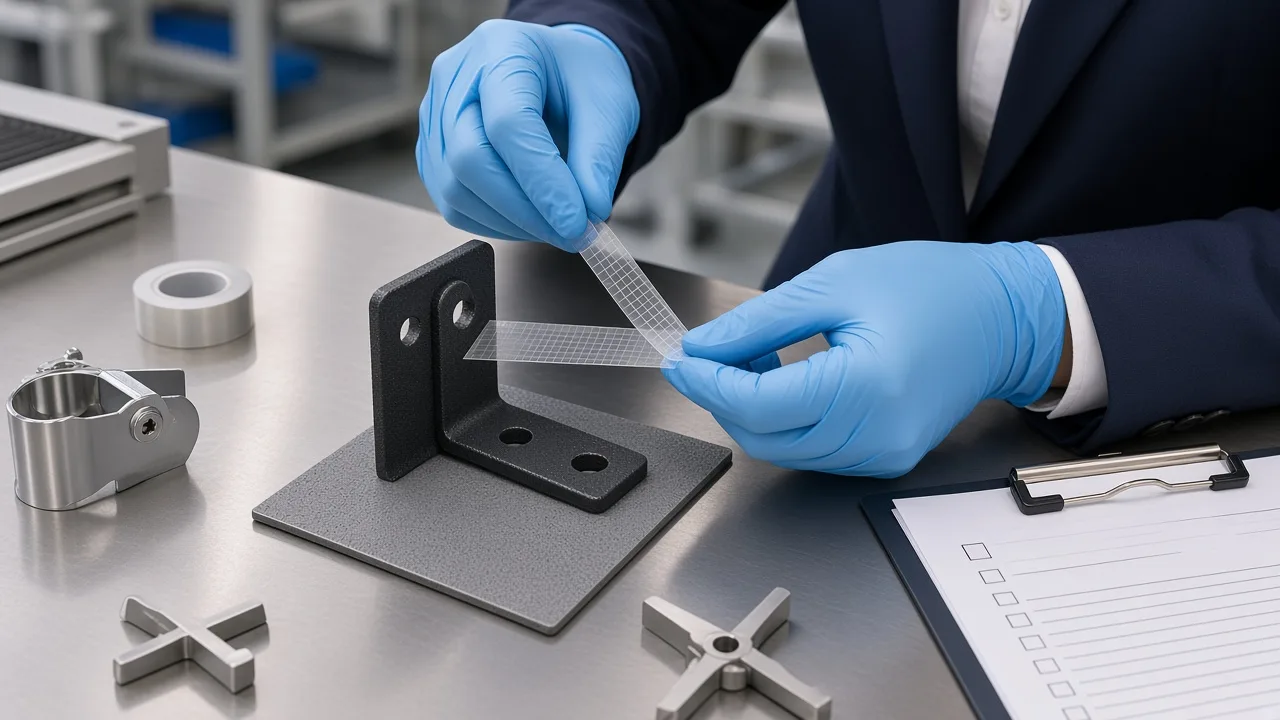
Different tapes invent different grades. Freeze brand/type, dwell time, and ~180° pull.
Photograph lattice before/after pull. Arguments without photos waste weeks.
Do not test only easy flats. Wet-room peels start at edges and weld spatter islands.
Pre-agree accept/rework/reject by class for matte black adhesion bathroom. Example: 5B/4B accept; 3B rework review; ≤2B reject.
Accept when specified zones meet min class after any required conditioning for this adhesion program.
Rework (strip/recoat) only with adhesion re-test. Sanding alone without re-pretreat often fails again.
Reject when grades fall below hard limit, or when visual peel already exists in wet-room simulation.
Separate adhesion fails from color ΔE fails and from packaging scuff. Different root causes.
This adhesion program blanks: pretreatment ______. Powder/primer ______. Cure verify ______. Method ASTM D3359 __ / ISO 2409. Min class ______. Conditioning ______. Zones: flat/wire/edge/weld. Tape ______. DFT window ref ______. Photo retain ______.
First-article pack: adhesion photos by zone, conditioning log, DFT map reference, and signed disposition.
Matte texture can mask micro-flake—always loupe this adhesion program lattices.
Steam showers and poor exhaust accelerate adhesion loss; match test severity to channel claims.
Do not use fingernail scratch as the only this adhesion program method; it is not reproducible across inspectors.
Accept, Rework, or Reject: Adhesion Disposition
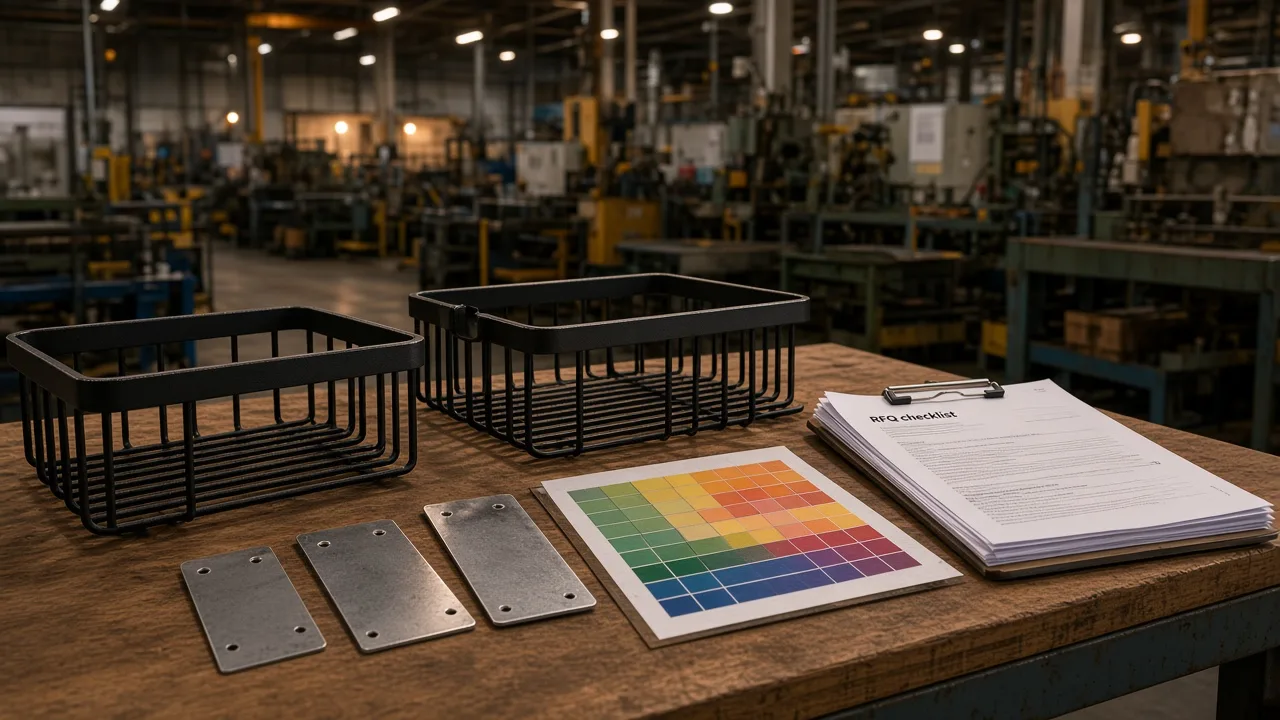
RFQ Checklist Language for Cross-Hatch, Humidity, and Edges
Primer-less matte blacks on cold-rolled wire need honest pretreatment audits.
Dual coaters must share tape brand and grading photos for this adhesion program or grades will disagree.
Track adhesion PPM separately from visual cosmetic PPM.
Change control: chemistry, blast media, or cure oven profile changes trigger re-FA for this adhesion program.
Faraday cage thin film on basket interiors is an adhesion risk zone—include it.
IFU should warn against abrasive pads that customers later blame on this adhesion program coating failure.
Keep a peel library from field returns tied to grade photos for training.
Humidity chambers need calibrated sensors; fake RH invents false this adhesion program confidence.
Coordinate packaging so PE rub is not mistaken for adhesion loss at receiving.
When Pantone color annexes exist, keep them separate from this adhesion program adhesion annexes.
Weld spatter under powder is a classic peel initiator—gate welding IQC upstream.
For hotel wet rooms, raise conditioning severity in the this adhesion program annex versus residential.
Operators must wear clean gloves; skin oils under matte black create local adhesion islands.
Audit blade sharpness weekly as part of this adhesion program lab checklist.
Third-party labs need your exact tape and conditioning recipe in the PO.
Report both as-coated and post-conditioning grades when this adhesion program claims include steam resistance.
Never waive adhesion FA because color looks perfect under booth light.
Pair adhesion grades with nondestructive DFT checks using practice aligned to ASTM D7091 so starved film is not mistaken for an adhesion-only fail.
Write change-control so chemistry, tooling, or bake edits cannot ship without a signed first-article pack.
Keep a sealed master and a working reference; replace working references on a calendar before they scuff into false fails.
Train inspectors with photo boards of borderline cases so two shifts grade the same way on Monday and Friday.
Separate cosmetic AQL language from method CTQs on the disposition sheet so teams do not waive the wrong gate.
Dual-source programs must exchange physical masters and gauges, not only PDF drawings, before the second plant ships.
Remote approvals need overnighted coupons or sealed masters; video calls under mixed room light are not lot release.
Scorecards should track finish or fit PPM separately from weld PPM so capital goes to the line that actually fails.
Packaging teams must not create scuffs that receiving later blames on finish or adhesion—align PE and separator notes.
First-article packages without photos, instrument IDs, and signatures create “we thought it was approved” disputes.
Seasonal rush cannot skip method checks; gauge capacity and lab time belong in the capacity plan with weld hours.
Field returns should trigger a method audit checklist, not only a supplier email, when the same fail repeats.
Marketing photography should use the same lighting mood as acceptance masters so catalogs do not oversell finish.
IFU warnings about cleaners and misuse protect both the buyer and the factory when returns arrive months later.
Retention policies for masters, tapes, and coupons need days and owners named—orphaned evidence helps no one.
Third-party labs require your exact method recipe in the PO; otherwise their grades are not comparable to yours.
Write change-control so chemistry, tooling, or bake edits cannot ship without a signed first-article pack.
Keep a sealed master and a working reference; replace working references on a calendar before they scuff into false fails.
Train inspectors with photo boards of borderline cases so two shifts grade the same way on Monday and Friday.
Separate cosmetic AQL language from method CTQs on the disposition sheet so teams do not waive the wrong gate.
Gold samples need adhesion coupons, not only pretty photos of the finished caddy. Keep owners named on the same page as the numeric CTQ.
Change-control on silane or zinc phosphate suppliers needs a D3359 re-baseline before ship. Keep owners named on the same page as the numeric CTQ.
Scorecards should track wet-room peel PPM separately from dry-room SKUs in the same finish family. Keep owners named on the same page as the numeric CTQ.
Document whether classification is 4B or 5B and whether edges are graded the same as flats. Keep owners named on the same page as the numeric CTQ.
Train receiving to reject lots missing adhesion photos even when visual AQL looks clean. Keep owners named on the same page as the numeric CTQ.
Retailer lab methods must match your frozen recipe or third-party fails will not map to your IQC. Keep owners named on the same page as the numeric CTQ.
Write adhesion CTQs in ASTM D3359 language with class targets for wet-room SKUs, not only salt-spray hours. Keep owners named on the same page as the numeric CTQ.
Matte black hides orange peel but reveals tape pulls; train IQC on lighting that shows lift edges. Keep owners named on the same page as the numeric CTQ.
Require pretreatment verification before blaming powder chemistry for bathroom peel returns. Keep owners named on the same page as the numeric CTQ.
Steam, cleaners, and toothbrush abrasion belong in the validation plan for wet-room mats. Keep owners named on the same page as the numeric CTQ.
Cross-hatch spacing and tape brand must be frozen; shopping-tape grades are not comparable. Keep owners named on the same page as the numeric CTQ.
Cure windows for matte textures are narrower; under-cure fails adhesion before color looks wrong. Keep owners named on the same page as the numeric CTQ.
Edge coverage on drilled flanges often peels first; include flange coupons in PPAP-style packs. Keep owners named on the same page as the numeric CTQ.
IFUs should ban abrasive pads that burnish matte into glossy islands customers call “defective paint.” Keep owners named on the same page as the numeric CTQ.
Retain cross-hatch photos with the lot record; verbal “it passed” does not survive a retailer audit. Keep owners named on the same page as the numeric CTQ.
Dual-source coaters must share the same tape lot and cutter; method drift creates fake PPM spikes. Keep owners named on the same page as the numeric CTQ.
Humidity at application and flash-off affects adhesion more than buyers expect on matte blacks. Keep owners named on the same page as the numeric CTQ.
Separate cosmetic speck AQL from adhesion class so teams do not waive peel for a pin-size mark. Keep owners named on the same page as the numeric CTQ.
Field returns with peel should trigger substrate and pretreatment audits, not only a powder reorder. Keep owners named on the same page as the numeric CTQ.
Packaging scuffs on matte black look like adhesion fails; align PE hardness and separator rules. Keep owners named on the same page as the numeric CTQ.
Gold samples need adhesion coupons, not only pretty photos of the finished caddy. Keep owners named on the same page as the numeric CTQ.
Change-control on silane or zinc phosphate suppliers needs a D3359 re-baseline before ship. Keep owners named on the same page as the numeric CTQ.
Scorecards should track wet-room peel PPM separately from dry-room SKUs in the same finish family. Keep owners named on the same page as the numeric CTQ.
Document whether classification is 4B or 5B and whether edges are graded the same as flats. Keep owners named on the same page as the numeric CTQ.
Train receiving to reject lots missing adhesion photos even when visual AQL looks clean. Keep owners named on the same page as the numeric CTQ.
Retailer lab methods must match your frozen recipe or third-party fails will not map to your IQC. Keep owners named on the same page as the numeric CTQ.
Write adhesion CTQs in ASTM D3359 language with class targets for wet-room SKUs, not only salt-spray hours. Keep owners named on the same page as the numeric CTQ.
Matte black hides orange peel but reveals tape pulls; train IQC on lighting that shows lift edges. Keep owners named on the same page as the numeric CTQ.
Require pretreatment verification before blaming powder chemistry for bathroom peel returns. Keep owners named on the same page as the numeric CTQ.
Steam, cleaners, and toothbrush abrasion belong in the validation plan for wet-room mats. Keep owners named on the same page as the numeric CTQ.
FAQ: Matte Black Adhesion Bathroom
Is a visual defect list enough for matte black wet rooms?
No. Add this adhesion program cross-hatch language with grades and zones.
ASTM D3359 or ISO 2409?
Pick one primary method for the PO; note the other for EU partners.
Why condition before testing?
Steam/humidity reveals latent adhesion loss matte texture can hide.
Where do peels start?
Edges, welds, and Faraday-thin interiors.
How does this differ from defect catalog #6921?
That catalog names visual defects; this page freezes adhesion test/disposition language.
Send Your Matte Black Adhesion Bathroom Spec for Review
If you are freezing this adhesion program language, send powder system notes, wet-room claims, and any existing lab reports. We can help turn them into grade-ready IQC text before mass PO.
Contact Koitor Hardware via the contact page or email simon@koitorhardware.com. Factory support is based in Jiangmen, China.
Fabrication pour compte de tiers / Marque de distributeur
Transformez ce guide d'approvisionnement en cahier des charges
Indiquez-nous le produit souhaité, ses dimensions, sa finition, la quantité commandée et vos exigences en matière d'emballage. Votre équipe recevra une analyse pratique de la faisabilité de la fabrication avant l'établissement du devis.
 English
 Español
 Português
 Français
 Deutsch
 العربية