
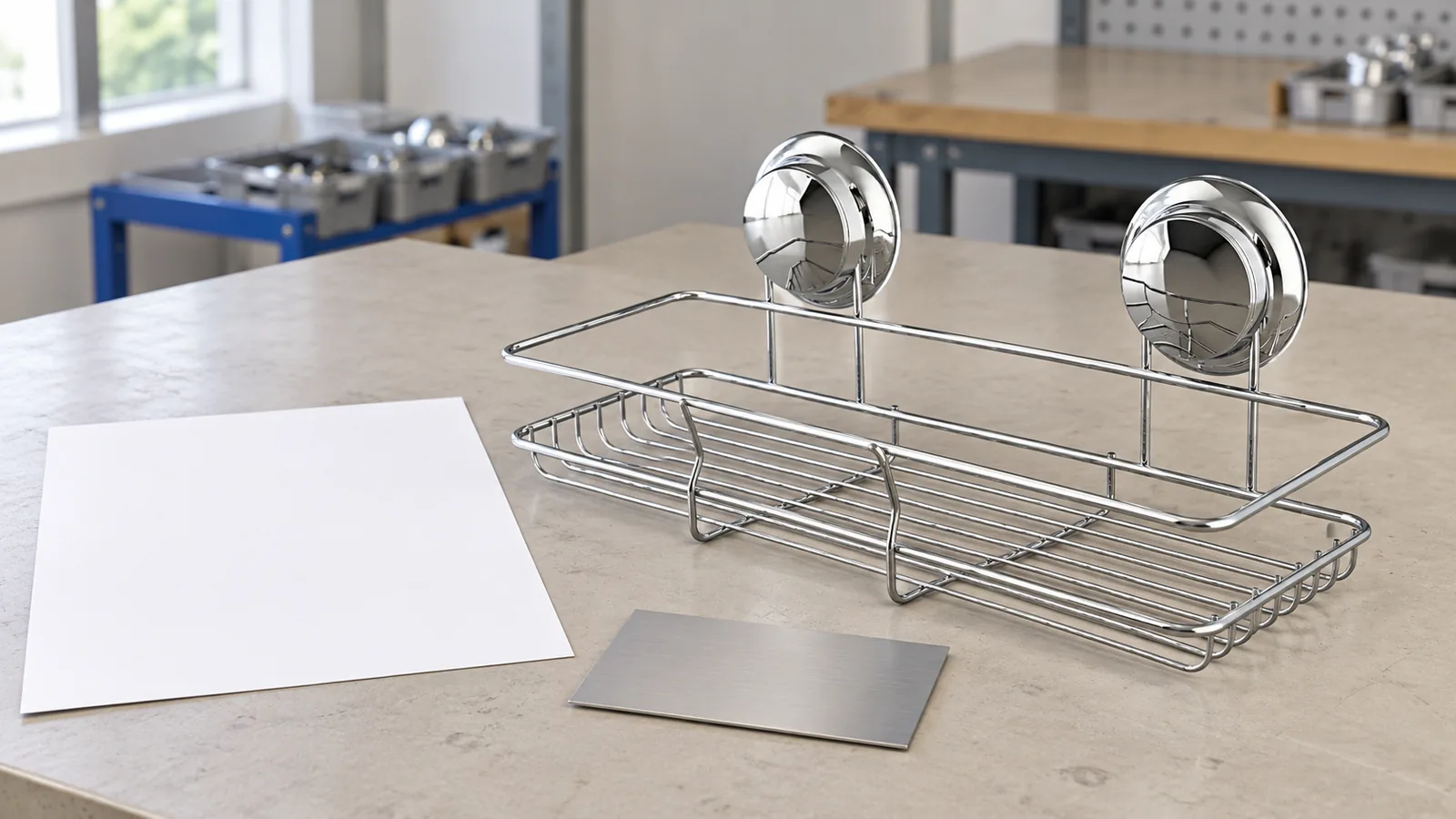
A search for metal bathroom hardware certification EU US should lead to a product-scope review, not a universal certificate shopping list. A passive household rack does not acquire a CE or GCC requirement simply because it is made of metal or sold into a particular market; the answer depends on the exact product, intended use, features, destination and rules that apply to that category. Before asking a factory for a certificate, identify the SKU and the decision the document must support, then confirm the rule with current official guidance or a qualified compliance professional.
Importers and private-label teams often receive a short request such as “send CE” or “provide GCC” without a product classification, applicable rule or destination-market context. That request can produce a document that looks formal but does not answer whether the product is covered, what evidence is required, or whether the evidence matches the item being launched.
This guide is limited to non-powered household bathroom and home-storage metal racks. It does not classify a specific Koitor product or provide legal advice. Electrical or LED features, child-directed use, plumbing functions, building or structural use, food-contact claims, unusual load claims, or a retailer’s own requirements can change the review. Treat each variant as a defined SKU, not as a generic “bathroom accessory.”
The useful question is not “Which certificates does every rack need?” It is: “For this exact SKU, in this destination and channel, which mandatory rules apply, who is responsible for the required conformity action, and what product-matched evidence should be retained?”
What product facts should be fixed before looking up rules?
Start with a one-page product identity record. Give it a model or SKU identifier and record the details that could change classification or evidence:
- Product form and construction: for example, a passive wire basket, shelf, towel rail or storage rack; note whether it includes suction mounts, adhesive pads, screws, moving parts or detachable components.
- Intended use, user and setting: household bathroom storage, hotel supply, a child-directed product, a commercial installation or another stated use. Avoid relying only on the product’s marketing category.
- Materials and finish by component, including any bought-in parts and coatings that could be relevant to a separate chemical or labeling review.
- Features and claims: electrical or lighting components, a plumbing connection, an asserted load, child-safety language, food-contact wording or claims that affect how the item is marketed.
- Destination market and route to market: EU or U.S. launch, importing entity, private label, distributor or retailer specification, and any destination-specific language or instructions.
- Configuration control: drawing revision, sample version, component list, packaging version and the date of the review.
This record is a scoping aid, not a substitute for legal classification. If two models differ in material, intended user, accessory, function or claim, do not assume one conclusion covers both. A clear scope makes supplier questions specific and helps a qualified reviewer see what was actually assessed.
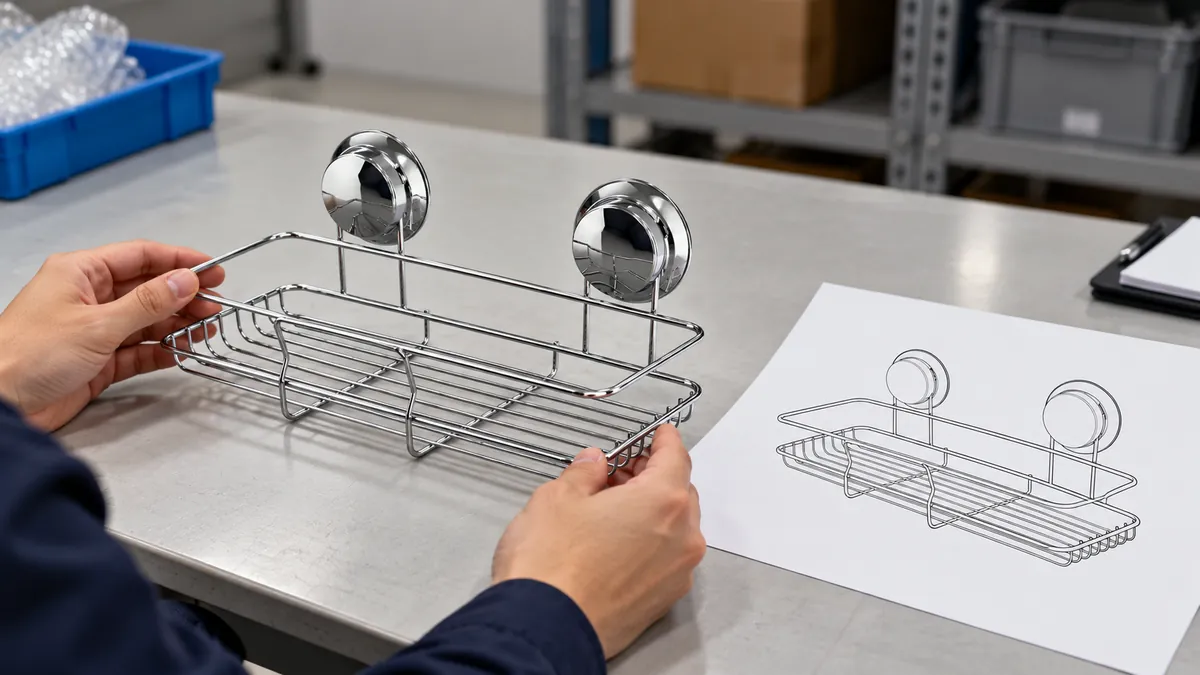
For a product-specific design conversation, buyers can also review Koitor’s custom metal storage rack manufacturing information. Product pages and factory discussions help describe construction; they do not determine legal applicability.
How should an EU buyer decide whether CE marking applies?
CE marking is not a general quality badge, country-of-origin mark or universal approval for goods sold in Europe. The European Commission’s CE marking guidance explains that CE marking is required only for products covered by relevant EU harmonisation legislation, and that affixing it to products outside the applicable scope is not permitted. Start by identifying the legislation that applies to the exact product and intended use. If a specific rule requires CE marking, follow that rule’s conformity-assessment route and documentation requirements; do not copy a process from a different product family.
For a passive rack, do not infer CE applicability solely from the words “bathroom,” “metal,” “shelf” or “imported.” Nor should a supplier’s marketplace listing, generic “CE certificate,” or a test report by itself settle the legal question. The relevant rules must be checked against the product’s construction, functions, claims and intended use. If the item has a powered feature or falls into a regulated category, the scope can differ materially and needs a separate review.
Not needing CE marking does not mean that no EU product obligations exist. The Your Europe general product-compliance guidance describes the need to identify applicable EU and destination-country requirements and outlines importer duties. Depending on the applicable rules, documentation, traceability, instructions, warnings, economic-operator information or other requirements may still matter. Ask the reviewer to identify the rule and the resulting obligation rather than asking the factory to add a CE logo “just in case.”
Record the conclusion as a scoped decision: product version reviewed, intended use, market, legislation considered, conclusion on CE applicability, responsible party, evidence needed, reviewer and review date. If the conclusion is uncertain, mark it unresolved and do not turn uncertainty into a declaration.
How should a U.S. buyer decide whether a GCC applies?
A General Certificate of Conformity is also not a universal certificate for every consumer product. The U.S. Consumer Product Safety Commission’s GCC FAQ says that general-use products subject to a CPSC-enforced consumer-product safety rule, ban, standard or regulation require testing and certification; where a general-use product is not subject to one of those requirements, a GCC is likely not required. The buyer should verify the current rule list and product classification for the exact SKU.
When a GCC is required for an applicable general-use product, the CPSC FAQ says the domestic manufacturer or importer is responsible for issuing it, based on passing test results for each product or a reasonable testing program, except where a specific rule states otherwise. The party responsible should be clear in the commercial arrangement. Do not assume that a factory-issued paper transfers the importer’s legal responsibility, and do not treat a supplier’s willingness to send a document as proof that the product is covered or that the evidence supports it.
The word “rack” alone is not enough to classify an item. A defined furniture category, child-directed product or product with a different intended function could be subject to different requirements. For example, CPSC has a product-specific rule for certain clothing storage units; that is not a basis to automatically classify a bathroom basket as one. If design, intended use, claims or sales channel create doubt, have the exact SKU checked by a qualified U.S. product-compliance professional before making a certification request.
Which documents answer which buyer question?
The phrase “certificate” can refer to documents with very different purposes. Separate the legal requirement from the evidence a retailer or buyer wants for its own program.
| Evidence or request | What it may establish | What it does not establish by itself |
|---|---|---|
| CE marking and a required EU Declaration of Conformity | A manufacturer’s declaration against the EU legislation that actually applies, with the required conformity process | Universal EU approval, product origin, or applicability to every rack |
| GCC, when an applicable CPSC rule requires one | The responsible U.S. manufacturer or importer certifies conformity to the listed applicable rule based on testing or a reasonable program | A blanket certificate for every U.S. consumer product or proof of unrelated retail requirements |
| Laboratory test report | Results for the tested sample, method, configuration and date stated in that report | A legal certificate, a product-family conclusion, or performance of an untested production variant |
| Retailer or distributor specification | A contractual or channel requirement for the named program or SKU | A government requirement unless a specific legal source makes it one |
| Supplier quality record | Product identity, inspection, process or shipment evidence within its stated scope | Regulatory conformity unless it is the required evidence and is properly supported |
A report can be useful even if it is not legally mandated. A retailer may ask for a test, inspection record, material declaration, packaging detail or other supporting evidence under its own program. Label the request accurately: “buyer requirement,” “voluntary test,” “quality record” or “mandatory rule,” and name its source. Do not describe a voluntary buyer request as law or a legal requirement as optional.
How can buyers check whether evidence matches the product?
When a document is requested or supplied, check its scope before reviewing its visual polish. A practical evidence request should let the buyer answer:
- Which exact model, SKU, drawing revision and product configuration does the document cover?
- Which destination and applicable regulation, standard or buyer specification is named?
- What sample, component set, material, finish and mounting version were tested or reviewed?
- Who prepared, issued or signed the document, and in what role?
- What test method, standard edition, sample count and result are stated, if it is a test report?
- When was the evidence created, and what design or supplier changes would require reassessment?
- Who owns the next action: factory, importer, brand owner, retailer or independent reviewer?
A document should not be accepted merely because the company name, product family or logo looks familiar. Match the description and images to the item being ordered. If the report names a different finish, a different mounting arrangement or an older drawing revision, ask whether that difference affects the conclusion and who can confirm it. A part change can also matter: a new fastener, adhesive, suction component, coating or packaging configuration may be relevant to a specific review.
Keep evidence in a controlled SKU folder with the drawing and sample revision, scope decision, official rule reference, document, date, responsible party and open questions. Version the record when the item or destination changes. Do not edit a report to make it appear product-specific; ask its issuer or responsible compliance party for a corrected scope or a new assessment.
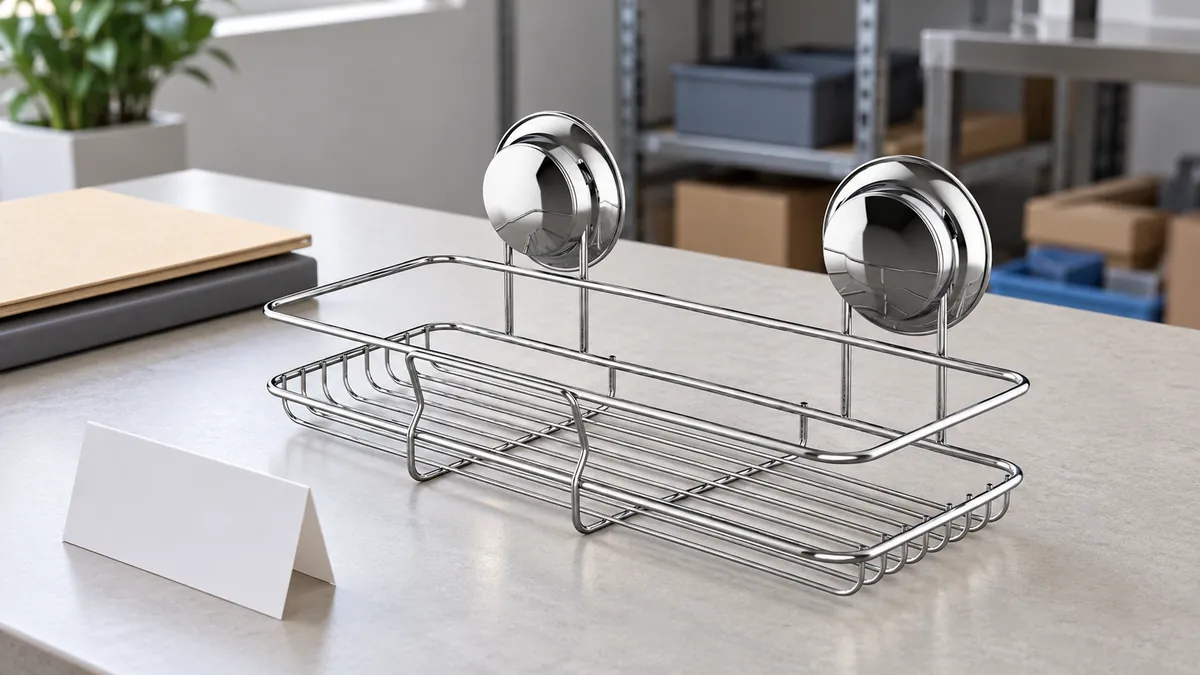
What should an importer send to the supplier or reviewer?
Use a focused request rather than “send all certificates.” Share the product identity record and ask the responsible party to confirm the scope in writing. For example:
- “Please confirm which exact model and drawing revision this evidence covers.”
- “Please identify the applicable EU legislation or CPSC-enforced rule and explain why it applies to this product.”
- “Please distinguish mandatory legal documents from retailer or buyer-requested reports.”
- “If a test report is relevant, please provide the issuer, test method and edition, tested sample configuration, date and result.”
- “Please identify changes in material, finish, mount, component or intended use that would require a new review.”
- “Please state which party is responsible for the declaration or certificate and which information is still pending.”
Then compare the response with the launch plan. A compliance file that arrives after artwork approval may reveal that product instructions, traceability information or packaging details need attention. Raise scope questions while the product is still in sample or pre-production review, when configuration and document ownership are easier to coordinate.
A supplier can help provide drawings, product construction, material/finish descriptions, sample identification, component details and manufacturing records. A metal hardware factory is not automatically a law firm, certification body or accredited laboratory. Koitor can discuss the product and the manufacturing information a buyer needs to share, but the responsible economic operator and qualified compliance reviewer must determine legal applicability and any required conformity action.
What mistakes create avoidable launch risk?
- Asking for a logo instead of a rule. A request to print CE on packaging without identifying applicable legislation can create an inaccurate claim.
- Treating a generic certificate as product approval. The document may cover another product, model, material, use or jurisdiction.
- Confusing a test report with a declaration. A report records test results within its scope; it does not automatically replace a required declaration or certificate.
- Applying a rule from a neighboring category. A requirement for a particular furniture, electrical or child product should not be copied to a passive bathroom rack without checking definitions and scope.
- Assuming “no CE” means “no obligations.” Applicable general safety, traceability, instruction, language, importer or channel requirements still need review.
- Leaving ownership unclear. The importer, manufacturer, brand, retailer and laboratory may have different tasks. Name the responsible party and due date for each item.
- Freezing the record while the SKU changes. A new finish, mount, component, intended use or claim may invalidate an earlier scope decision.
For metal bathroom hardware certification EU US, the reliable workflow is to classify the SKU first, identify a current official rule, then request only evidence that supports that rule or a clearly labeled buyer requirement. When the answer is uncertain, a written “pending classification” is safer than a broad claim or a decorative mark.
Foire aux questions
Does every metal bathroom rack need CE marking?
No universal answer follows from the product being a metal rack. CE marking applies when relevant EU harmonisation legislation covers the product. Check the exact design, features, intended use and destination before deciding, and do not affix the mark if the product is outside its permitted scope.
Does every rack imported into the United States need a GCC?
No. The CPSC says a GCC is required for a general-use product when it is subject to an applicable CPSC-enforced rule, ban, standard or regulation. The exact category and current rule list must be checked; a generic “rack” description is not enough.
Is a supplier’s test report the same as a GCC or EU declaration?
No. A test report describes testing and results within its stated scope. A GCC or EU declaration is a different document with a defined responsible party and legal context. Whether a report supports a required certification depends on the applicable rule and evidence program.
What if a retailer asks for a document that the law does not require?
Record it as a buyer or retailer specification, identify the product and test scope, and agree who will provide the evidence. A channel requirement can still be commercially important, but it should not be mislabeled as a government mandate.
When should a buyer obtain professional compliance advice?
Seek qualified advice when the product includes electrical or child-related features, has a regulated or structural use, makes unusual safety or load claims, serves several jurisdictions, or when the applicable legislation or product definition is unclear. Provide the reviewer with the actual product, drawing, intended use, claims, destination and variants.
Before launch, use a scoped review—not a generic certificate request—to keep the product file useful. Buyers looking for a manufacturing partner can learn more about Koitor’s OEM bathroom and home-storage hardware capabilities, then share their drawing, sample, intended use and destination with the team.
Review the product before requesting compliance evidence
Share the product drawing or sample, intended use, features and destination market so the manufacturing information can be scoped clearly. Regulatory classification and conformity decisions should be confirmed by the responsible importer and a qualified compliance professional.
Fabrication pour compte de tiers / Marque de distributeur
Transformez ce guide d'approvisionnement en cahier des charges
Indiquez-nous le produit souhaité, ses dimensions, sa finition, la quantité commandée et vos exigences en matière d'emballage. Votre équipe recevra une analyse pratique de la faisabilité de la fabrication avant l'établissement du devis.
 English
 Español
 Português
 Français
 Deutsch
 العربية