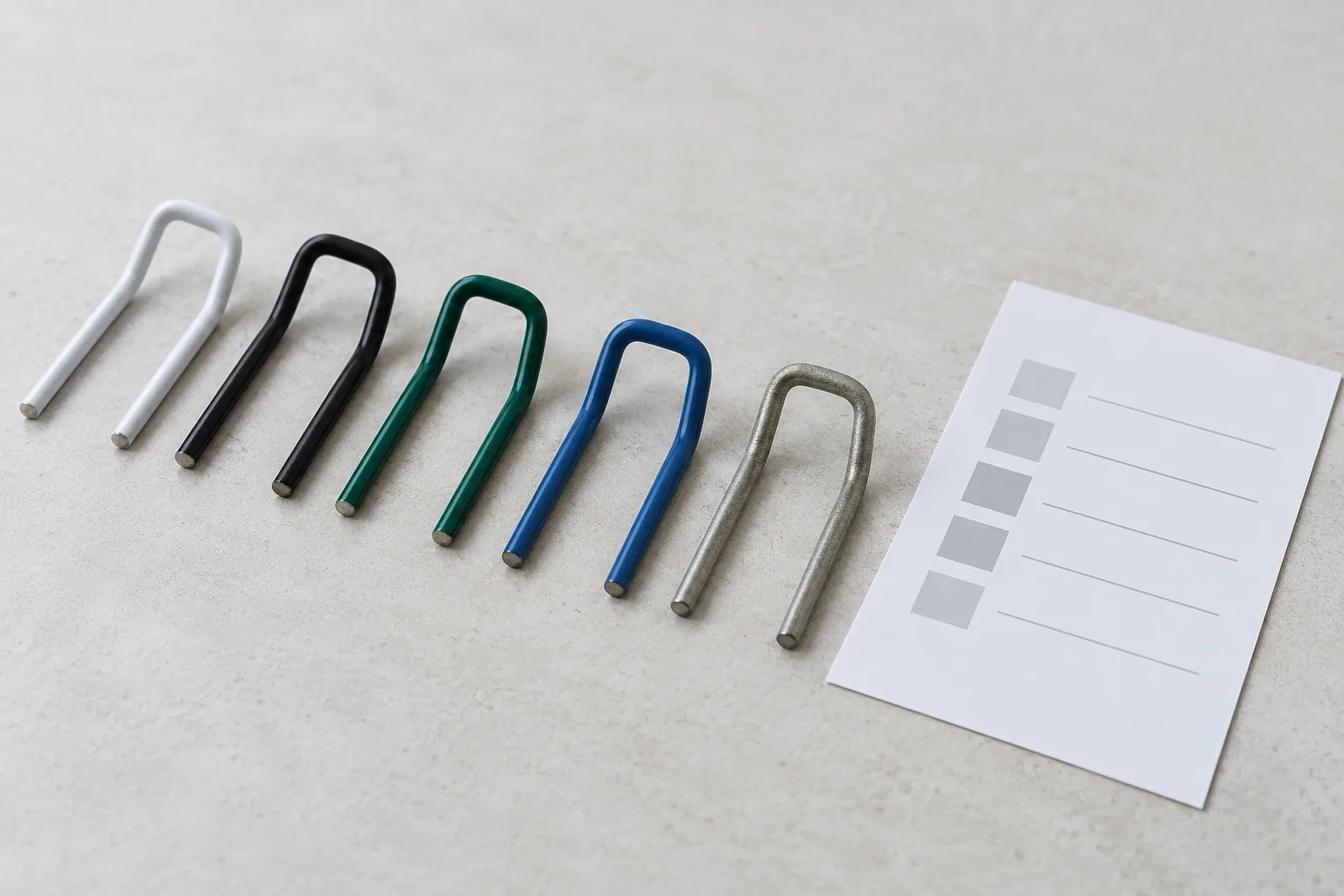
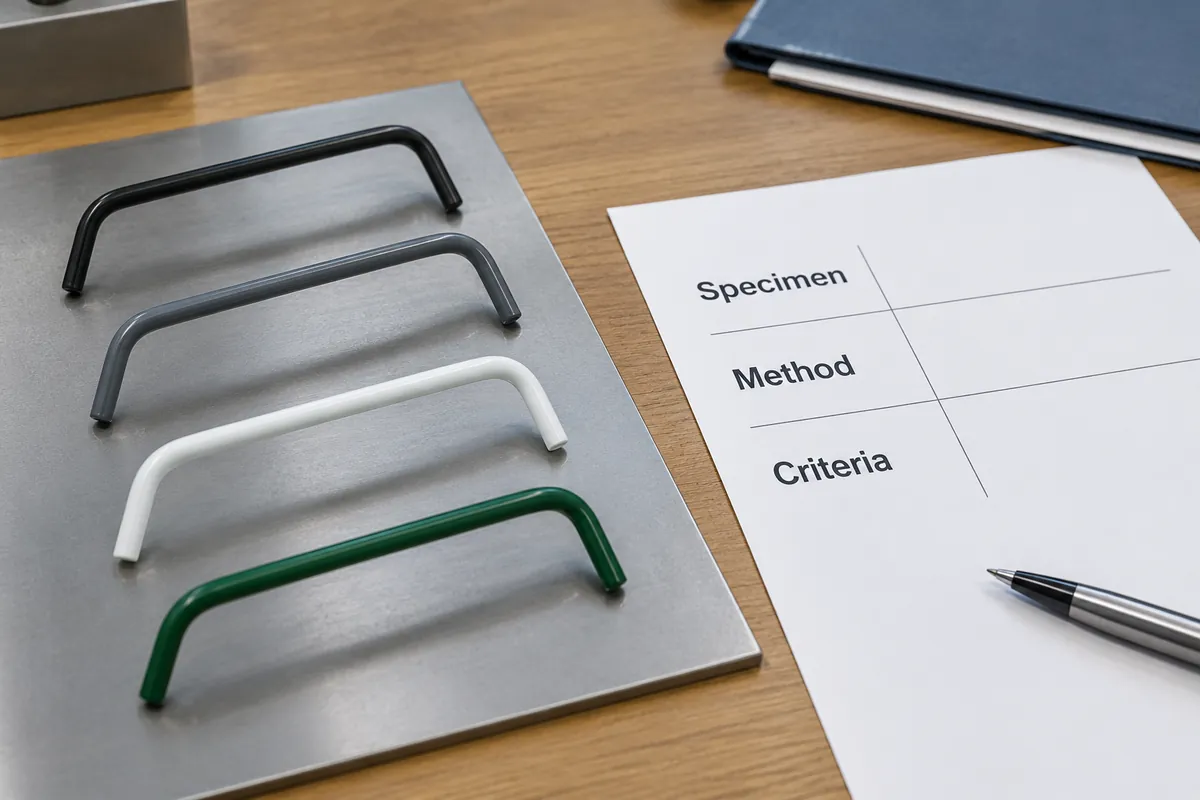
Salt spray test report interpretation bathroom hardware buyers can rely on starts with the specimen, method and agreed acceptance criteria, rather than an isolated number of hours. Before accepting a supplier's report, connect the tested samples to the exact material, finish, assembly and revision being purchased. Confirm which surfaces were evaluated and what observations count as acceptable. A controlled corrosion exposure can support a purchasing decision, but it does not establish a universal bathroom service life.
What does a salt-spray report actually establish?
A salt-spray report records how identified specimens behaved during a specified laboratory exposure and evaluation. Its usefulness depends on whether the exposure and observations answer the buyer's product question.
ASTM B117 is a practice for operating salt-spray apparatus. Its public scope explains that product-specific specimens, exposure periods and interpretation are outside the practice's general prescription. Buyers should therefore separate the apparatus method from the purchasing acceptance agreement. Stating that a sample was exposed under B117 does not independently establish that a shower basket meets a buyer's requirements. The source is the ASTM B117 public scope; the actual report should identify the edition used.
For a private-label importer, the practical question is narrower: does this document support approval of this product revision for this intended use? A report for a flat coating coupon may answer a coating-development question. It may leave the welded basket's joints, wire tips, assembled interfaces and packaging-related scratches unevaluated. That limitation does not make the coupon useless. It changes the decision the coupon can support.
Separate three records in the purchasing file. The laboratory report documents exposure and observations. The approved specification defines the required result and evaluation scope. The sample identity record connects the report to the ordered product. A purchasing manager needs all three to avoid turning a laboratory document into an unsupported marketing claim.
Do not treat the laboratory's name, a polished cover page or an impressive exposure duration as a substitute for those connections. Where a buyer needs competent technical interpretation, involve the laboratory or a qualified corrosion specialist. Koitor can discuss product structure and manufacturing changes; that is different from issuing independent test certification.
Which specimen details make reports comparable?
Reports are comparable only to the extent that their specimen identity, preparation and evaluation conditions are comparable. Begin with what entered the laboratory before reviewing the final result.
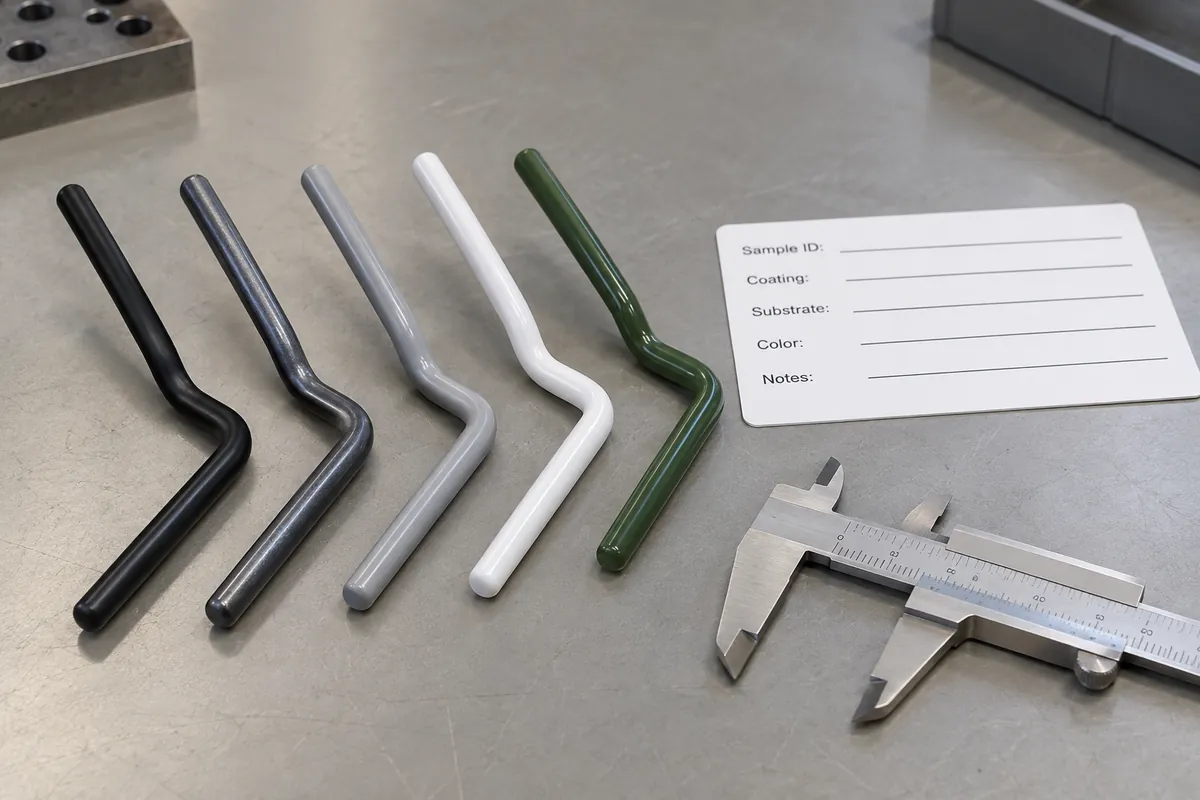
Ask for the product code, drawing revision, material identification and finish description. For coated hardware, include the coating system and any relevant preparation record available from the supplier. For stainless assemblies, identify the relevant material and surface condition without assuming that a generic stainless description establishes grade or performance.
Photographs should show the sample before exposure, its configuration during evaluation when available, and the observed condition afterward. The report should explain whether the specimen was a coupon, loose component or complete assembly. Count the specimens and note their selection method. A specially prepared development sample and a randomly selected production item represent different sampling situations.
Preparation can change the question. Cut coupons may expose substrate at their edges. Masked edges, intentional damage and assembled joints should be described. Buyers should not compare an unmodified basket against a prepared coating panel while treating the difference as evidence that one supplier has a better finished product.
| Report feature | Buyer question | Purchasing implication |
|---|---|---|
| Specimen identity | Does the revision match the proposed order? | An earlier design may not cover current interfaces |
| Material and finish | Are the records specific enough to identify the tested system? | A generic description cannot track a substitution |
| Complete assembly or coupon | Which product features were included? | Coupons may omit joints and wire ends |
| Preparation and masking | Were edges or intentional defects treated differently? | Different preparation can change comparability |
| Observation area | Which surfaces count toward acceptance? | Visible faces and cut edges may be rated separately |
| Sampling record | How were the specimens selected? | Development evidence differs from production sampling |
Consider a hypothetical towel-rack project with a finished face and a welded attachment behind it. A face-only coupon can help compare coating options, but it does not answer whether the attachment interface needs a different specification. This is a planning example, not a reported Koitor test.
The RFQ should identify that distinction before quotation. Otherwise a supplier may price a coupon exposure while the buyer expects an assembled-product review. Resolving the difference after sampling creates avoidable delays and disputes about what was included.
Which exposure and acceptance criteria should buyers agree first?
Agree the exposure method and acceptance criteria before specimens are submitted. A duration becomes meaningful only when it is connected to a defined observation and purchasing decision.
The buyer, supplier and laboratory should confirm the method, edition, preparation, specimen arrangement, inspection points and reporting format applicable to the project. Leave detailed laboratory operating requirements to the relevant standard and competent laboratory. An importer should not copy a chamber recipe from an unrelated online guide and present it as a validated procurement method.
Acceptance needs explicit language. Identify whether the concern is substrate corrosion, coating blistering, visible discoloration, corrosion around an intentional defect, or another defined observation. Do not collapse different mechanisms into a single undefined word such as rust. If ratings are used, identify the rating method and edition instead of requesting an unexplained pass.
Define the significant surfaces: the surfaces whose condition matters to the agreed evaluation. State whether cut edges, hidden attachment areas, welds and contact interfaces are included, excluded or reported separately. Exclusions should remain visible in the purchasing file. They must not disappear when the result is summarized for a retailer.
For salt spray test report interpretation bathroom hardware projects often need a clear distinction between cosmetic acceptance and functional concerns. A purchaser may want observations about visible appearance while separately investigating a joint. The report should preserve those separate questions rather than imply that one observation establishes every form of durability.
A useful approval record identifies the decision owner. Procurement may collect the documents, engineering may define the feature scope, and a laboratory may explain an observation. No team should assume another has accepted an unresolved limitation. Record whether the decision is accepted, accepted with a defined restriction, or pending clarification.
Do not retrospectively choose the easiest acceptance criterion after seeing a result. If the initial specification was incomplete, document the gap, obtain the necessary review and commission additional work when justified. A transparent limitation is more useful than a convenient but misleading pass statement.
How should buyers assess edges, welds and assembled interfaces?
Review edges, welds and interfaces according to their actual preparation and intended evaluation scope. A localized observation should trigger a precise question about the feature rather than an immediate general claim about the whole product.
A wire basket contains a rim, cross wires, weld intersections and attachment features. A coated shelf can include folded edges, cutouts and joints. Those geometries make assembled-product review different from looking at a flat panel. Photograph locations consistently so the buyer can connect an observation to the drawing.
Ask whether the affected area existed in the supplied configuration or was introduced during specimen preparation. A cut edge created for testing and a wire tip accessible in the finished product are different cases. Both may deserve reporting, but they should not be silently treated as equivalent.
Inspect the relationship between a local observation and the proposed manufacturing action. If a supplier suggests additional finishing, ask which feature changes and what evidence would confirm the revised process. If the proposed action changes material, coating, weld treatment or assembly sequence, the old report may no longer describe the approved configuration.
Avoid diagnosing a corrosion mechanism from a photograph alone. Surface residues, stains and coating changes can resemble other problems. The laboratory should state what it observed and the limits of its analysis. A buyer can request clarification without claiming a chemical explanation that the evidence does not support.
Koitor's practical role is to connect a buyer's inspection map with the manufactured hardware: which welds are present, where finishing occurs, which components are assembled and where handling protection is needed. The custom bathroom hardware manufacturing page provides the relevant commercial context. Laboratory findings still require their own technical interpretation.
Keep the corrective action and the acceptance decision separate. A revised sample might look improved, but visual appearance alone does not demonstrate the result of a repeated exposure. Define the follow-up evidence before approving a change.
Why cannot exposure hours become bathroom service years?
Laboratory exposure hours do not supply a universal conversion into years of bathroom use. Real use differs in moisture patterns, cleaning, drying, handling, geometry and maintenance.
The safe purchasing statement describes the tested specimen and conditions. It does not promise a fixed lifetime, absolute rust resistance or a warranty period. The public ASTM scope cautions that salt-spray results alone generally do not reliably correlate with performance in natural environments. That limitation should remain visible when buyers compare suppliers.
A bathroom basket may encounter cleaning agents, trapped residue, intermittent moisture and local damage. A laboratory exposure addresses its specified conditions. Buyers should ask which additional product-use questions remain unresolved rather than treating a longer duration as automatically better in every setting.
For a distributor, the issue also affects product listings. A supplier's report should not be transformed into a headline saying that every unit lasts a particular number of years. A record for one finish, sample revision or preparation does not automatically cover a family of colors, materials and structures.
If a retailer requests an hours claim, ask what exact statement is proposed and which evidence supports it. Keep a link to the original document, the product identity and any exclusions. Seek qualified review before using a technical claim in the target market.
Cost comparisons should follow the same discipline. A higher-priced finish may offer manufacturing or appearance advantages, but the report must be evaluated within its actual scope. Procurement should compare the total approved specification and required evidence, not purchase a larger number printed on a quotation.
This is why salt spray test report interpretation bathroom hardware sourcing teams undertake should end in a documented scope decision. Useful outcomes include approving a defined system, requesting an assembled specimen, clarifying an edge exclusion, or withholding a claim pending review. None requires inventing a service-life forecast.
Which checklist should accompany approval and repeat orders?
Keep the report, specimen identity and acceptance agreement together, then define the changes that require review. The checklist should support both sample approval and repeat-order control.
- – Identify the buyer, target product and intended use.
- – Record the product code, drawing revision and sample version.
- – Identify materials, components, finish and relevant processing records.
- – State whether specimens are coupons, components or complete assemblies.
- – Record specimen selection, quantity, preparation and masking.
- – Identify the exposure method and edition used by the laboratory.
- – Define observations, significant surfaces and acceptance criteria.
- – Preserve initial and final photographs and laboratory explanations.
- – List exclusions, unresolved questions and additional evidence required.
- – Record the reviewer, decision, date and permitted claim wording.
- – Define changes that trigger renewed technical review.
- – Connect repeat-order inspection records to the approved configuration.
Before a repeat order, ask whether the material source, finish formulation, preparation, structure or component interface has changed. A supplier should explain the change rather than quietly reuse a report for a different system. Revalidation should be proportionate to the actual change and agreed with the buyer.
Keep commercial expectations realistic. Koitor is a family-owned custom metal hardware factory supporting drawing-based or sample-based development and flexible small-batch OEM production. The team can review structure, welding, finishing and packaging requirements before quotation. Testing cost, specimen preparation and external laboratory work should be confirmed for the actual project.
A small trial order can help a buyer examine production consistency, but it does not remove the need for a defined corrosion evidence plan. Agree which documents belong to development approval and which records will accompany bulk production. That distinction makes repeat-order decisions easier to audit.
What do importers ask about corrosion reports?
Does mentioning ASTM B117 mean the product passed?
No. The method reference identifies an exposure practice. A purchasing pass requires a separate acceptance agreement, identified specimens and reported observations that can be compared with that agreement. Ask the laboratory to clarify ambiguous wording.
Can a coupon report support a finished basket order?
It may support a defined coating or material question. It does not automatically cover the basket's welds, edges, assembled interfaces or handling condition. Record what the coupon establishes and what further evidence the project needs.
Is a longer reported exposure always better?
Not without comparable specimens, preparation, method and evaluation criteria. Duration is one part of the record. Buyers should compare the complete evidence scope before drawing a supplier-ranking conclusion.
What if a material or finish changes after approval?
Review whether the original evidence still applies. Identify the changed feature and agree the appropriate confirmation with the supplier and technical reviewer. Do not relabel an old report as proof of a new configuration.
Can Koitor provide a guaranteed corrosion lifetime?
No lifetime claim is established by this guide. Koitor can discuss product-specific manufacturing and sourcing requirements. Any performance statement needs relevant evidence and project-specific agreement, with qualified technical review where needed.
Discuss Your Hardware Specification With Koitor
Send Koitor your drawing, physical sample, material and finish requirements, intended use and packaging plan. Our family-owned custom metal hardware factory can review manufacturing practicality and small-batch OEM project requirements before quotation. Specific performance and any adjacent product feasibility require project confirmation.
Fabrication pour compte de tiers / Marque de distributeur
Transformez ce guide d'approvisionnement en cahier des charges
Indiquez-nous le produit souhaité, ses dimensions, sa finition, la quantité commandée et vos exigences en matière d'emballage. Votre équipe recevra une analyse pratique de la faisabilité de la fabrication avant l'établissement du devis.
 English
  Español
  Português
  Français
  Deutsch
  العربية