
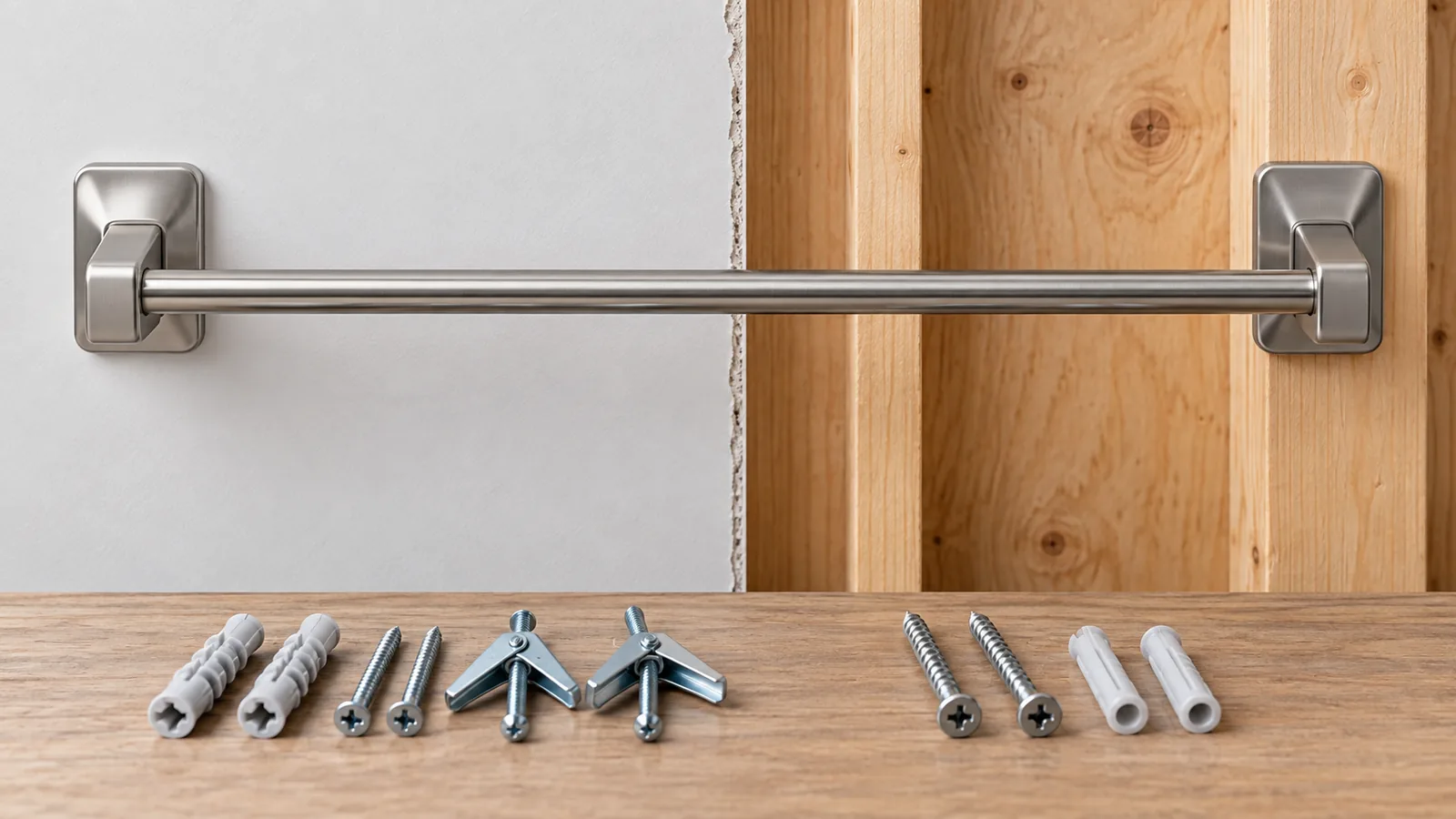
For an importer, “anchor kit included” is not a complete mounting specification. A towel bar anchor kit drywall versus stud decision starts with the wall construction the product is intended to support, then connects that substrate to the supplied fasteners, bracket geometry, installation sheet and sample approval. The buyer should approve the whole configuration rather than assume one small bag of hardware will fit every project wall.
The search phrase towel bar anchor kit drywall versus stud often leads to home-repair advice. A sourcing team has a different task: decide what the SKU includes, what wall types the instructions cover, which installation method belongs to each, and how to prevent a customer from receiving components that do not match the stated application. Do not promise a load value unless the exact product and assembly have been evaluated against a defined method.
What belongs in a towel-bar mounting kit?
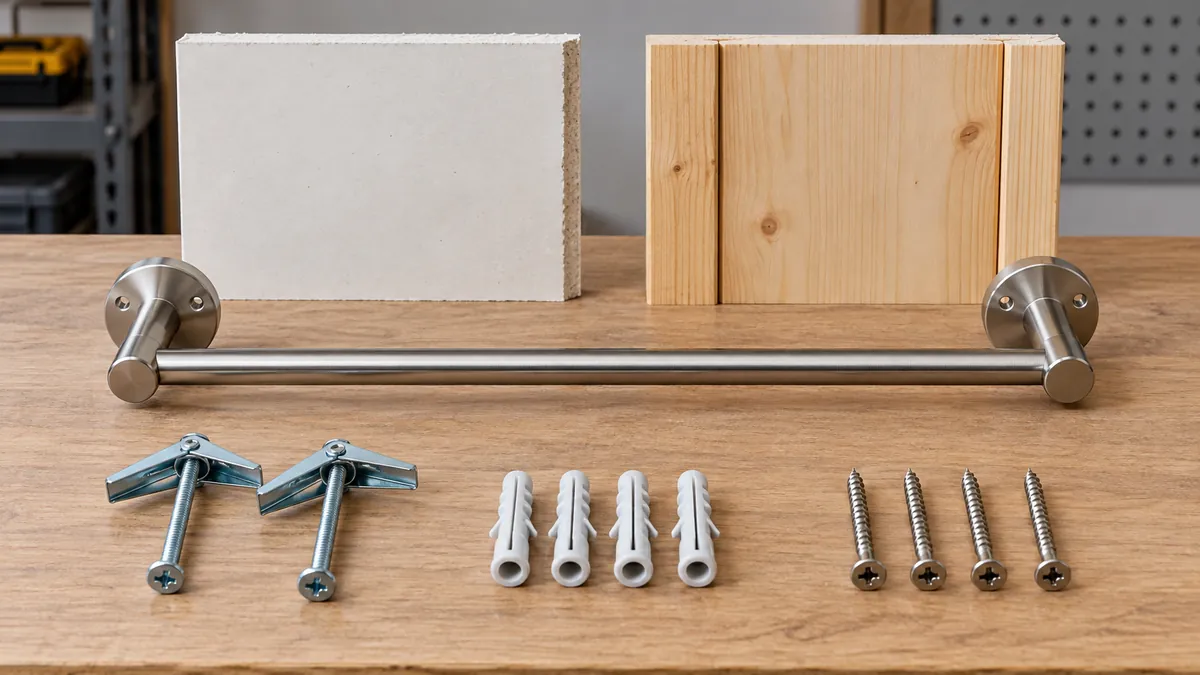
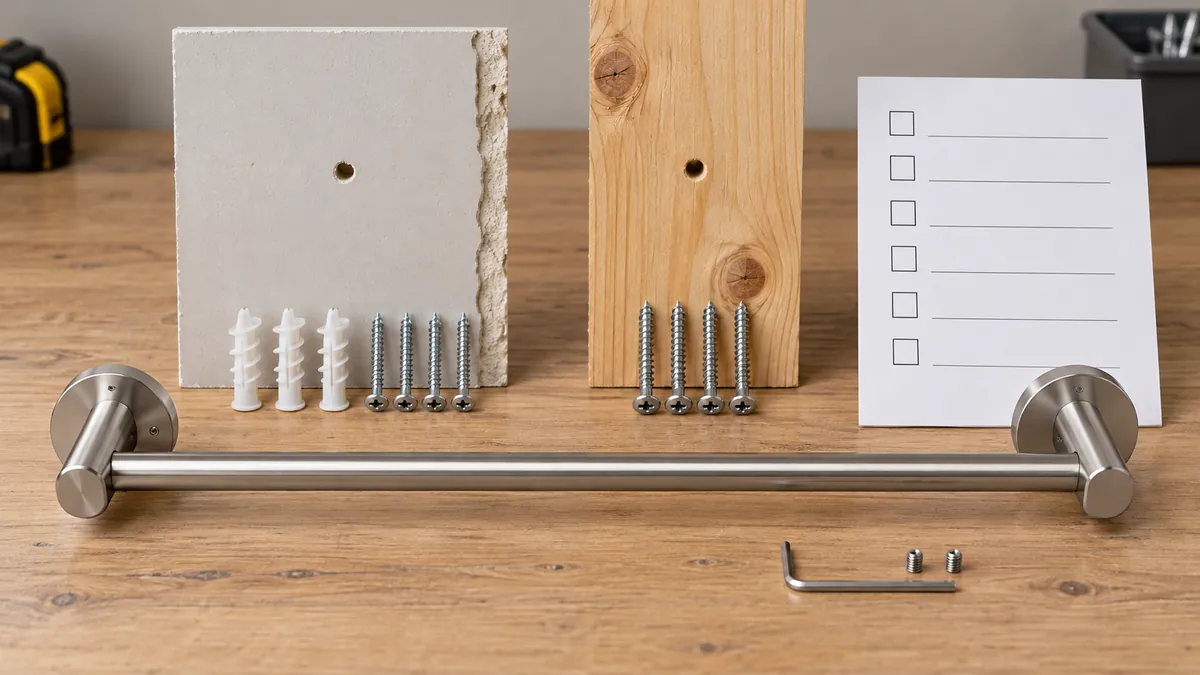
A kit is a system of parts and instructions, not just anchors. Depending on the design, it may include wall brackets or mounting plates, screws, anchors for one or more substrates, set screws, a template, an alignment aid and an installation sheet. Buyers should require the supplier to identify each item by type, quantity and intended use. If a towel bar uses two end brackets, the kit drawing and packout should show both end assemblies and all their required fixings.
This sounds basic, but mounting parts can be difficult to identify once packed in a small polybag. Similar-looking screws can have different lengths, head styles or thread forms. A plastic plug, toggle anchor and screw intended for a timber stud are not automatically interchangeable. A template may locate the bracket holes without identifying the wall substrate. The purchase specification should make these distinctions visible to the factory, importer and end-user documentation team.
The kit also has a boundary. The product supplier may provide the towel bar and hardware for stated substrates, while the project installer selects a different fixing method for a particular wall assembly. State whether the retail package contains one universal kit, multiple labeled kits, or only the product and a defined fastener set. If fasteners are not included, say so clearly in product data and carton content records. Do not let a product photo imply hardware that is absent from the bill of materials.
Wall type is an assembly input, not a keyword label
Drywall is not one uniform fixing condition. The thickness, backing, cavity and proximity to a framing member can matter to the selected anchor. A wood stud presents another interface: its location and the selected screw must correspond to the mounting plate. Masonry is a separate wall construction and requires a compatible fixing choice. A tiled wall includes a finish layer over a backing assembly, so the buyer should not specify a fastener based on the tile surface alone.
These categories do not establish a universal anchor selection. The fastening supplier or responsible product engineer should identify the wall construction and approved installation method for the actual mounting system. Koitor’s article is a buyer-sourcing checklist, not a structural design or installation approval. If a towel bar is expected to carry loads beyond ordinary accessory use, or if it is a safety-related support, the buyer must define the application and consult the responsible specialist. Do not apply grab-bar assumptions or ratings to a towel bar.
One public HomeImprovement discussion describes a towel bar that became loose and a wall anchor that no longer tightened; replies consider stud versus drywall fixing. This is a single user account and does not establish how common the problem is or what caused that particular failure. It does illustrate why buyer documents should identify substrate and installation details instead of relying on the phrase “wall anchor.”
What manufacturer instructions can—and cannot—tell you
The Moen installation sheet for a named towel-bar collection gives drywall-specific steps and says to use wood screws only when installing into a stud. That is useful evidence that a manufacturer may define different hardware routes by substrate. It is not a universal rule for every towel bar: the anchor type, plate, screw, hole pattern and instructions belong to that particular system.
Moen’s Genta hand-towel-bar specification separately describes mounting brackets, anchors and set-screw assembly for its named model. These documents show what a buyer can request from a supplier: a model-specific bill of hardware and an installation sequence that connects the parts. They do not establish Koitor’s mounting design, material, load capacity or supplied-kit contents.
When reviewing a supplier’s documents, check that they agree with the quoted SKU and product revision. A product page might show one bracket while the instruction sheet covers several collections. A retailer listing can summarize the package but omit installation qualifications. Ask the component supplier to identify which drawing and instruction revision governs the order, and retain that reference with the approved sample. Do not copy a hole size or fastener detail from a different brand’s document into a Koitor specification.
Buyer decision matrix by wall construction
| Wall condition | Buyer should identify | Supplier evidence to request | What not to assume |
|---|---|---|---|
| Drywall without confirmed stud position | Board/system assumptions and intended anchor route | Named anchor, screw, plate arrangement and matching instructions | That any plastic plug or toggle fits every board/cavity |
| Wood-stud location | Stud material/position assumptions and screw route | Screw identity, bracket holes and instructions for the selected bar | That drywall anchors remain the specified route into a stud |
| Masonry | Masonry type and project-specific fixing responsibility | Approved fastener pairing and installation notes from the responsible supplier | That the retail kit contains the right fixing for all masonry |
| Tile over backing | Tile and backing assembly, drilling responsibility and fixing route | Written installation boundary and compatible anchor method | That the tile alone defines the suitable fastener |
| Unknown or mixed site conditions | Whether the SKU supports a stated default or requires installer selection | Clear package disclosure, substrate exclusions and alternate-kit process | That “universal” means validated for every wall |
The table is an RFQ prompt, not a recommendation of a particular anchor. The supplier should fill in product-specific values and exclusions. If the buyer’s target market has different common wall systems, decide whether the product needs multiple pack configurations or whether the installation document should direct the installer to select a suitable fixing independently. This is a packaging and customer-support decision as much as a mechanical one.
Specify the interface and packout before quotation approval
For each towel-bar SKU, request a dimensioned view of the bar, end posts, mounting brackets and required fasteners. Confirm the number and position of mounting points, bracket orientation, screw access, set-screw direction and any installation template. The visible bar length does not define the fixing geometry. A mounting plate may have multiple holes; a post may lock onto the plate in a particular orientation; a template may be shared across different product lengths only if the supplier confirms it.
Ask the supplier to list package contents in a controlled bill of materials: part name, part number, quantity, material or finish where relevant, and wall condition for which it is supplied. If one bag contains more than one type of screw or anchor, separate them into labeled sub-bags or show a clear key in the installation sheet. The packaging should not encourage an installer to choose by appearance alone. For private-label products, make sure the retail artwork and online listing say the same thing as the approved packout.
The drawing and instructions should also describe the installation sequence at the level needed for the buyer’s channel. A distributor may need a clear note that stud installation uses a different screw route than drywall installation for that specific model. An ecommerce brand may want a substrate table and a photo of each kit option. A project buyer may need the installer to confirm the wall assembly before the purchase order is finalized. These are different audiences, so agree who owns the final instructions and translations.
When comparing quotations, normalize the scope. One supplier may include a bracket pair, anchors, screws, template and instructions; another may quote the metal bar only. Record exclusions and optional hardware separately. If a buyer later adds a different anchor, that is a controlled kit change and may affect instructions, packaging, compatibility notes and the approved sample. Do not compare unit prices until the component and documentation scope match.
Approve the complete kit on a representative sample
Sample approval should use the actual towel bar, both end brackets, the quoted hardware and representative wall samples or a clearly documented project substrate. Start by checking part identity, quantity, finish, hole alignment and orientation against the drawing. Then have the responsible installer or supplier follow the current instructions for the stated wall condition. The sourcing team should record which pieces were used and whether any substitute fastener was introduced.
The review should capture more than “installed successfully.” Record the wall panel construction, bracket position, fastener identity, installation steps, any deviation and the observed fit of the post to its mounting plate. Check that both ends align with the intended bar position and that the locking details can be reached as described. If the sample was mounted to a simplified board rather than a representative wall assembly, state that limitation. A simple mock-up does not prove performance across all site conditions.
Do not make unsupported load statements from a hand-applied pull or a single installed sample. If a load test is commercially or technically required, agree who defines the setup, fixture, substrate, loading direction, duration, sample count and acceptance criteria. The report should identify the complete assembly and wall system tested. A test on a different bar, bracket, anchor or backing is not evidence for this kit. Likewise, a one-time installation check does not establish long-term reliability or warranty life.
Photograph the two end brackets, fasteners and wall sample before and after installation. Keep the images linked to the sample ID and drawing revision. If a bracket was reversed, a screw was substituted or an anchor was not seated according to the instruction, note the actual event rather than silently correcting the sample. This helps the buyer distinguish a documentation problem from a part-fit concern and directs corrective action to the party responsible for that interface.
Keep changes, instructions and supplier responsibilities aligned
Revisit the approval if the bar length, end-post design, bracket hole pattern, fastener supplier, anchor material, kit quantity, instruction revision or target wall condition changes. A new finish color may not alter the mounting kit, but a different post or bracket can. Ask the supplier to identify affected components and say whether the prior sample remains representative. The buyer’s review scope should follow the change rather than automatically repeating unrelated checks.
For a multi-supplier product, assign responsibilities explicitly. The metal-product maker controls its released bar and bracket geometry; the anchor or fastener supplier provides data for its component; the packer confirms kit identity and quantity; and the importer approves the market-facing application and instructions. One person should own the consolidated product file so that a newer drawing does not become separated from an older installation sheet. If a substitute fastener is proposed, require written compatibility confirmation before packout.
Keep substrate assumptions consistent across the purchase order, packaging, online listing and customer service script. Avoid broad labels such as “fits all walls” unless the responsible supplier has defined and validated the scope. If the package only covers selected wall types, state exclusions plainly and provide a path for installer selection on other substrates. This reduces ambiguity without promising a result that the product supplier has not established.
The phrase towel bar anchor kit drywall versus stud should therefore lead to four controlled records: the substrate matrix, the hardware bill of materials, the installation document and the representative sample approval. Keep that decision tied to a named configuration rather than an abstract product comparison: two visually similar kits may specify different included hardware and installation routes. Together these records make an accessory easier for a buyer to source and for a distributor to explain. Koitor can discuss towel-rack hardware and custom metal product development, but a purchased anchor’s capacity and wall-system approval remain with its responsible component supplier.
Frequently asked buyer questions
Should one towel-bar kit include both drywall anchors and wood screws?
That depends on the selected product design, the target market and the supplier’s approved instructions. Ask the supplier to identify each fastener’s intended substrate and whether both routes are covered for the exact SKU. Moen’s cited instructions are an example for a named system, not a universal kit rule.
Is “drywall versus stud” enough detail for an RFQ?
No. It is a useful starting distinction, but the buyer should also identify the wall assumptions, bracket geometry, hardware contents, installation steps and who approves nonstandard substrates. The exact information depends on product and project scope.
Can a supplier state a load capacity without naming the wall and anchor?
A capacity statement without the tested assembly and conditions is incomplete for buyer approval. Request the supporting method and identify the towel bar, brackets, fasteners and substrate used. Do not transfer figures from another manufacturer’s model.
Should the towel bar’s mounting template be treated as universal?
No. Confirm that the template matches the quoted model and revision. Similar-looking end posts or bar lengths do not prove identical plate spacing or hole positions.
What if a project has tile over a wood or board backing?
Treat the wall as a layered assembly and get the fixing route from the responsible installer or fastener/product supplier. Do not choose an anchor based on the tile surface alone or assume the retail kit covers every backing condition.
Discuss a towel-rack sourcing requirement
Share the bar drawing, target wall constructions, bracket layout, expected kit contents and intended market. Anchor selection and wall-system performance must be confirmed by the responsible fastener supplier or project installer.
Fabrication pour compte de tiers / Marque de distributeur
Transformez ce guide d'approvisionnement en cahier des charges
Indiquez-nous le produit souhaité, ses dimensions, sa finition, la quantité commandée et vos exigences en matière d'emballage. Votre équipe recevra une analyse pratique de la faisabilité de la fabrication avant l'établissement du devis.
 English
  Español
  Português
  Français
  Deutsch
  العربية