

How to clean anodized aluminum depends on identifying the actual surface and following the product maker’s care instructions; use a soft cloth and a mild, compatible cleaning routine only when those instructions allow it. Rinse and dry as directed, and stop if the surface changes, a mark persists, or an additional clear or colored topcoat is uncertain. For bathroom or home-storage hardware, a cautious routine is more useful than assuming every anodized part tolerates the same cleaner or abrasion.
What Does a Safe Anodized Aluminum Cleaning Routine Include?
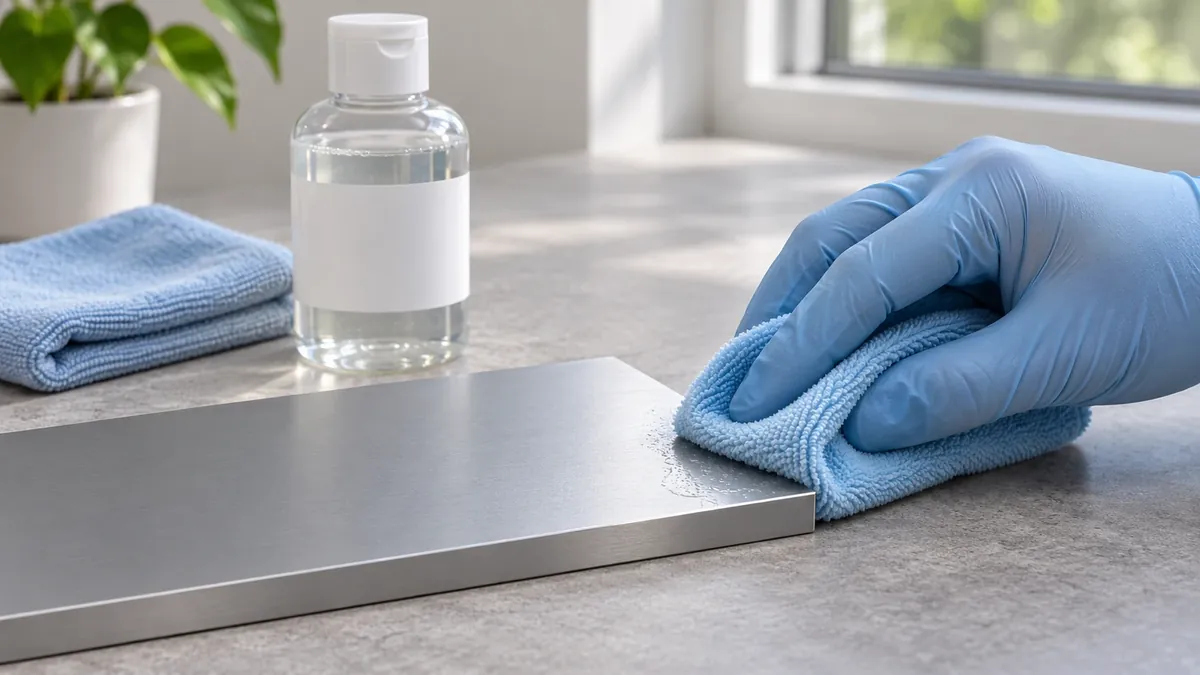
For a routine clean, first remove loose dust with a soft cloth, then use the mildest cleaning method approved by the product manufacturer. Avoid transferring a cleaner or polishing method from another finish, even when two parts look similar. A small discreet compatibility check may be appropriate if the maker permits one, but it is not a substitute for the product-specific care instructions.
Anodizing is an electrochemical surface treatment that forms an oxide layer from the aluminum substrate. That description does not make every anodized component identical. Alloy, process, color, sealing, surface texture, and any later clear or organic coating can vary. The buyer or product owner should therefore identify the specified finish before issuing cleaning advice.
Keep the routine deliberately limited:
- Check the product manual, care label, or supplier-approved instructions.
- Confirm whether the visible surface is anodized aluminum and whether a secondary coating is present.
- Remove loose particles gently so they are not dragged across the surface.
- Use only a cloth and cleaner that the responsible maker approves for that finish.
- Rinse or wipe away residue and dry the part as the instructions direct.
- Stop and ask the manufacturer or finish processor before escalating to polishing, scraping, solvent, acid, alkali, or abrasive treatment.
When a buyer asks how to clean anodized aluminum for a mixed-material bathroom product, the answer must cover the complete assembly and its approved finish. This sequence is a decision framework, not a universal chemical recipe. The actual product instructions override general guidance. For a component installed in a bathroom, also consider neighboring seals, adhesives, plastics, labels, and joints. A liquid can be compatible with one metal surface yet unsuitable for another material in the assembly.
Manufacturer instructions illustrate why the routine needs an owner. Stryker’s anodized aluminum care guidance begins with the surface condition, mild washing, a discreet compatibility check, a cool surface, and rinsing; any discussion of a mild abrasive is conditional and points toward professional advice. Those cautions are specific to the products and context covered by that manufacturer. They do not authorize an abrasive on an unrelated bathroom accessory.
Solar Innovations’ maintenance guidance separately warns about harsh acidic or alkaline cleaners, possible effects on seals from solvents, and the presence of organic topcoats. The useful lesson for a buyer is not to copy a chemical list into every care card. It is to ask whether the product has a secondary coating, whether the assembly includes seals or other sensitive materials, and which supplier owns compatibility approval.
These sources are manufacturer guidance, not a universal standard or a substitute for the care document supplied with the exact SKU. Their product conditions and intended applications can differ from a small bathroom fitting. When instructions appear to conflict, do not average the methods or choose the more aggressive one. Ask the responsible product maker or finish processor to identify the applicable surface system and approve one controlled routine. Record the answer with a revision date or document reference so a later material or finish change does not silently inherit an outdated method.
How Can Buyers Identify the Finish Before Giving Care Advice?
Do not identify a finish by color alone. A dark gray, silver, bronze, or black appearance does not establish whether a part is anodized, powder coated, plated, clear coated, or made from a different material. Similar colors can come from different processes, and one product may combine multiple materials and surface treatments.
For a sourced product, keep the finish information attached to the controlled drawing and specification. The record can state the substrate, finish name, color reference, finish supplier or responsible process owner, visible surfaces, and any approved maintenance instructions. If a component is bought in, record the supplier’s data and revision rather than converting a marketing description into a technical specification.
Use this practical identity check:
| Question | Evidence to check | Why it matters |
|---|---|---|
| What is the substrate? | Drawing, material declaration, or supplier record | Cleaning and finish behavior depend on the underlying material and treatment. |
| Is the surface anodized? | Controlled finish specification or processor record | A visual guess can lead to an incompatible cleaning or repair method. |
| Is there another topcoat? | Finish stack description, approved sample, or processor confirmation | A clear or organic layer may have its own chemical and abrasion limits. |
| Which faces are cosmetic? | Drawing and approved sample | A small mark on a hidden face may be treated differently from one on a visible surface. |
| What instructions were validated? | Product maker’s care document and revision | Advice should match the actual sold configuration, not a generic material page. |
For variation between anodized parts, the buyer may also need a consistent alloy, temper, surface preparation, process route, and color approval record. Those are specification and production questions, not cleaning instructions. Koitor has a separate published discussion of anodized color variation by alloy and temper. Keep the ownership distinction clear: that article concerns finish variation during product development; this guide concerns care escalation.
If the item lacks traceable finish information, do not infer it from a product photograph. Ask the supplier for the drawing revision, finish declaration, approved sample, and current care guidance. A buyer who cannot identify the finish cannot reliably select an aggressive cleaning method.
Which Cleaning Tools and Products Should Be Avoided Until Approved?
Do not start with a scouring pad, abrasive powder, metal brush, polishing compound, sharp scraper, or strong household chemical. These methods can alter a surface or affect adjacent materials, and visible improvement on one sample does not prove suitability for every production part. An abrasive that removes residue may also change gloss, color, texture, or a thin coating.
Avoid treating product labels such as “safe for metal” or “non-scratch” as sufficient compatibility evidence. The label may not cover anodized surfaces, a particular seal, a colored topcoat, or the full product assembly. Likewise, a cleaner recommended for a different manufacturer’s cookware, architectural extrusion, marine component, or automotive trim is not automatically approved for bathroom hardware.
Use a cautious escalation path:
- Loose dust: follow the maker’s dry-wipe or rinse instructions.
- Ordinary soil: use only a mild cleaner explicitly allowed by the product instructions, with a soft cloth.
- Stubborn residue: stop before increasing pressure or concentration; ask the product maker which method is compatible.
- A scratch, dull patch, color shift, or coating lift: treat it as possible surface damage, not dirt that needs stronger scrubbing.
- Unidentified substance or chemical exposure: provide the product identity and exposure details to the responsible supplier or processor.
Never mix cleaners or improvise a multi-step chemical treatment. Do not give a buyer a concentration, dwell time, temperature, or disposal instruction unless that method comes from an applicable product document or qualified process owner. This guide intentionally does not prescribe acids, alkalis, solvents, or abrasive repair.
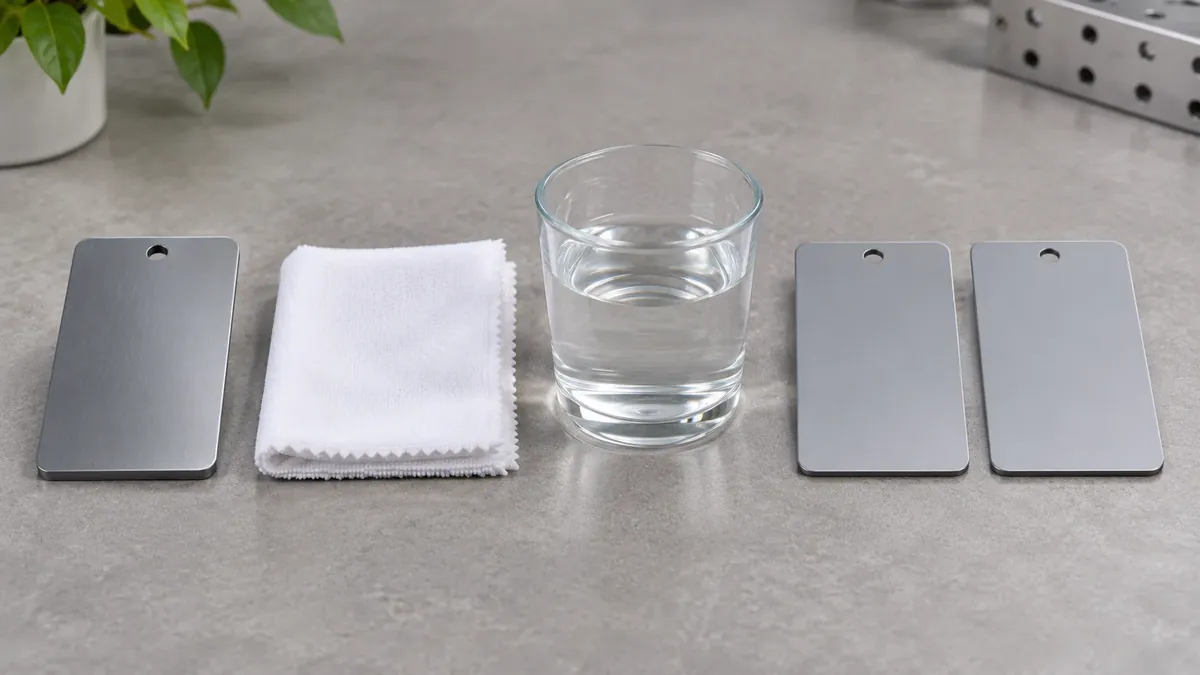
The point of a conservative first response is to preserve information. If a buyer applies several undocumented substances or abrasives before recording the original condition, a supplier may not be able to distinguish a manufacturing finish issue from later chemical or mechanical damage. Before any intervention beyond the approved routine, photograph the condition under consistent light and retain an untreated comparison sample if the product program allows it.
How Should a Buyer Handle Stubborn Marks or a Changed Surface?
Separate removable soil from a suspected finish change. A mark may be residue, water spotting, transferred material, surface damage, corrosion of a neighboring component, or an effect from an unknown cleaner. A photograph alone rarely establishes the cause. The next step should preserve the sample and gather the facts needed for a responsible assessment.
Record the following before requesting technical review:
- Product model, part number, lot or shipment reference, and drawing revision.
- Substrate and finish specification, including any known topcoat or sealant.
- Location of the mark and whether it appears on a cosmetic or concealed surface.
- Cleaning products, cloths, tools, contact time, rinsing, and drying already used.
- Exposure to humidity, standing water, heat, storage chemicals, or other materials, if known.
- Photos of the entire assembly and close-ups using neutral light, without filters.
- An unaffected comparison part or retained sample, if available.
Do not claim that a cleaning step restored the original finish unless the surface owner has approved the result against a defined sample or acceptance criteria. An apparently clean surface may still have a changed gloss, color, protective layer, or fit. If the component’s visual or functional acceptance matters, compare it to the approved sample and the relevant specification, not only to memory.
The supplier and buyer should agree who owns the next decision: the product brand, hardware supplier, anodizing processor, chemical supplier, or installer. A bathroom accessory can include an anodized metal part plus fasteners, pads, plugs, adhesive, or packaging materials from other sources. Responsibility for cleaning compatibility needs to cover the assembly and its use instructions.
Can a Powder-Coated Metal Cleaning Method Be Used on Anodized Hardware?
Not without confirming that the actual anodized product’s maker approves it. Powder coating and anodizing are different finish routes, and a method approved for one surface does not establish compatibility with the other. The substrate, coating chemistry, cure, sealing, texture, and adjacent components may differ.
Koitor’s guide to cleaner compatibility for powder-coated bathroom hardware addresses a separate finish question. Its existence does not extend the powder-coating routine to anodized aluminum. Use the exact product’s care instructions, and ask for clarification when the supplied documentation is silent or ambiguous.
This distinction matters in private-label programs. A retailer may sell visually coordinated products made from stainless steel, coated steel, aluminum, plastic, or combinations of them. One care card for an entire collection may oversimplify the finish differences. Buyers can reduce ambiguity by assigning care instructions by SKU or finish family, documenting approved products and methods, and controlling revisions when a material or processor changes.
When the same cleaner is proposed across a mixed-material assortment, request compatibility evidence for each relevant finish and material. That request should state the intended product configuration and use conditions. A supplier’s response for a bare sample cannot automatically cover a finished assembly with adhesive pads, plated screws, polymer caps, or printed labels.
What Should Importers Include in a Finish-Care Specification?
Importers and private-label product teams can prevent avoidable disputes by treating maintenance instructions as part of product documentation. The specification does not need to pretend that every use condition can be predicted. It should make the approved routine, limitations, and escalation owner clear enough that a distributor or end user will not improvise an aggressive repair.
Include these fields where applicable:
| Specification field | Example of what to record | Review question |
|---|---|---|
| Product identity | SKU, revision, supplied configuration | Does the instruction cover the exact finished assembly? |
| Surface stack | Substrate, anodized route, color, and any topcoat | Is the process description confirmed by the responsible supplier? |
| Approved routine | Allowed cloth, cleaner category, rinse, and drying direction | Is every instruction supported by the product owner? |
| Prohibited escalation | Abrasives or chemicals not approved for use | Are the cautions specific enough to prevent unsafe improvisation? |
| Cosmetic acceptance | Approved sample, viewing conditions, and visible faces | How will a buyer distinguish soil from an unacceptable surface change? |
| Change control | Supplier, process, or material revision notification | Will the care document be reviewed if the finish stack changes? |
| Service escalation | Contact and evidence required for review | Who receives photos, sample, and exposure history? |
For procurement, this information can be requested alongside the product drawing, sample approval, packaging specification, and parts list. If details remain unknown, record the gap rather than filling it with a generic cleaning claim. A buyer may decide to hold customer-facing advice until the finish processor or responsible product owner responds.
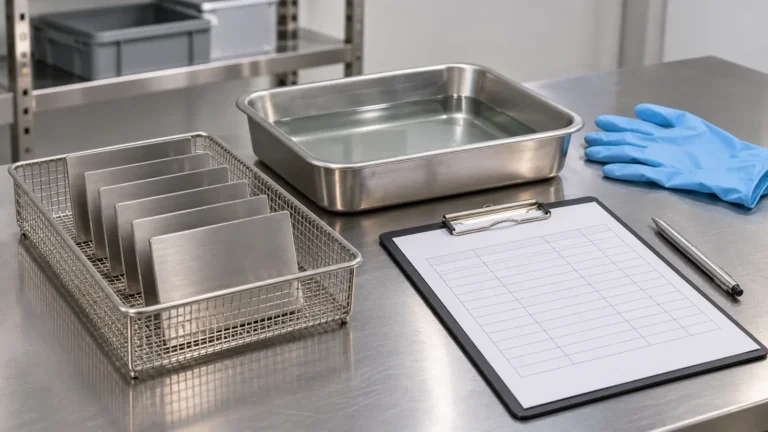
For a multi-SKU program, maintain a simple document-control table rather than a single undated instruction sheet. Each row can identify the product code, finish revision, approved care document, approver, date confirmed, and next review trigger. A trigger might be a substrate substitution, a new anodizing processor, a change to a clear layer, or a change in an adhesive or seal that can contact the cleaner. Distributors can then check whether the guidance they received applies to the shipment in front of them. If a manufacturer cannot confirm a field, label it pending and avoid publishing a broader claim until the responsible owner supplies the missing information.
The supplier evaluation should also separate factory capability from process ownership. A manufacturer may fabricate, weld, finish, assemble, or coordinate outside processing depending on the product and approved scope. Do not assume that every factory controls or tests every upstream surface treatment. Ask who performs the treatment, which requirements are passed to that party, how the approved sample is retained, and how changes are communicated.
How Can a Small-Batch OEM Factory Support Finish Questions?
A small-batch OEM project benefits from early clarification of the drawing, finish callout, sample, and packaging instructions. Koitor Hardware is a family-owned custom metal hardware factory focused on bathroom and home-storage hardware. Its approved scope supports discussion of product drawings and samples, metal fabrication, assembly, finishing requirements, packaging preparation, and coordination questions. That positioning does not mean Koitor performs anodizing or operates a finish-testing laboratory; those capabilities should not be assumed.
For a custom project, a buyer can share:
- The part drawing or physical sample and its current revision.
- The substrate and finish name as stated by the responsible processor.
- Visible surfaces and the desired color or appearance reference.
- Any existing care instructions or known chemical exposures.
- The target quantity, sample need, packaging requirements, and market.
- The question that remains unresolved, such as finish identification or document ownership.
Koitor can then clarify which questions concern the fabricated product, which depend on a finish supplier, and which require the product owner’s approval. Depending on product and confirmed details, MOQ may start from 100 pieces; samples usually take 5–7 working days after details are confirmed, and bulk production usually takes 4–6 weeks depending on quantity, finish, and packaging. These are planning ranges, not guarantees. The quotation and project confirmation should specify the actual scope and timing.
The useful outcome is not a blanket promise that a finish will tolerate every cleaner. It is a traceable decision: a known material and surface, an approved sample, care guidance tied to that configuration, and a clear escalation route when a buyer sees a change. For broader project discussion, see the OEM home storage hardware manufacturer page or contact Koitor with the drawing, sample, and exact finish question.
What Should Buyers Check Before Approving Care Instructions?
Use this checklist before printing a care card, replying to a complaint, or approving a supplier document:
- [ ] The instruction is tied to the correct SKU, revision, and product configuration.
- [ ] The finish identity comes from a controlled record rather than color or appearance alone.
- [ ] Any clear or organic topcoat is identified or explicitly marked unknown.
- [ ] The product maker has approved the cleaner and cloth for the specified finish.
- [ ] Directions state whether rinsing and drying are required, without adding unsupported details.
- [ ] The instruction warns against unapproved abrasion and stronger chemicals.
- [ ] Adjacent seals, plastic parts, adhesive components, and fasteners are considered.
- [ ] The escalation route explains what photos, sample, and exposure history to provide.
- [ ] The care document will be reviewed after material, finish, or processor changes.
- [ ] A retained sample or other acceptance reference is identified when appearance is critical.
If one of these items cannot be confirmed, note the open question and assign it to the responsible owner. This is more reliable than turning a plausible cleaning practice into a product claim.
Frequently Asked Questions
How to clean anodized aluminum when the finish is unknown?
Do not assume that an acid is safe for the actual part. Check the product maker’s care instructions and ask the responsible supplier or processor if the guidance is unclear. The presence of a mark does not justify an unapproved chemical treatment.
Is a soft cloth always safe?
A soft, clean cloth is a cautious starting point only when the maker’s instructions allow it and loose abrasive particles have been removed. A contaminated cloth can scratch, and pressure or repeated rubbing can still change a delicate finish. Follow the product-specific directions.
Can cleaning restore a scratched or dull anodized surface?
Cleaning may remove residue, but it should not be represented as repairing damaged anodizing. Preserve the part, document the condition and prior exposure, and ask the product owner or processor to assess it before polishing or refinishing.
Does anodized aluminum have the same care requirements as powder-coated steel?
No universal equivalence should be assumed. They are different substrate and finish combinations. A product-specific method for powder coating cannot be transferred to anodized aluminum unless the responsible maker approves it for that exact item.
What should a distributor request from a hardware supplier?
Request the controlled finish description, the applicable care instructions, the identity of the document owner, and a revision link to the SKU or drawing. If a complaint is under review, also provide the lot reference, clear photos, cleaning history, and a comparison sample where possible.
When should cleaning stop and technical review begin?
Stop when the surface changes, a mark persists after the approved routine, the finish identity is uncertain, or the proposed next step involves stronger chemicals, abrasion, scraping, polishing, or refinishing. Preserve the part and ask the responsible product owner or finish processor.
Work With Koitor Hardware
For a bathroom or home-storage hardware project, share the current drawing or sample, known material and finish, target quantity, and the specific care or finish question that needs review. Koitor can help clarify the fabrication and sourcing scope and identify questions that must be confirmed by the finish processor. Consumer care should follow the actual product maker’s instructions.
Review the Finish Before You Approve the Care Guide
Send the drawing or sample, finish specification, and open project question for a scoped discussion.
OEM / PRIVATE LABEL
Turn this sourcing guide into a product brief
Share your target product, size, finish, order quantity and packaging requirements. Your team receives a practical manufacturability review before quotation.

 English
 Español
 Português
 Français
 Deutsch
 العربية