

OEM supplier production milestone reporting should show what has happened, what evidence supports the status, who owns the next action, what is blocked, and which buyer decision is due. For custom metal hardware, separate sample approval, material readiness, fabrication, finishing, assembly, inspection, packing and shipment release rather than compressing them into “in production.” A concise shared tracker can work; its milestone definitions and evidence matter more than its software.
Why is an “in production” update not enough?
OEM supplier production milestone reporting is useful only when a status connects a dated event to evidence, an owner, an open risk and the next buyer decision. The phrase “in production” collapses many different states: material may be ordered but not received, a sample may be awaiting approval, welding may be complete while finishing is blocked, or finished goods may still need inspection and packing. A buyer cannot plan around a label that does not say which state is true.
This matters especially for custom metal hardware because a product normally moves through linked activities rather than one uninterrupted operation. Drawing clarification, material preparation, wire or tube forming, welding, grinding, polishing or coating, assembly, inspection and packing may involve different people or outside services. One unresolved interface can hold later work even when another operation is visibly underway. Reporting should show the actual critical path rather than repeat a broad percentage that has no agreed calculation.
A useful update also separates completed work from forecast work. “Sample approved” should point to the sample identity and approval record; “finish complete” should identify which parts and finish revision were checked; “ready to ship” should not be used if final inspection, carton count or buyer release remains open. Treat a milestone as complete only when its stated acceptance evidence exists. If the evidence is not available, report the condition honestly as pending or at risk.
The buyer does not need a complicated enterprise dashboard for every order. A concise table, shared tracker or structured email can work if both parties agree its fields and cadence. The format is secondary to clear ownership and reliable definitions. For small-batch OEM orders, a short, consistent report may be easier to maintain than a polished system that is not updated when a supplier is waiting for a drawing, finish sample or packaging decision.
Which milestones should a metal-hardware order track?
Start with gates that change what the buyer can do next. Typical checkpoints include specification freeze, sample submission, sample approval, material readiness, first production operation, fabrication completion, finish completion, assembly completion, final inspection, packing completion and shipment release. Not every project needs every line. The buyer and supplier should select milestones that reflect the product route and commercial commitment rather than copy a generic checklist that treats all orders alike.
Specification freeze is a decision gate, not simply a calendar date. It should record the drawing revision, approved sample reference, material and finish description, packaging scope, label artwork status and any buyer-owned components. If a specification remains open, the report should name the unresolved item and the person expected to decide it. A supplier should not silently treat an unanswered question as approval, and a buyer should not assume a quotation included details that were never confirmed.
For manufacturing stages, distinguish start, completion and acceptance. “Welding started” is not the same as the welded subassembly being complete; “coating done” may mean parts entered the finishing route rather than passed the agreed visual review. Define whether a line reports an operation date, a quantity, a sample observation or a release decision. Where finishing or packaging depends on outside parties, identify the handoff and expected return evidence without implying that an external provider has been verified by the buyer.
Shipment readiness is a separate gate from production completion. Buyers may still need to confirm final quantity, carton configuration, shipping marks, booking details, document set or release authorization. Identify which party owns each item and whether the condition blocks dispatch. A milestone map should reflect the purchase order and agreed shipping terms; it should not invent legal obligations or promise a transit date. The supplier can then flag a missing buyer decision while there is still time to respond.

What evidence makes each milestone verifiable?
Evidence should be proportionate to the decision. A drawing revision can substantiate specification freeze; a dated sample record can support sample approval; a material document or receiving entry can support material readiness when the project requires that proof; and dated stage photographs can help show that a defined operation has occurred. A photo is not a substitute for a measurement or test when the buyer has specified one. The report should state what the evidence proves and what it does not prove.
Keep each record identifiable. Use the purchase-order or project reference, product code, drawing revision, sample number, lot or quantity where available, event date, uploader and approval status. Avoid sharing sensitive information beyond the project team. If the buyer changes a drawing or finish after approval, preserve the old reference and mark the new revision; replacing a file without a change note can make later questions impossible to resolve.
A practical milestone row contains a planned date, current forecast date, actual date, status, evidence link or reference, responsible owner, blocker, required decision and next update. The planned date preserves the original commitment; the forecast reflects the latest view; the actual date records what happened. Keeping these separate makes slippage visible without rewriting history. If a milestone has no measurable completion definition, agree one before the order depends on it.
Avoid evidence theater: many pictures, repeated percentages or long message threads do not necessarily improve control. Choose evidence that helps the buyer make a decision, such as whether a production-intent sample matches the approved structure or whether carton protection is ready for review. For commercial and confidential records, use the parties’ approved channel and access rules. A buyer should not request a factory-wide view, customer data or unrelated records merely to make a routine status report look comprehensive.
| Milestone | Useful evidence or reference | Buyer decision / next action |
|---|---|---|
| Specification freeze | Released drawing, sample ID, finish and pack scope | Confirm revision and close open questions |
| Sample approval | Dated approval record and noted deviations | Approve, reject or request a bounded change |
| Material readiness | Receiving or supplier document if required by project | Resolve substitution or documentation gap |
| Fabrication / finishing | Stage record, defined quantity and relevant review | Respond to process or appearance exception |
| Final inspection | Agreed inspection record and disposition | Accept, hold or document corrective action |
| Packing / shipment release | Carton count, marks, documents and release status | Confirm buyer-owned shipping decisions |
How should buyers handle blockers and schedule changes?
A useful exception report names the blocker, its impact, its owner and the decision deadline. “Delayed” is a condition, not an explanation. More useful wording is: the finish reference is not approved; the supplier is holding the affected parts; the buyer decision needed is confirmation of the selected sample; and the next forecast will be updated after that decision. This does not require the supplier to diagnose a root cause prematurely, but it does make the next action visible.
Separate confirmed facts from estimates and hypotheses. If a subcontract finishing slot moved, state what is known and when the supplier expects confirmation. Do not label a guessed recovery date as committed. If the cause is unclear, record the investigation owner and next checkpoint. This discipline protects both sides from treating an optimistic message as a revised purchase-order commitment or treating a preliminary concern as a verified defect.
Escalation should be tied to decision impact. A missing minor document may be recorded without executive attention, while an unapproved critical sample or material substitution may require the buyer’s prompt review. Agree which events trigger same-day notification, who receives it, and what information is needed. The escalation path can be simple: operating contact, purchasing lead and an agreed management contact. It should not bypass normal change authorization or turn every date variance into a crisis.
When a forecast changes, preserve the previous forecast and record the reason for the update. That history helps the buyer distinguish a one-time dependency from recurring planning uncertainty. It also supports a constructive supplier conversation: which information arrived late, which stage had no buffer, and what change could reduce risk next order? Avoid using reporting to assign blame before evidence is reviewed. The goal is to make a decision early enough to protect the order, not to create a retrospective score from incomplete data.
How should sample approval and reporting rules connect?
Sample approval should identify the exact item being approved and the limits of that approval. Record the sample or revision, agreed dimensions or visual references, finish, packaging assumptions and any open deviation. If approval is conditional, state the condition and who must close it. A photograph can document appearance or assembly orientation, but it cannot establish every hidden dimension, material identity or durability claim. Use a separate check where those characteristics matter to the product brief. This is where OEM supplier production milestone reporting should connect technical approval to a dated production-release decision.
Link the approved sample to the production start gate. Before bulk work proceeds, the report should confirm that the current drawing, materials, finish reference and packaging instructions correspond to the released version. If production must begin before a buyer closes an item, document the authorized scope and risk rather than letting an informal message stand in for approval. This is particularly important when an outside finish or bought-in component affects the final appearance or fit.
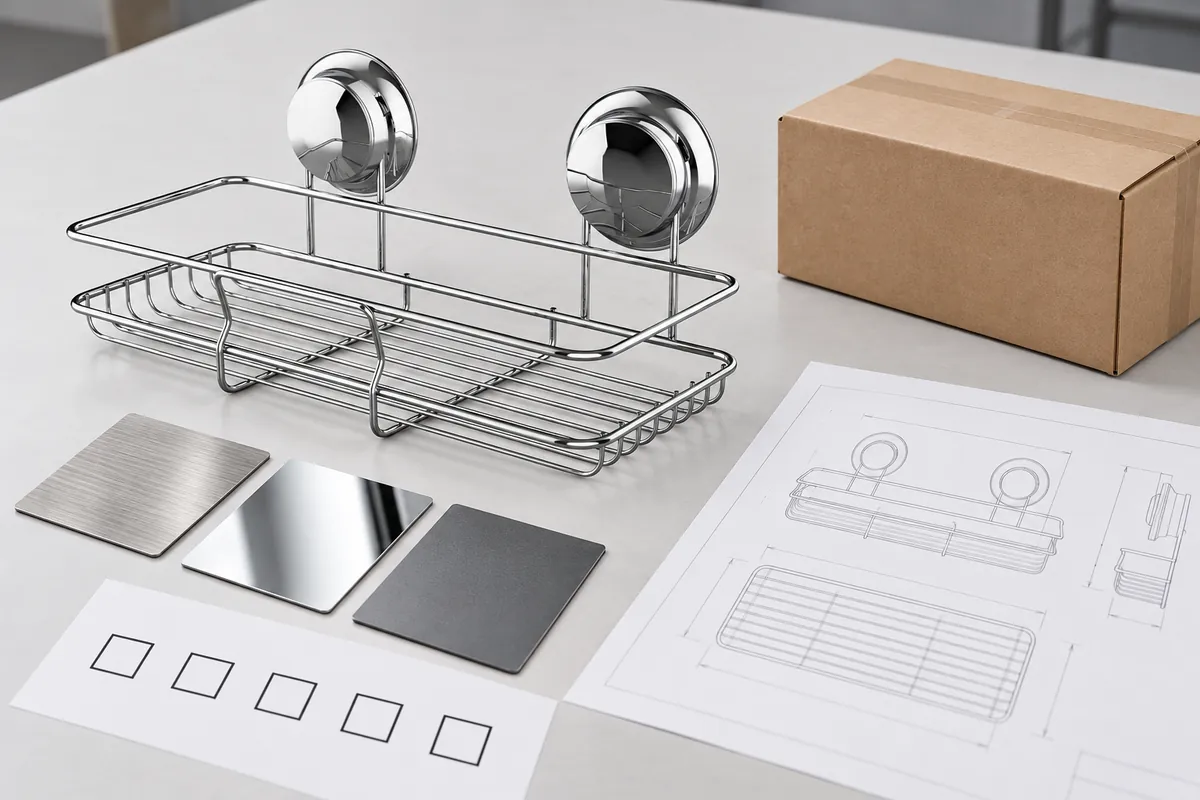
A useful production-intent check asks whether the actual process route can reproduce the approved decision. For a wire basket or towel rack, buyers may review major dimensions, mounting points, weld locations, surface appearance and package protection, depending on the project. The inspection plan should be agreed with the supplier and should not assume that a hand-built prototype automatically represents a production batch. Any test methods or numeric criteria should come from the project specification and qualified technical review.
After approval, define what happens when something changes. A material substitution, drawing revision, finish route change, packaging redesign or supplier change can affect different risks. The supplier should notify the buyer before implementing a change that requires approval under the agreement. The buyer can then decide whether a targeted sample, document review or broader requalification is appropriate. The milestone tracker should show the change request, review owner and disposition so that old and new approvals do not become confused.
What should an importer request in the reporting agreement?
Set the reporting unit and cadence first. A weekly update may be adequate for a stable order with long intervals between gates, while a project near sample approval or shipment release may need a different rhythm. The parties should identify a named owner on each side, the reporting channel, time zone, cut-off time and backup contact. Do not require daily updates if no meaningful event can occur daily; stale repetition can obscure the one change that needs action.
Agree the milestone vocabulary before the first report. Define what “sample submitted,” “material ready,” “production complete,” “inspection passed” and “ready to ship” mean for the order. The supplier should be allowed to mark a milestone not applicable when the route does not include it, with a short explanation. The buyer should ensure that the definitions match the purchase order and avoid adding a new acceptance test through a spreadsheet after commercial terms are set.
Clarify how schedule dates are treated. A planned date is a baseline; a forecast is the latest estimate; an actual is a recorded event. Identify whether a date is a target or contractual commitment, and who can authorize a change. Reporting itself does not amend the contract. If the parties need to revise a committed delivery date, use the formal change process and retain the buyer’s confirmation.
Keep access and confidentiality practical. A tracker may contain order quantities, supplier names, process details or commercial data. Limit access to people who need it, store records in an approved system and agree how long they are retained. Share only project-relevant evidence. This is not a request to disclose other customer projects, unrelated production capacity or private factory records. A small order can still use disciplined information handling without building a complex reporting platform.
Buyer checklist and common mistakes
Before placing an order, map the decisions that can block the next stage. Confirm which drawings and sample define the product, who approves finish and packaging, what evidence is required at each gate and how a late buyer decision will be reported. Confirm the planned reporting contact and cadence. If a stage depends on a third party, ask what status can be shared and what uncertainty remains rather than expecting the supplier to control an outside schedule completely.
During production, read the report as a set of claims to verify. Check whether the actual dates, forecast dates and baseline are distinguishable; whether a milestone has evidence; whether quantity and revision identify the item; and whether blockers specify a needed action. If the tracker says “complete,” ask whether that means operation completion, inspection acceptance or buyer release. A clear question early is less costly than discovering at shipment that both sides used the same word differently.
Common mistakes include tracking only a single shipment date, accepting a percentage with no denominator, treating a photograph as proof of a test, deleting previous forecasts, allowing a sample change to disappear in chat, and escalating every variance at the same level. Another mistake is to assume that a polished tracker means the supplier has a reliable process. Reporting supports communication; it does not replace supplier qualification, agreed product requirements, inspection or commercial controls.
Use the following checklist as a starting point and adapt it to the order. The specific fields should be mutually agreed, concise enough to maintain, and relevant to the metal hardware route. Do not add technical acceptance criteria merely because a template includes a blank column. If a buyer needs a measurement, test or compliance document, identify it in the specification and agree the method, evidence format and responsible party before production depends on it.
Buyer milestone checklist
- List only milestones that affect the order’s next decision or critical path.
- Separate baseline, latest forecast and actual dates; retain the prior forecast.
- Define completion for every milestone and link the evidence that supports it.
- Record owner, blocker, decision needed, due date and next update for exceptions.
- Tie sample approval and production release to a drawing revision and sample identity.
- Keep shipment readiness separate from fabrication completion and buyer release.
Frequently asked questions
How often should a buyer request a supplier milestone report?
Choose a cadence that matches the order’s decision points and risk. Weekly may suit a stable stage; sample approval or shipment release may need a faster update. Agree the schedule with the supplier instead of asking for daily messages that repeat unchanged information.
Should a supplier report a percentage complete?
Only if the parties define its denominator and evidence. A stage-based status is often easier to interpret for a custom product because an unweighted percentage can conceal a single unresolved blocker.
Does a photo prove that a milestone passed?
A photo can show a visible condition or that an operation appears to have occurred. It does not prove hidden dimensions, material identity, test results or acceptance unless the project defines the photo as sufficient evidence for that specific decision.
Does a production tracker change the agreed delivery date?
No. A tracker records baseline and forecast information. A change to a committed date should follow the parties’ formal commercial process and receive the required authorization.
Can Koitor provide a dedicated reporting platform?
No dedicated platform is asserted here. Koitor’s direct factory communication and OEM production context support agreeing practical project updates, but the reporting format, cadence and evidence should be confirmed for each order.
For the product and process context, see Koitor’s custom bathroom hardware manufacturing page. Buyers can also contact Koitor with a drawing, sample reference and reporting requirements.
Work With Koitor Hardware
Need a Clearer Order-Update Process?
Share the drawing revision, sample status, finish and packaging decisions, target quantities and reporting needs so the project scope and next buyer actions can be discussed.
OEM / PRIVATE LABEL
Turn this sourcing guide into a product brief
Share your target product, size, finish, order quantity and packaging requirements. Your team receives a practical manufacturability review before quotation.


 English
 Español
 Português
 Français
 Deutsch
 العربية