
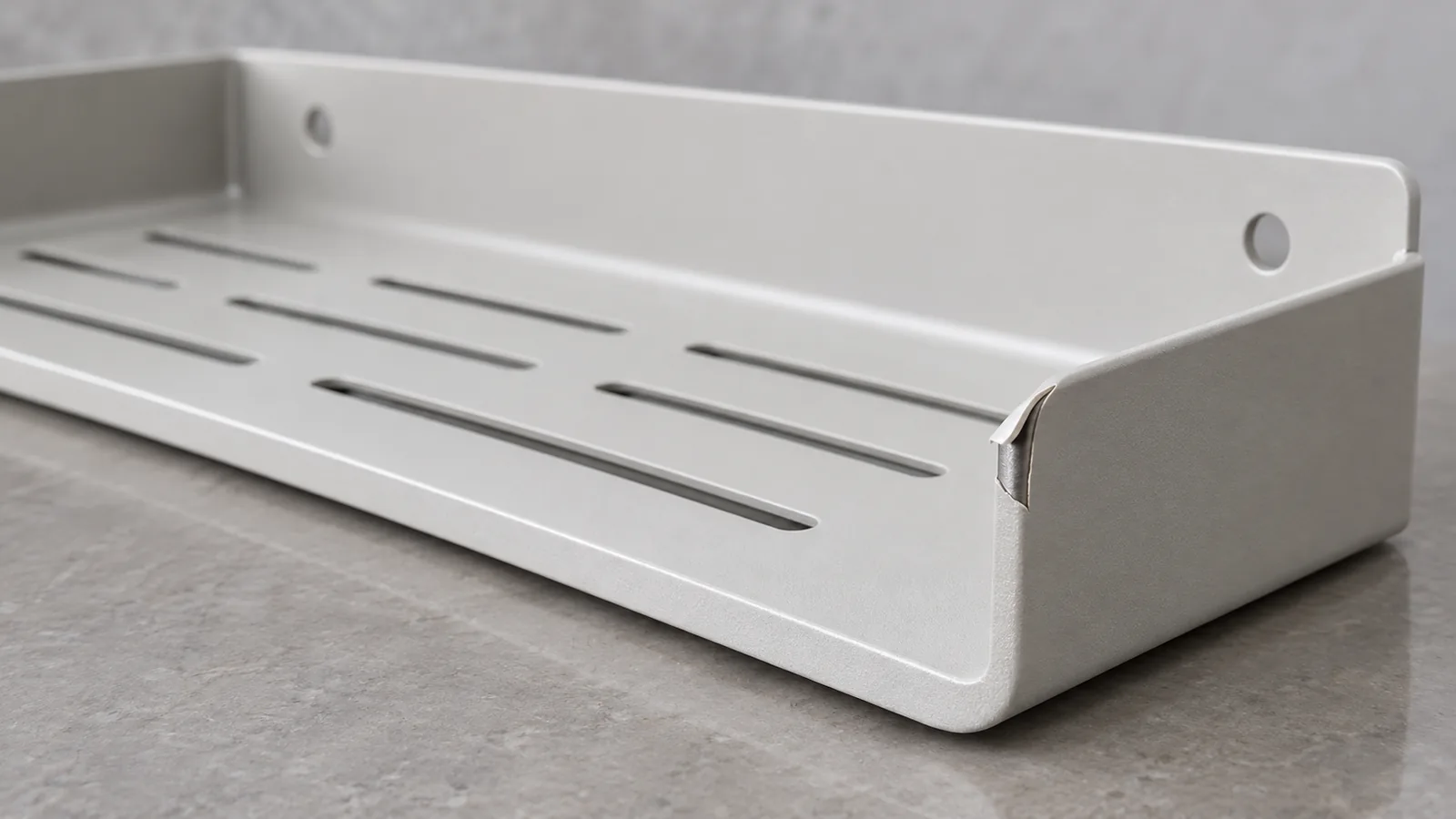
Powder coated stainless shower shelf peeling is a visible failure signal, but appearance alone does not identify its cause. Buyers should preserve the affected sample, document where coating lifted and request the supplier's substrate, pretreatment, application and cure records for that lot. Adhesion depends on the complete coating system and surface condition. Do not conclude that grade, coating thickness or one process step is responsible until evidence narrows the cause.
This short video shows the product or manufacturing context discussed in this guide.
What can a peeling observation tell the buyer?
A lifted edge shows that coating separated locally from the underlying surface or another coating layer. It does not by itself prove which interface failed or why. Contamination, preparation, pretreatment, application, cure, handling, edge geometry, later damage or service conditions may be investigation paths. They are not diagnoses. Preserve the item and avoid scraping away evidence before documenting it.
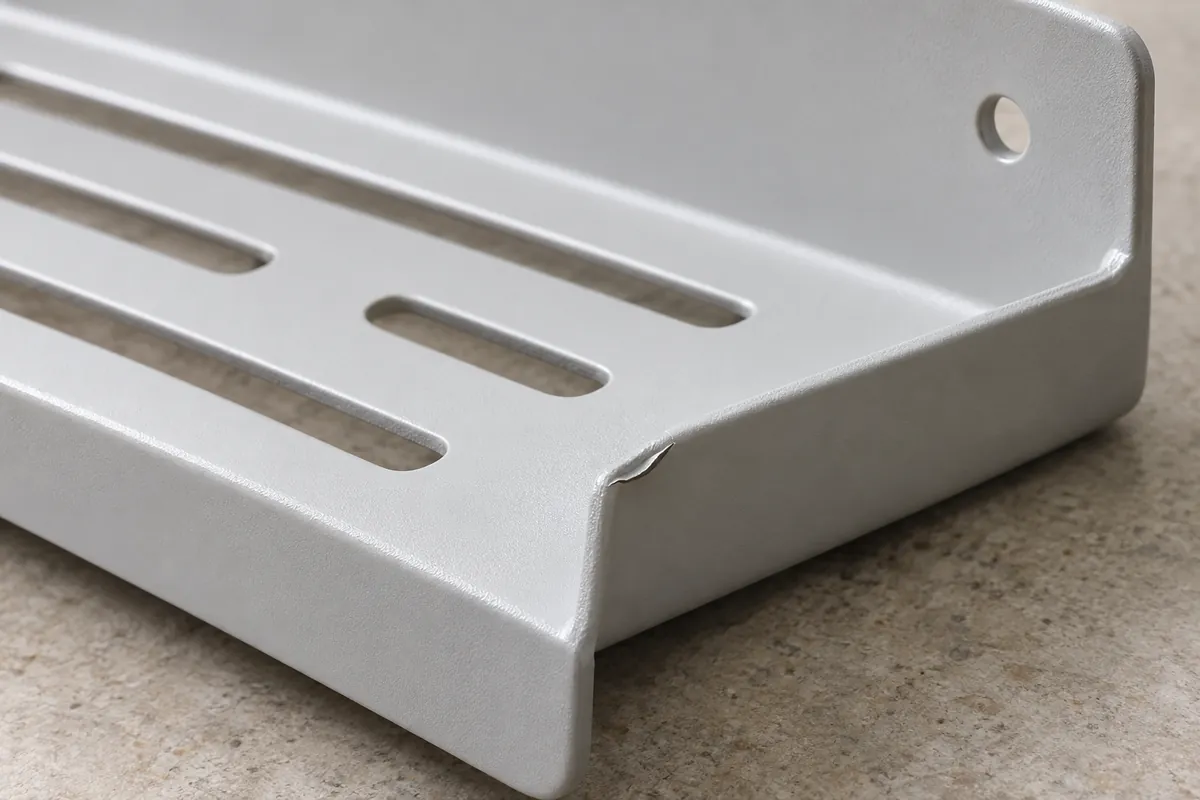
A Reddit post in the research pack describes a user reporting that a stainless shower shelf identified by its maker as powder-coated was peeling. This is one public failure signal; it does not establish prevalence, construction or root cause. It illustrates why an importer may need an approval checklist, while technical conclusions must come from controlled sample and process evidence.
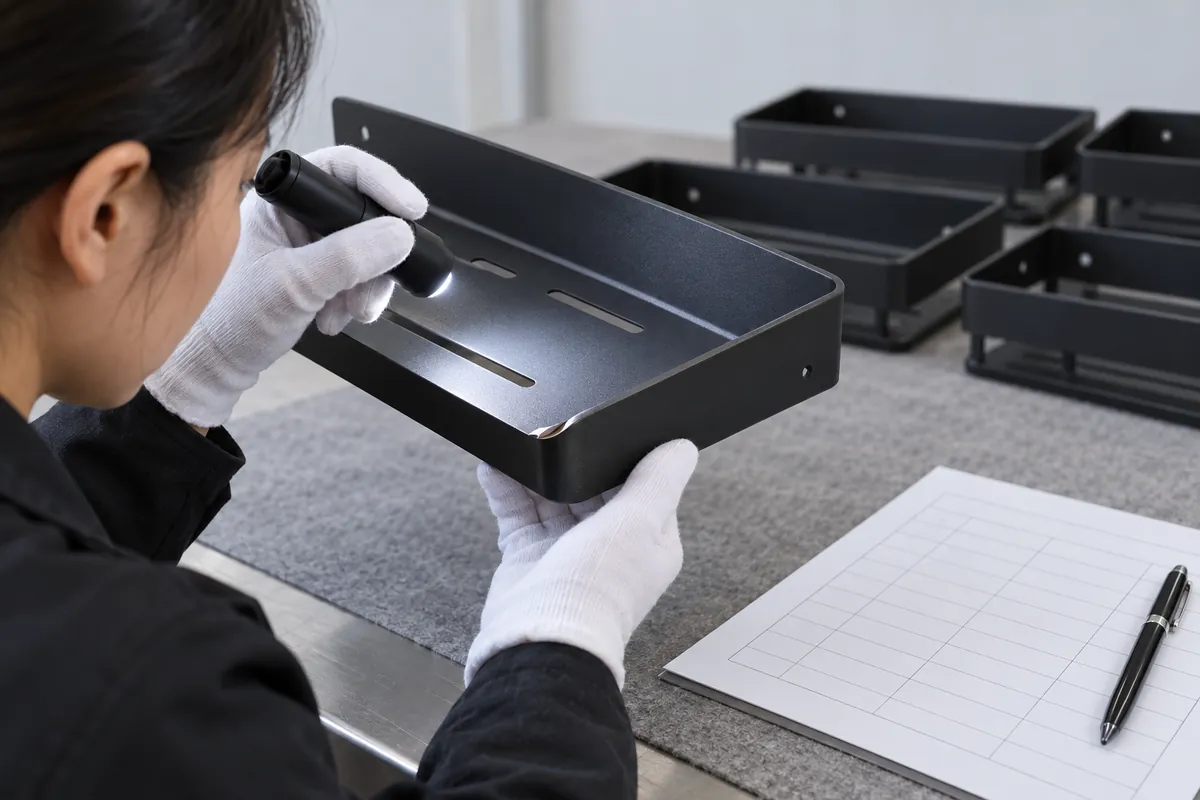
The Powder Coating Institute FAQ and coating-supplier guidance describe cleanliness and suitable pretreatment as relevant to adhesion, with conditions depending on coating system and substrate. These sources support asking about preparation; they do not prove that a particular shelf was poorly cleaned or specify universal chemistry. Ask the supplier to identify the approved process and records for the material and finish under review.
A powder-coated appearance does not reveal the base metal grade. Verify material identity through supplier records or an agreed method. Do not infer grade, corrosion resistance or coating suitability from color or a magnetic response alone. Keep material, pretreatment and finish as separate fields in the technical investigation.
What evidence should be requested before assigning cause?
Begin with traceability: model, drawing revision, production lot, date code, coating batch if available and sample source. Record the location and size of the lifted area, nearby edges or welds, visible impact or abrasion, and conditions under which it appeared. Photograph the item before handling. Keep an untouched sample when possible so a qualified coating specialist can inspect the failure surface.
Request the coating system identity and technical data for the selected substrate and environment. Ask the supplier to describe cleaning, pretreatment, application and cure controls and provide records relevant to the affected lot. A process name alone does not prove the method ran correctly. For confidential formulations, the supplier can provide a controlled statement or specialist assessment without exposing proprietary chemistry.
Ask whether the geometry creates areas that are difficult to clean, coat or cure. Folds, seams, welds, recesses and drainage openings can present different access or film conditions. The question is whether the actual product's critical areas are represented in sample approval and process checks. Ask how the coating system handles those locations rather than assuming one shape always peels.
Separate the intended use environment from the complaint. Record cleaners, exposure, water conditions, storage, installation and contact damage without assigning blame based on an unverified description. The coating supplier should confirm compatibility for the selected finish. A cleaner suitable for bare metal may not suit every coated system.
How should coating proposals be compared?
Compare documented substrate, pretreatment sequence, coating product, application controls, cure window and quality records. Avoid ranking proposals by color or claimed thickness alone. A thicker layer does not automatically solve adhesion if preparation or system compatibility is unsuitable. Ask what evidence demonstrates control on the actual part and where process limits apply.
Pretreatment methods vary with base material, soil condition, coating chemistry and production line. Buyers should not prescribe an unverified chemical sequence. Require the manufacturer to state its approved method and relevant control points. For bathroom use, agree how a representative sample will be evaluated and which tests, if any, fit the exposure and product.
A shelf with welds, corners and edges differs from a flat test panel. Ask whether the sample uses production material and geometry and includes equivalent joints and openings. A separate test panel can inform coating behavior but does not automatically prove that the complete shelf received the same preparation and application.
Compare commercial scope as well as finish names. One quote may include a defined system, sample approval and lot traceability; another may say only powder coated. Ask what records, sample retention and corrective-action support are included. A supplier statement does not guarantee against every service failure; acceptance criteria must remain tied to evidence.
What should sample approval and inspection cover?
Select a production-intent shelf with proposed material, weld layout, preparation and finish. Record sample identity, coating source and approval date. Inspect the full surface, especially edges, corners, welds, folds and recesses. Establish a baseline appearance and critical locations. One attractive sample does not guarantee future lots.
Agree on an adhesion or durability method with the coating supplier or qualified test provider if required. State specimen geometry, conditioning, procedure and acceptance criteria. Salt-spray exposure alone does not identify every adhesion failure or predict service life. Do not invent test hours or present an informal scratch as a recognized qualification.
For production inspection, define visible defects, sample size, examined locations and actions when a defect appears. Compare against the approved sample using photographs and lot records. If coating lifts, preserve samples from affected and unaffected areas. Do not repair before cause review because sanding or recoating can obscure the original interface.
A corrective-action request should cover containment, traceability, process review, confirmed cause or remaining uncertainty, proposed action and verification on the revised process. A plausible explanation is not root-cause proof. If the investigation cannot isolate a cause, state limits and identify what additional sample or technical analysis is needed.
How should buyers control finish changes and packaging?
Name base material and finish system separately. Identify accepted color, appearance range, sample, product geometry and any approved coating supplier or route. Keep the product drawing and finish specification at one revision. If the coating source changes, review substrate compatibility and sample evidence before production; visually similar powders can have different preparation or cure requirements.
Control changes to cleaners, pretreatment, coating formulation, application equipment, cure settings, supplier site and part geometry through a documented review. Define which changes require notice and renewed evidence. Focus on changes that can affect the coating interface or appearance. Preserve baseline samples and photos for repeat-order comparison.
Packaging after coating matters. Protect edges from abrasion and metal-to-metal contact, and review separators, bags and carton movement on a production-intent pack. Transit damage can resemble an adhesion problem. If a complaint appears after shipment, examine damage location and packaging evidence before assigning it to pretreatment or cure.
Koitor's verified capabilities include metal fabrication, surface finishing coordination, assembly and packaging preparation for bathroom and home storage hardware. A particular coating chemistry, lab test or performance result must be confirmed for the project. Share the drawing, finish expectation and observed issue, then ask the responsible coating supplier to confirm its process and test scope.
How should peeling be separated from corrosion and impact damage?
A lifted coating edge, a rust-colored mark and a chip can look related in a photograph but indicate different conditions. Map the location, shape and surrounding surface before cleaning the item. Note whether the defect begins at a weld, cut edge, sharp corner, contact point or area exposed to a cleaner. Record when it first appeared and how the shelf was handled. These observations help specialists choose an investigation; they do not by themselves establish a root cause.
Where a coating has separated, preserve both the product and any loose flakes if practical. Ask the coating supplier or qualified lab to examine the failure interface and document whether separation occurred between coating and substrate, within the coating, or alongside corrosion products. Do not scrape, polish or apply touch-up paint before evidence is captured. If the item contacted another metal in transit, retain packaging and note abrasion locations so transport damage can be considered separately.
Compare affected and unaffected pieces from the same production lot and, when available, a retained approved sample. Verify substrate identity and finish records independently. A stainless label does not answer whether a coating interface was properly prepared; likewise, peeling does not prove that the base metal was incorrect. Keep material traceability, pretreatment, application and cure records connected to the unit or lot under review.
The evidence may point to several possible contributors, including surface contamination, inadequate preparation, application variation, cure conditions, geometry or service exposure. Treat these as hypotheses until supported by inspection or records. Ask the responsible supplier to state what is confirmed, what remains uncertain and what evidence would discriminate among causes. Avoid assigning blame or promising a lifetime outcome from a single returned shelf.
What should a corrective-action and repeat-order plan include?
Contain the affected lot based on traceability and agreed risk, then define which additional samples will be examined. The supplier's response should connect the observed defect to a documented process step or clearly acknowledge that the cause is still under investigation. Record proposed corrective action, owner, due date and verification method. A plausible explanation is not proof that the action worked; compare production-intent parts after the change using the agreed criteria.
For a repeat order, freeze the substrate, preparation route, coating material, application method, cure control and approved sample to the level the project can actually verify. Identify which changes require buyer notification and renewed approval. The specification should not prescribe unverified chemical details. The coating specialist should define appropriate process controls and any test method based on the substrate, product geometry and use conditions.
Review the finished shelf at edges, welds, folds, corners and recesses, not just on broad flat surfaces. If a test panel is used, record how it relates to production parts; it can provide process information but does not automatically prove that a complex shelf received identical preparation and coating. Define method, specimen, conditioning and acceptance criteria before interpreting test hours or adhesion results.
Packaging after finishing also deserves a controlled check. Separate metal surfaces, protect vulnerable corners and verify that packed units cannot abrade each other in transit. If damage appears after shipment, compare its pattern with the packaging and handling evidence before attributing it to coating adhesion. A practical supplier corrective-action file combines product identity, process records, sample results and packaging review so the next shipment is evaluated against evidence rather than assumptions.
How should the buyer define a defensible acceptance decision?
For powder coated stainless shower shelf peeling, acceptance should be based on a defined defect description, sample scope, process evidence and agreed inspection or test method. The buyer and coating specialist should state what constitutes lifting, where it will be examined and how uncertain findings will be escalated. A broad statement such as no peeling is difficult to apply consistently unless inspection conditions and sample identity are recorded.
Keep material verification separate from coating adhesion review. Confirm the substrate documentation for the affected lot, then review pretreatment, application and cure records with the responsible supplier. This prevents powder coated stainless shower shelf peeling from being assigned to the steel grade based on appearance alone. If evidence remains inconclusive, record the limitation and agree the next examination instead of presenting a hypothesis as confirmed cause.
Buyer comparison table
| Investigation item | What to record | What it can establish |
|---|---|---|
| Failure location | Edge, weld, fold, recess or impact point | Where separation occurred |
| Material identity | Supplier lot and verification evidence | What substrate was used |
| Coating process | Preparation, application and cure records | Whether stated controls were followed |
| Service conditions | Cleaner, exposure, handling and timing | Context for observation |
| Follow-up test | Method, specimen and criteria | Result for the defined setup |
Buyer checklist
- Photograph and preserve the sample before repair
- Record product, material and coating lot identity
- Request preparation, application and cure evidence
- Compare edges and welds on production-intent samples
- Agree test method and criteria with specialists
- Verify corrective action against evidence
For a project-specific detail, consult the manufacturer or technical reference. Its information applies to the stated system and conditions.
See related OEM sourcing information or contact Koitor for a metal-product drawing discussion.
Frequently asked questions
Does peeling prove the stainless grade was wrong?
No. The visible failure does not identify substrate grade or root cause; verify material and coating records separately.
Does a thicker powder coat prevent peeling?
Not by itself. Adhesion also depends on preparation, application, cure, geometry and service conditions.
Does a salt-spray result prove the shelf cannot peel?
No. It applies to its defined method and specimen and does not establish every adhesion condition.
Can a photo diagnose the cause?
A photo records location and appearance, but inspection and lot evidence are needed to confirm cause.
Discuss a project-specific sourcing question
Koitor Hardware is a family-owned custom metal hardware factory focused on bathroom and home storage products. Share the product drawing or physical sample, the purchased fitting identity, the intended application and the buyer decision that still needs evidence. Specialist drawer runners, closet shelf fittings and coating systems must be confirmed by their responsible suppliers.
OEM / PRIVATE LABEL
Turn this sourcing guide into a product brief
Share your target product, size, finish, order quantity and packaging requirements. Your team receives a practical manufacturability review before quotation.
 English
  Español
  Português
  Français
  Deutsch
  العربية