
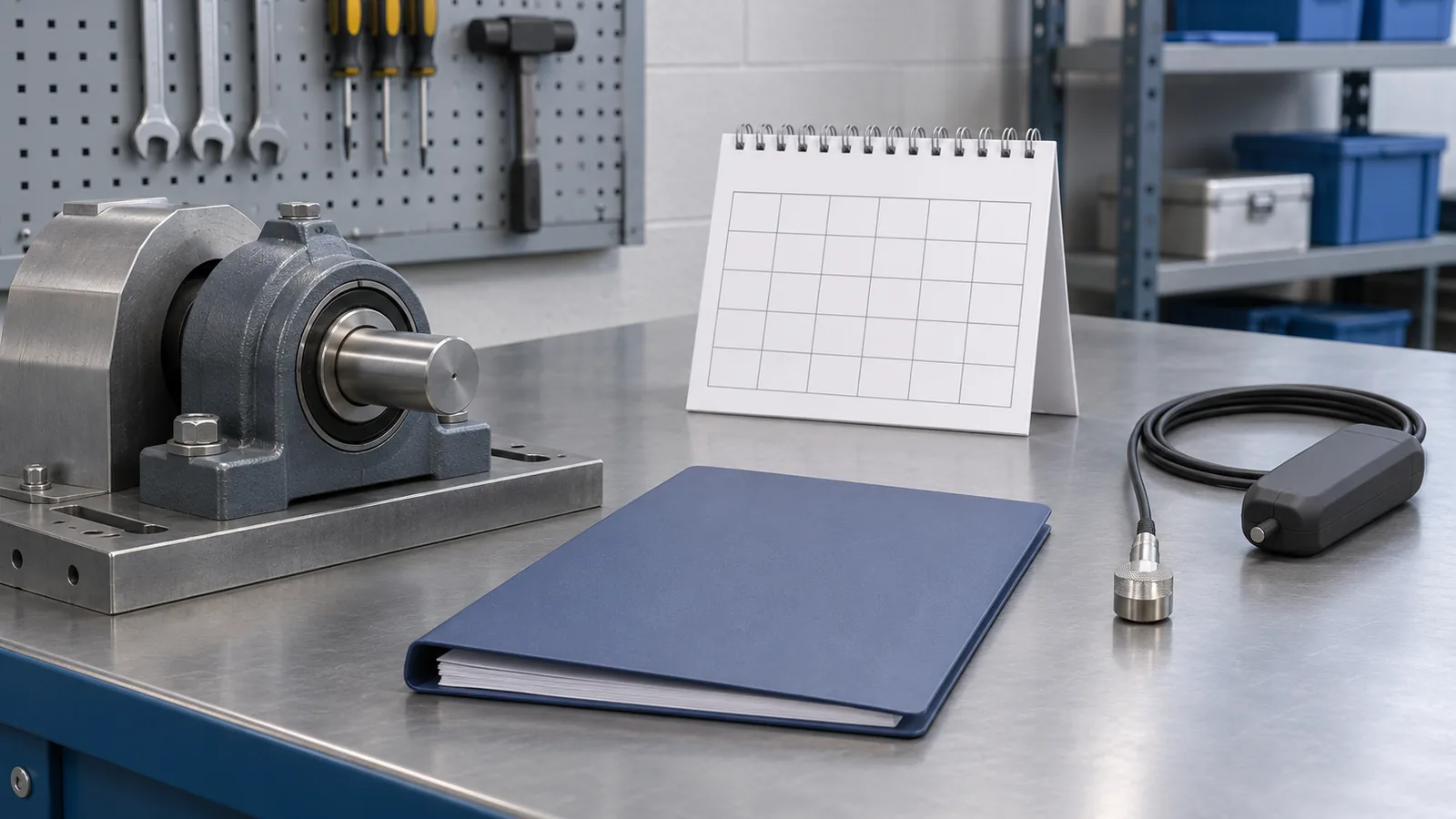
Preventive vs predictive maintenance compares two planning approaches by their trigger. Preventive maintenance is scheduled by an agreed time or usage basis; predictive maintenance uses condition information and analysis to estimate when maintenance may be needed. A supplier may use either approach, both, or another maintenance practice, and a condition check alone does not prove that a predictive forecasting program exists. For a buyer, the useful question is how a supplier’s documented equipment plan relates to the order schedule—not whether a label guarantees uninterrupted production.
This distinction matters when buyers assess manufacturing continuity, supplier statements or a proposed recovery plan. Maintenance terminology can be used loosely, so ask what event triggers work, what record supports that trigger, which asset is in scope and how a planned or emerging issue is communicated. The comparison does not establish a supplier’s actual equipment, maintenance performance, uptime or delivery reliability. Those require project-specific evidence.
What does preventive vs predictive maintenance mean?
Preventive maintenance is planned around a schedule or usage basis, such as an established interval or operating count. Predictive maintenance uses condition information and analysis to anticipate an asset’s maintenance need. The approaches can coexist: a facility may perform routine scheduled work while also investigating condition signals that suggest an earlier intervention.
The basic distinction is the trigger, not whether one approach is inherently “better.” A schedule is a plan for when an activity should occur. A condition indicator is information about equipment state. A prediction requires an analysis that connects relevant condition information to an anticipated maintenance need. Simply checking a machine, collecting a reading or owning a sensor does not by itself establish a predictive program.
IBM’s overview of predictive and preventive maintenance supports this schedule-versus-condition-analysis distinction. This article does not use that source to claim a particular savings rate, uptime improvement, required technology stack or universal maintenance interval. It also does not imply that Koitor Hardware has predictive sensors, a proprietary forecasting system or a specific maintenance program.
| Comparison point | Preventive approach | Predictive approach | Buyer question |
|---|---|---|---|
| Main trigger | Planned time or usage basis | Condition information analyzed to anticipate need | What event initiates the work? |
| Main purpose | Perform planned care before a defined need is confirmed | Use condition evidence to inform when maintenance may be needed | What decision does the information support? |
| Typical record | Schedule, work order or use counter | Condition record, analysis and follow-up decision | Can the supplier show a scoped example or record? |
| What it does not prove by itself | That equipment cannot fail between intervals | That every condition signal predicts a failure accurately | What other evidence supports the delivery plan? |
| How approaches relate | Can operate alongside condition monitoring | Can inform work in addition to scheduled work | Are the approaches integrated or separate? |
These descriptions are planning concepts rather than a supplier audit standard. Actual definitions, methods and systems vary. Ask a supplier to describe its own trigger and records in plain language instead of assuming that an industry label has one fixed implementation.
What evidence distinguishes a schedule from a forecast?
A schedule shows that planned work is assigned to an interval, usage threshold or other defined basis. A forecast needs condition information plus an analysis that supports an anticipated maintenance decision. Buyers should ask what is measured or observed, how it is interpreted, who reviews it and what action follows. No specific technology is universally required by the term alone.
An equipment record might contain a date, asset identifier, planned task and completion. That can be useful evidence of preventive scheduling. It does not show that condition-based prediction is being performed. A condition log might include an observation or measurement; that alone is not necessarily a forecast either. To understand a predictive claim, ask the supplier to explain the relationship between the observed state and the projected need, along with any limitations or review process.
The distinction can be represented as a sequence:
- Asset scope: identify the machine or equipment group being discussed.
- Trigger: state whether work is initiated by time, usage, a condition threshold, a forecast, a breakdown or another event.
- Input: identify the schedule record, observation, measurement or other data used.
- Decision: explain who interprets the input and what maintenance action is considered.
- Follow-up: record whether work is planned, completed, deferred or escalated.
- Order connection: state whether the maintenance event affects the production plan for the buyer’s order.
This does not ask the supplier to reveal confidential algorithms or detailed factory security information. A scoped explanation may be sufficient to distinguish scheduled work from a condition-informed forecast. If the supplier’s claim is material to a sourcing decision, request an appropriate redacted record or named confirmation, subject to confidentiality and access limits.
For example, a hypothetical supplier could schedule routine service for a production fixture according to its established usage basis, then inspect an unusual condition and reschedule work before the next planned interval. The first trigger is preventive; the second may be condition-informed. Whether the second case qualifies as predictive depends on the analysis and decision process, not just on the fact that someone observed a change.
Keep records focused on the buyer’s question. A list of machines is not evidence that maintenance is effective. A completed work order is not proof that an order will ship on time. A dashboard is not a substitute for understanding the decision and its connection to the relevant production resource. The buyer should seek only evidence appropriate to the commercial risk and agreed supplier relationship.
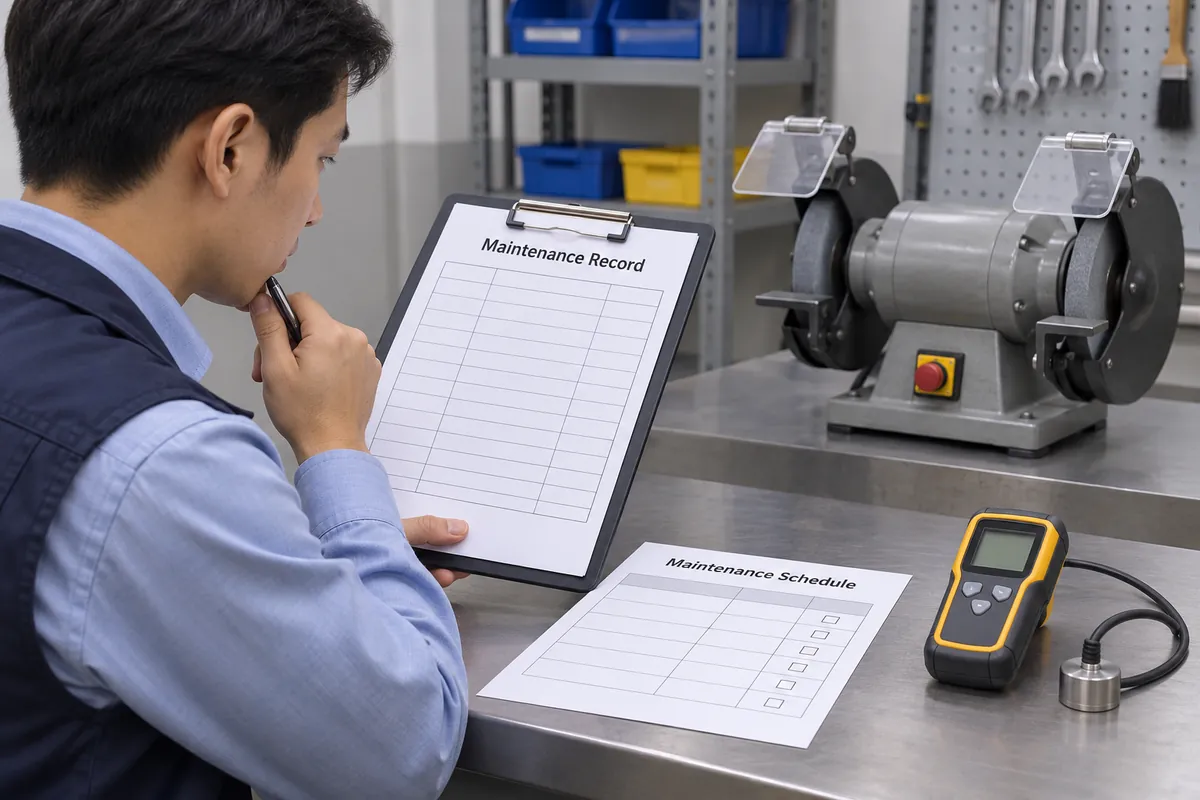
How should procurement connect maintenance language to an order?
Procurement should connect a maintenance statement to the specific production resource, order window and communication path that matter. The goal is to understand exposure and contingency, not to audit every machine or demand a guarantee that no interruption can occur.
Start with the manufacturing route or critical process named in the quotation or project discussion. A buyer may ask whether a certain tool, fixture or work center is relevant to the product, but should not assume an asset exists at the supplier until confirmed. Then ask whether any planned maintenance falls within the order’s production period and how the supplier manages a change to the plan.
If a supplier raises a condition issue, distinguish what is known from what is forecast. Is there an observed condition requiring review? Is maintenance already scheduled? Is a projected need based on an established analysis? Does the supplier have an alternate route or revised sequence? The appropriate questions depend on the part, order and supplier’s confirmed process. Avoid turning a generic maintenance discussion into a claim about capacity or quality.
An order-specific conversation can cover:
- The named product, drawing revision and order window.
- The production stage or confirmed resource relevant to the order.
- Whether planned maintenance overlaps the expected production sequence.
- How an emerging condition could change timing or routing.
- Who will notify the buyer if the production plan changes.
- What revised milestone or recovery plan will be communicated.
- What information is confidential and what can be reasonably shared.
This is different from asking the supplier to provide a full asset register. The buyer should use a proportionate request tied to the order risk. If a supplier cannot share internal maintenance records, a concise statement of the schedule impact and communication plan may answer the commercial question without disclosing protected details.
For small-batch custom metal hardware, project dates can depend on product configuration, tooling, finish, order quantity, sampling, packaging and other confirmed factors. Maintenance is only one possible planning input. A generic predictive maintenance claim cannot stand in for an agreed sample schedule, production milestone or shipment communication. Confirm those project dates directly and keep changes documented.
What are the limitations of each approach?
Preventive maintenance is only as useful as its planning basis, scope and execution; it does not remove all risk between scheduled activities. Predictive maintenance depends on relevant condition information and sound interpretation; a signal can be incomplete, noisy or outside the scope of the analysis. Neither label guarantees uptime, product conformance, capacity or delivery.
A scheduled plan may be straightforward to document, but intervals can be generic or unsuitable if conditions change. Buyers should not prescribe maintenance intervals for a supplier’s equipment without appropriate expertise and a clear contractual basis. The relevant sourcing question is whether the supplier can explain how it plans and communicates production-impacting work.
A predictive claim may sound precise, but a forecast is not certainty. The buyer should ask what asset and condition are covered, what decision the analysis informs, who reviews exceptions and how the plan changes. Do not infer that every sensor reading is meaningful or that data collection alone proves equipment health. This article does not advise readers to service equipment or interpret a technical reading.
The two approaches can also be used together. A supplier might keep routine scheduled activities and use condition observations to decide whether earlier review is warranted. In that case, the buyer should ask which part of the program is scheduled and which is condition-informed rather than forcing the entire system into one category. Clear language is more useful than debating a label.
For procurement, the limitation is especially important: maintenance records answer a maintenance-process question, while an order status report answers a delivery-planning question. One does not automatically prove the other. If the supplier reports a maintenance event, ask for its specific effect on the buyer’s order, the revised milestone, and the next communication date. This keeps the discussion anchored to actionable project information.
What mistakes make supplier maintenance claims hard to assess?
The most common mistake is treating “predictive” as a guarantee. It describes a planning approach, not certainty that equipment will not fail or that an order will remain on schedule. A second mistake is assuming that any inspection or sensor means a forecast exists.
Other mistakes include:
- Confusing a calendar plan with condition analysis. Both may be valid activities, but their triggers differ.
- Assuming only one approach can be used. Scheduled work and condition-informed planning can coexist.
- Treating a completed work order as proof of uptime. It records an activity, not every operating outcome.
- Requesting an asset list without a clear business purpose. Ask about the specific order exposure and communication plan.
- Assuming a supplier uses a named technology. Ask what is actually used; do not infer a system from industry terminology.
- Equating predictive maintenance with artificial intelligence. A label does not establish a particular algorithm, sensor or software platform.
- Treating a condition reading as a diagnosis. Ask who interpreted it and what decision it supported.
- Using maintenance status as a quality certificate. Equipment planning does not by itself prove product dimensions, finish or function.
- Expecting a maintenance plan to guarantee shipment. Delivery depends on the full project and supply chain, not one maintenance label.
- Failing to identify who will notify the buyer. A useful plan includes a communication owner and defined update.
- Reusing an old supplier statement for a changed order. Scope, equipment and schedule may differ by product and period.
A practical correction is to restate the supplier’s claim in observable terms: “The supplier says routine maintenance is scheduled for the identified work center during the planned window” or “The supplier says a condition observation triggered review and a possible maintenance decision.” Then ask for the order-specific effect. This wording prevents a broad label from being repeated as if it were a verified performance result.
How can an OEM supplier support maintenance-related communication?
A hardware OEM can explain the confirmed manufacturing route, relevant sample or tooling milestone, and how a production schedule change will be communicated. Koitor Hardware is a family-owned custom metal hardware factory focused on bathroom and home-storage products. This statement does not imply a predictive maintenance program, named equipment, sensors, monitoring capability or a guaranteed maintenance outcome.
Buyers can make project communication more useful by sharing the drawing or sample revision, required quantity, target dates and packaging assumptions. If a schedule issue is raised, ask which milestone changes, whether a sample or approval step is affected, and when the next status update will arrive. This does not require access to confidential factory data; it asks for the information needed to manage the purchase.
If a supplier describes a maintenance approach in a capability review, ask for the scope of the description and a suitable example of how it informs planning. Do not ask the supplier to reveal proprietary models or sensitive machine details when a high-level explanation is enough. If the claim is part of a contractual representation or qualification requirement, document the wording and obtain the appropriate review from procurement, quality and legal teams.
Koitor’s OEM home-storage hardware information and custom bathroom hardware manufacturing page describe the product-supply context. They do not substantiate specific maintenance systems. For a real order, contact Koitor with the product scope, target schedule and the exact question about production milestones or communication.
Sample timing, MOQ, production routing, finishing and shipment schedules depend on the actual product and order. Confirm them directly for each project. A clear communication path can help a buyer respond to schedule changes, but it does not replace agreed dates or guarantee delivery.
How should procurement document a maintenance-related schedule change?
Document the schedule change as an order event with a clear owner, affected milestone and next update. The maintenance label explains the type of trigger being discussed; the buyer still needs to know what it means for the order. Ask the supplier to state whether the event changes sampling, production start, finishing, inspection, packaging or shipment timing, and which date is now being monitored.
Keep the original and revised plan visible. A short record can show the date of the supplier’s notice, the asset or production stage if confirmed, the planned response, the milestone affected and the person responsible for the next update. It should also state what remains uncertain. This creates an actionable timeline without requesting internal data that the supplier cannot share or turning a status note into a performance certification.
If the supplier states that a condition observation prompted maintenance, preserve that wording as the supplier’s explanation. Do not rewrite it as proof of a forecast model unless the supplier has explained the analysis and the basis for that claim. A buyer can still make a sound sourcing decision from a bounded operational update: what changed, what the supplier is doing, how the schedule is affected and when the next decision will be made.
For a multi-stage order, confirm which downstream dates depend on the affected step. A shift in a sample approval may move production planning; a change to a finish slot may alter inspection or pack-out; a short maintenance window may have no material impact on the buyer’s order. These are project-specific dependencies. The buyer should ask the supplier rather than infer the impact from an equipment label or generic industry article.
Where a maintenance issue could recur, agree on a cadence for status communication appropriate to the order. This is a buyer-supplier coordination decision, not a universal reporting interval. Avoid asking for repeated updates that have no decision value. Instead, agree what event will trigger the next message: completion of planned work, a revised production start, an inspection milestone or a confirmed shipment date.
In a supplier qualification file, distinguish records that serve different purposes. A maintenance schedule supports a planning description; a work order supports an activity record; a production schedule supports order timing; and an inspection report supports product acceptance within its stated scope. Keep each record labeled and avoid using one as a substitute for another. The preventive vs predictive maintenance distinction helps buyers ask about the trigger, while the order record captures the commercial consequence.
What should remain open when a supplier cannot share its records?
A supplier may have confidentiality or security reasons for limiting access to detailed maintenance logs. The buyer can respect that limit while still asking for an order-relevant explanation. Request a concise statement of the planning trigger, whether it affects a named milestone, the next review date and the contact who will communicate any change. If a redacted sample or high-level record is available, it may help clarify the process without exposing sensitive equipment information.
Do not turn the lack of a full log into either a positive or negative conclusion about maintenance quality. It simply means the buyer has not reviewed that underlying record. Decide whether the remaining information is proportionate to the sourcing risk. For a low-impact schedule question, a clear milestone update may be enough. For a qualification requirement or contractual representation, procurement and quality teams may need more defined evidence, and legal counsel should review the wording.
Record the limitation plainly: which record was requested, what the supplier provided, what was not shared, and what decision the available evidence supports. That distinction helps a later reviewer avoid repeating an unverified claim. It also preserves a path to revisit the issue if the order scope, production route or risk changes.
Buyer checklist for supplier maintenance discussions
- Identify the exact asset or production stage being discussed, if confirmed.
- Ask whether the trigger is a schedule, usage basis, condition observation or forecast.
- Separate the maintenance activity from the order milestone it may affect.
- Ask what record or explanation supports the supplier’s description.
- Confirm who reviews a condition and who decides the next action.
- Ask whether planned work overlaps the order window.
- Confirm how a change to the order plan will be communicated.
- Request only the level of evidence proportionate to the sourcing risk.
- Keep confidential supplier information protected and use redacted evidence where appropriate.
- Do not treat maintenance terminology as proof of uptime, quality or delivery performance.
- Record the named contact and next update date for an open issue.

Frequently asked questions
Is predictive maintenance always better than preventive maintenance?
Not universally. Each approach has a different trigger and depends on the asset, information, risk and operating context. A supplier may use both.
Does a sensor mean a supplier uses predictive maintenance?
No. A device or reading alone does not establish that condition data is analyzed to anticipate a maintenance need.
Can preventive maintenance prevent every breakdown?
No. A scheduled plan does not prove that equipment cannot fail between activities or that a particular production order is protected.
Does predictive maintenance guarantee on-time delivery?
No. It does not guarantee uptime or delivery. Ask the supplier how any maintenance event affects the order schedule and communication plan.
Does this article describe Koitor’s maintenance system?
No. It explains the terms and buyer questions. Koitor’s actual equipment and maintenance practices must be confirmed for the relevant project; none are asserted here.
Work With Koitor Hardware
Clarify a Production Schedule Question
Share the hardware drawing or sample, quantity, target dates and the specific milestone you need to coordinate. Koitor can discuss the project schedule and communication scope for the actual inquiry.
OEM / PRIVATE LABEL
Turn this sourcing guide into a product brief
Share your target product, size, finish, order quantity and packaging requirements. Your team receives a practical manufacturability review before quotation.

 English
 Español
 Português
 Français
 Deutsch
 العربية