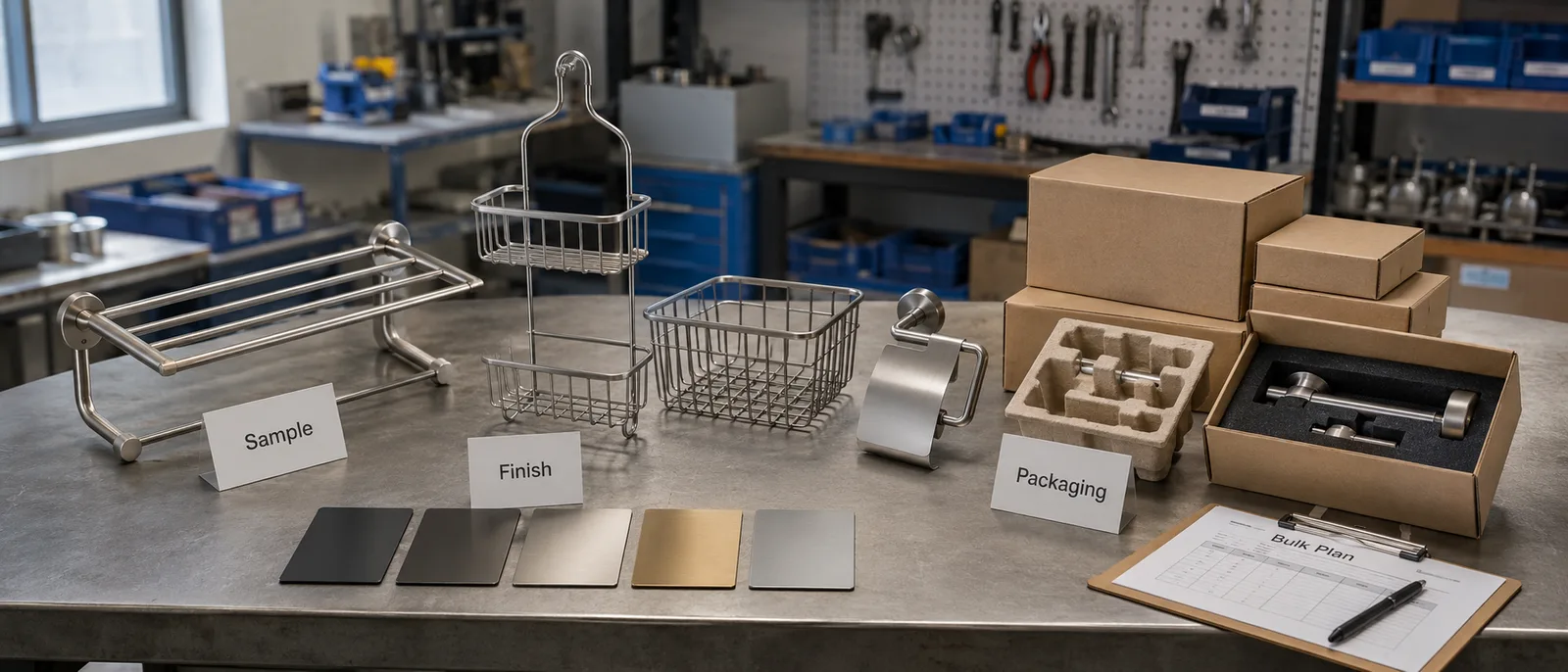
Private label bathroom accessories move from idea to bulk production more smoothly when buyers confirm the sample, product structure, finish, packaging and order plan before asking for a final price. A towel rack, shower caddy, tissue holder or wire basket may look simple in a photo, but private-label development adds extra decisions: logo packaging, retail presentation, carton protection, sample correction and repeat-order consistency. Importers should treat the first sample as a practical production test, not only a visual approval. The safest path is to prepare clear requirements, review manufacturability with the factory, confirm a realistic MOQ and then lock the approved sample before bulk production starts.
What private-label bathroom hardware development includes: the buyer sells bathroom or home storage hardware under its own brand, retail program or e-commerce listing. The supplier may produce the metal item, support packaging preparation and adjust product details so the item fits the buyer’s market. For bathroom storage hardware, this can include towel racks, shower caddies, metal baskets, hook bars, tissue holders, wall-mounted racks and no-drill accessories.
A complete private-label project usually includes more than product sourcing. Buyers need to decide which product shape fits the target market, whether the structure is stable enough, what material and finish should be used, how the item should be packed and what information must appear on the package or instruction sheet. These decisions affect quotation, sampling, production planning and shipment quality.
For buyers starting a new line, Koitor Hardware’s private label bathroom accessories page is the most relevant internal reference for OEM product and packaging discussion.
What Should Buyers Prepare Before Requesting a Sample?
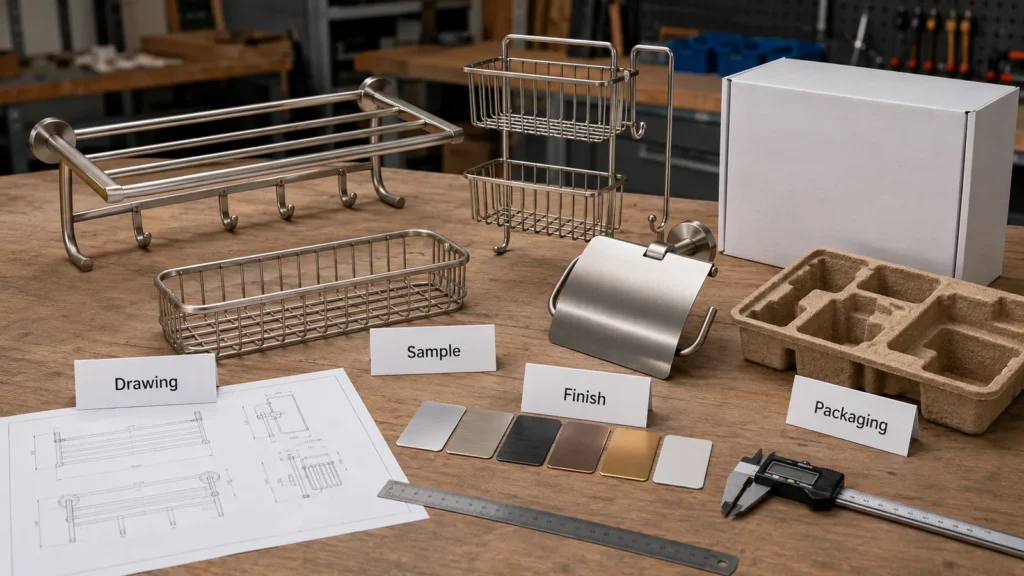
The best sample request is specific enough for a factory to understand the real product, but still open enough for manufacturability feedback. A vague request such as “send bathroom shelf price” often leads to mismatched quotes because each supplier may assume a different size, finish, material and packaging method. A clear request helps the factory quote the same product the buyer actually wants to test.
Before requesting a sample, buyers should prepare:
- Product type, such as towel rack, shower caddy, wire basket, hook bar or tissue holder.
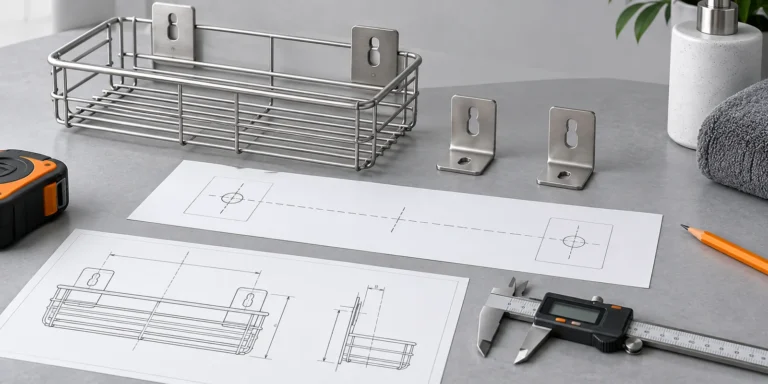
- Target dimensions, installation method and expected use environment.
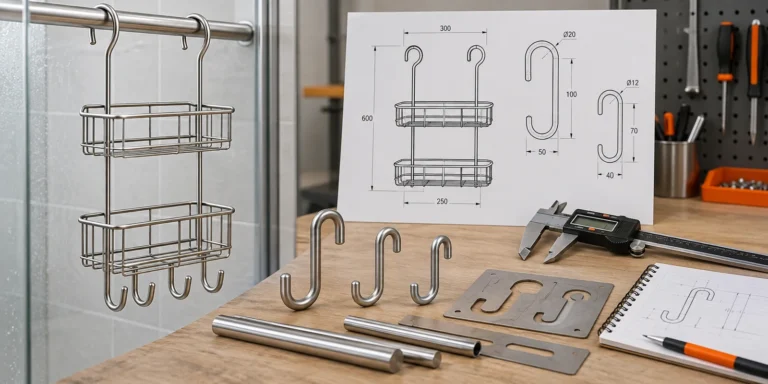
- Reference photos, drawings, a 3D file or a physical sample if available.
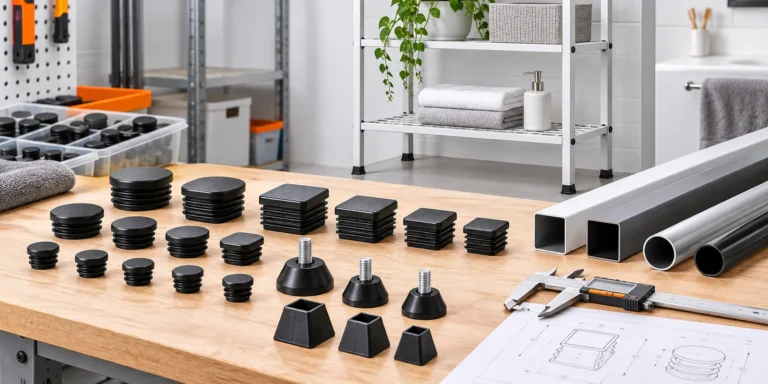
- Preferred material, wire diameter, tube size or sheet thickness when known.
- Finish expectation, such as powder coating, polished metal or another suitable finish.
- Target MOQ, trial order quantity and expected repeat-order plan.
- Packaging type, such as neutral carton, color box, hang card, label, instruction sheet or e-commerce pack.
- Any logo packaging or private-label presentation requirements.
When these details are available, the factory can review whether the structure is practical, whether the welding points need adjustment, whether the finish is suitable for the shape and whether the packaging can protect the product. Drawings or physical samples often speed up quotation and sample development because they reduce guessing.
How Does the Sample Stage Connect to Bulk Production?
The sample stage should answer three questions: can the product be made, can the buyer sell it and can the supplier repeat it in production. A good sample is not only a display piece. It should help the buyer check dimensions, wall mounting, weld position, surface finish, packaging fit and basic handling risk before a larger order is placed.
For a private label shower caddy, for example, the buyer may need to check drainage spacing, basket depth, hook shape, coating coverage and carton protection. For a towel rack, the buyer may need to review wall mounting holes, tube alignment, polish or coating appearance and whether the package prevents scratching. For a wire basket, the buyer may need to confirm wire spacing, welding points, edge treatment and how the basket sits inside the carton.
Koitor Hardware can review drawings, photos or physical samples and discuss manufacturability before sampling. Samples usually take 5-7 working days after the design and key details are confirmed, depending on product structure, material and finish. This timing should be confirmed project by project, especially when special packaging, new tooling, unusual finish requirements or repeated corrections are involved.
If the product is close to an existing production method, a small-batch trial order can help buyers test the market before scaling. MOQ can start from 100 pcs depending on product structure, material, finish and packaging, but the correct quantity must be reviewed for each item.
Which Details Affect MOQ, Cost and Lead Time?
Importers often ask for the lowest MOQ and fastest lead time, but those numbers depend on product details. A simple metal basket with standard finish may be easier to sample and produce than a multi-part wall-mounted rack with custom package inserts. A color box, logo label, instruction sheet or retail display card can also affect MOQ because packaging materials may have their own production requirements.
| Decision Area | What Buyers Should Confirm | Why It Affects Production |
|---|---|---|
| Product structure | Size, wire or tube layout, mounting method and assembly style | More complex structures may need extra welding, fixtures, checking and packing time |
| Material and finish | Steel or stainless steel choice, surface preparation and finish expectation | Material and finish affect sourcing, appearance control, cost and production planning |
| Packaging | Neutral pack, color box, hang card, insert, label or e-commerce protection | Custom packaging bathroom accessories may need separate artwork, samples and MOQ review |
| Brand presentation | Logo position, instruction sheet, barcode label and retail shelf requirements | Private-label presentation must be checked before bulk packing begins |
| Trial order plan | Initial quantity, market test purpose and repeat-order expectation | A practical trial plan helps the factory discuss small-batch production and later scaling |
Bulk production usually takes 4-6 weeks depending on order quantity, product complexity, material availability, finish and packaging. Buyers should avoid treating this as a fixed guarantee. The production schedule should be confirmed after sample approval and packaging details are locked.
How Should Buyers Review Packaging for Private-Label Products?
Packaging is part of the product experience and part of risk control. Bathroom hardware products often have coated surfaces, welded joints, corners, hooks or mounting parts that can scratch or deform if the package is too weak. For retail buyers, the package also needs to communicate the product clearly and fit the shelf or online sales channel.
For custom packaging bathroom accessories, buyers should check three layers. The first layer is product protection, such as a bag, foam, cardboard insert or separated components. The second layer is retail or brand presentation, such as color box, hang card, label or instruction sheet. The third layer is outer carton planning, including how many pieces fit in one carton and whether the products are protected from pressure during handling.
Packaging should not be left until the end of the project. If the buyer approves the product sample but later changes the carton or retail box, the supplier may need to recheck package fit, cost and lead time. For e-commerce sellers, packaging review is especially important because single-piece shipping can create different damage risks than pallet or distributor shipments.
Buyers developing shower shelves or hanging bathroom baskets can also review Koitor’s custom shower caddy manufacturing page for product-specific structure and OEM development context.
What Common Mistakes Delay Private-Label Bathroom Projects?
The first mistake is approving a sample only by photo. Photos can show shape and color, but they cannot fully confirm size tolerance, assembly feeling, wall mounting, packaging fit or surface handling. Buyers should request clear sample details and, when possible, check a physical sample before bulk production.
The second mistake is changing packaging after sample approval. Packaging affects cost, MOQ, lead time and sometimes product structure. If the buyer needs a logo color box, hang card, barcode label or instruction sheet, those requirements should be discussed early.
The third mistake is comparing suppliers only by unit price. A lower quote may use a different wire diameter, simpler finish, weaker inner packing or less detailed sample correction process. For private-label programs, consistency matters because buyers are building a repeatable product line, not only purchasing one shipment.
The fourth mistake is not defining the inspection points before production. Importers should agree on practical checks such as appearance, dimensions, weld cleanliness, finish consistency, assembly, package contents and carton markings. Inspection does not remove all risk, but it helps reduce preventable problems.
The fifth mistake is not planning the transition from trial order to repeat order. A small first order can be useful, but buyers should still keep records of the approved sample, packaging version, finish reference and change history. These records make later orders easier to repeat.
How Can Koitor Support a Practical Private-Label Workflow?
Koitor Hardware is a family-owned custom metal hardware factory specializing in bathroom and home storage hardware. For private-label projects, the practical support comes from direct factory communication and manufacturing-aware review. Buyers can send a drawing, sample, reference photo, finish idea, packaging concept or target order quantity for discussion before quotation.
As a specialized OEM manufacturer, Koitor can review details such as welding points, wire or tube layout, mounting structure, powder coating requirements, sample feasibility and packaging method. This is useful when a buyer wants to work with an OEM towel rack manufacturer, develop a private label shower caddy or improve a metal storage basket for retail packaging.
Koitor’s flexible small-batch OEM production is suitable for trial orders, product testing, private-label development and long-term distributor cooperation. The goal is not to promise that every idea can be produced at any quantity. The goal is to review the product honestly, identify practical risks and help the buyer move from sample approval to a realistic bulk production plan.
For more sourcing guides and related knowledge articles, buyers can use the approved Koitor resources page.
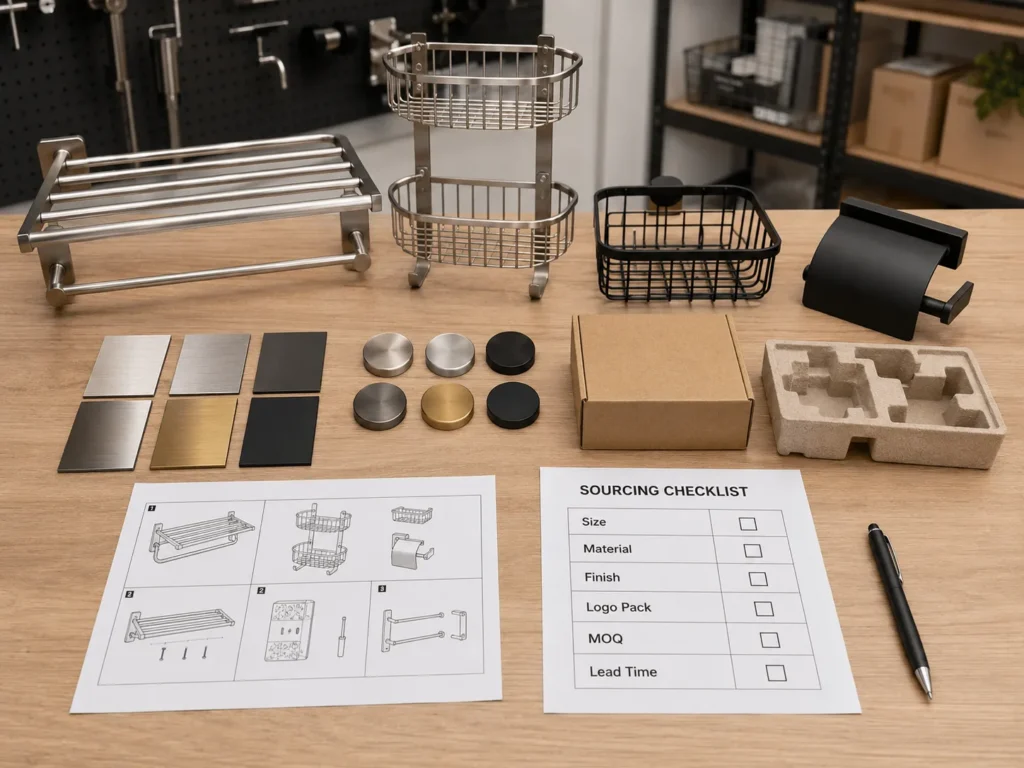
Buyer checklist before requesting a quotation: use this list before asking for a final quotation for private label bathroom accessories:
- Product category: towel rack, shower caddy, tissue holder, hook bar, wire basket or other bathroom storage hardware.
- Target size, structure, installation method and expected use environment.
- Drawing, reference photo, 3D file or physical sample availability.
- Preferred material, wire diameter, tube size or sheet thickness if known.
- Finish requirement and target appearance, with practical review of bathroom use conditions.
- Packaging style: neutral carton, color box, hang card, label, instruction sheet or e-commerce package.
- Logo packaging or private-label brand presentation requirements.
- Target MOQ, first trial order quantity and possible repeat-order plan.
- Sample approval points, including dimensions, finish, welding, assembly and packaging fit.
- Target market, sales channel and any retailer-specific requirements that must be reviewed manually.
A complete checklist helps the buyer and factory discuss the same product. It also makes quotation, sampling and production planning more reliable.
Frequently Asked Questions
Can Koitor make private-label bathroom accessories from a physical sample?
Yes. Koitor can review a physical sample, drawing or reference photo and discuss whether the structure, finish and packaging can be developed for OEM production. Details should be confirmed before sampling and bulk production.
What is the usual MOQ for a private-label bathroom hardware project?
MOQ can start from 100 pcs depending on the product structure, material, finish and packaging. A simple item may be easier to plan in a small batch than a complex product with custom packaging materials.
How long does sample development usually take?
Samples usually take 5-7 working days after the design, material and main details are confirmed. The exact timing may vary when the product needs special finish review, packaging samples or repeated correction.
Should packaging be confirmed before or after product sampling?
Packaging should be discussed before or during sampling. Product size, carton layout, protection method and retail presentation can affect cost, MOQ and lead time, so late packaging changes may delay the project.
What should buyers send to get a useful quotation?
Send drawings, photos or samples, target dimensions, material and finish preference, expected quantity, packaging idea, logo or label requirements and target market. Clear details help reduce assumptions in the quote.
Work With Koitor Hardware
Need Help Developing Private-Label Bathroom Hardware?
Send Koitor your drawing, physical sample, size target, finish requirement, packaging idea or expected trial order quantity. Our team can review the structure, manufacturability, packaging method and small-batch production options before quotation.
OEM / PRIVATE LABEL
Turn this sourcing guide into a product brief
Share your target product, size, finish, order quantity and packaging requirements. Your team receives a practical manufacturability review before quotation.
 English
  Español
  Português
  Français
  Deutsch
  العربية