
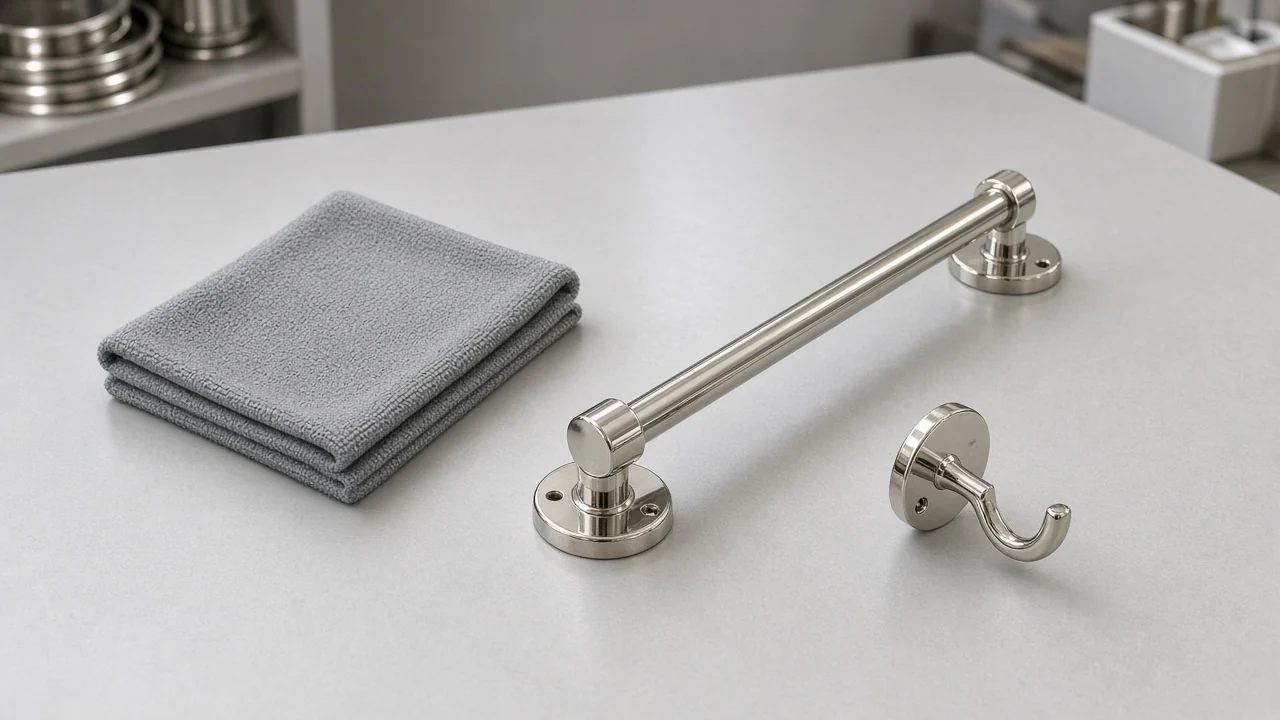
How to clean polished nickel depends first on which finish system it is: electroplated nickel, a PVD nickel-colour coating, a clear-lacquered polished finish or an unlacquered finish that is meant to change. For routine care, most care sheets for these finishes agree on a simple method: wipe with warm water and a little mild soap on a soft cloth, rinse with clean water and dry right away.
Where they differ is what the finish must not meet. Abrasive pads and powders scratch a bright surface. Ammonia-based glass cleaners, acidic descalers and bleach can mark or dull it. Metal polish can cut through a clear lacquer. A care card that ignores the finish system can tell customers to do the one thing their finish cannot take.
This guide is for distributors, retailers and private-label teams who print care cards, carton inserts or listing text for polished-nickel bathroom accessories. It explains how to confirm the finish, what routine to print and what to prohibit. It does not endorse any cleaning product and does not set warranty terms.
Koitor Hardware is a family-owned China OEM manufacturer of custom metal bathroom and home storage hardware, including plated accessories. Care wording sits with the brand owner. Our role is to make sure the brand owner knows exactly which finish system is on the order, so the care card describes the right one.
How to clean polished nickel: which finish system is it?
Before any care wording, name the finish system. “Polished nickel” is a colour and shine description, not a process. It can describe electroplated nickel, nickel with a thin protective topcoat, a physical vapour deposition (PVD) coating in a nickel tone, a lacquered finish or a living finish left without protection.
Each behaves differently. A PVD coating is very thin but hard. A lacquer is a clear organic layer over the metal. Electroplated nickel is a metal layer that can tarnish slowly. An unlacquered living finish is expected to darken and may be polished back by the owner. The care card should match the system named on the purchase order.
Where to find the finish system
Look at the finish specification, the approved sample record and the purchase order. A specification that says only “polished nickel” is incomplete for care purposes. Ask the supplier which process is used, whether a topcoat is applied and what the supplier’s own care recommendation says for that system.
The National Association for Surface Finishing represents the surface finishing industry and is a useful starting point for understanding plating and coating processes. Supplier and process information still governs for your specific product.
Questions to ask the supplier
A short list of written questions settles the finish system. Is the polished nickel electroplated, PVD or another process? Is a clear topcoat or lacquer applied? What base metal is underneath? Which cleaning agents has the finish been tested with, if any? Does the supplier have its own care recommendation for this finish? Is the finish the same on every item in the order?
Keep the answers with the order file. When the care card is drafted, every line can be traced to one of those answers. When a customer complaint arrives later, the brand can check whether the complaint matches the finish system or suggests a different process was used.
Plated finishes and their standards
Decorative plated finishes are often specified under standards such as ASTM B456, which covers electrodeposited nickel-plus-chromium and copper-plus-nickel-plus-chromium coatings. A polished nickel finish without chromium is a different stack. The guide on nickel and chrome plating layer thickness explains how plating stacks are specified.
Polished nickel versus nearby finishes
Polished nickel is often confused with chrome and with brushed or satin nickel. Chrome has a cooler, bluer tone; polished nickel is warmer. Brushed nickel has a directional texture that hides fingerprints differently. For those finishes, see nickel versus chrome e how to clean brushed nickel. Bright nickel specification is covered in the bright nickel towel bar RFQ guide.
What routine cleaning do care sheets recommend?
For most polished nickel finishes, the routine is gentle: warm water with a small amount of mild, pH-neutral soap, applied with a soft cloth, followed by a clean-water rinse and immediate drying with a separate soft dry cloth. Frequency depends on use; a weekly wipe and a quick dry after heavy splashing are common suggestions.
Drying matters as much as cleaning. Water left to evaporate leaves mineral spots, especially in hard-water areas. On a bright finish those spots are very visible. A dry cloth after each clean, and ideally after showers on nearby fixtures, keeps the finish clear.
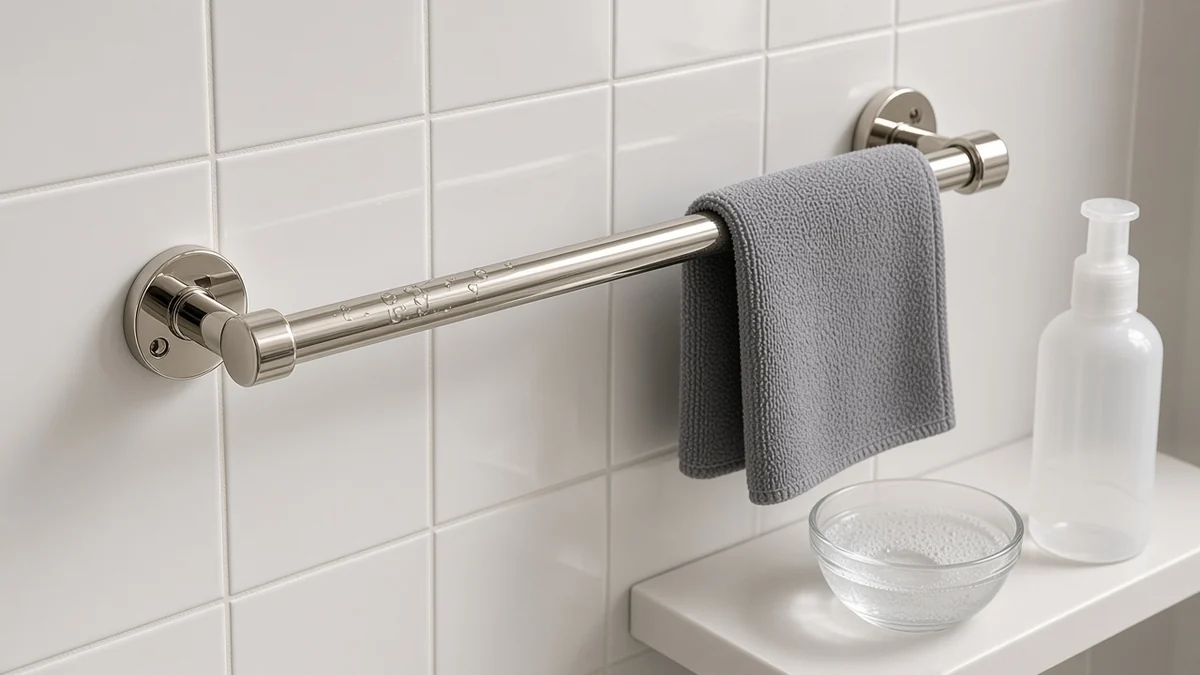
Cloths and tools
Soft cotton or microfiber cloths are the usual choice. Avoid scouring pads, steel wool, stiff brushes and melamine sponges, which can scratch or haze a bright surface. Keep a separate cloth for drying so the drying cloth does not carry soap residue back to the surface.
Fingerprints and smudges
Polished finishes show fingerprints. A dry soft cloth often removes them. If not, a lightly damp cloth followed by drying usually does. Leaving a little moisture behind can turn a fingerprint into a spot, so the final step should always be a dry wipe.
Living finishes are different
An unlacquered polished nickel finish that is sold as a living finish is expected to change. Some owners welcome the change; others polish it back. If the brand sells a living finish, the care card should say so, describe the expected change and give the supplier-approved method for restoring shine, if any. Do not apply that method to lacquered or PVD finishes.
How often to clean
Frequency is a customer choice, but a card can suggest one. In a busy family bathroom, a weekly wipe and a quick dry after showers keeps buildup from forming. In a guest bathroom, less often is fine. The aim is to avoid the long gaps that let soap and minerals harden, because hard deposits tempt people to scrub.
Hardware in damp locations
Shower shelves, soap dishes and robe hooks next to a shower stay wet longer than a towel bar across the room. Standing water and soap pooling on a shelf are harder on any finish than occasional splashes. A card can suggest emptying soap dishes and wiping shelves after use, and a product design with drainage helps too.
How should water spots and soap film be handled?
Prevent them first: dry after use. For spots that have formed, a soft cloth with warm water and mild soap usually lifts light mineral deposits, followed by rinsing and drying. For stubborn hard-water deposits, follow the supplier’s specific recommendation for the finish system, and test any stronger method on a hidden area.
Many descaling products are acidic. Acids can etch or discolour some metal finishes and attack some clear coats. That is why the care card should not recommend descalers unless the supplier confirms the finish tolerates them, and then only in the dilution and contact time the supplier approves.
Soap film and product residue
Bar soap, body wash and shampoo leave films on shelves, soap dishes and towel bars near showers. Warm water and a soft cloth usually remove them. Letting residue build up for weeks makes it harder to remove gently and tempts customers to reach for stronger products.
Testing a method on a hidden area
Where a stronger method is needed, test first on a part of the product that is not visible, such as the back of a post or the underside of a shelf. Wait, rinse, dry and look under good light. If the test area dulls or changes colour, do not use the method on the visible surface.
What a distributor should not improvise
A distributor should not write its own chemistry advice for a finish it did not make. If customers ask about a specific product, the safest answer refers them to the care card and the supplier’s guidance for that finish. Product names and endorsements do not belong on the card.
What damages polished nickel?
Most damage comes from abrasion and harsh chemistry. Scouring pads, powders and creams with abrasive particles scratch the surface. Ammonia, bleach, strong acids and strong alkalis can stain, dull or attack coatings. Metal polish can remove a lacquer and alter a PVD appearance. The care card should list prohibited items in plain words.
| Finish system | Routine care on most care sheets | Typical prohibited items | What the care card must confirm |
|---|---|---|---|
| Electroplated polished nickel, no topcoat | Mild soap, soft cloth, rinse, dry | Abrasives, ammonia, bleach, acidic descalers | Whether the supplier approves any restoring method |
| Lacquered polished nickel | Mild soap, soft cloth, rinse, dry | Metal polish, abrasives, solvents, acidic descalers | That polish must not be used on the lacquer |
| PVD nickel-colour coating | Mild soap, soft cloth, rinse, dry | Abrasives, polishing compounds, harsh chemicals | That the finish is PVD and not plated |
| Unlacquered living finish | Mild soap, soft cloth, rinse, dry | As listed by the supplier | Expected change and any approved restoring method |
Chemical safety for customers
Cleaning chemicals carry their own hazards. Customers should follow the product label and never mix cleaners, particularly bleach with ammonia or acids. General information on chemical hazards is published by OSHA. The care card should keep its advice to mild soap and water and avoid recommending chemicals.
Rust and corrosion questions
Polished nickel on brass or zinc does not rust the way bare steel does, but damage to the finish can expose the base metal. If a customer reports corrosion, it is a product quality question, not a cleaning question. Route it to the supplier with photos. For chrome items, see how to remove rust from chrome.
Cleaning products near the hardware
Damage is sometimes caused by products used on nearby surfaces. Tile, grout and glass cleaners sprayed in a shower can drift onto accessories and dry there. A card line telling customers to rinse and dry hardware if other cleaners reach it addresses a common, avoidable cause.
What should the printed care card and listing say?
Keep it short, specific and tied to the finish system. Name the finish system, give the routine in three or four steps, list prohibited products in plain language, and say what to do if a stronger method seems needed. Avoid absolute claims such as “will never tarnish” or “safe with all cleaners.”
The listing text should match the card. If the listing says “easy-care finish” and the card lists six prohibited products, customers notice the gap. The finish sample approval guide explains how finish claims are tied to an approved sample.
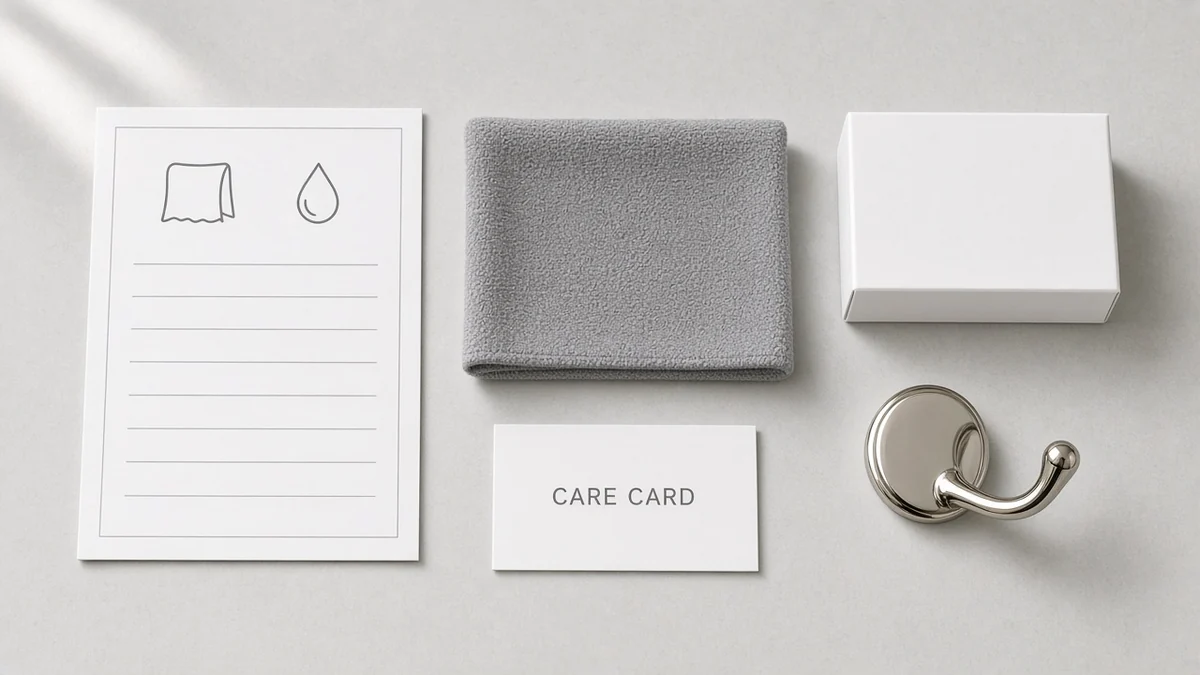
Care card checklist
- The finish system is named: plated, lacquered, PVD or living.
- The routine says mild soap, soft cloth, rinse and dry.
- Drying after use is recommended to prevent water spots.
- Prohibited products are listed in plain language.
- No brand of cleaner is named or endorsed.
- Stronger methods are referred to the supplier’s guidance and a hidden-area test.
- Living finishes describe the expected change.
- No absolute claims about tarnish, chemical resistance or lifetime.
- Warranty wording, if any, is set by the brand owner, not copied from this guide.
- The listing and the card say the same thing.
Wording examples to adapt
Short, factual lines are easier to follow than long paragraphs. Examples: “Clean with warm water and mild soap on a soft cloth. Rinse and dry.” “Do not use abrasive pads, scouring powders, metal polish, bleach, ammonia or descaling products.” “Dry after use to prevent water spots.” “If stubborn marks remain, contact us before trying stronger products.” Adapt them to the finish system the supplier confirmed.
Customer service scripts
Customer service teams answer the same questions repeatedly: why the finish has spots, whether a named cleaner is safe, how to remove a mark. A short internal script built from the care card keeps answers consistent and stops agents from giving advice the card does not support. When a question goes beyond the card, the script should route it to the supplier, with photos.
One card per finish system
Brands that sell polished nickel alongside chrome, brushed nickel or brass often print one generic card. That is where errors appear. A separate short card for each finish system, or a card with clearly separated sections, avoids telling a lacquered-finish customer to polish. For brass, see how to clean brass without removing patina; for chrome, how to clean chrome bathroom fixtures.
Collections with mixed finishes
A collection sold as polished nickel may include parts made by different processes, such as a plated towel bar and a PVD-coated hook. Customers will clean them the same way. Confirm whether every item in the collection uses the same finish system, and if not, write the card for the most sensitive one. The collection finish matching guide covers how collections are kept consistent.
Packaging that protects the finish until first use
Care starts before the customer opens the box. Bright finishes can be scuffed in transit if parts rub against each other or against carton walls. Protective film, individual bags and fitted inserts keep the finish intact until installation. The card can remind installers to remove film carefully and avoid using tools directly on the finished surface.
Koitor practice note
When a buyer prepares care wording for a Koitor order, the finish system and any topcoat can be confirmed in writing from the order specification, so the card is drafted from the actual process. The card text and any warranty statement are the buyer’s.
Returns and complaints about the finish
When a customer returns a polished nickel item for dullness, spots or discoloration, look at the cause before deciding the response. Was the item cleaned with a prohibited product? Is the damage limited to one area, such as where a cleaner pooled? Or does it look like a coating defect, such as peeling, blistering or bare base metal? Photos under good light help the supplier tell the difference.
Recording the cause of each finish complaint over a season shows whether the care card is working. If most complaints trace to one prohibited product, the card may need to name it more prominently. If complaints suggest a coating issue, the question goes to the supplier with the batch reference.
How does finish choice affect care?
Finish choice sets the care burden. A buyer choosing between plated polished nickel, a lacquered finish and a PVD nickel tone is also choosing how forgiving the product will be in a customer’s bathroom. That trade-off belongs in the sourcing decision, not only in the care card written afterwards.
PVD finishes are often chosen where durability matters, but they still need gentle cleaning, and repairs to a damaged PVD surface are not practical at home. Lacquered finishes keep their shine until the lacquer is damaged. Plated nickel may slowly tarnish. The guide on PVD versus electroplating compares the processes.
Hard-water markets
In regions with hard water, water spots are the most common complaint on bright finishes. Brands selling into those regions may emphasise drying more strongly on the card and in the listing. That is a wording decision for the brand, based on where the product is sold.
Commercial and hospitality use
Hotels and commercial bathrooms use stronger cleaning routines and chemicals than homes. A polished nickel accessory sold for commercial use needs care guidance that the cleaning contractor can follow. Confirm with the supplier which cleaning agents the finish has been tested with, and write the guidance around that.
Sample testing before printing
Before a large print run of care cards, a brand can clean a finish sample using exactly the routine on the draft card, repeatedly, and inspect it. That does not predict long-term performance, but it catches a routine that visibly harms the finish. Record the test and the sample reference with the card version.
Frequently asked questions about cleaning polished nickel
What is the safest way to clean polished nickel?
For routine care, warm water with a small amount of mild soap on a soft cloth, a clean-water rinse and immediate drying with a soft dry cloth, unless the supplier’s care sheet says otherwise for that finish.
Can I use glass cleaner on polished nickel?
Many care sheets advise against ammonia-based glass cleaners on polished nickel. Follow the care sheet for your finish system.
How do I remove water spots from polished nickel?
Wipe with warm soapy water on a soft cloth, rinse and dry. For stubborn deposits, follow the supplier’s guidance and test any stronger method on a hidden area first.
Can I use metal polish on polished nickel?
Not on lacquered or PVD finishes. On an unlacquered living finish, only use a method the supplier approves.
Why does my polished nickel look dull?
Common causes are soap film, mineral deposits, or damage from abrasive or harsh cleaners. Clean gently and dry; if dullness remains, contact the supplier.
Is polished nickel the same as chrome?
No. Polished nickel has a warmer tone and may use a different finish system. Clean each according to its own care sheet.
Should polished nickel be waxed?
Some owners apply a thin protective wax to living finishes. Whether this suits a particular finish is a supplier question. Do not recommend wax on lacquered or PVD finishes without the supplier’s confirmation.
How do I clean polished nickel in a hotel bathroom?
Use the method the supplier confirms for the finish system and the cleaning agents the hotel uses. Commercial cleaning chemicals should be checked against the supplier’s guidance before use.
Does Koitor provide care cards for its finishes?
Koitor can confirm the finish system and process on an order. The care card wording is written by the brand owner.
Trabalhe com a Koitor Hardware
Align care cards with the finish you are buying
Send the finish description, the sample reference and your draft care card. We can review whether the card matches the finish system on the order and flag lines that need confirmation. Care wording and any warranty terms remain your decision.
OEM / MARCA PRÓPRIA
Transforme este guia de fornecimento num resumo do produto
Indique o produto pretendido, as dimensões, o acabamento, a quantidade a encomendar e os requisitos de embalagem. A sua equipa receberá uma análise prática da viabilidade de fabrico antes da apresentação do orçamento.

 English
 Español
 Português
 Français
 Deutsch
 العربية