

Cleaner compatibility powder coated bathroom hardware buyers approve should connect the actual coating system with the proposed cleaning products, exposure conditions and care wording. A finish color is not a chemical-resistance specification, and a cleaner's general bathroom claim does not establish compatibility with every coated accessory. Importers should identify both products, obtain relevant supplier guidance and agree a representative sample review before launch. The resulting instructions must describe the supported use without promising resistance that has not been demonstrated.
Why should buyers approve cleaning requirements before launch?
Cleaning requirements belong in product development because the retailer's care instruction becomes part of the buyer's product promise. Leaving it until artwork approval can expose a mismatch between the intended cleaning routine and the finish selected during quotation.
A powder-coated basket may be cleaned directly, or it may encounter overspray when someone cleans a nearby tiled wall. Those are different exposure scenarios. A product brief that only says easy to clean leaves the supplier uncertain about detergents, repeated wiping, rinsing and residue.
The importer should describe the intended market and use. A domestic storage accessory, a rental-property assortment and a product specified for a professional housekeeping routine can have different expectations. This guide concerns sourcing and care approval; it does not prescribe disinfectant use or promise hygiene performance.
A finish can look satisfactory during sample inspection while still lacking an approved care instruction. Appearance approval, coating-process approval and cleaner compatibility are separate decisions. Keep the records connected so that a color change or coating substitution cannot silently inherit unrelated cleaning claims.
For a private-label brand, the packaging team also needs clear boundaries. Words such as chemical resistant or safe with all bathroom cleaners should not be added merely because the surface is powder coated. Translate the actual supported cleaning conditions into usable instructions, then check that the retail listing and insert use the same wording.
Consider a hypothetical buyer launching a dark wire shelf beside a tiled shower wall. The buyer expects a wipe-clean product but the housekeeping routine includes a separate tile cleaner. The correct development question includes both direct care and foreseeable incidental contact. It does not begin by promising that the finish tolerates whatever cleaner the customer owns.
Which coating and cleaning variables need identification?
Record the actual finish and the actual cleaner rather than relying on category names. The compatibility question concerns a complete system under defined use conditions.
For the finish, ask which coating product or identifiable system is proposed, what substrate is used and which supplier guidance applies. Where relevant records are available, connect preparation and application information to the production sample. A color code alone describes appearance; it does not define all chemical or application characteristics.
For the cleaner, record the product identity, supplier, current label and technical information. If the intended cleaning instruction specifies dilution, contact, rinsing or another condition, obtain that instruction from the cleaner supplier. Do not invent a dilution or recommend mixing cleaning products.
Also identify how the cleaner contacts the hardware. Is it wiped on, sprayed nearby, left as residue or repeatedly applied? What cloth or brush is proposed? Does the product contain accessible weld intersections or areas where liquid can remain? These details define the sample-review question without pretending to reproduce every household event.
| Variable | Information to obtain | Decision it supports |
|---|---|---|
| Coating identity | Product or identifiable finish system and supplier guidance | Whether the proposed care advice applies |
| Substrate and preparation | Relevant material and process identification | Whether the reviewed sample represents production |
| Cleaner identity | Product label and relevant technical data | Whether a generic cleaning statement is justified |
| Exposure route | Direct wiping, overspray or residual contact | Which locations and conditions require review |
| Cleaning implement | Proposed cloth, sponge or other approved implement | Whether abrasion is included in the scope |
| Rinsing and drying | Supplier-supported instructions | Whether residual exposure is controlled |
| Sample revision | Product, color and process version | Whether approval covers the ordered configuration |
Treat missing information as an open item. An unnamed detergent and an unnamed black finish do not produce a traceable compatibility approval, even if a sample appears fine after informal wiping.
For cleaner compatibility powder coated bathroom hardware suppliers and buyers need a shared vocabulary. Separate chemical exposure from abrasive damage, residue from permanent appearance change, and initial appearance from repeated-use expectations. That makes supplier questions more useful than asking whether the product is durable.
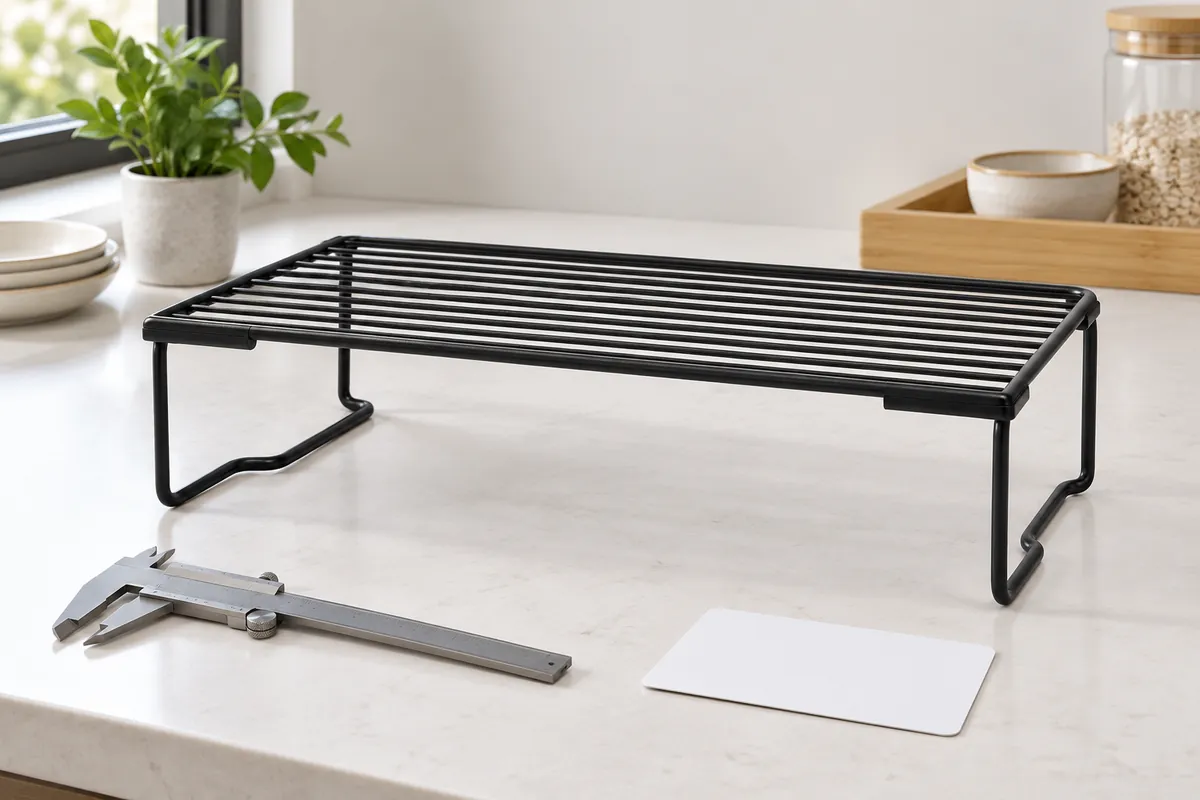
How should coating and cleaner guidance be compared?
Compare guidance only within its stated scope, and resolve conflicting or missing information with the relevant suppliers. A recommendation for one coating family should not be generalized into approval of another product.
AkzoNobel's Interpon cleaning and maintenance guidance discusses gentle cleaning, rinsing and attention to cleaning-agent information for the covered products. It also warns about aggressive or abrasive cleaning. This is useful evidence that care advice is coating-specific. The document's architectural context does not establish bathroom-accessory approval or confirm that Koitor uses that coating system.
Create a short comparison record. List the proposed coating guidance, the cleaner's intended surfaces and conditions, the product-use scenario and any unresolved gap. A statement that a cleaner is suitable for ceramic tile does not necessarily include a coated basket fixed beside the tile. Likewise, a coating supplier's general maintenance advice may not address a named specialty cleaner.
Where the cleaner or finish supplier recommends checking a small area, understand the limitation: a preliminary check does not establish long-term performance or cover all assembly interfaces. For sourcing approval, agree the evaluation scope with competent technical support and use representative samples.
Do not choose a stronger chemical merely to make a test appear demanding. The development review should reflect a defined product requirement. Uncontrolled chemical experiments introduce hazards and do not create reliable purchasing evidence.
Keep the source versions and review date. Product formulations and instructions can change. A saved webpage summary without product identity is weaker than a controlled care-approval record that states which documents and sample revision were considered.
If the two suppliers' guidance conflicts, hold the claim. Ask for clarification or revise the proposed care routine. Procurement should not resolve uncertainty by accepting the most convenient sentence from unrelated marketing material.
What should a representative sample evaluation include?
A sample evaluation should connect the actual manufactured product to the cleaning condition and observation criteria being approved. Define the plan before exposure so the parties know what a satisfactory result means.
Begin with sample identity and condition. Photograph the completed accessory, record the finish and component versions, and note existing marks. Select the locations that matter: visible wires, welded intersections, edges, brackets and any other parts included in the stated care instruction. A loose coated panel may answer one finish question while leaving the assembly unresolved.
Ask a qualified reviewer to define the method and suitability of the planned work. Record the cleaner, permitted conditions and observation schedule applicable to the project. Do not replace technical planning with a universal number of wipes, a made-up concentration or a generic chemical-resistance guarantee.
Separate observations such as color change, gloss change, coating damage, residue and component effects. Agree how and when the sample will be compared with its initial condition. Photographs should use consistent framing and lighting. A casual phone image under a different light can create an appearance dispute that says little about the actual finish.
Include a reference condition when it improves the agreed review. The purpose is to help distinguish the proposed cleaning effect from existing variation or handling. The reviewer should decide what controls are appropriate, and the report should describe limitations rather than hiding them.
An importer should also examine the care instruction as a user task. Does it identify the supported routine clearly? Does the wording assume that the user can remove or access a component? Is there a risk that packaging artwork invites abrasive scrubbing when the approved guidance does not?
A sample review does not authorize unrelated claims. If the plan only evaluates a named gentle cleaner under agreed conditions, the approval should preserve that scope. It does not establish resistance to all descalers, sanitizers, solvents or household chemicals.
How can manufacturing choices affect the care decision?
Manufacturing choices can change which finish system and product details require review, so cleaner compatibility should remain connected to the approved production configuration. The buyer's commercial decision includes both the care requirement and the cost of delivering it consistently.
Koitor supports metal forming, welding, finishing, powder coating and assembly for bathroom and home storage hardware. During drawing or sample review, the team can discuss visible surfaces, welded details, accessible edges and packaging protection. Those are practical manufacturing inputs; they are not a substitute for coating-specific chemical guidance.
A buyer may need to compare a finish option with an alternative care instruction. For example, if the intended retailer routine cannot be supported for the proposed coating, the project may require a different approved finish or narrower user instruction. Confirm cost, appearance and availability before choosing. Do not assume that a change of color solves a compatibility question.
Product geometry also affects the review scope. Intersections, folded areas and attachment interfaces should be identified when the buyer is concerned about retained residues. A product-specific map can help the supplier discuss manufacturing practicality without claiming that the design removes every cleaning risk.
The custom bathroom hardware manufacturing page describes the relevant OEM context. Buyers can send a drawing, finish preference, packaging proposal and intended care statement together rather than treating each as a separate late-stage request.
For small-batch development, distinguish sample costs from production costs. A project may require coating-supplier support, external review or additional sample versions. Confirm those items before quotation. A low unit price that excludes the required review is not directly comparable with a quotation that includes it.
Cleaner compatibility powder coated bathroom hardware procurement teams document should survive reorder changes. If the coating system, substrate, preparation, color or component arrangement changes, review whether the earlier care decision remains applicable. The necessary work depends on the change, not on a universal repeat-test rule.
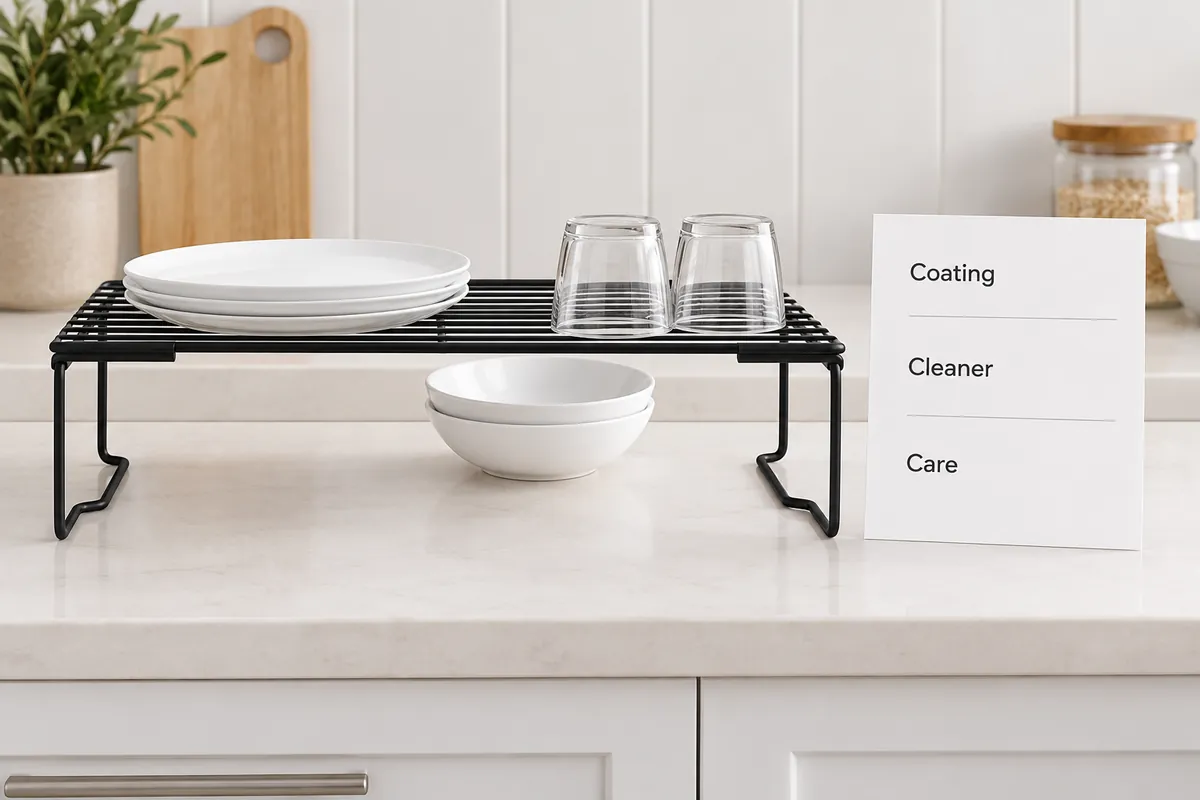
Which checklist should private-label buyers sign off?
Approve a care record that connects the product, cleaner and allowed claim wording. Assign responsibility for keeping the record current across purchasing, packaging and supplier changes.
- – Identify the target buyer, market and use environment.
- – Record the product code, drawing and sample revision.
- – Identify the material, coating system and color under review.
- – Save relevant coating-supplier instructions and their scope.
- – Identify the proposed cleaner and its current supplier guidance.
- – Describe direct contact, incidental contact and expected user actions.
- – Identify the relevant product locations and other components.
- – Agree the sample-review method and observation criteria.
- – Record results, limitations and unresolved questions accurately.
- – Approve care text, retail listing text and packaging wording together.
- – Assign a review owner and document version.
- – Define coating, cleaner or design changes requiring reconsideration.
The signed record should state what is supported rather than simply carry a checked box saying cleaning passed. If a particular use remains unresolved, either close the question or keep the claim out of the launch materials.
Packaging teams should use the approved wording without embellishment. A short instruction can be clear without saying maintenance free, stain proof or suitable for every cleaner. Keep any relevant precautions practical and consistent with supplier guidance.
Repeat-order reviews should check whether the production configuration still matches the approved sample. Request notice of material, finish or process substitutions that could affect the care scope. This is especially useful when a retailer changes the assortment or asks for an additional color after the original launch.
Koitor can discuss drawing-based or sample-based customization and flexible small-batch OEM requirements. MOQ, sample timing and production lead time depend on the actual product, material, finish and packaging. Include the care-approval work in that planning instead of assuming it happens automatically.
What do importers ask about cleaner compatibility?
Does black powder coating identify the chemical resistance?
No. Black describes appearance, while compatibility depends on the identifiable coating system and defined exposure. Obtain the actual finish information and relevant supplier guidance before approving care wording.
Can a bathroom-cleaner label approve every accessory nearby?
No. Check the surfaces and conditions covered by the cleaner supplier. A product intended for tile may not have guidance for the particular coated hardware. Include incidental contact in the project review when relevant.
Is one inconspicuous spot check enough for launch?
It may be a preliminary observation, but it does not automatically establish repeated-use or assembly performance. Agree a representative review appropriate to the proposed claim and record its limitations.
Should buyers publish a universal cleaning recipe?
No. Use instructions supported for the actual product and approved cleaning scope. Do not invent concentrations, mixing instructions or chemical combinations. Ask the relevant suppliers when information is incomplete.
What changes should reopen the care decision?
Relevant coating, substrate, process, cleaner and design changes should prompt review of applicability. Not every change needs identical work, but none should silently inherit an unsupported compatibility claim.
Discuss Your Hardware Specification With Koitor
Send Koitor your drawing, physical sample, material and finish requirements, intended use and packaging plan. Our family-owned custom metal hardware factory can review manufacturing practicality and small-batch OEM project requirements before quotation. Specific performance and any adjacent product feasibility require project confirmation.
OEM / MARCA PRÓPRIA
Transforme este guia de fornecimento num resumo do produto
Indique o produto pretendido, as dimensões, o acabamento, a quantidade a encomendar e os requisitos de embalagem. A sua equipa receberá uma análise prática da viabilidade de fabrico antes da apresentação do orçamento.
 English
  Español
  Português
  Français
  Deutsch
  العربية