
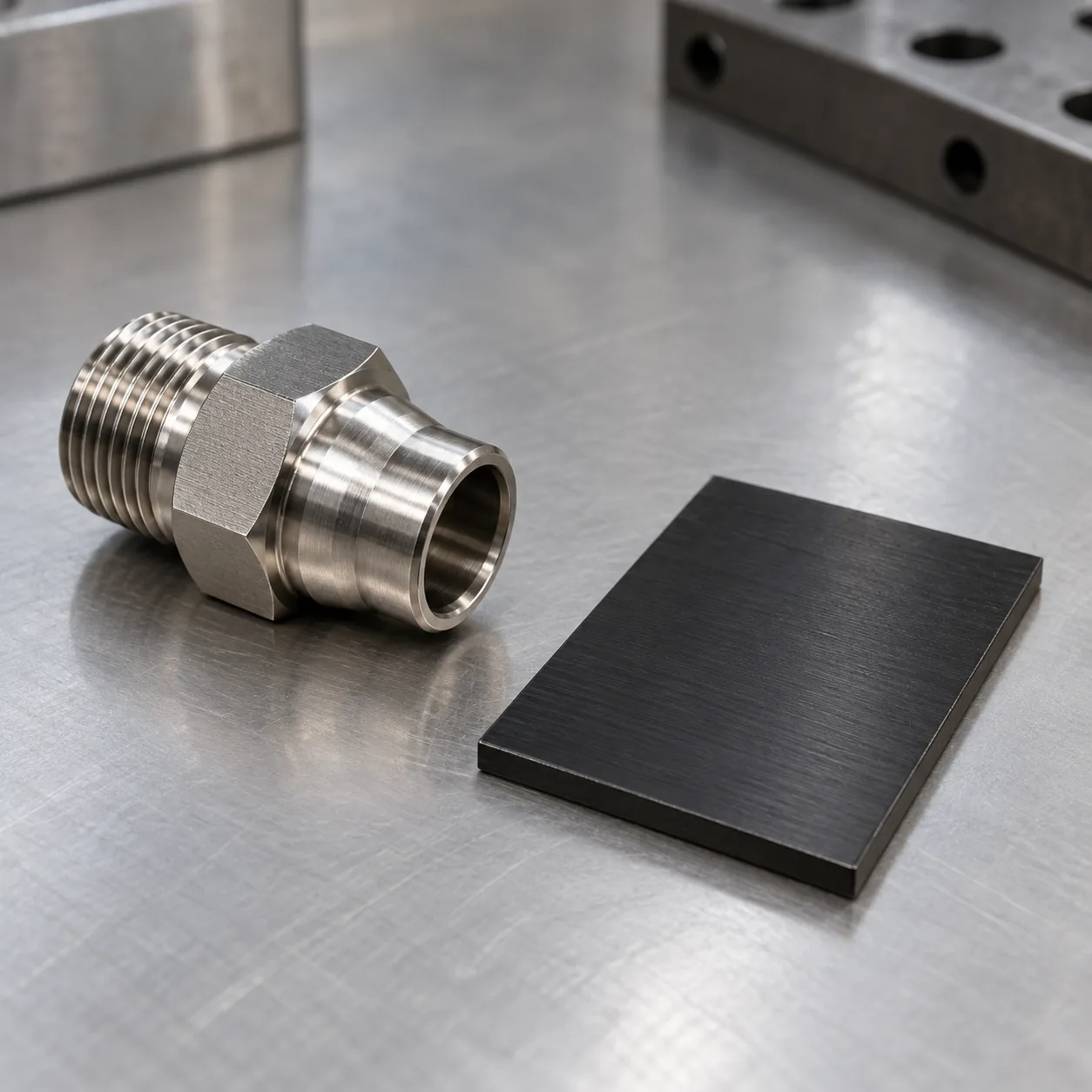
Chemical blackening stainless steel black oxide finish should be specified as a complete, sample-approved finishing route—not as a color name alone. Hardware buyers should identify the stainless grade and part condition, the required black appearance, the supplier’s activation and finishing steps, any sealing or post-treatment, and the evidence that will be checked on production-representative samples. A black surface on a stainless part does not by itself prove corrosion protection or suitability for a wet bathroom environment.
This short video shows the product or manufacturing context discussed in this guide.
What Problem Does This Article Help Buyers Solve?
Importers often receive a request such as “make the stainless fitting black,” but that wording does not define a reproducible finish. Different stainless grades, surface conditions, cleaning residues, weld heat tint, polishing levels and chemical routes can lead to different appearance and adhesion outcomes. A buyer who approves only a color photograph may discover that a production lot varies in shade or that the finish performs differently from the sample.
The buyer decision is therefore two-part: first decide whether a chemical blackening route is appropriate for the specific stainless part; then define how the appearance and any functional requirements will be approved. This article concerns specification and supplier evaluation. It does not imply that Koitor currently performs stainless blackening or operates a finishing laboratory.
What Should Importers Check First?
Start with the substrate and the product’s use conditions. Ask the supplier to identify the exact stainless grade or material designation, the formed or welded state, the existing surface finish, and any heat-affected areas. The same nominal color request may need different preparation when a part is polished, brushed, welded or supplied with a purchased component.
Next, describe what “acceptable black” means for the product: uniformity across faces, edge coverage, allowable variation between components, visible weld zones, gloss or satin appearance, and which areas must remain uncoated or masked. Use actual product drawings and reference samples rather than a supplier’s generic finish card.
A chemical black oxide process for stainless is not necessarily the same route used for carbon steel. One finishing supplier describes a dedicated stainless process that uses a surface activation step before oxidation and notes that an appropriate seal can be part of the finish system. That is useful evidence that the route is process-specific; it is not a universal recipe or a guarantee for every grade and geometry. Buyers should have the proposed finisher confirm the method, safety controls and limits for the actual part. See the supplier’s stainless black oxide process description.

How Do Materials, Structure, and Finish Affect the Product?
Chemical blackening is a surface treatment, so the condition presented to the process matters. Oil, polishing compound, fingerprints, scale, weld oxide and inconsistent pre-cleaning can affect the final appearance. The supplier should explain which cleaning and activation steps it controls and what incoming surface condition it expects. If the part includes welds or tight corners, ask for samples that represent those features rather than a flat coupon only.
Do not assume the blackened layer will fill scratches, hide grinding marks, equalize different base finishes, or protect every crevice. A finish may be visually dark while still requiring a separately defined sealer or other post-treatment. If corrosion resistance is important, specify the service environment and the evidence method separately from the appearance requirement. A supplier’s product page may describe its own chemistry, thickness or compliance claim, but these statements should not be copied into a purchase specification unless they are verified for the chosen process and batch.
| Buyer Requirement | What to Check | Why It Matters |
|---|---|---|
| Substrate | Grade, condition, forming, welds and base finish | Establishes whether the proposed process is suitable |
| Aparência | Color range, gloss, coverage and acceptable variation | Converts “black” into an approvable visual target |
| Post-treatment | Sealer, oil or other topcoat and maintenance assumptions | Separates appearance from protection claims |
| Evidence | Representative sample, inspection method and record | Makes approval repeatable for production |
How Should Buyers Compare Finish Options?
A buyer may be comparing chemical blackening with a painted or powder-coated finish, a deposited decorative coating, or a purchased pre-finished part. These options differ in appearance, layer build, edge behavior, process compatibility and repair expectations. The right choice depends on the geometry, use, cleaning, substrate and supply chain; there is no universally best black finish.
| Route to evaluate | Useful buyer question | Provas a solicitar | Limitation |
|---|---|---|---|
| Stainless chemical blackening | Can the finisher process this grade and actual part geometry? | Production-representative sample and written process scope | Color alone does not establish corrosion performance |
| Organic coating | Will added film thickness affect fits, slots or wire joints? | Coating specification, coverage review and sample | Can change dimensions and edge appearance |
| Decorative deposited finish | Is the substrate and pretreatment compatible? | Supplier-specific sample and adhesion/appearance criteria | Appearance and performance remain process-specific |
What Are Common Mistakes When Sourcing This Product?
The first mistake is specifying only “black oxide” without naming the substrate. Another is approving a flat coupon while ignoring formed corners, welds, cut edges or assembled interfaces. Buyers also make avoidable problems by mixing color approval with a corrosion claim, changing the material or polish after sample approval, or accepting a substitute finisher without comparing samples.
Do not transfer a coating supplier’s marketing figures or standard references to another supplier’s process. Ask for a current technical data sheet and define which claims apply to the exact commercial route. If appearance is critical, retain a signed or otherwise controlled golden sample and state how the production sample will be compared under agreed lighting.
How Can a Small-Batch OEM Factory Help?
A family-owned factory such as Koitor can help buyers organize the part drawing, material callout, finish zones, assembly interfaces and sample-approval questions for bathroom and home-storage hardware. That manufacturing discussion does not mean Koitor currently offers chemical blackening. Where the required treatment is external, the buyer should qualify the finishing source directly and keep responsibility for the process evidence explicit.
For a new color or finish, review the order of operations: fabrication and welding, surface preparation, finishing, assembly, protection during packing and final inspection. Confirm whether the sample includes the same material, welds, polishing and packaging that will be used for the first order. If a change occurs, decide whether it triggers a new sample approval.
Build a Finish Qualification Plan Before the RFQ
A useful qualification plan separates the questions that are often bundled into the word “black.” First, identify the substrate: stainless grade, product form, fabrication sequence, weld condition and current surface preparation. Then define the visual outcome by the surfaces a customer will actually see, including edges, recesses, weld transitions and contact points. If different components are assembled together, decide whether they need to match one another or merely remain within an acceptable range. These choices should be written down before suppliers quote, because otherwise each supplier may price and sample a different interpretation.
Next, separate appearance acceptance from functional performance. A dark, even appearance is a visual requirement; corrosion behavior, chemical resistance, abrasion or cleaning durability are separate performance questions. Identify the actual service environment and cleaning products rather than borrowing a generic claim from a finish brochure. Ask the finishing source which evidence is available for the proposed substrate and geometry, what specimen was tested, and whether the result applies to the full part or only a flat coupon. Do not treat a color sample as proof of corrosion performance.
For sample approval, use a production-representative part wherever possible. A flat coupon is useful for color discussion, but it may not reproduce a welded junction, tight bend, internal corner, polished transition or masking boundary. Record the sample’s base material, surface condition, process route, post-treatment and date. Agree how the sample will be stored and compared, including lighting and viewing distance. If a later sample changes the substrate, polishing step, finisher or sealing method, treat it as a controlled change and decide whether approval must be repeated.
The RFQ should also make ownership clear. Name the party responsible for the finishing operation, process records, incoming-part condition and final appearance review. If the fabricator outsources finishing, specify how parts are protected during transport and how rejected pieces are segregated. Ask for the proposed supplier’s current technical data and process scope, but verify that documents refer to the actual commercial route rather than a similar product family. These controls make supplier comparisons more meaningful without pretending that every route has identical chemistry or performance.
Production Controls and Change Review
During first-article review, inspect representative areas rather than one convenient face. Include edges, holes, welds, masked areas and interfaces that may be hidden after assembly. The buyer and supplier should agree whether visual review is performed before or after assembly and how parts will be handled to avoid fingerprints or scratches. If the design has multiple finish zones, mark them on the drawing and define the boundary; photographs alone can leave ambiguity about which surfaces are included.
For repeat orders, retain traceability between the approved sample and the purchase specification. The record should identify the material designation, base finish, approved appearance reference, finishing source or route, post-treatment where relevant, and any acceptance criteria. It should not claim a universal process recipe. A supplier may legitimately adjust process controls to suit part geometry, but changes that can alter color, coverage or performance need review before mass production. A simple change log can capture who proposed the change, what evidence was reviewed and whether a new sample was required.
When a lot appears inconsistent, describe the observation precisely: shade difference, incomplete coverage, visible preparation marks, damage after packing or another specific condition. Preserve representative parts and compare them under the agreed viewing conditions. This creates a useful corrective-action discussion instead of a vague “the black is wrong” complaint. Ask the supplier to distinguish an incoming substrate issue from a preparation issue, finishing variation or handling damage before deciding on rework or replacement.
For a small trial order, the same discipline still applies, even if the documentation is proportionate. A buyer can use a concise approved-sample sheet, a few annotated photographs and a short acceptance checklist. The goal is not paperwork volume; it is to ensure that the supplier, buyer and any external finisher are working to the same product-specific definition. That is especially important when a black finish is new to the assortment and there is not yet a stable production history.
For the purchasing file, label the requirement chemical blackening stainless steel black oxide finish and attach the approved reference sample; the phrase alone is not a process specification. The chemical blackening stainless steel black oxide finish approval should identify the substrate and the visual and functional criteria that were actually reviewed.
Buyer Checklist Before Requesting a Quotation
- Name the stainless grade and part condition, including welds and base finish.
- Mark which surfaces require blackening and which must remain bare.
- Define visual acceptance using a representative sample and clear viewing conditions.
- Identify whether the request is appearance-only or includes separate corrosion requirements.
- Ask the finisher to document activation, finishing and any sealing steps.
- Agree on the sample approval record and what changes require re-approval.
- Confirm who controls the finishing operation and who supplies the supporting evidence.
Perguntas frequentes
Is stainless steel black oxide the same as ordinary carbon-steel black oxide?
Not necessarily. Stainless steel’s passive surface may require a dedicated activation route, and process chemistry differs by supplier. Ask for confirmation for the exact grade and part.
Does a black appearance prove corrosion resistance?
No. Appearance and corrosion performance are different requirements. Define the environment, test method and acceptance criteria with the responsible supplier when corrosion evidence is needed.
Should buyers approve a coupon or a finished product sample?
Use both when the product geometry matters: a coupon helps compare color, while a production-representative sample shows coverage on bends, welds, edges and interfaces.
Can Koitor confirm that it performs this finish?
This article does not establish that capability. Koitor can discuss drawings, fabrication interfaces and sourcing requirements; the buyer should verify the finishing supplier’s current process and evidence.

Trabalhe com a Koitor Hardware
Planning a Black-Finish Hardware Project?
Share the drawing, material callout, finish zones and approval sample requirements. Koitor can review the metal-hardware structure and coordinate the sourcing questions that need confirmation before quotation.
OEM / MARCA PRÓPRIA
Transforme este guia de fornecimento num resumo do produto
Indique o produto pretendido, as dimensões, o acabamento, a quantidade a encomendar e os requisitos de embalagem. A sua equipa receberá uma análise prática da viabilidade de fabrico antes da apresentação do orçamento.


 English
  Español
  Português
  Français
  Deutsch
  العربية