

For a U.S. importer, the customs value of buyer-supplied tooling cannot be settled by looking only at who owns a die or how a factory lists its tooling charge. U.S. valuation rules may require an assist to be considered in transaction value when the statutory conditions apply, and the records must support the relevant amount. The importer should give its customs broker a traceable picture of the tool, its cost, the products it serves, where it is used and which U.S.-bound shipments are involved.
For a search such as “customs value buyer supplied tooling importer,” the useful next step is to assemble the transaction facts for broker review rather than guess at an allocation formula.
This guide is a document handoff checklist, not a valuation opinion. The broker or qualified trade counsel must decide whether a particular tool or related work qualifies as an assist, which value inputs apply, whether the amount is already included elsewhere and what allocation is appropriate. A complete evidence pack helps them assess the facts; it does not predetermine the answer.
Why do buyer-funded tools raise a customs-value question?
Under 19 U.S.C. § 1401a, transaction value can include the value, apportioned as appropriate, of an assist supplied directly or indirectly by the buyer for use in producing or selling goods for export to the United States. The statute identifies tools, dies, molds and similar items used in production among the possible assists. It also conditions additions on the amount not already being included in the price and being based on sufficient information. The current regulation, 19 CFR § 152.103, explains relevant valuation and apportionment considerations.
Those provisions create questions for a custom bathroom shelf, wire basket, towel rack or home-storage bracket program when the buyer pays a toolmaker, supplies an existing die, arranges a reduced-cost tool, or funds a fixture used to make export goods. They do not mean every tooling payment is automatically dutiable. The tool’s use, source, payment arrangement, production relationship, destination and records matter. A separately named invoice line does not by itself resolve the customs treatment.
Keep three questions separate in the sourcing file. First, who owns or controls the physical tool under the buyer-supplier agreement? Second, how does the supplier recover or quote the commercial cost, such as a one-time charge or a unit-price component? Third, how should the importer report the goods’ customs value under the applicable rules? Ownership and quote structure are useful facts for the broker, but neither one alone determines the third question. Keep the supplier’s cost-recovery quote available, but label it as commercial pricing evidence rather than assuming it supplies the customs valuation answer.
Use the current text of 19 U.S.C. § 1401a e 19 CFR § 152.103 as starting references, then ask the broker how the rules apply to the specific transaction and current entry facts.
What should the importer identify about each tool?
Start with an asset-to-product map. Give each die, mold, jig, fixture or production design a stable identifier, even if the factory’s internal name is informal. Connect that identifier to the drawing number and revision, the finished product family, affected SKUs, production location and the operation for which it is used. A forming die for a mounting plate and a weld-positioning fixture for a wire basket may both be called “tooling” in a quotation, but their functions and records differ.
Record who acquired or made the item, who paid, who holds it and where production actually uses it. Note whether the buyer supplied it free or at reduced cost, purchased it from a third party, paid the factory to make it, leased it, or provided a previously used tool. Preserve the agreement or purchase order that describes the arrangement. If the tool was repaired, modified, transferred between factories or replaced, record the date and link the change to the products and production periods it affected.
Also map intended destinations. Does the tool serve only U.S.-bound products, or does it support the same part for several countries? Does one tool produce components that go into more than one finished SKU? Mark each fact as confirmed, estimated or unknown and name the person who can verify it. This prevents an early forecast from being mistaken for actual production or a U.S.-only assumption from being applied to a shared-use tool.
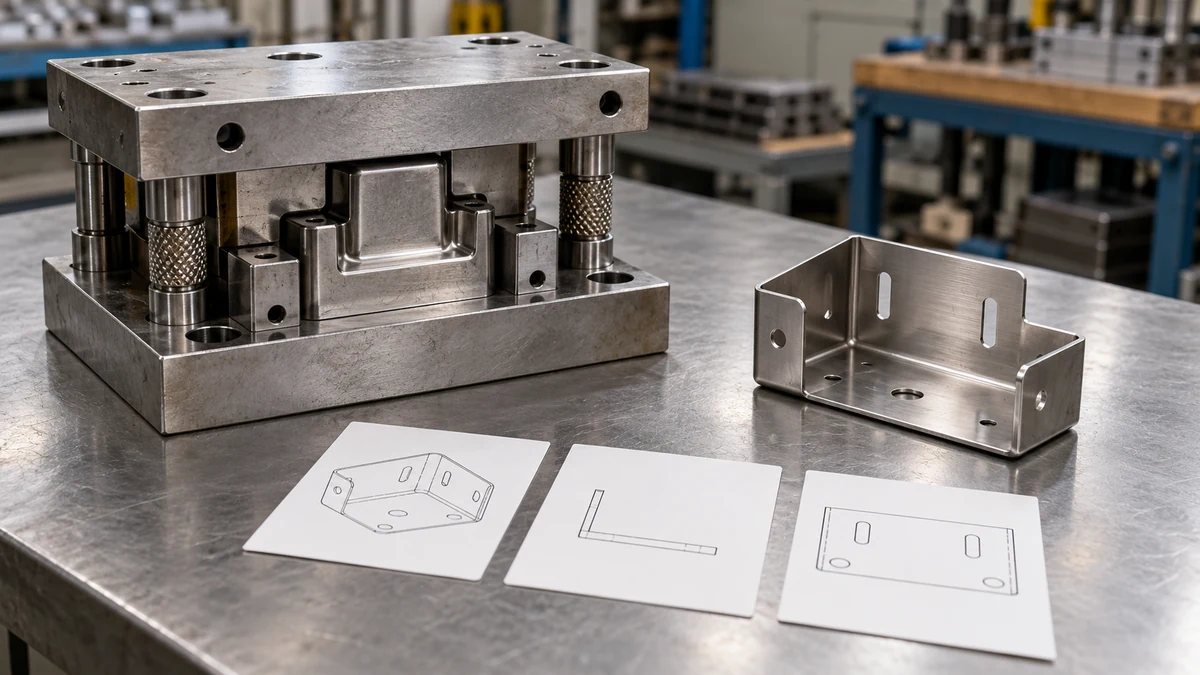
Which cost and payment records belong in the broker file?
Build one folder per tooling asset or clearly related group, then include the records held by each party. Useful documents may include the tooling agreement, buyer purchase order, factory quotation, toolmaker invoice, proof of payment, supplier credit or debit note, and correspondence explaining whether the cost was separate, included in a unit price or paid to another party. If available, include the tool’s acquisition or production cost support and the cost to transport it to the production location. The applicable regulation discusses how those facts can matter; the broker should decide which amounts are relevant.
Keep the commercial documents together rather than trying to calculate a customs value in the spreadsheet. A quote may describe how the supplier recovers a cost, while a toolmaker invoice may show what was paid to acquire or produce the item. They answer different questions. If documents disagree, flag the difference and ask the supplier to explain it in writing. Do not silently substitute a quote amount for a third-party invoice, or assume a separate charge is excluded.
If a tool has been used before, or multiple buyers or product programs share it, preserve the available use history and any basis for the amount attributed to the current program. If a buyer supplied design work, drawings or engineering, record who created the work, where it was undertaken and how it was supplied. U.S. law treats some design work differently depending on the facts, so do not infer its treatment from the word “drawing.” Send the underlying records to the broker for review.
Keep document versions and dates. A revised drawing may change a tool, the part made by it or the population of SKUs. If the factory cannot provide a requested cost record, note that limitation and ask what alternate evidence is available. The statute makes sufficient information relevant; an undocumented estimate may not answer the broker’s question.
How should production quantities and shipments be reconciled?
The broker may need to understand how an assist relates to imported merchandise and what apportionment method the facts support. The regulation discusses possible approaches in particular circumstances, including allocation to an initial shipment, to units produced through that shipment, or across anticipated production when the anticipated production is for export to the United States. These are examples in the rule, not a menu from which an importer should select without advice. The correct method depends on the facts and available information.
Prepare the underlying quantity evidence instead. Collect the original production forecast and its date, actual production reports by SKU or part, the quantity made with the tool, the quantity shipped to the United States, and shipment or entry references if available. Record quantities sent to other markets separately where the same tool or product is shared. Keep scrap, trial pieces, samples and engineering-validation runs identified rather than folding them into saleable output without explanation.
Reconcile the figures across purchase orders, supplier production updates, commercial invoices, packing lists and shipment records. Identify whether a number is a forecast, a factory count, an inspected quantity, a quantity shipped or a quantity entered. If the systems use different units or product codes, add a conversion note and preserve the source file. A broker can then see the path from tool to product to shipment and determine whether the information supports a proposed treatment.
Do not divide a tooling amount by forecast units and present the result as the customs allocation merely because the supplier quoted an amortized unit price. Commercial amortization and customs apportionment can be separate calculations with different inputs and purposes. Keep both records available and clearly label what each one represents.
What questions should the importer send to its customs broker?
Send a concise cover note with the document index and ask the broker to assess the open points for the specific entry. For example, ask whether the described die, mold, jig, fixture or design work may be an assist under the applicable facts; which cost elements and transport records matter; whether any amount is already included in the price actually paid or payable; and what additional evidence is needed to support the value. Include any uncertainty about prior use, third-party payment, shared SKUs, multiple export markets or changed tooling.
Ask the broker to determine whether the available records support an apportionment method and which production or shipment population is relevant. If actual quantities have changed from the original forecast, ask how to reconcile that change and whether further entry or recordkeeping steps are needed. Also confirm the broker’s preferred format and timing before the first shipment, since a useful answer depends on receiving the facts before the entry is finalized.
Do not ask the factory to select a U.S. customs method on the importer’s behalf. Instead, ask the factory for manufacturing facts it can verify: tool identity, location, product use, revision history, available cost documents, production counts and destination breakdown. The importer supplies its own purchase, payment and shipping records. The broker applies the customs rules to the combined record; trade counsel can advise on complex or disputed matters.

Buyer checklist before the first U.S.-bound shipment
Before the broker reviews the entry, the importer can prepare a short index with these items. For an internal “customs value buyer supplied tooling importer” record set, the checklist below links each source document to the question it may help answer; it does not select a valuation method.
| Record group | What to organize | Question it helps answer |
|---|---|---|
| Tool identity | Asset ID, description, photo or drawing, revision, function and production location | Which production aid is being discussed? |
| Product scope | Product family, part number, finished SKU and tool-to-SKU relationship | Which imported goods may relate to it? |
| Arrangement | Agreement, purchase order, ownership/control terms, lease or free/reduced-cost supply details | How was the tool provided and used? |
| Cost evidence | Toolmaker invoice, factory cost support, buyer payment and relevant transport records | Which amounts can be substantiated? |
| Price records | Supplier quote, unit-price schedule, tooling line item, commercial invoices and credits | Is a cost already reflected elsewhere? |
| Quantity evidence | Forecast date, actual production, U.S. shipment counts and other-market use | What population and period should the broker assess? |
| Change history | Repairs, modifications, replacement, drawing revisions and dates | Did the tool or its use change? |
| Shipment link | PO, commercial invoice, packing list, bill of lading and entry references | Which shipments connect to the products? |
Add an owner and status beside every line: “buyer has,” “factory requested,” “received,” “not available,” or “broker question.” This turns missing information into a visible follow-up instead of an unsupported assumption. Keep confidential design files and supplier cost details in the approved secure channel and share them only with parties who need them for the review. If you label the internal research task “customs value buyer supplied tooling importer,” keep that search label separate from the broker’s legal analysis and from the factory’s commercial tooling quote.
FAQs about customs value and buyer-supplied tooling
Is buyer-owned tooling automatically excluded from U.S. customs value?
No. Ownership is a relevant fact, but the importer should not treat it as the sole answer. The broker needs to assess the tool’s provision, use, value, relationship to the imported goods and other transaction facts under current law.
Does a separate tooling invoice mean the charge is outside the entered value?
Not by itself. Invoice formatting describes billing; it does not settle whether a possible assist is relevant or whether an amount is already included elsewhere. Provide the quote, agreement, invoice and payment evidence to the broker.
Should the importer allocate tooling over forecast units?
Do not choose an allocation method from a general rule of thumb. Preserve forecasts, actual production and shipment quantities, then ask the broker which method the law and records support for the specific case.
What if the factory cannot provide the original tool cost?
Tell the broker what is missing and provide the available records, such as the agreement, payment trail, supplier explanation, tool use history or transport documentation. Ask what further evidence is needed; do not invent a replacement value.
Does this checklist apply to imports into countries other than the United States?
No. This article is limited to U.S. valuation references. Other jurisdictions have their own rules and procedures, so ask the importer’s local customs broker or trade adviser.
Discuss tooling records with your manufacturing supplier
When developing custom metal bathroom or home-storage products, clarify the tool’s identity, product use, revision history and available supporting documents early in the sourcing process. Koitor is a family-owned custom metal hardware manufacturer; buyers can share drawings or samples to discuss manufacturing requirements and the records available for a product program. For U.S. customs treatment, have your broker review the transaction facts and current rules.
Discuss Custom Hardware and Tooling Records
Share a drawing or sample with Koitor to discuss custom metal hardware manufacturing. Ask your U.S. customs broker to assess valuation and entry requirements for your transaction.
OEM / MARCA PRÓPRIA
Transforme este guia de fornecimento num resumo do produto
Indique o produto pretendido, as dimensões, o acabamento, a quantidade a encomendar e os requisitos de embalagem. A sua equipa receberá uma análise prática da viabilidade de fabrico antes da apresentação do orçamento.


 English
 Español
 Português
 Français
 Deutsch
 العربية