
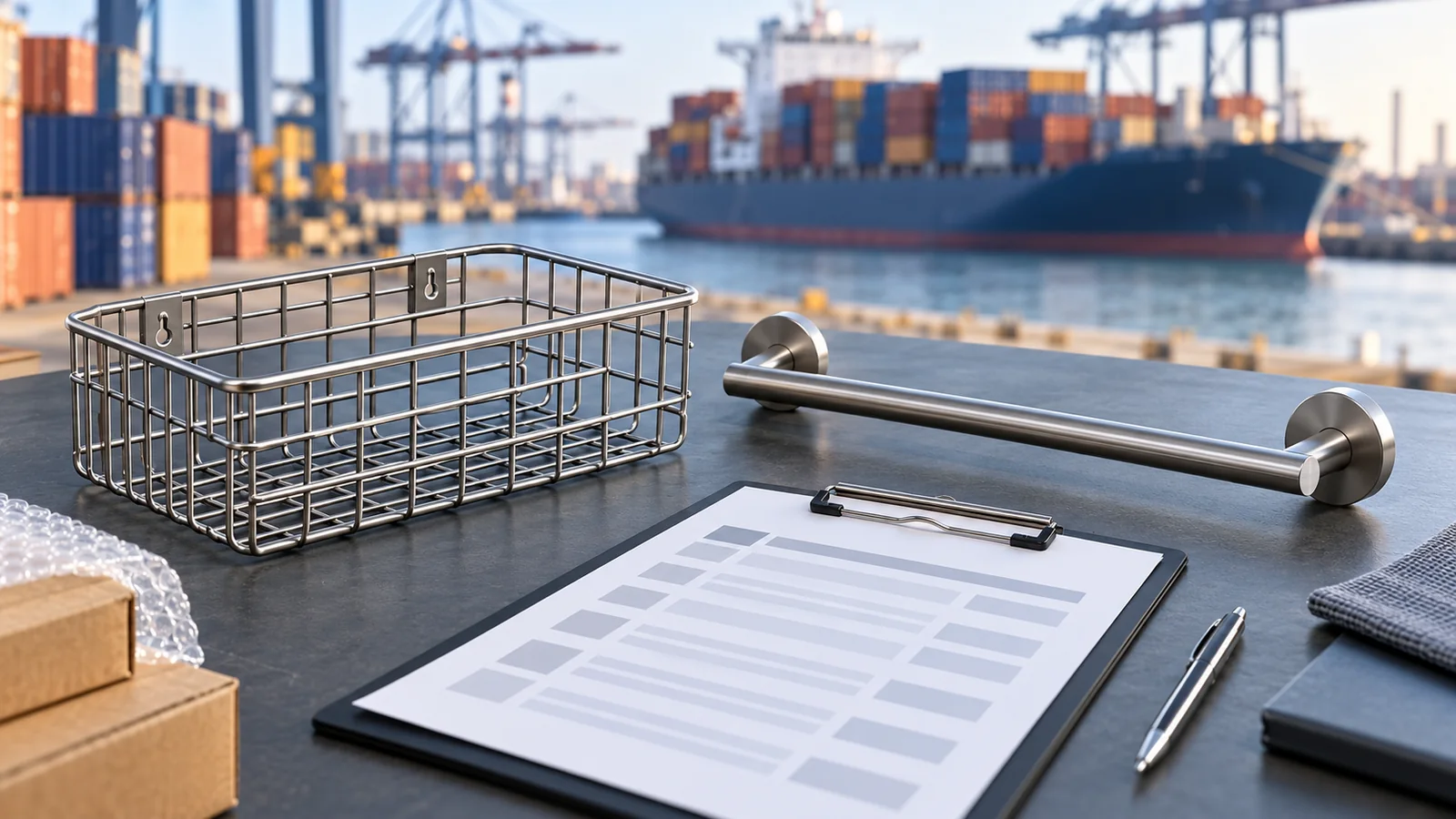
For an EU-bound ocean shipment of metal bathroom or home-storage hardware, the importer should confirm the Entry Summary Declaration (ENS) filing model with the carrier or forwarder, identify who supplies each data set, and exchange the references needed to link any partial filings. An ICS2 ENS importer supplier data handoff is a coordination plan: the factory provides accurate product and party facts it controls, while the carrier, house-level filer and importer agree their roles, identifiers and cutoffs. Do not assume the factory files ENS or that a booking alone contains every required detail.
What does ICS2 require for an EU-bound hardware shipment?
ICS2 is the European Union’s advance cargo information system. Economic operators bringing goods to or transiting through the EU must provide safety and security information through an ENS before arrival, with data and responsibilities depending on transport mode and business model. For a China-to-EU sea shipment, the importer’s practical task is to make sure the carrier or responsible filer receives complete, accurate information in time.
The European Commission says either a single complete ENS or multiple partial filings may be used, depending on contractual arrangements and the information available to each supply-chain actor. The carrier generally lodges the ENS; when it lacks legally required particulars held by another actor, that actor may need to submit its part under agreed arrangements. The importer should confirm the actual filing model with the carrier or house filer rather than infer it from the sales term or who paid freight.
ICS2 concerns safety and security cargo data. It is separate from import declarations for duty and VAT, product conformity evidence, retailer routing instructions, carton labels, and a container loading tally. A valid ENS does not establish that the product meets EU product rules or that customs has released the goods.
Who supplies which ENS information?
Assign a named source and recipient for each data group before the forwarder’s cutoff. The exact fields depend on mode and filing model, so ask the responsible carrier or filer for its current data template and shipment-specific requirements.
| Information group | Likely source | Buyer’s coordination step |
|---|---|---|
| Product and goods description | Factory, supplier, commercial records | Send clear SKU-level descriptions, materials and package distinctions; confirm the filer’s required format |
| Manufacturer or supplier identity | Factory or seller records | Confirm the legal entity and address relevant to the product lines |
| Buyer, seller and consignee details | Purchase and logistics records | Give the carrier or filer the correct parties and identify any changes |
| Origin and production facts | Supplier records and importer documentation | Provide traceable product-specific facts; route legal origin treatment to the responsible customs professional |
| Transport and contract references | Carrier, forwarder or house filer | Exchange the exact transport-contract or bill-of-lading references required to link filings |
| EORI and filer identifiers | Carrier, house filer, importer or broker | Obtain the identifiers from each responsible filer and agree how they will be transmitted |
| Routing, arrival and shipment particulars | Carrier or forwarder | Confirm route, first EU entry, mode, cutoff and who reports a change |
This matrix is a planning aid, not a universal legal allocation. Some actors may hold only master transport data; others may hold house or buyer/seller information. Contract and data availability shape the multiple-filing arrangement. Make the handoff explicit in the booking instructions or another agreed record.

How do multiple ENS filings get linked?
When the supply chain uses multiple filing, the carrier and house-level filers need to exchange in advance the linking information required by ICS2. European Commission guidance specifically describes exchanging the carrier and house filer EORI identifiers and the transport-contract number so the partial ENS datasets can be linked.
Before booking, ask the carrier or forwarder:
- Will one actor submit a complete ENS, or will several actors submit partial datasets?
- Which party is the carrier filer and which party is the house-level filer for this shipment?
- Which EORI identifiers and transport-contract reference must be exchanged?
- Which actor sends each reference, through which channel, and by what date?
- Who confirms that the filings have been linked or that missing details are resolved?
- What should the importer do if a bill-of-lading or contract reference changes?
Do not invent or reuse an identifier from a previous shipment. Check the relevant bill of lading, booking or transport contract with the actor that issued it. If the carrier and house filer use different references or the shipment is consolidated, ask them to confirm the correct linkage before cargo cutoff.
The Commission FAQ describes multiple filing as an option when a carrier does not hold all required data. It also explains that actors holding particulars may have responsibilities to share or file the information under the applicable arrangement. The importer should get the specific plan from the carrier and house filer; a generic “forwarder handles customs” statement does not establish which filing role the forwarder has accepted.
What should the factory provide to the importer or forwarder?
The factory should provide accurate commercial and product facts in its records, not make legal determinations outside its role. For metal bathroom hardware, useful inputs may include the SKU/model description, material and component details, the supplier or manufacturer identity, product revision, quantity and package configuration, and manufacturing-location facts the supplier can substantiate.
Ask the supplier to:
- Map each PO line to a clear product name, model or SKU and revision.
- Distinguish similar products, sets and separately sourced components when their descriptions differ.
- Confirm the relevant supplier/manufacturer entity and address.
- Identify facts that are provisional and when more accurate information will be available.
- Send corrections promptly if a product, source, address or shipment detail changes.
The importer and customs professional decide how those facts map to the ENS and other customs declarations. A factory’s product description does not determine tariff classification, and a supplier’s location statement alone may not resolve every legal origin question. Keep the supplier’s factual response and the filer’s legal or technical decision separate in the record.
For a custom project, buyers may review Koitor’s OEM home-storage hardware manufacturer overview. Koitor’s documented role is custom metal hardware production and direct factory communication; it does not claim to file ENS or provide customs brokerage.
When should buyers confirm timing and cutoff?
Confirm the ENS deadline with the carrier or responsible filer for the mode, route and voyage. The European Commission’s importation page gives a general sea rule of 24 hours for voyages longer than 24 hours; operational filing requirements can depend on the shipment and applicable rules, so do not apply this as a complete deadline table for every route.
Build an internal data cutoff earlier than the filer’s final deadline. The importer may need time to collect product descriptions from the factory, reconcile party data, review the transport references, and correct inconsistent information. Ask the carrier or forwarder to state when it needs each data group and what happens if information is late or changes.
The Commission’s ICS2 page currently notes that a valid ENS is required for consignments entering EU territory from 1 June 2026, including the described NCTS Phase 6 link in opt-in countries. Avoid relying on older temporary transition or derogation dates. Verify current Commission and national guidance with the responsible filer before a shipment moves.
If the carrier, forwarder and importer have different internal cutoffs, record all three. Use the earliest workable buyer deadline to send factory facts and reference information, while leaving the filer responsible for confirming its statutory filing duties. If an EU member state or route has an applicable derogation or a transit arrangement that changes the filing path, ask the carrier to identify the current official notice and explain how it affects this consignment. Do not rely on a past temporary transition window as a standing exemption. Save the answer with the booking record so that purchasing and warehouse teams use the same arrival and filing assumptions.
What should an importer do when data changes?
Send corrections to the responsible filer as soon as they are known and ask who will update the ENS or linked filing. Changes to product lines, supplier identity, buyer/seller details, transport documents, route or filing roles can affect different data sets. Do not assume that correcting the commercial invoice automatically updates ICS2.
Keep a simple change record with the field, old and new value, source, date, affected SKU or consignment, recipient, and filer acknowledgement. If a house bill number or transport contract changes, alert both the carrier and house-level filer so they can confirm linkage. If the filer says the information is incomplete, ask which party owns the missing value and the final response time.
Incomplete or inaccurate ENS data may be rejected or prompt risk-mitigating referrals and delays, according to Commission guidance. That does not mean every data issue causes the same outcome; the point is to resolve gaps with the responsible filer rather than assume that customs will infer missing details.
Buyer checklist before shipping instructions are finalized
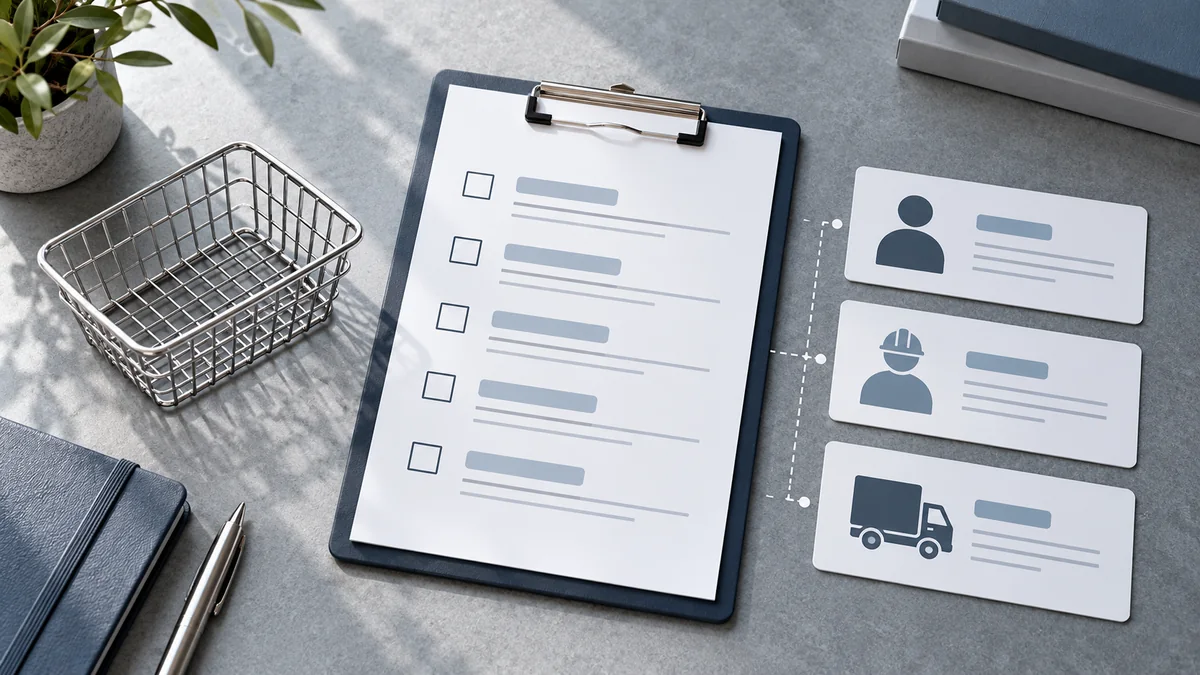
Use this ICS2 ENS importer supplier data handoff checklist to clarify the filing plan with the carrier, forwarder and factory:
- [ ] Confirm that the cargo is entering or transiting the EU and identify the relevant mode and route.
- [ ] Ask whether the shipment will use a single complete filing or multiple partial ENS filings.
- [ ] Name the carrier filer, house-level filer and importer contact for missing information.
- [ ] Obtain the EORI identifiers and transport-contract reference the filers need to link partial data.
- [ ] Give the factory a SKU-level product and party-data request with a response date.
- [ ] Confirm which party supplies origin, supplier identity, goods description and transport details.
- [ ] Agree the carrier’s internal cutoff and an escalation contact for late or inconsistent data.
- [ ] Ask how changes to the route, transport document, consolidation or goods description will be communicated.
- [ ] Request confirmation from the responsible filer when missing data and linkage questions are resolved.
- [ ] Keep ENS coordination distinct from duty entry, product compliance, carton marking and loading tally.
A practical handoff is a one-page responsibility record, not a promise that one party controls the full filing. Record who owns each data field and who confirms completion. This ICS2 ENS importer supplier data handoff should also name a backup contact for cutoff-day changes, such as a revised transport document or a missing house-level reference.
For example, a buyer can send the factory a SKU and supplier-information request early, then ask the forwarder to identify its ENS model and required identifiers. The buyer returns the factory’s factual data to the party that agreed to file it, while the carrier and house filer exchange the linking references. The importer follows up on any unanswered field before the forwarder’s internal cutoff. This sequence is a communication example, not a prescribed legal workflow.
Perguntas frequentes
Does the EU importer always file the ENS?
No single answer applies to every transport chain. The carrier generally lodges the ENS; other actors may need to provide or file particulars they hold, depending on the filing arrangement and contractual responsibilities. Confirm the exact roles with the carrier and house-level filer.
What identifiers help link multiple filings?
The Commission FAQ says the carrier and house-level filers need to exchange in advance the relevant EORI identifiers and transport-contract number used to link partial ENS filings. Confirm the exact values for the shipment with those filers.
Is ICS2 the same as the EU customs import declaration?
No. ICS2 is the advance safety and security ENS system. The customs import declaration, tariff, tax and product compliance processes are separate and may involve different information and parties.
Can the factory decide the ENS filing model?
The factory can provide product and supplier facts it controls. The importer, carrier and forwarder should agree the filing model, role assignments and linking references based on the transport chain and available information.
Trabalhe com a Koitor Hardware
Prepare Product Details for Your EU Shipment
Share your drawing or sample, SKU list, product revision and known supplier details with Koitor during sourcing. Coordinate ENS filing roles, identifiers and deadlines with your carrier or forwarder.
OEM / MARCA PRÓPRIA
Transforme este guia de fornecimento num resumo do produto
Indique o produto pretendido, as dimensões, o acabamento, a quantidade a encomendar e os requisitos de embalagem. A sua equipa receberá uma análise prática da viabilidade de fabrico antes da apresentação do orçamento.

 English
 Español
 Português
 Français
 Deutsch
 العربية