

When an importer searches “wire mesh basket manufacturer China,” the key sourcing decision is whether the offer covers mesh components or the finished household basket. A mesh supplier may quote panels or formed parts; a finished-basket OEM may coordinate the product structure, joining, edge treatment, finish, accessories, inspection and pack-out. The labels alone do not prove who performs or controls those steps. Put each responsibility in the RFQ, then approve a representative sample against the same written scope.
Should you buy wire mesh components or a finished household basket?
Choose the supply model that matches the work your team can own. Buy mesh or components when you already control the basket design, downstream forming and joining, finishing, assembly, inspection and packaging. Choose a finished-product supplier when you want one party to coordinate the completed SKU and its buyer-facing pack-out. Either model can be workable; the right choice depends on your engineering resources, required product scope, order structure and accountability needs.
A wire-mesh component can be a sheet, panel, roll, cut piece or other input described in a supplier’s quotation. A finished household basket is a defined product with an agreed shape, dimensions, edges, connections, finish, included accessories and packing configuration. The word “basket” may also describe industrial parts-handling equipment, so confirm the end use and product category rather than assuming that two catalogs refer to the same item.
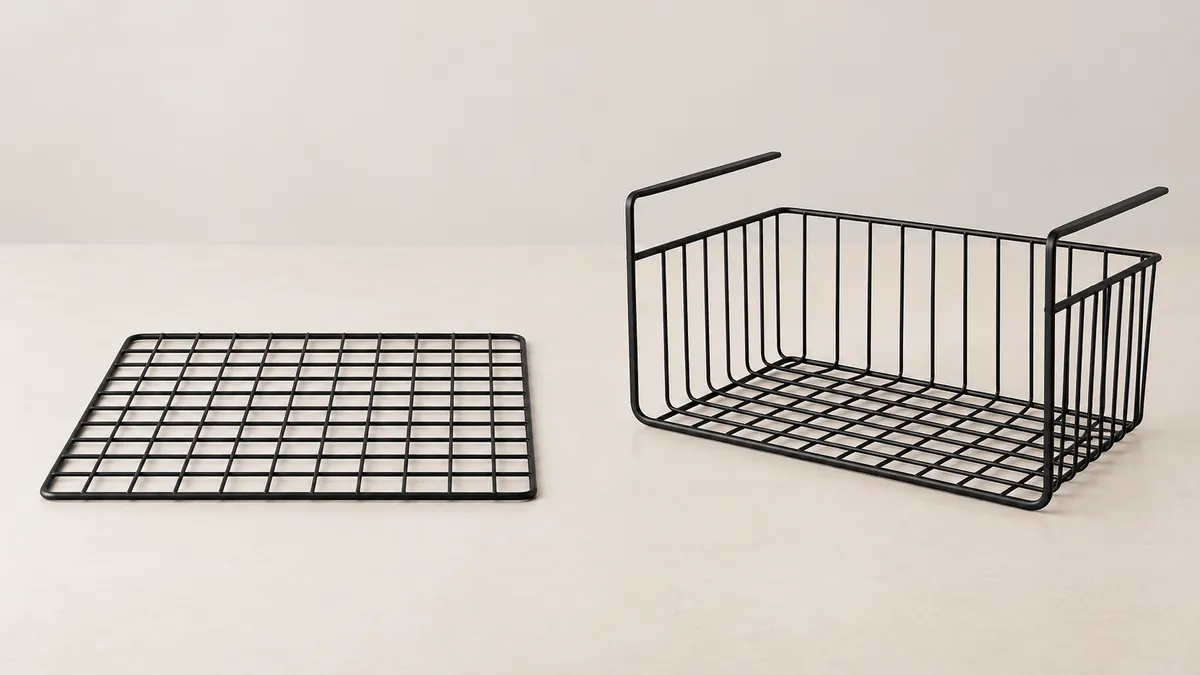
The first question for a wire mesh basket manufacturer China search is therefore not simply “Can you make wire mesh?” Ask: Which parts of my specified finished SKU are included in this offer, and who is accountable for the remaining steps? A supplier that specializes in a component may be a strong fit for that component while leaving other operations to your team or a second supplier. A finished-goods OEM may coordinate more of the product, but its exact scope still needs to be confirmed model by model.
What should an importer verify in a supplier’s scope?
Ask the supplier to mark every work package as included, buyer-supplied, purchased from another source, optional, or not offered. This simple status map prevents a product photo or a broad catalog label from standing in for a production commitment.
| Work package | What to define in the RFQ | Provas a solicitar |
|---|---|---|
| Wire, mesh or other input | Material description, form supplied, size or gauge reference, and who purchases it | Quotation line, material description and sample or record tied to the quoted SKU |
| Cutting and forming | Which parts are shaped or supplied flat; any critical dimensions and reference points | Drawing revision, process-scope answer and representative part |
| Joining and edge treatment | Connection locations, acceptable visible areas, and how exposed ends or edges are handled | Finished sample viewed from the agreed cosmetic sides |
| Acabamento da superfície | Finish name, color reference, visible faces and buyer acceptance criteria | Approved finish sample or documented reference; ask which surfaces are covered |
| Accessories and assembly | Handles, hooks, liners, mounting pieces or other included components | Bill of materials or quotation breakdown showing included and excluded parts |
| Inspection and change control | What the supplier checks, when changes are approved, and which sample is the reference | Written inspection points, approved revision and named approval step |
| Pack-out and labels | Assembly state, protective separation, units per pack, carton marks and buyer artwork | Pack-out sample, photos or a written packing specification tied to the order |
The evidence should match the question. A catalog image may show an available product style, but it does not establish the quoted material, the current sample revision, included parts or export packaging. A supplier’s written description is useful for defining scope; it is not an independent audit. If a claim matters to your purchase decision, ask for model-specific support and record what that support does and does not establish.
Make the handoff visible. If one supplier provides the mesh and another forms the basket, identify who checks the incoming component, who accepts a drawing change, who owns damage between operations, who approves the finish and who packs the final retail unit. If one company coordinates several steps through subcontractors, ask that company to identify the boundaries and remain the named contact for the commitments it accepts.
How can you make two quotations comparable?
Send each candidate the same product definition. At minimum, identify the SKU and intended use; overall dimensions and critical fit points; the supplied material description or approved alternatives; finish and color reference; included accessories; sample basis; order quantity assumptions; inspection request; pack-out; labels; and delivery terms to be quoted. Attach a dated drawing or a clear, controlled reference sample where available.
Ask each supplier to return the scope table with its offer. Request separate line items for optional components or services rather than leaving the buyer to infer whether the price includes them. Where a supplier proposes an alternative, require it to state what changes: dimensions, visible joints, finish, included parts, sample timing or packing. A lower unit price is not a like-for-like comparison if the offers cover different work.
Keep three product stages distinct:
- Reference item: a catalog product or physical sample used to communicate the intended function or appearance.
- Development sample: a modified or newly made sample that incorporates specified changes and is still subject to buyer review.
- Approved production reference: the identified revision the buyer accepts as the basis for the order, with any open exceptions recorded.
These names are practical controls, not a claim that every supplier uses the same terminology. Define them in your purchase documents so both sides know which sample is under discussion. A sample can demonstrate the specific item received; on its own, it cannot prove that later units will match unless the order also identifies the controlling specification, change process and applicable production checks.
For sample approval, compare the sample with the drawing and written scope. Check overall size and the points that affect shelf fit or assembly; the spacing and orientation of the wire pattern if these affect product use; visible joining and corner alignment; any protruding or sharp ends; coating or finish on the surfaces that matter to the buyer; accessory fit; and the agreed packing arrangement. The appropriate checks depend on the product and intended use. Do not add an arbitrary load, corrosion or coating test without defining the method, sample, acceptance criteria and purpose first.
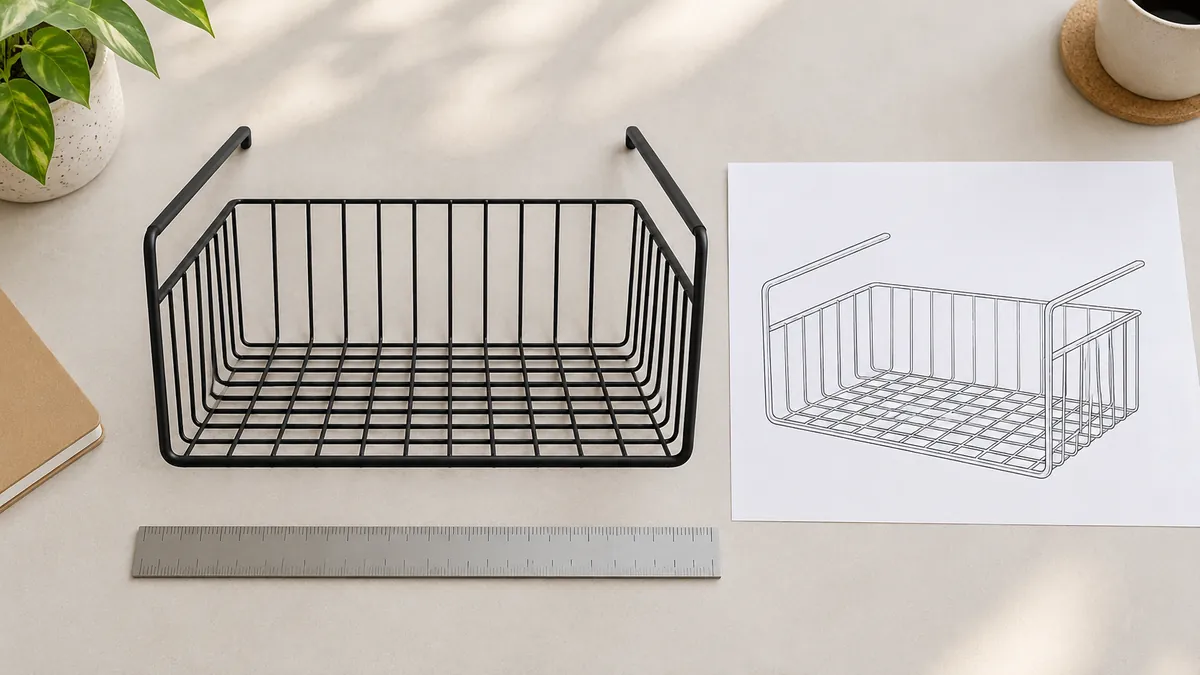
If the product includes a lid, liner, mounting part or removable component, specify its fit and retention separately. A product-specific sample guide such as Koitor’s wire basket lid fit and retention checks covers that accessory decision. This article keeps the question at supplier-scope level; it does not replace the design or acceptance criteria for an individual component.
When does each supplier model fit?
When an upstream mesh supplier may fit
An upstream mesh supplier may suit a buyer that already has a fabricator, product engineer or production partner to turn the specified input into a finished product. That route can make responsibilities clear when the buyer intentionally separates materials, forming, assembly and pack-out. It may also suit a company sourcing mesh for several different products. These are reasons to evaluate the model, not promises of lower cost or shorter lead time.
Before choosing that route, check that your team can own the interfaces between suppliers. You may need to manage drawing revisions, incoming inspection, shipping between production sites, finish compatibility, sample approvals and final packaging. Ask who handles a nonconforming component and whether the downstream supplier will accept it as supplied. If a mesh change affects fit or appearance, define who must review it before production proceeds.
A component-first offer is not automatically incomplete. A supplier may offer additional processing or finished products, and its actual scope may differ by product. Read the quotation for the named SKU. Ask for a direct answer on each line item instead of assuming a supplier’s broader catalog proves that a specific step is available for your design.
When a finished-basket OEM may fit
A finished-basket OEM is worth considering when your buying need is the completed organizer rather than a mesh input and your business wants one supplier to coordinate more of the specified SKU. This can simplify commercial communication if the supplier accepts responsibility for the defined operations and pack-out. It does not eliminate the need for a controlled drawing, approved sample, clear exclusions and written change handling.
Confirm the exact meaning of “finished.” Does it include formed sides and base, joined corners, edge treatment, finish, accessories, assembly, inspection, retail packaging or only a product ready for your next operation? Ask whether these steps are done by the quoted company or another party, and who owns the final check. The supplier’s answer should describe the actual offer without forcing it into a generic “factory” or “OEM” label.
Use the supplier’s process vocabulary as prompts, not as a scorecard. A company may discuss cutting, bending, welding, polishing, coating or packaging, but the relevant question is which of those operations apply to this model and are included in this quote. More process names do not prove a better result. Request evidence at the level needed for your decision, then compare the finished sample and order documents.
Koitor Hardware is a family-owned custom metal hardware factory focused on bathroom and home-storage hardware. Its broader home-storage OEM scope is relevant when an importer is developing a metal organizer or storage product. Confirm the specific basket geometry, input materials, finish and pack-out directly with Koitor before assuming a particular mesh or under-shelf design is within the current offer. Drawing or physical-sample review helps identify what needs to be quoted and which details remain open.
What do supplier examples tell you—and what do they not prove?
Public supplier pages can help buyers distinguish product categories and prepare questions. They should be read as self-descriptions unless independently verified. For example, Yuyang Metal Mesh’s company profile describes wire-mesh products and deeper processing, including basket examples. That page shows how one supplier presents its catalog; it does not prove which operation it performs for a particular order, whether every listing is made at the same site, or what is included in a buyer’s quotation.
Three M Tool’s custom wire-basket page separates standard basket offers from custom-engineered industrial baskets and lists application, environment, working dimensions and basket features among its information requests. It is an industrial example, not evidence of a standard household-basket workflow. Its useful lesson for an importer is narrower: define application and requirements before comparing a custom offer.
This is why a wire mesh basket manufacturer China search should lead to a scope conversation rather than a copied directory list. Search results may mix raw mesh, industrial process baskets, household organizers and marketplace pages. A result’s location or category name does not independently establish company role, production site, household product experience or export pack-out for your SKU. Verify the organization and offer you are actually evaluating.
What should you get right before requesting a quotation?
Avoid preventable handoffs
An avoidable scope mistake is comparing prices before defining the finished product. If one quote covers mesh panels and another covers an assembled basket in retail packaging, the unit prices do not represent the same purchase. Resolve the work package table before asking which offer is more economical.
Other avoidable mistakes include:
- Treating “manufacturer” as a complete scope statement. Ask which operations are included, purchased or excluded for the quoted model.
- Sending an image without dimensions or revision control. A photo helps communicate shape but may not show hidden fit points, accessory interfaces or packaging details.
- Approving a sample without noting what it represents. Record whether it is a standard catalog piece, modified sample or production-intent reference, and list open changes.
- Leaving the finish or cosmetic faces vague. Identify the surfaces buyers will see, the color reference and the visual criteria relevant to the SKU.
- Assuming the sample includes all retail components. Check hooks, liners, labels, instructions and fasteners against the quote or packing list.
- Waiting until shipment to discuss packaging. Confirm assembled or knock-down state, protective separation, quantity per carton, marks and buyer artwork before the final pack is approved.
- Assuming a regional cluster or online catalog proves factory ownership. Verify the contracting party and who controls the work for the exact product.
- Using a test without a defined acceptance rule. State the method, sample count, conditions and pass/fail criteria that fit the buyer’s product decision; do not treat one test as proof of every performance attribute.
A buyer does not have to engineer every manufacturing detail alone. The buyer does need to distinguish confirmed requirements from supplier proposals and unanswered questions. Ask the supplier to flag an unknown rather than fill it with an assumed grade, finish, tolerance, test or lead time.
Prepare a comparable quotation brief
Use this checklist to make the first response more useful:
- Identify the finished SKU and whether you are requesting mesh/components or a complete household basket.
- Attach a dated drawing, clear photos or physical reference sample. Label the revision.
- State overall dimensions and the dimensions that control fit, storage capacity or assembly.
- Describe the material and finish requirement as a buyer requirement or approved alternative, not as an assumed supplier capability.
- List every included component and mark buyer-supplied or optional items.
- Identify visible faces, edge expectations and any handling or cleaning conditions relevant to the product.
- Define the sample purpose, review criteria, open changes and person who will approve the production reference.
- State the desired assembly state, protective packing, retail presentation, labels and carton information.
- Ask the supplier to mark each operation as included, outsourced, optional or excluded, and to name who owns final inspection and pack-out.
- Request a quotation that separates the finished SKU from optional services or components, with quantity and delivery assumptions shown.
If you are comparing a mesh organizer with a desk product or another SKU, keep the product decision specific. Koitor’s metal mesh desk organizer sample-approval guide addresses a different product’s specifications. It can help frame sample questions, but its dimensions and design criteria should not be copied into a household basket RFQ.
Perguntas frequentes
Is a wire mesh supplier the same as a finished-basket OEM?
Not necessarily. A mesh supplier may quote an input or a processed component; a finished-basket OEM may quote some or all work needed for a completed household product. Both terms vary by company, so ask which operations and pack-out are included for the specific SKU.
Does choosing one finished-product supplier remove the need for buyer checks?
No. The buyer still needs a controlled product definition, an approved sample, documented inclusions and exclusions, and a change-approval path. A single point of contact can simplify coordination only for the responsibilities that the supplier has actually accepted.
Should an importer source mesh separately to reduce cost?
There is no universal answer. Compare equivalent scope and include the coordination, transport, incoming checks, finishing, assembly, inspection and packaging that your team would take on. A separate component quote may not be comparable to a retail-ready finished-product offer.
What should the approved basket sample represent?
It should represent the revision and configuration the buyer intends to order, including material description, finish, included accessories and packing state where relevant. Record any accepted exceptions and confirm how subsequent changes will be reviewed.
Can a supplier catalog prove that it manufactures my basket?
A catalog can show what a company chooses to present, but it does not independently prove the production role or capability for your design. Ask who contracts for the quoted item, which party performs each operation, and what project-specific evidence supports the answer.
Trabalhe com a Koitor Hardware
Define the Scope for Your Wire-Storage Project
Send Koitor a drawing, reference sample, target dimensions, finish request and packaging brief. As a family-owned custom metal hardware factory focused on bathroom and home-storage products, Koitor can review the project details and discuss whether the requested structure fits its current scope before quotation.
OEM / MARCA PRÓPRIA
Transforme este guia de fornecimento num resumo do produto
Indique o produto pretendido, as dimensões, o acabamento, a quantidade a encomendar e os requisitos de embalagem. A sua equipa receberá uma análise prática da viabilidade de fabrico antes da apresentação do orçamento.
 English
 Español
 Português
 Français
 Deutsch
 العربية