
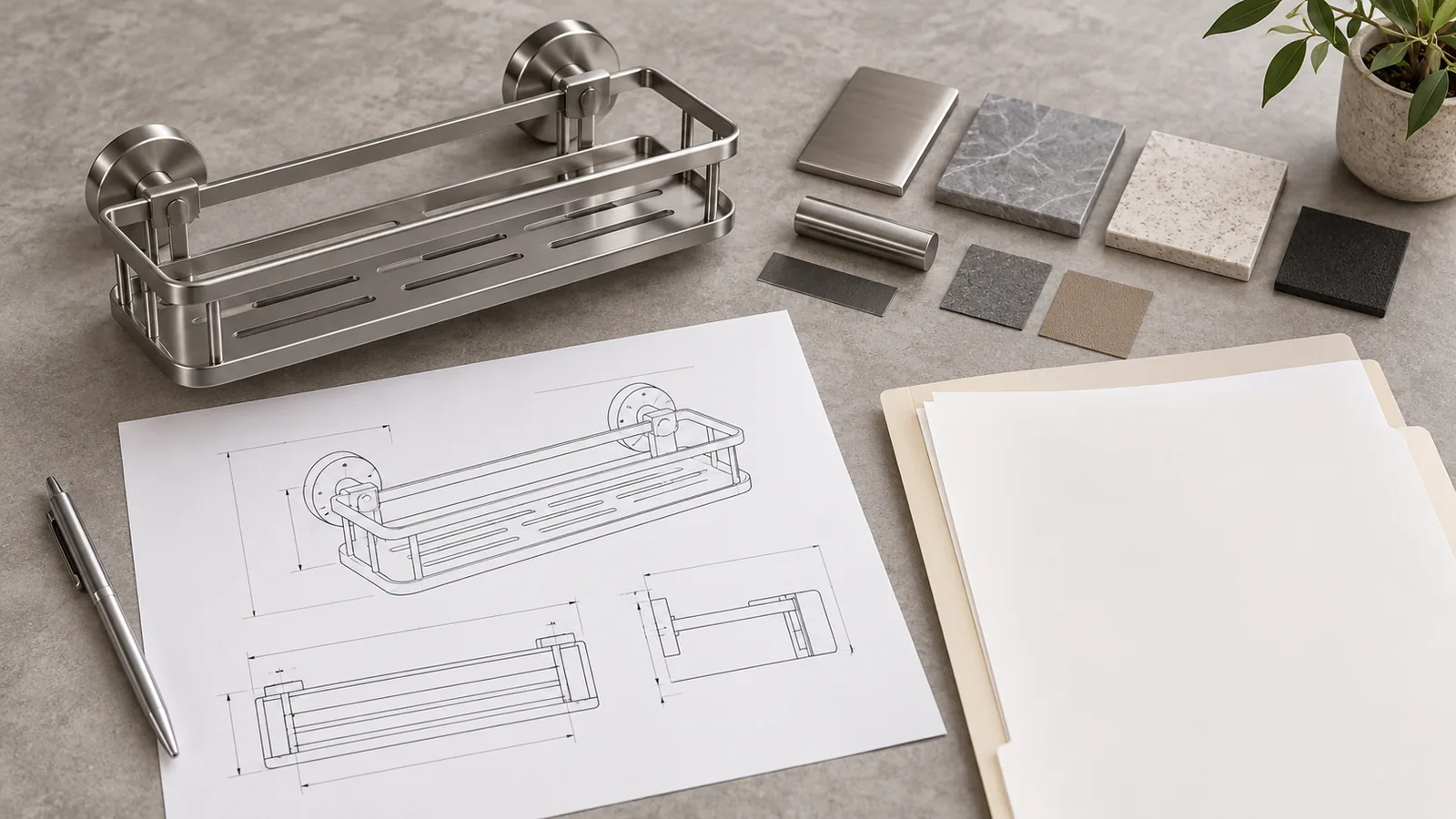
An EU importer who is uncertain how a specific bathroom or home-storage hardware product should be classified may need more than a supplier’s short product name or a code copied from an old shipment. EU binding tariff information (BTI) is a formal customs classification decision issued by a customs authority. It can give the applicant a documented classification position for the described goods, subject to the rules and facts in the decision.
BTI is not a tariff quote, a product approval, or a guarantee that customs will decide every import question in the importer’s favor. The product description and evidence matter. A wall-mounted wire basket, a freestanding rack, a mixed-material organizer, and a component sold separately may present different classification facts. Buyers should involve their customs broker or relevant customs authority when they need classification advice.
This guide explains when a buyer might consider BTI, what a hardware supplier can contribute to an application, and what the decision does not settle. The examples are illustrative; they do not classify any Koitor product.
What EU BTI does—and what it does not do
The European Commission describes BTI as a legal decision on tariff classification issued by an EU national customs authority. A BTI is generally valid for three years and is binding on the holder and EU customs administrations, subject to applicable conditions. It can cease to be valid or be revoked earlier, and incomplete or inaccurate information can undermine an application. Check the current Commission guidance before acting because validity and procedure depend on the applicable rules and the facts of the case.
The central value is predictability about the classification of the goods described in the decision.
| Pergunta do comprador | BTI can address | Separate review still needed |
|---|---|---|
| How is this described good classified? | The classification of the goods accurately described in the decision | Whether the actual shipment matches that description |
| What duty will the shipment pay? | Classification can be one relevant input | Origin, customs value, applicable measures, entry date and other duty factors |
| Is the product compliant for sale? | No product approval is created by BTI | Product safety, chemical, labeling and market-access requirements |
| Can another version use the decision? | Only the goods within the decision’s scope should be considered | Broker or authority review of changes in dimensions, parts, construction or function |
This comparison is a practical scope check, not legal advice. Use EU binding tariff information for the classification question it actually resolves, then ask your broker to identify the other determinations needed for the shipment. For an importer managing recurring entries, product launches or a material commercial commitment, a formal decision may be worth discussing if a classification disagreement could affect planning. Whether to apply is a business and customs-advice decision; there is no reason to assume every SKU needs a BTI.
BTI has a narrower scope than many buyers expect. It does not, by itself, determine:
- the product’s country of origin or whether it qualifies for a preferential origin rule;
- customs value, assists, royalties, freight additions or valuation method;
- applicable duty amount across all measures, including trade remedies or additional duties;
- VAT treatment, product safety, chemical compliance, labeling or market access;
- the classification of a materially different product variant that is not covered by the decision.
A classification can be one input into duty analysis, but the duty payable also depends on other facts and measures. Ask the broker which questions require separate review.
When an importer may consider applying
Consider a BTI discussion when the product description is not straightforward and the classification choice has meaningful operational consequences. Examples could include a product whose function changes with its configuration, a set containing multiple components, or a new design where the buyer’s and broker’s initial views differ. These are prompts for professional review, not claims that a particular hardware product belongs under a particular heading.
The importer should first ask the broker whether the available tariff information and existing guidance answer the question. If uncertainty remains, ask whether a BTI application is available and useful for the planned transaction. The European Commission’s guidance frames BTI around prospective transactions. That makes timing important: raise the issue while the product facts and shipment plan can still be reviewed, rather than treating an application as a last-minute clearance fix.
BTI is associated with the applicant/holder and the goods as described. A buyer should not assume that another importer’s decision, a supplier’s historic code, or a broker’s prior entry automatically transfers to a new company or a different product. Likewise, a BTI is not a general classification certificate for a product family merely because the items share a marketing name.
Before proceeding, agree who will own the application, who will supply product facts, which exact SKU or version is in scope, and how the result will be reviewed against the intended transaction. Confirm whether the authority may need a sample, additional technical material or clarification.
Prepare product evidence before asking a supplier
Customs authorities classify the goods; the factory should provide accurate product facts within its knowledge. Buyers can make this handoff easier by asking for a consistent, version-controlled evidence set. A concise dossier is more useful than a large folder of unlabeled photographs.
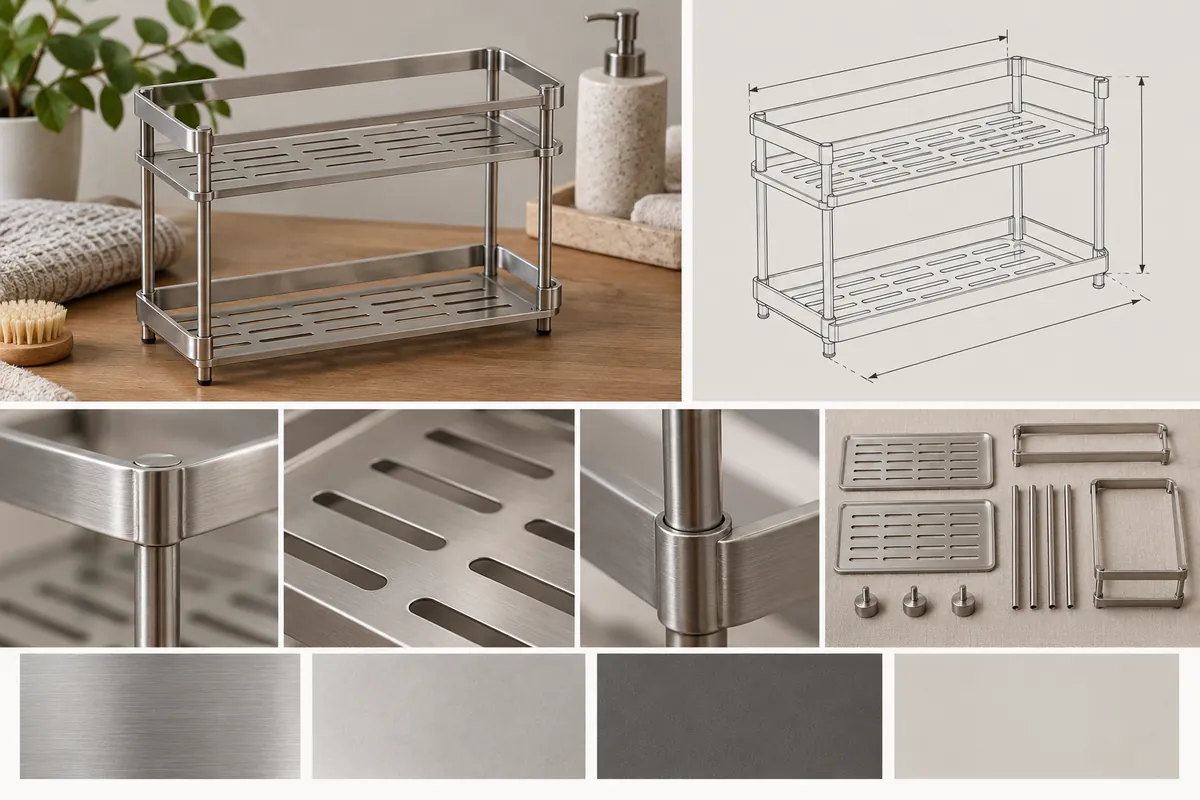
A practical first request can include:
- Product identity: buyer SKU, supplier reference if applicable, product name, drawing revision, sample date and the precise version under review.
- Function and use: what the article does, how it is installed or used, and whether it is sold as a complete article, a component or a set. Describe facts; avoid writing a legal conclusion into the product description.
- Construção: a parts list or exploded view showing the main body, mounting pieces, fasteners and other included components. Identify which parts are supplied together and which are optional or sold separately.
- Materials: verified material information for relevant components, with the basis for the statement when available. If a grade or composition has not been confirmed, say so rather than estimating.
- Dimensions and photographs: overall dimensions, useful close-ups, back and underside views, and photos showing how parts connect. Label each image and link it to the relevant SKU and revision.
- Drawings and samples: current drawings, diagrams or other technical documents. Ask the broker or authority whether a physical sample is needed and how it should be sent.
- Variants: list differences in dimensions, construction, material, mounting method, included parts and intended function. Separate a genuinely different configuration from a color-only or packaging change only after the broker confirms the distinction is immaterial for the question.
For a wire shower basket, for example, the evidence could describe the basket geometry, any rails or hooks, the method of attachment, included mounting parts, dimensions, and the way the product is presented for import. It should not announce a tariff heading unless that conclusion comes from the importer’s customs professional or authority. For a mixed-material organizer, the supplier should identify the components and their materials accurately; the broker determines which facts are relevant to classification.
The buyer should maintain one controlled product dossier. Give every file a revision or date, retain the exact version sent for the application, and record who confirmed the facts. If the product changes later, the importer can compare the new version with the description before relying on the decision.
Divide responsibilities among importer, broker and factory
A sound process assigns each question to the party with the right knowledge. The importer owns the application and business decision, and should ensure that the applicant identity, planned transaction and product version are correct. The customs broker can advise on the classification question, application route and additional customs issues within the broker’s engagement. The supplier can answer manufacturing questions about its product: construction, dimensions, components, material documentation it holds, drawings and sample availability.

A supplier should not be asked to guarantee a BTI outcome or provide a code just to complete a buyer’s form. Nor should a buyer assume a factory can certify facts outside its records, such as the composition of an externally sourced component that has not been verified. If an answer is unknown, record the limitation and agree whether further evidence is needed.
For customized OEM goods, drawing changes can alter the item described. A different mounting assembly, added component, changed dimensions or new bundled accessory may affect the factual description. The buyer should share relevant revisions with the broker and ask whether the existing decision still applies. Do not decide internally that a change is “minor” for customs purposes without checking.
Accuracy, confidentiality and change control
The European Commission warns that BTI information is made available through the EBTI database, subject to the applicable data rules. Do not presume that all application details will remain confidential. Before submitting sensitive drawings, proprietary dimensions, customer identifiers or other commercially sensitive information, the importer should ask the customs authority or broker what is required, what may be published, and how confidentiality concerns should be handled. Provide the information needed for a clear classification description while following official instructions; do not omit relevant facts simply to protect commercial information.
Accuracy is not a paperwork formality. An application based on incomplete or incorrect facts may be annulled. A product description that says “metal shelf” when the actual item is a bundled, multi-part organizer may leave important facts unclear. Conversely, adding unsupported material or function claims can create a mismatch between the application and the goods shipped.
Use a simple change-control check before each repeat order:
- Does the SKU match the product described in the BTI?
- Is the drawing revision unchanged?
- Are construction, included parts and intended presentation the same?
- Have any material or functional facts changed?
- Has the authority’s decision, validity status or relevant tariff information changed?
- Has the broker confirmed that the decision remains appropriate for this transaction?
If any answer raises doubt, pause reliance and ask the broker or relevant customs authority. Keep the decision and the matching product evidence together with internal SKU records so that purchasing, compliance and customs teams can find the same reference.
Practical questions to ask your broker
Before pursuing an EU binding tariff information application, ask:
- What precise classification uncertainty are we trying to resolve?
- Is the transaction prospective, and is the proposed applicant the right holder?
- Which exact product configuration should the application cover?
- What technical description, drawings, photographs, material evidence or sample should we provide?
- Should variants be included or handled in separate applications?
- What information may be visible in the public EBTI database?
- How will we monitor validity, revocation or changes in the applicable tariff framework?
- Which separate questions remain for origin, customs value, trade remedies, VAT and product compliance?
- What should the importer do if the production item changes after the decision?
Ask the broker to identify the official application route for the country and case. EU-wide concepts are governed at EU level, while application portals and practical submission instructions may be presented by national customs authorities. For example, Ireland’s Revenue page describes its own application steps and access requirements; those details should not be generalized to every Member State. Check the current national instructions applicable to the applicant.
Perguntas frequentes
How long is a BTI valid?
The Commission generally describes a BTI as valid for three years, but it may cease to be valid or be revoked earlier under applicable conditions. Check the actual decision and current official guidance; do not treat the general period as an unconditional guarantee.
Does a BTI tell me the duty rate?
It addresses tariff classification for the goods described. It does not by itself settle every factor that may affect duties, including origin, customs value or trade measures. Ask your broker to review the full import situation.
Can a factory apply for BTI for my product?
The importer should discuss the applicant and holder with its broker or customs authority. A factory can often help provide product facts within its knowledge, but it should not be assumed to be the importer, applicant or customs adviser.
Can I use one decision for every size or version?
Do not assume that. The decision relates to the goods described. Ask the broker whether the variants and changes are within scope and whether additional review is needed.
Trabalhe com a Koitor Hardware
A hardware supplier can support a buyer’s customs review by providing clear product drawings, dimensions, construction details and sample information that match the version being discussed. Koitor Hardware is a family-owned bathroom and home-storage hardware factory with direct factory communication; buyers can review our OEM home-storage hardware manufacturing capabilities and contact the team to discuss product information for a specific sourcing project.
For classification decisions, application strategy and tariff treatment, work with your customs broker or the relevant customs authority. Supplier product evidence supports that process but does not replace customs advice.
Need Clear Product Evidence for a Buyer Review?
Koitor Hardware can discuss product drawings, dimensions and sample information for bathroom and home-storage hardware sourcing projects. Customs classification decisions should be confirmed with your customs broker or authority.
OEM / MARCA PRÓPRIA
Transforme este guia de fornecimento num resumo do produto
Indique o produto pretendido, as dimensões, o acabamento, a quantidade a encomendar e os requisitos de embalagem. A sua equipa receberá uma análise prática da viabilidade de fabrico antes da apresentação do orçamento.
 English
 Español
 Português
 Français
 Deutsch
 العربية