
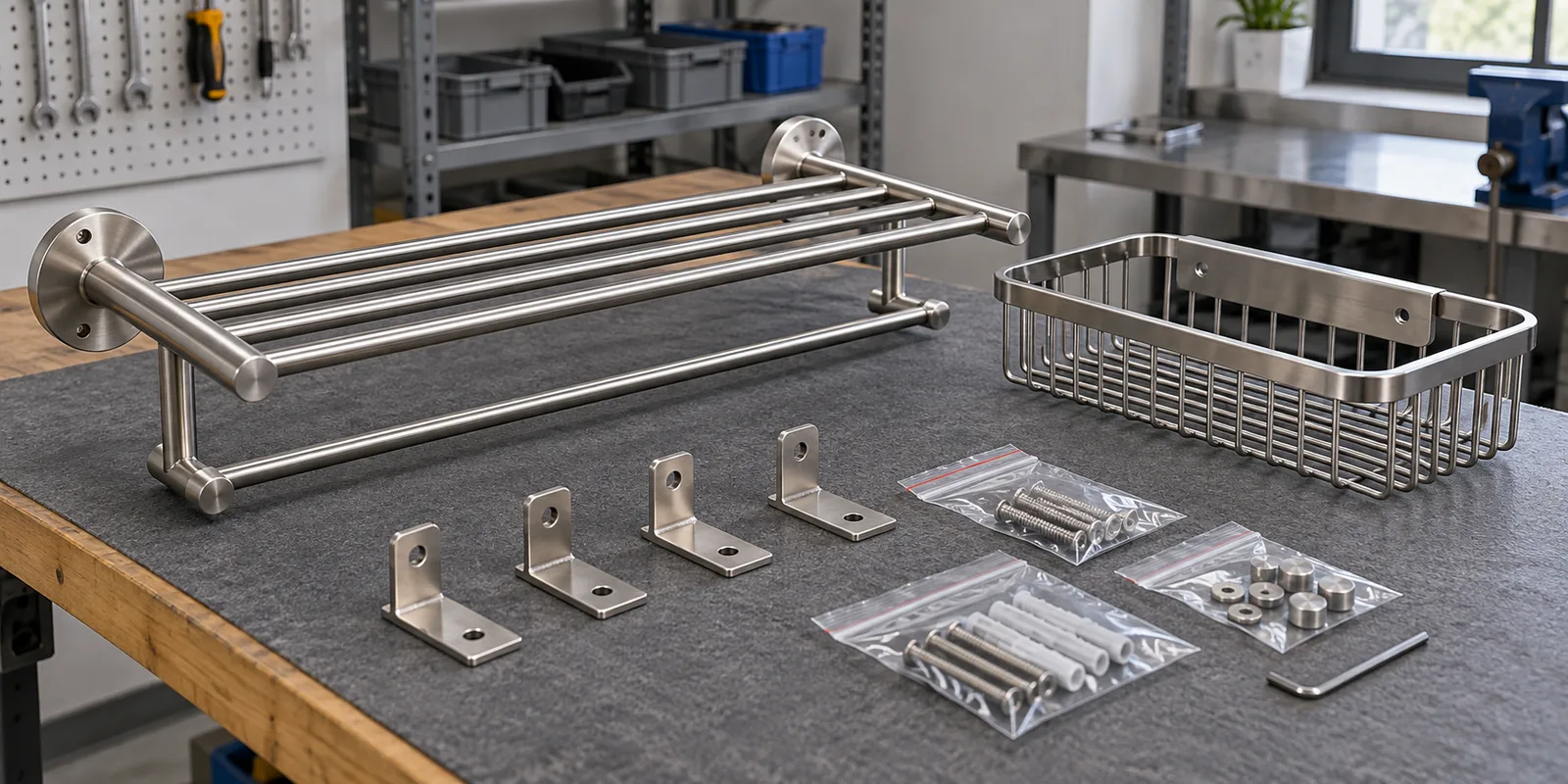
A wall mounted bathroom rack manufacturer should review the rack body, wall brackets, fixing points, installation accessories and packaging as one complete system. B2B buyers should provide the intended wall position, product dimensions, expected contents, material, finish and mounting concept before requesting a final quotation. The best sample review is an actual installation on a representative surface, not only a visual check on a table. Final load expectations and fastener suitability should be confirmed for the specific project and target installation conditions.
What should buyers expect from a wall mounted bathroom rack manufacturer?
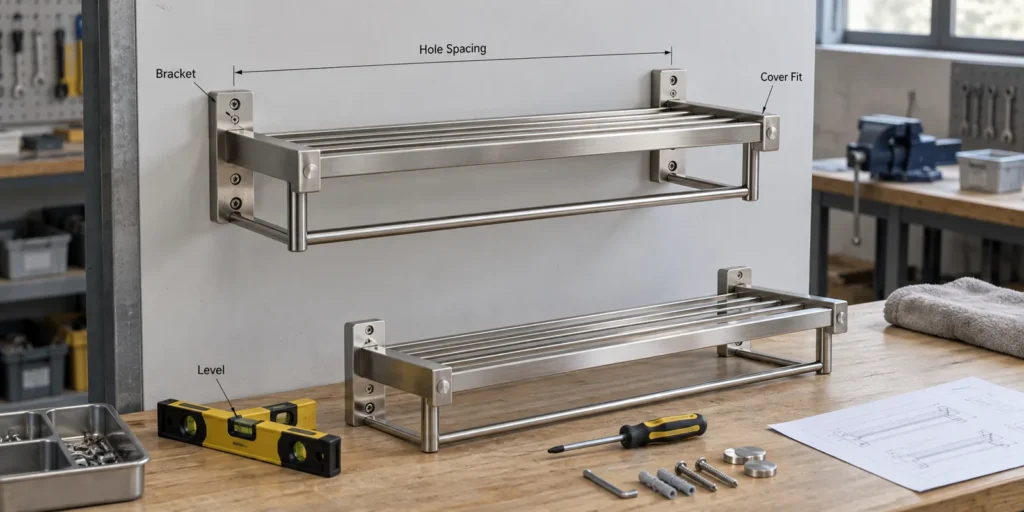
Buyers should expect a wall mounted bathroom rack manufacturer to translate a drawing, physical sample or product brief into a manufacturable rack and a clearly defined mounting set. The supplier should identify open questions before sampling instead of assuming that a familiar-looking bracket will fit every wall or market.
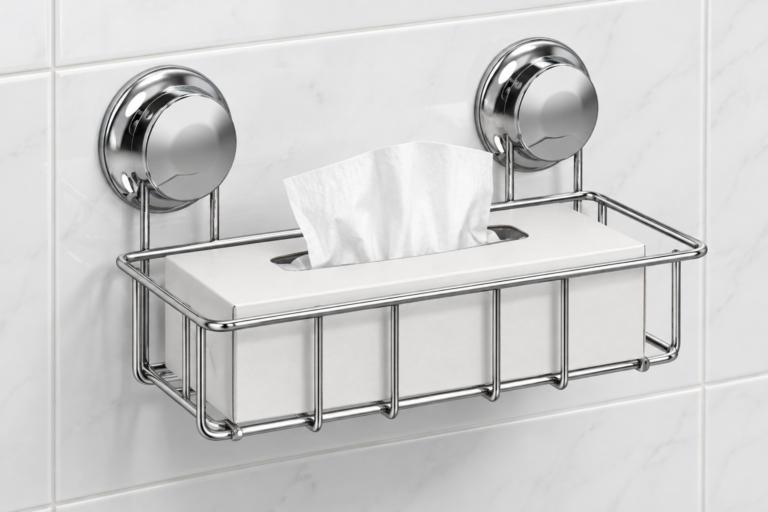
A wall-mounted rack is a product system. It may include a welded basket or shelf, rear mounting plates, concealed or visible brackets, decorative covers, screws, wall anchors, assembly hardware, instructions and protective packaging. If one part is omitted from the brief, the sample may look correct while remaining incomplete for installation or retail packing.
Start by naming the product type. A towel shelf, shower basket, corner rack and multi-tier bathroom organizer place different demands on the wall connection. State what the rack is intended to hold and whether the product sits in a wet shower zone, beside a basin or in a drier bathroom area.
Next, distinguish buyer requirements from proposed factory details. The buyer may control overall size, appearance and installation method, while the manufacturer proposes feasible wire diameters, tube sections, weld positions or bracket construction. Record which points are fixed and which may change during development.
Koitor Hardware supports drawing-based and sample-based development for bathroom and home storage hardware. Direct discussion with the production team can cover bending, welding, grinding, polishing, powder coating, assembly and packaging preparation before a sample is made.
How should the rack structure be defined before sampling?
The rack structure should be defined with critical dimensions, component sections, joint locations, drainage, edge treatment and the relationship between the rack body and mounting parts. A clear structure brief reduces quotation differences and makes sample comments easier to resolve.
Overall width, depth and height are not enough. Mark the usable shelf area, distance between tiers, front-rail height, wall clearance and position of any hooks or towel bars. For a custom wall basket, include wire spacing and the location of supports that prevent the basket from twisting.
Specify which dimensions are critical to installation and which are mainly visual. The distance between mounting holes usually needs tighter control than a decorative bend. If a rack must align with an existing product family, identify the shared dimensions and finish references.
Drainage deserves attention for products used near water. Horizontal plates, closed corners or closely spaced wires can retain water and residue. A design that looks clean in a rendering may be harder to dry in daily use. Review the physical sample from the top, front, side and wall-facing surfaces.
| Structure item | What the buyer should specify | What to review on the sample |
|---|---|---|
| Rack dimensions | Overall and usable width, depth, height and tier spacing | Fit, access and consistency with the product brief |
| Wire or tube sections | Preferred sizes or performance objective | Appearance, rigidity and manufacturability |
| Wall connection | Bracket type, hole spacing and visible or concealed fixing | Alignment, installation access and cover fit |
| Joints and supports | Key weld locations and any appearance restrictions | Distortion, sharp areas and finish around joints |
| Drainage and cleaning | Wet-zone exposure and areas that must remain accessible | Trapped-water points, corners and wall clearance |
| Accessories | Hooks, bars, trays, screws, anchors and covers | Compatibility, quantity and secure packing |
Do not specify a heavier section only because it sounds stronger. Material size affects weight, bending, welding, appearance, packaging and cost. The appropriate section should follow the full structure and project-specific performance requirement.
Buyers can use Koitor’s OEM bathroom hardware manufacturing page as a starting point when preparing drawings, samples and customization requirements for a wall-mounted product.
How should bathroom shelf mounting design be reviewed?
Bathroom shelf mounting design should be reviewed around the wall substrate, bracket geometry, hole pattern, installation access and supplied fasteners. The rack cannot be evaluated independently from the surface and method used to secure it.
Ask the target customer or retailer which wall types are relevant. Tile over masonry, solid masonry, timber framing and hollow-board construction may require different anchors and installation instructions. A factory should not claim that one generic anchor is suitable for every wall.
Define whether the fixing is exposed or concealed. Exposed screws can simplify inspection and access, while concealed mounting may use a separate wall plate, set screws or decorative covers. Concealed arrangements need enough space for tools and a clear installation sequence.
Hole spacing should appear on the controlled drawing. If the rack uses two separate brackets, their relative position must be maintained through welding, assembly and installation. Small angular or spacing differences can make the rack difficult to fit, even when each individual bracket appears acceptable.
Review the wall-facing surface. Weld beads, projecting hardware or uneven bracket faces can prevent the rack from sitting correctly. Decorative covers should close evenly and should not hide a loose connection that remains unresolved underneath.
Fasteners must be treated as specified components. Confirm screw dimensions, head style, finish, anchor type and quantity. If the buyer supplies market-specific anchors separately, state that clearly in the product and packaging records.
Installation instructions should reflect the approved product. Drawings need to show the current hole pattern, bracket orientation and accessory set. Instructions copied from a previous model can create errors if the mounting design has changed.
Which manufacturing details affect alignment and finish quality?
Bending sequence, welding position, fixture control, grinding and surface finishing all affect whether a wall-mounted bathroom rack sits straight and looks consistent. Buyers should inspect these details as connected process steps rather than isolated cosmetic checks.
Welding can pull components out of position as heat enters the assembly. A production fixture can help maintain bracket spacing and rack geometry, but the fixture must correspond to the approved drawing. Ask how the supplier plans to control the wall-facing parts and key mounting dimensions during repeated production.
Resistance welding may be suitable for wire intersections, while TIG or laser welding may be discussed for other joints depending on material, access and appearance. The selected method should follow the product structure. Buyers do not need to prescribe a fashionable process when the important outcome is a suitable, repeatable joint and acceptable surface.
Grinding and polishing should remove unwanted sharpness and prepare visible transitions without thinning or flattening important features unnecessarily. Inspect both the front face and concealed mounting areas. A rough hidden edge can damage packaging or make assembly unpleasant even when it is not visible after installation.
Surface finish can make alignment differences easier to see. Brushed stainless components should have a consistent direction. Powder-coated racks need suitable coverage around welds, corners and brackets. Color, gloss and texture should be compared with an approved reference under consistent light.
Material and finish must match the use environment and buyer specification. Stainless steel, powder-coated steel and plated constructions can each require different process controls. Avoid unsupported claims such as “never rusts”; corrosion behavior depends on material, finish, fabrication, maintenance and exposure.
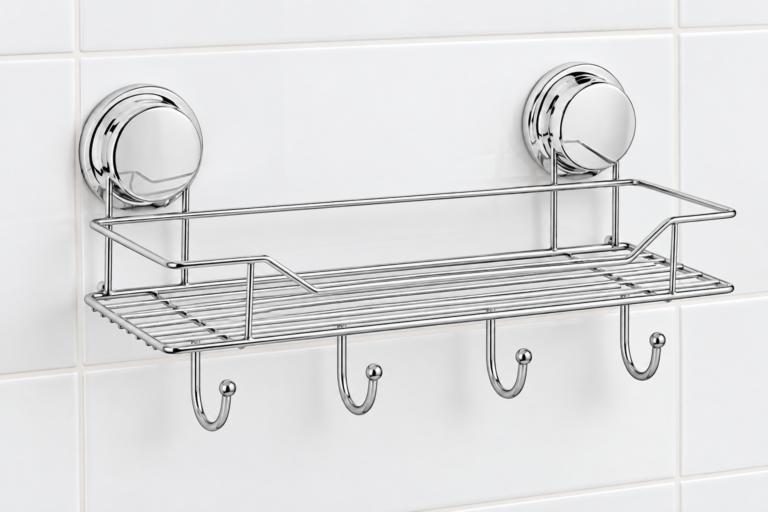
A wall mounted towel rack OEM project may combine a shelf, front towel bar and hooks. Each added feature changes welding sequence, access and packaging space. Approve the complete configuration rather than evaluating a simplified frame and assuming later accessories will have no effect.
How should samples, installation and packaging be approved?
Samples should be approved through drawing review, dimensional inspection, representative installation and packaging review. A signed appearance sample alone does not confirm that the mounting system is practical or that the finished rack will arrive without damage.
Begin with the current drawing revision. Check overall dimensions, bracket spacing, mounting-hole locations, shelf level, hooks, bars and included hardware. Mark any temporary sample component so it is not accidentally treated as the production standard.
Install the sample on a representative test surface using the intended method. Observe whether tools can reach the screws, brackets sit flat, covers close correctly and the rack can be leveled. If several wall substrates matter, define separate evaluation arrangements with appropriate technical input.
Any load or pull requirement should be project-specific. Agree the fixture, wall construction, anchors, loading method, duration and acceptance criteria before relying on a result. Koitor does not invent a universal load figure for towel shelves, shower baskets or custom wall racks.
Check ordinary use interactions. Place representative items on the shelf or in the basket, hang a towel if relevant and confirm access to hooks and lower tiers. Review whether products can be removed without striking the wall or another part of the rack.
Packaging should protect the visible finish and control movement of brackets and installation hardware. Screws and anchors should be counted, bagged and separated from polished or coated surfaces. Projecting hooks and corners may need localized protection to prevent carton puncture or contact damage.
For a rack with detachable components, create a clear packing and assembly sequence. A knock-down arrangement can reduce package size, but it also adds hardware, instructions and user assembly. Compare the shipping benefit with the risk of missing parts, incorrect assembly or visible joint variation.
Koitor samples usually take about 5–7 working days after design and materials are confirmed, depending on the project. Bulk production usually takes around 4–6 weeks depending on quantity, complexity, material availability, finish and packaging. Confirm the actual schedule after the approved sample and order details are clear.
For shower-zone products, the fabrico de cestos de duche personalizados page provides a relevant product-development path for baskets, corner racks and multi-tier storage designs.
What should buyers include in an RFQ and approval checklist?
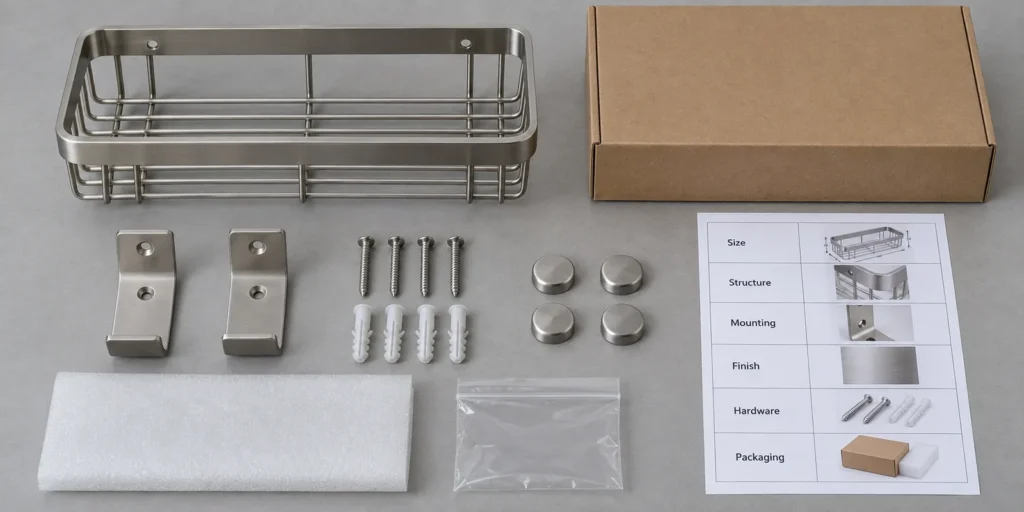
A useful RFQ should define the complete wall-mounted rack and clearly separate fixed requirements from options that the manufacturer may propose. This allows suppliers to quote the same scope and gives the buyer a practical approval record.
Send drawings in a readable format and include photographs or a physical reference when available. Identify the target market, application, expected order quantity and whether the product belongs to an existing range. A reference sample should be accompanied by written notes explaining what to copy and what to improve.
Ask suppliers to list assumptions. One quotation may include installation anchors and individual protective packing, while another may include only the metal rack. Compare material, finish, mounting kit, sample work, packaging and inspection scope before comparing unit price.
MOQ at Koitor can start from 100 pieces depending on structure, material, finish and packaging. A new bracket, custom color, printed packaging or special accessory may affect practical quantities. Confirm each item during quotation rather than treating the starting quantity as a fixed promise.
Buyer checklist for a wall-mounted bathroom rack
- Product type: towel shelf, wall basket, shower rack, corner rack or combined organizer.
- Application: expected contents, installation zone, water exposure and target market.
- Dimensões: overall size, usable area, tier spacing, wall clearance and critical hole spacing.
- Material: grade or material family by main rack, bracket, cover and fastener.
- Estrutura: wire or tube sizes, supports, weld locations, hooks and detachable parts.
- Mounting: wall substrate assumptions, exposed or concealed fixing, bracket design and tool access.
- Fasteners: screw, anchor, set-screw and cover specifications with required quantities.
- Conclusão: color, gloss, texture or brushing direction and approved appearance reference.
- Sample review: drawing revision, installation method, dimensional checks and open evaluations.
- Embalagem: finish protection, accessory bag, corner protection, instructions and carton arrangement.
- Commercial plan: sample quantity, target MOQ, forecast, packaging versions and desired schedule.
Before placing an order with a wall mounted bathroom rack manufacturer, convert approved comments into the drawing, finish reference, accessory list and packaging instruction. The purchase order should reference those revisions so verbal decisions are not lost between sampling and production.
Additional recursos para a aquisição de acessórios de casa de banho can help buyers connect this checklist with material, welding, finish, sample and shipment-inspection decisions.
Frequently asked questions about wall-mounted bathroom racks
These answers cover common sourcing questions about wall brackets, samples, anchors and custom production. Final specifications should still follow the product and intended installation environment.
Should the factory choose the wall anchors?
The factory can discuss a proposed fixing set, but anchor suitability depends on the wall substrate and project requirements. Buyers should identify target wall types and obtain suitable technical confirmation rather than treating one generic anchor as universal.
Is concealed mounting better than exposed screws?
Neither is automatically better. Concealed mounting can create a clean appearance, while exposed screws can simplify access and inspection. Compare bracket complexity, installation steps, tool access, cover fit and the target retail position.
How can buyers prevent uneven wall brackets?
Define critical bracket and hole dimensions, use a production fixture where appropriate and inspect the wall-facing surfaces. The installed sample should sit flat and level using the agreed mounting method before bulk production.
Can an existing bathroom shelf be copied from a physical sample?
A physical sample can support development, but the buyer should identify dimensions, material, finish, mounting details and any requested changes. The supplier should create a controlled drawing so the quotation and production do not depend only on visual interpretation.
What should be included with a wall-mounted rack?
Confirm the rack body, brackets, decorative covers, screws, anchors, set screws, tools if required, instructions and packaging. The exact set varies by project, so list every component and quantity on the approved record.
How should load capacity be confirmed?
Use a project-specific evaluation with agreed wall construction, anchors, mounting method, loading procedure and acceptance criteria. Do not rely on an unsupported generic load claim or a demonstration performed under different conditions.
Develop a wall-mounted bathroom rack with Koitor
Koitor Hardware is a family-owned custom metal hardware factory supporting small-batch OEM production for bathroom and home storage products. Buyers can send a drawing or physical sample for practical review of the rack structure, brackets, welding, finish, installation accessories and packaging before quotation.
Need a Practical Wall-Rack Structure Review?
Send Koitor your rack drawing or sample, wall-mounting concept, material, finish, packaging idea and target quantity. Our team can review manufacturability and the sample-development scope before quotation.
OEM / MARCA PRÓPRIA
Transforme este guia de fornecimento num resumo do produto
Indique o produto pretendido, as dimensões, o acabamento, a quantidade a encomendar e os requisitos de embalagem. A sua equipa receberá uma análise prática da viabilidade de fabrico antes da apresentação do orçamento.
 English
  Español
  Português
  Français
  Deutsch
  العربية