
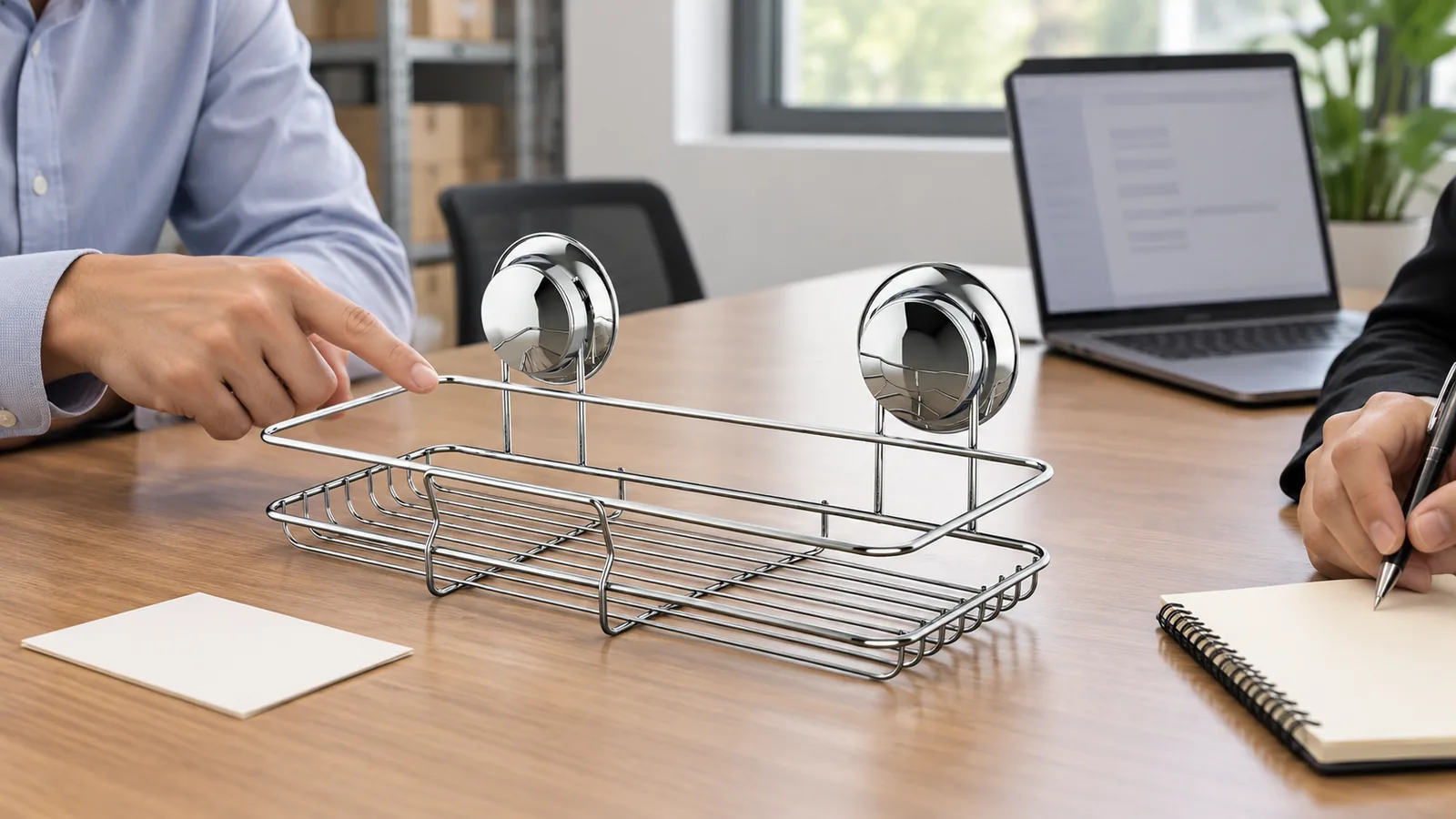
AI supplier meeting notes become useful for a metal-hardware RFQ only when a buyer can trace each important field back to a photograph, sample, written message, or confirmed conversation. AI can help sort scattered notes into a draft product brief, but it cannot turn an unclear photo into a verified dimension or a supplier statement into an approved specification. Keep confirmed buyer requirements, supplier claims, direct observations, and unknowns separate; then have a person review the brief and ask the supplier to confirm unresolved items in writing.
Why do supplier meeting notes become unreliable after a trade fair?
A sourcing conversation often produces several different records at once: a business card, a product photograph, a sample label, a voice memo, a handwritten price, and a follow-up message. The difficulty is not simply that the buyer has too many files. It is that each file may refer to a different supplier, product version, finish, price basis, or stage of discussion.
A photograph of a chrome basket may show the general product family but not its material grade, wire diameter, coating or plating route, load requirement, packaging, or price. A handwritten number may be a target price, an indicative offer, a price for a different quantity, or a figure without a confirmed currency or delivery basis. If these fragments are merged into one fluent summary without source labels, uncertainty can disappear from view.
This is where AI-assisted notes can help—and where they can mislead. A tool may group similar notes, transcribe a voice memo, or draft a follow-up list. It may also misread handwriting, connect a photograph to the wrong card, infer a missing product detail, or present a plausible but unconfirmed field as fact. NIST describes confabulation as generated output that can confidently present erroneous information; the practical implication for sourcing is to treat extracted values as unverified until checked against their original evidence. See the NIST Generative AI Profile. Well-managed AI supplier meeting notes therefore preserve the path from each proposed field back to its source.
The objective is therefore not “automate the supplier meeting.” It is to make the buyer’s next decision more orderly: identify the right supplier and product, preserve what was actually said or seen, expose missing information, and prepare questions for a formal RFQ.
What should the buyer capture before asking AI to organize the record?
Start with the source material rather than a blank prompt. Give each meeting a unique record ID and keep original files unchanged. A simple file naming pattern can connect the meeting date, supplier or booth identifier, product reference, and sequence number without putting sensitive customer information in a public filename.
For each note, preserve enough context to answer: who or what does this record refer to, when was it captured, and what was the source? Useful source labels include:
- Buyer requirement: a feature or condition the buyer requested.
- Supplier statement: something the supplier said, still awaiting confirmation where needed.
- Direct observation: something the buyer personally saw on a sample, label, or process.
- Document evidence: a value shown in a quotation, drawing, sample card, or other record.
- Unknown / to confirm: information that was not provided or cannot be read reliably.
Keep the original photograph, scan, recording, or message attached to the extracted note. If a transcription is corrected, retain the correction history or at least mark who checked it and when. Do not silently replace the original with a cleaned-up AI summary. This matters when a later question arises about which sample, finish, quotation, or revision the buyer discussed.
Before recording people or uploading files, follow the buyer organization’s consent and confidentiality rules. Review the chosen service’s data-handling terms before submitting confidential drawings, supplier information, pricing, contact details, or customer requirements. The article does not assume any particular tool or offer legal advice; the buyer’s own policy and contract obligations govern.
How can AI supplier meeting notes become a traceable product brief?
Ask the tool to organize only the supplied material. A restrained instruction is more useful than a request to “complete” missing specifications. For example: “Extract the product and commercial fields from these notes. For every value, cite the source file or timestamp. Separate buyer requirements, supplier statements, direct observations, and unknowns. Do not infer missing technical or commercial details. List contradictions and draft questions for confirmation.”
The output should remain a working record, not the approved RFQ itself. A buyer can use fields such as these:
| Field | Record what is known | Evidence to retain | If missing or unclear |
|---|---|---|---|
| Supplier identity | Name as shown on card or document | Card image, meeting record | Confirm legal/contracting entity separately |
| Product reference | Buyer SKU, supplier code, or temporary ID | Sample photo, label, note | Assign a temporary reference; do not invent a supplier code |
| Variant | Size, shape, finish or mounting form only if stated | Drawing, sample, written statement | Mark “to confirm” |
| Buyer requirement | Requested outcome or market need | Buyer brief or meeting note | Ask the product owner |
| Supplier statement | What the supplier represented | Quote, email, or attributed note | Request written confirmation |
| Price basis | Amount, currency, quantity, and stated basis | Original quotation or note | Do not compare until the basis is clear |
| MOQ and timing | Only the stated value and scope | Supplier document or confirmation | Ask whether it applies to the exact variant |
| Next action | Owner, question, and due date | Follow-up log | Assign a buyer-side owner |
A source reference should be specific enough for another team member to locate the evidence—for example, “IMG-07, close-up of finish sample” or “voice note 03, 01:24–01:41.” If the source is a document, record its name and revision. If two sources disagree, retain both and flag the conflict. Do not allow the AI summary to choose which one is correct.
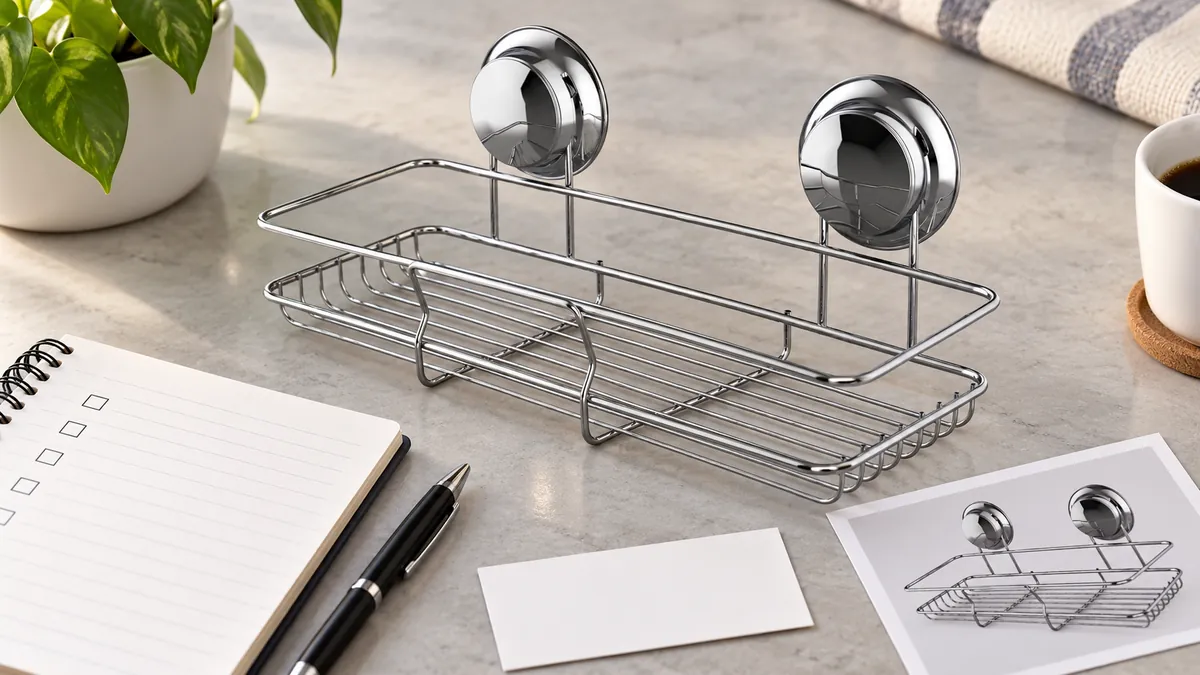
The brief should distinguish fields that are merely useful for triage from fields that must be confirmed before quotation. A readable photograph can help identify a basket’s broad shape; it usually cannot establish hidden material grade, exact dimensions, coating specification, production capacity, or the conditions behind an indicative price. The buyer should turn each unknown into a question instead of accepting a generated guess.
How does a buyer verify the product and commercial details?
Review the brief against original sources in a fixed order. First match the meeting record to the supplier and product. Next compare every extracted product descriptor with the sample, drawing, label, or supplier message. Then review each commercial field against the actual quotation or written confirmation. Finally, ask the supplier to resolve missing or conflicting details.
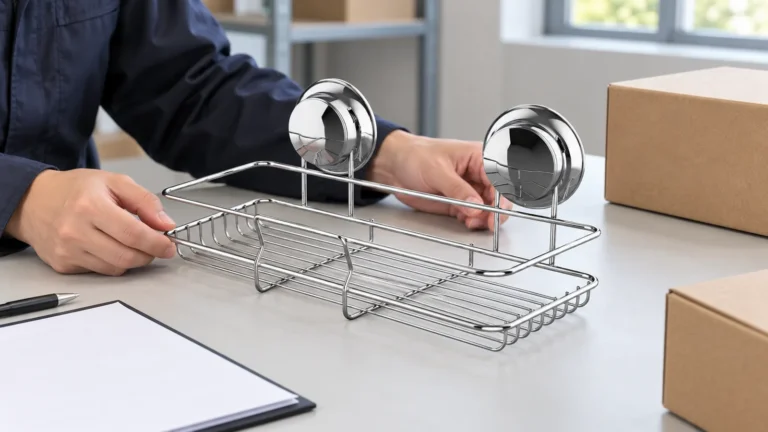
For a metal bathroom basket, verification may include the product’s width and depth, basket profile, mounting method, finish requested, packaging expectations, target quantity, and the exact sample or drawing revision. These are examples of questions, not claims about the pictured product’s specification. Record the buyer’s own requirement separately from what the supplier offered. “Buyer requests a polished finish” is different from “supplier says polished finish is available,” and both are different from “sample visually appears polished.”
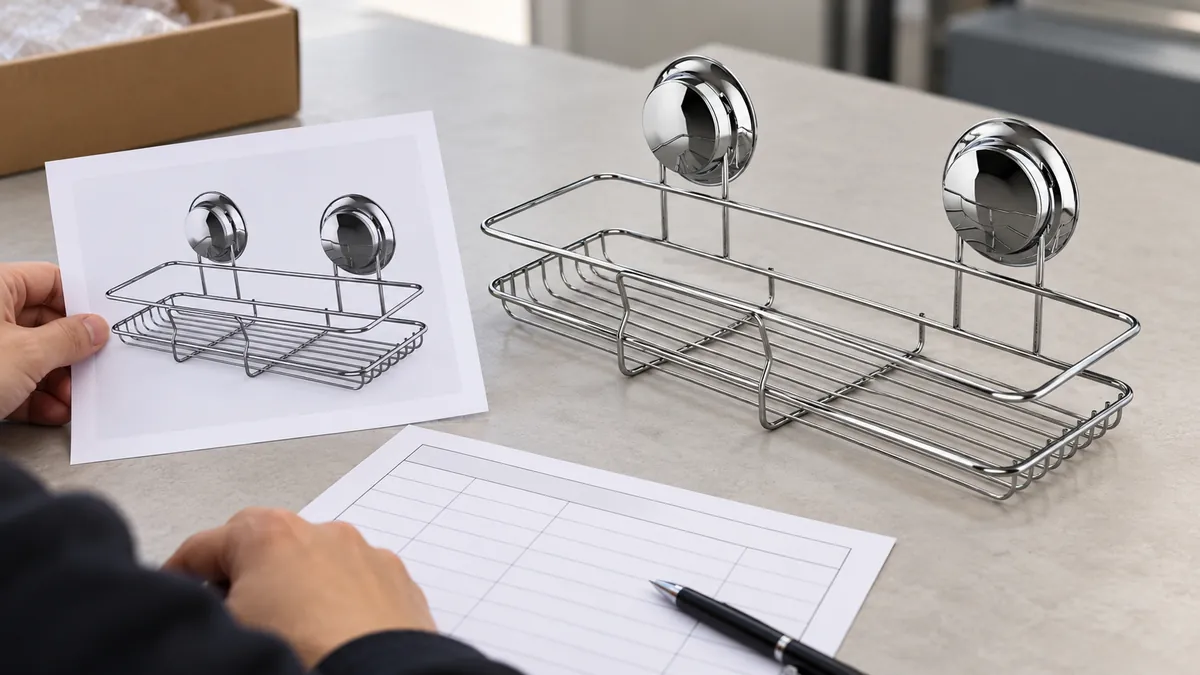
For a quotation, confirm the currency, quantity breaks, included packaging, tooling or sample charges if applicable, delivery basis, validity period, and the product variant covered. If a supplier gives a verbal estimate, record it as an estimate and request the formal written quotation before using it for a purchase decision. A value without a clear basis is not comparable with another supplier’s value.
For a product sample, give it a temporary buyer reference and connect it to the meeting record. If the sample is changed later, create a new revision or sample record rather than overwriting the earlier one. A photo can document visible appearance and geometry; it does not prove a material grade, coating performance, load capacity, or compliance result. Those require the relevant specification, records, or tests that the buyer actually needs.
What controls prevent AI from inventing or merging details?
Use a “no source, no confirmed value” rule. If a required field cannot be tied to an original record, leave it blank or label it “to confirm.” Ask the system to report uncertainty and conflicts instead of smoothing them into a single narrative. Then apply a human review checklist:
- Supplier match: Does each photo, card, note, sample, and quotation belong to the same meeting record?
- Product match: Is the model or variant confirmed, or only visually similar?
- Source match: Can each extracted value be found in its cited source?
- Status match: Is the value a buyer requirement, supplier claim, observation, documented value, or unknown?
- Revision match: Does the drawing or sample reference match the revision being quoted?
- Commercial basis: Are currency, quantity, packaging, delivery basis, and validity explicit?
- Open questions: Are contradictions and missing fields visible and assigned to someone?
- Approval boundary: Has the responsible buyer approved the brief before it becomes an RFQ or order record?
When a value affects fit, finish, cost, compliance, packing, or delivery, ask the supplier to confirm it through an authorized written channel. Maintain a link to that confirmation. AI can draft the question, but the supplier’s response and the buyer’s approval remain separate evidence.
A meeting brief is not supplier verification, a contract, an approved drawing, a final quote, a sample approval, or compliance evidence. Each has its own decision and authorization step. A concise review workflow reduces clerical confusion; it does not remove buyer responsibility or replace the company’s purchasing controls.
Which mistakes create avoidable sourcing problems?
The first mistake is treating a smooth summary as a reliable record. Fluent language can hide missing sources, uncertain transcription, or details combined from two suppliers. Require source references at field level, not only a bibliography at the bottom.
The second is treating an image as a technical specification. A product photograph may help identify an item and record visible features, but perspective, reflections, and image resolution can obscure dimensions, material, joining methods, finish composition, or internal construction. Use a controlled drawing, approved sample, or written specification for the decision that requires it.
The third is combining buyer needs and supplier claims into one “agreed specification.” A buyer request is not agreement; a supplier statement is not necessarily a document; an observed sample may not represent production intent. Preserve the distinction until both sides confirm the same revision and scope.
The fourth is comparing unqualified commercial notes. A price without currency, quantity, packaging, tooling, delivery basis, and validity can look attractive but may refer to a different offer. Keep each amount attached to its original quote or a carefully labeled note and wait for comparable written offers before choosing.
The fifth is allowing temporary meeting labels to become permanent product codes. If a buyer assigns “Basket A” to organize photos, mark it as a buyer reference. Do not imply the factory assigned or approved that number. Likewise, never infer supplier capability, certification, production capacity, material grade, or lead time from an AI-generated summary.
Finally, do not upload sensitive material merely because an AI tool accepts it. Buyers should check internal policy, consent requirements, supplier confidentiality terms, and provider data handling. If the material cannot be shared under those rules, use an approved offline method or organize non-confidential fields without uploading the source.
What should an importer check before turning notes into an RFQ?
Use this checklist to decide whether the brief is ready to become a formal request:
- The supplier or meeting identity is matched to the right original records.
- Every product image or sample has a buyer reference and, where available, a supplier code.
- The buyer’s desired configuration is written separately from the supplier’s offer.
- Dimensions, material, finish, mounting and packaging are confirmed or explicitly listed as open questions.
- The relevant drawing, sample photo, revision and any later change are linked.
- Each supplier statement is attributed and supported by a source.
- Quote values include the basis needed for a like-for-like comparison, or are clearly marked incomplete.
- MOQ, sample needs, tooling questions, lead-time scope and next actions are confirmed or assigned.
- Contradictions remain visible until a person resolves them.
- The responsible buyer has reviewed and approved the brief.
- Confidential records were handled under the organization’s policy and the selected service’s terms.
The same discipline applies whether the notes came from a trade fair, video call, factory visit, email thread, or physical sample review. A buyer may also use a drawing-focused handoff when the concept is ready: AI product render to manufacturer: what hardware buyers should send covers a different, earlier stage. For formal product requirements, see the guide to sheet-metal RFQ file formats and what buyers should send.
Perguntas frequentes
Can AI turn a supplier meeting into a complete RFQ automatically?
It can help draft a structured brief from supplied notes, but missing specifications and commercial terms still need confirmation. A buyer should trace critical values to source evidence and approve the RFQ before sending it.
Can a product photo confirm material grade or dimensions?
Usually not. A photo can document visible appearance and may help match a product reference, but it does not establish hidden material composition or precise measurements. Use the relevant specification, controlled drawing, sample measurement, or supplier documentation.
Should supplier claims be included in the buyer brief?
Yes, when attributed and marked as claims or statements. Keep them distinct from buyer requirements and independently verified documents. The distinction helps the buyer prepare follow-up questions without implying that an unconfirmed statement has been accepted.
Is AI meeting output suitable as a purchase or compliance record?
Not by itself. Follow the organization’s approval and records process. The AI output may help organize evidence, but it should not replace the approved quotation, contract, drawing, sample sign-off, test record, or compliance assessment.
If your product idea, drawing or sample raises a manufacturing question, share the confirmed requirements and identify what is still open. Koitor Hardware is a family-owned custom metal hardware factory focused on bathroom and home storage products; a clear buyer brief helps a factory discussion stay tied to the intended product and revision.
Prepare a clearer hardware RFQ
Share the product reference, confirmed requirements, target finish and open questions for a project-specific manufacturing discussion.
OEM / MARCA PRÓPRIA
Transforme este guia de fornecimento num resumo do produto
Indique o produto pretendido, as dimensões, o acabamento, a quantidade a encomendar e os requisitos de embalagem. A sua equipa receberá uma análise prática da viabilidade de fabrico antes da apresentação do orçamento.


 English
 Español
 Português
 Français
 Deutsch
 العربية