
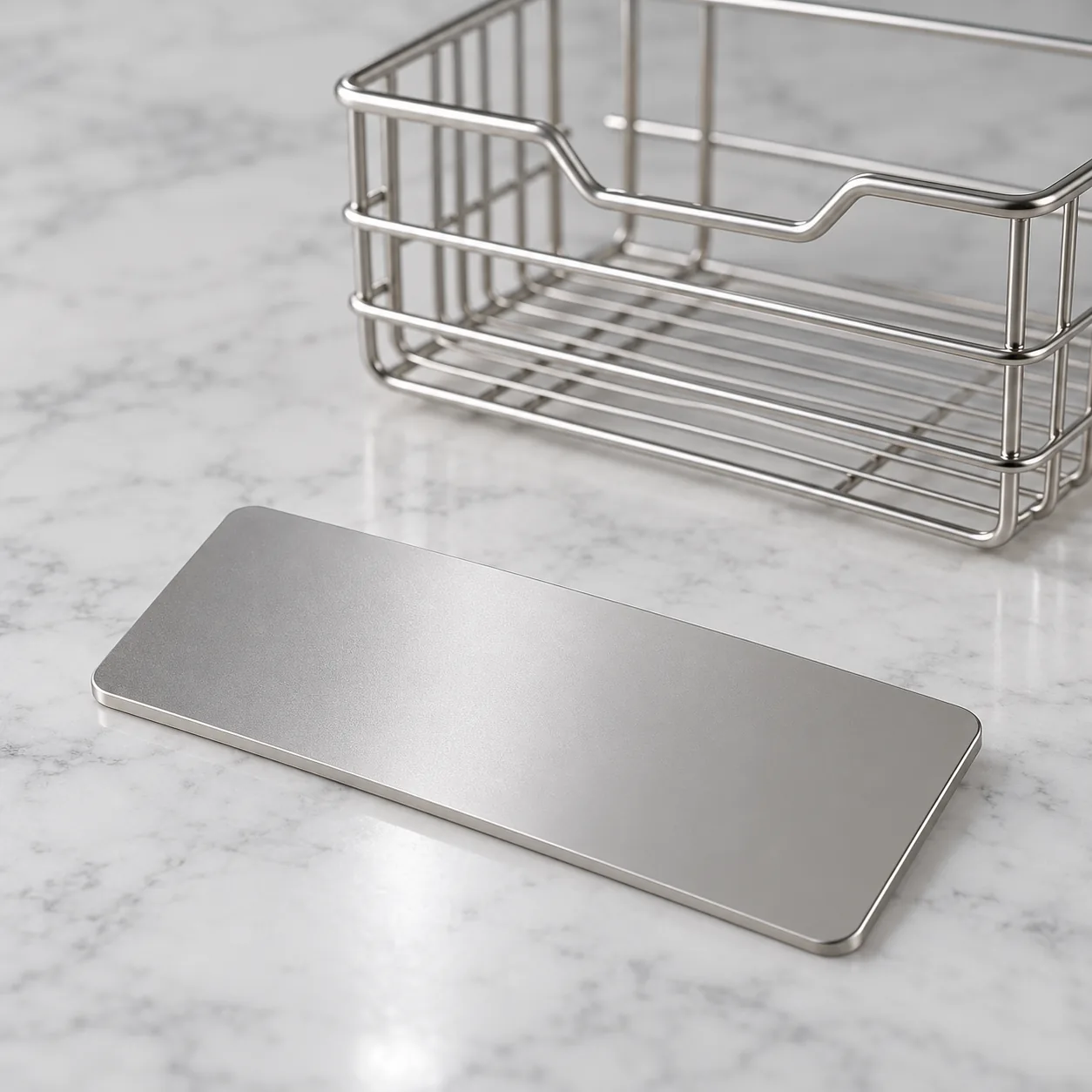
Aluminum filiform corrosion coating cut edges deserve separate review because a threadlike corrosion pattern can develop beneath an organic coating, often beginning where coating protection is weak or damaged. For buyers sourcing coated hardware, the useful decision is to identify the substrate and finish system, inspect the actual edge geometry on a representative sample, and agree what evidence supports the product’s intended environment. Do not assume that every aluminum component has this risk, that all underfilm marks have the same cause, or that a steel pretreatment route applies to aluminum.
This article addresses a focused buyer question: how should an importer assess cut edges on coated aluminum hardware? Industry guidance on filiform corrosion of aluminum describes threadlike underfilm attack and identifies inadequately protected areas such as cut edges, holes, damage and sharp edges as possible initiation locations. That context informs the sample review; it does not prove that a particular Koitor product uses aluminum or that any finish system is suitable without project testing.
What does filiform corrosion look like beneath a coating?
Filiform corrosion is commonly described as a threadlike corrosion pattern that propagates under an organic coating on a metal substrate. On a coated component, it may appear as narrow tracks, often with a leading head and trailing line, rather than broad uniform discoloration. The appearance can be confused with scratches, coating delamination, residue or other corrosion forms, so buyers should record the observation without diagnosing from a photograph alone.
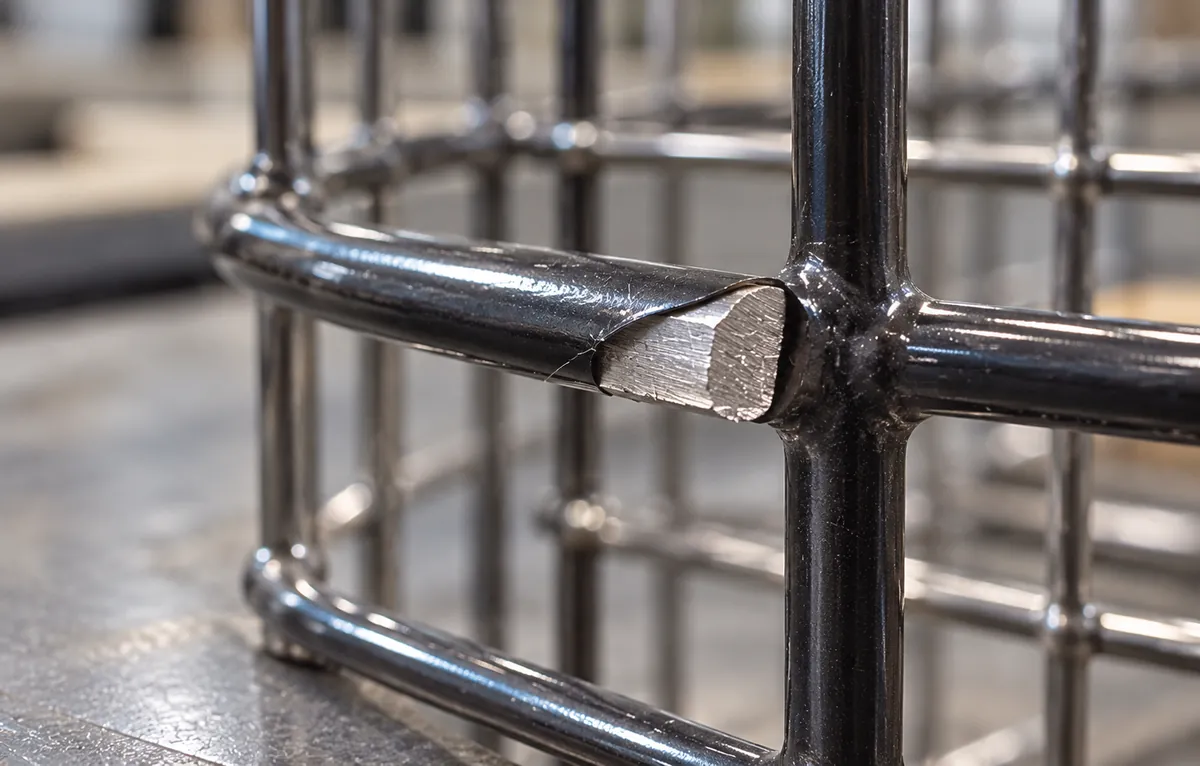
The relevant technical guidance from the Vereniging ION practical recommendations for aluminum notes that the phenomenon can originate where lacquer protection is absent or inadequate, including cut edges, punch holes, damage and sharp edges. That makes edges important to review on panels, brackets and formed accessories. The article uses this as a risk signal for a sourcing conversation, not a guarantee that a given coating will fail.
Aluminum’s oxide behavior and the coating interface differ from coated carbon steel. A bare cut edge does not necessarily corrode in the same manner as steel rusting, and a visible mark under a film is not automatically proof of a specific mechanism. The substrate alloy, pretreatment, coating chemistry, edge shape, handling and environmental exposure all matter. The buyer should ask the supplier to identify which of those conditions are controlled and which remain assumptions.
The product context also matters. A dry indoor cabinet organizer, a bathroom component exposed to condensation and a hardware part used in a more aggressive environment do not share one universal acceptance requirement. Define the intended environment and appearance expectation with the buyer or brand team before selecting a test or coating route.
Why are cut edges a distinct sourcing concern?
A cut edge exposes geometry and substrate conditions that may differ from a broad coated face. Sharp corners, punched openings, cut boundaries and handling marks can be harder to cover consistently, and a coating may thin or retreat at a boundary depending on the process and shape.
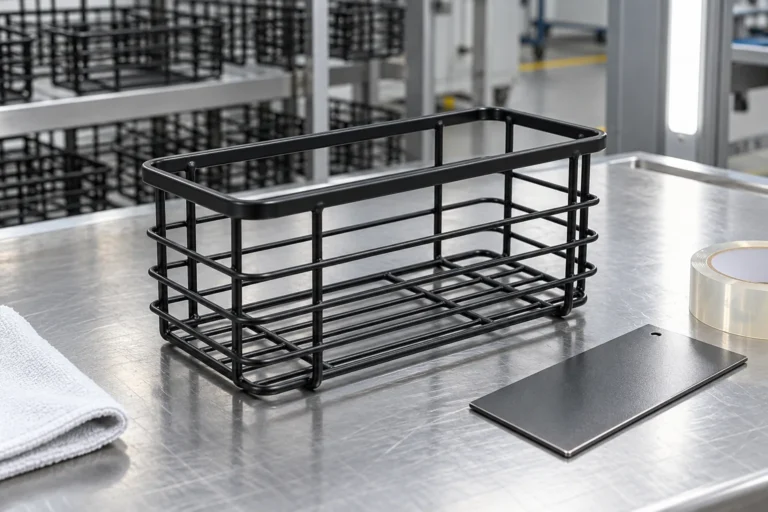
For an importer, this creates a mismatch risk: a supplier may show an attractive flat panel while the finished product contains cut edges, slots, holes or folded returns that determine the visible result. A broad-face sample is useful for color and gloss but may not represent the product’s most vulnerable coating locations. The buyer should inspect edges after the actual cutting, forming, preparation and finishing sequence where possible.
| Product feature | Buyer concern | Exemplos de provas a solicitar | Limit of that evidence |
|---|---|---|---|
| Sheared or laser-cut boundary | Edge coverage and post-cut condition | Finished representative edge and process description | A photograph cannot prove long-term durability |
| Punched opening or slot | Coating continuity around internal perimeter | Sample showing the full hole boundary after finishing | One opening may not represent every geometry |
| Sharp external corner | Thin or discontinuous coating at a small radius | Agreed visual review of corner and adjacent face | Appearance alone does not identify the failure mechanism |
| Handling damage | Local breach or scratch before packing | Packed and unpacked sample comparison if relevant | It does not establish the coating’s original process quality |
For aluminum filiform corrosion coating cut edges, ask the supplier to identify the material and coating as specified, the edge-producing operation, and the point at which the finish is applied. If those details are unknown, do not infer them from a color sample. Use the drawing to mark critical edges and define whether the buyer expects a rounded edge, a particular finish boundary or an agreed treatment.
Which material and finish details belong in the RFQ?
The RFQ should identify the substrate family and surface system when known, then leave unresolved choices visible for supplier review. “Painted aluminum” may be too vague if the buyer expects repeatable edge appearance or environmental performance.
Specify the part material or approved alternatives, the product geometry, whether cutting or punching happens before or after coating, the intended finish and color reference, and the environmental use description. If an external coating standard or test is required by the brand, include the exact requirement and responsible party. Do not state that a generic salt-spray exposure proves filiform resistance unless the applicable method and acceptance criteria actually address the buyer’s question.
Request supplier explanation of the surface preparation and coating sequence at a level appropriate to the project. A buyer can ask how the supplier treats cut boundaries, whether a representative sample includes the same edge geometry, and how process changes are controlled. Detailed chemical recipes or proprietary bath parameters are not automatically needed; the goal is to understand the evidence and responsibility.
For coated aluminum, ask whether the finish system is intended for the specified substrate and product conditions. Do not copy a steel pretreatment specification into an aluminum RFQ without technical review. The buyer should confirm whether edges are deburred or rounded, whether a coating is applied before or after forming, and how the chosen sequence affects the visible boundary.
How should buyers approve a representative sample?
Approve a sample that includes the geometry and process steps relevant to the risk. The sample should have the actual edge types, holes, bends and finish sequence that the production part will use, or clearly document what differs.
Mark the areas to inspect on the drawing and sample. Review the full perimeter of cut edges, inside openings and corners, not just the largest flat face. Record visible defects, coating discontinuities, handling marks and dimensional condition separately. If an underfilm track or edge defect is observed, preserve the part and record the first observation date and conditions; avoid sanding or cleaning it before the supplier has a chance to inspect.
For a new product, compare more than one sample when the buyer’s approval decision depends on repeatability. The number and inspection plan should follow the project’s risk and order plan, not a universal rule. Retain an identified sample, revision and visual reference so later orders can be compared to the approved condition.
If formal testing is required, specify which question it is intended to answer: coating adhesion, corrosion propagation, appearance after exposure, or another defined concern. Choose a method with a qualified technical partner and do not invent pass criteria. A test result from a different coating, substrate, edge shape or exposure cannot automatically be transferred to the commercial part.
How should buyers separate filiform corrosion from other coating failures?
Treat a threadlike pattern as a clue, not a complete diagnosis. Filiform corrosion, general underfilm corrosion, blistering, poor adhesion, contamination and mechanical damage can overlap visually in early photographs. A qualified review may be necessary before changing the specification or assigning responsibility.
Capture the location, direction and extent of the feature; note whether it begins at a cut edge, scratch, punched hole or another discontinuity; and retain the sample. Compare an affected region with an unaffected area on the same part and with the approved reference where possible. Record when the product was coated, packed, unpacked and inspected if that information is available.
Ask the supplier for the actual substrate and coating route, not a broad assurance such as “corrosion resistant.” If the mark appears only after shipping, investigate packaging abrasion and trapped moisture as well as the coating system. If it appears after use, record the environment and cleaning exposure provided by the buyer. Each observation narrows the investigation, but does not independently prove cause.
Avoid immediate rework that hides the evidence. Abrasion, touch-up paint or chemical treatment may change the edge and make a later assessment harder. Agree on containment and sample handling first, then decide whether rework, a process correction, a design change or a different coating route is appropriate.
What can an OEM supplier help buyers resolve?
A custom metal hardware supplier can review the drawing, edge geometry, finishing sequence and sample plan before the buyer locks the production specification. That conversation helps identify where the buyer’s intended appearance and the manufacturing route may conflict.
Koitor Hardware is a family-owned factory focused on bathroom and home-storage hardware. Its approved capabilities include metal forming, punching, welding, grinding, polishing, powder coating, assembly and packaging preparation. Current aluminum substrate capability and a specific filiform-resistant coating system are not confirmed by those general capabilities; buyers should ask about the actual project route before attributing an aluminum performance claim to Koitor.
Early review can clarify whether a part needs a different edge radius, revised opening geometry, a modified finish boundary or additional sample evidence. Any change should be checked against function, appearance, assembly and cost. Do not promise that a design adjustment eliminates corrosion; verify the effect on a representative sample and through suitable technical evidence where required.
For small-batch OEM development, share the drawing revision, finish target, critical edge locations and intended market environment. If the supplier proposes a material or finishing alternative, ask for a sample and a written description of the difference from the approved baseline. That makes a future change review easier to manage.
What should the edge approval checklist include?
Use this checklist before approving coated aluminum hardware or an adjacent product that contains a coated cut edge:
- Is the substrate and finish system identified, or clearly marked as an open decision?
- Does the sample include the actual cut, punched and formed edges?
- Are visible and concealed edges distinguished on the drawing?
- Is the edge preparation and finishing sequence described by the supplier?
- Are appearance, adhesion and corrosion questions separated into suitable evidence requests?
- Does any required test match the actual material, coating, geometry and intended exposure?
- Is the approved sample identified by date, revision and condition?
- Are changes to material, edge geometry, pretreatment or coating routed for reapproval?
- Has the part been protected from packaging damage that could compromise the edge?
Where the buyer cannot specify a performance threshold for aluminum filiform corrosion coating cut edges, ask a qualified technical partner to help define the test and acceptance basis. Record the agreed uncertainty rather than asking a supplier to guarantee an unmeasured result.
Perguntas frequentes
Does every coated aluminum cut edge develop filiform corrosion?
No. Edge condition is one possible initiation factor, but substrate, preparation, coating system, environment and damage also matter. Assess the actual product and avoid treating risk guidance as a prediction for every part.
Is filiform corrosion the same as rust on steel?
No. Filiform corrosion is a threadlike underfilm corrosion pattern associated with coated metal surfaces. The substrate and mechanism differ from ordinary red rust on carbon steel.
Can a flat coated coupon approve a part with many slots and edges?
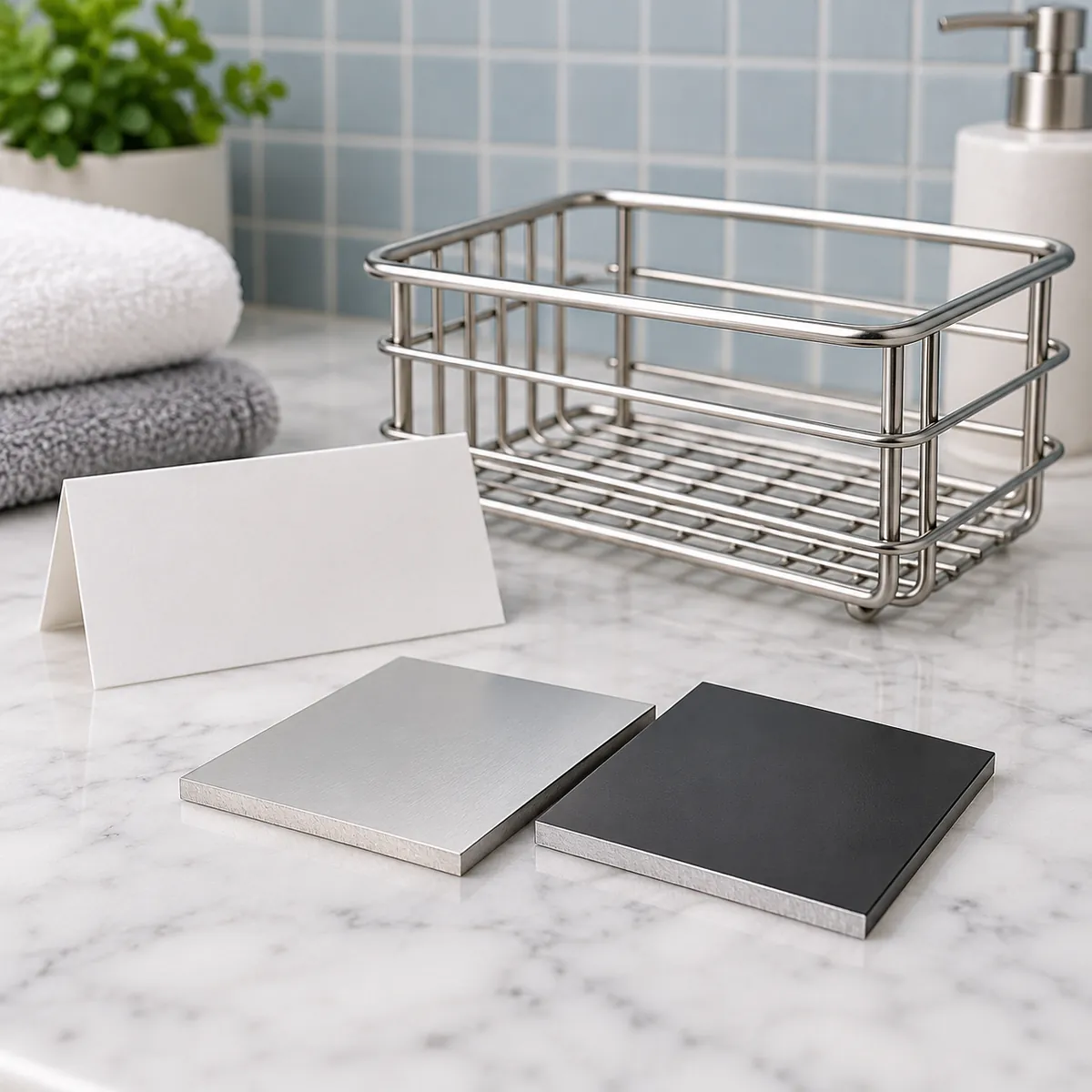
It may help review color or broad-face finish, but it does not represent every cut boundary. Include the real edge geometry or explain the difference in the sample approval record.
Does a salt-spray report prove resistance to filiform corrosion?
Not automatically. The method, substrate, coating, specimen preparation and acceptance criteria must match the buyer’s question. Ask a qualified technical partner to determine whether the evidence is relevant.
Should buyers specify aluminum if the current supplier mainly makes steel hardware?
Only after the intended product and sourcing route are confirmed. Adjacent material knowledge is not proof that a supplier currently processes a particular aluminum grade or coating system.
Review a Coated Edge Before Sample Approval
Send Koitor the drawing or sample, material preference, finish target, critical edge locations and the buyer evidence you need. Our team can discuss manufacturability and small-batch OEM options after the project route is confirmed.
OEM / MARCA PRÓPRIA
Transforme este guia de fornecimento num resumo do produto
Indique o produto pretendido, as dimensões, o acabamento, a quantidade a encomendar e os requisitos de embalagem. A sua equipa receberá uma análise prática da viabilidade de fabrico antes da apresentação do orçamento.

 English
  Español
  Português
  Français
  Deutsch
  العربية