

For a hardware importer comparing consignment vs wholesale inventory, the central question is when the parties treat stock as received, sold, owned, and payable—not simply where the cartons are stored. In a conventional wholesale purchase, the buyer purchases a defined quantity under the agreed sale terms; in a consignment arrangement, a supplier or consignor may retain ownership of stock held by another party until a contract-defined event such as resale or use. The exact transfer, risk, invoicing, tax, accounting, and insurance consequences depend on the contract and applicable rules. Buyers should map each event with commercial, finance, and legal advisers before receiving stock. A consignment vs wholesale inventory comparison should identify the transfer and settlement event for each model.
How does consignment vs wholesale inventory change ownership?
Physical location does not by itself tell a buyer who owns inventory. A carton can be at an importer’s warehouse while the importer holds it for a supplier, or it can be stock purchased by the importer and held for resale. The practical distinction lies in the agreement governing title or ownership, permitted handling, sale or consumption, loss, returns, records, and settlement. Labels such as “consignment,” “vendor managed,” and “stocking arrangement” may be used differently by different businesses, so the buyer should document the actual mechanics rather than rely on a commercial label.
In a wholesale purchase, a distributor usually orders a quantity for its own account at an agreed price and then resells it through its channel. The buyer’s obligations and the point at which title, risk, invoicing, and payment arise are still controlled by the contract and governing rules. A wholesale invoice or delivery note may support the transaction record, but the document name alone does not settle every legal or accounting question. Define which order terms and documents control.
In a consignment arrangement, the consignor places stock with a consignee for storage, distribution, or sale while the parties define a later event that triggers settlement or changes ownership. The supplier may retain ownership until a consignee sells an item, uses it in production, or reaches another agreed trigger. Those are possible contract structures, not universal rules. U.S. trade guidance describes consignment in the context of exporters and foreign distributors and highlights the importance of the agreement and insurance; it should not be treated as a rule for every country or transaction. See the U.S. Trade Finance Guide discussion of consignment.
A useful buyer test is to ask five independent questions: Who owns each unit today? Who has physical custody? Who may move, relabel, consume, or sell it? Which event creates a payable? Who bears the agreed loss or damage exposure? A buyer who cannot answer each question may be confusing warehouse operations with commercial rights. Store staff need handling instructions; accounts payable needs settlement triggers; finance needs records that support its required reporting; and the supplier needs visibility into stock attributed to it.
| Dimensão | Wholesale stock (typical pattern) | Consignment stock (possible pattern) | What the buyer must document |
|---|---|---|---|
| Stock location | Buyer, distributor, or third-party warehouse | Consignee or third-party warehouse | Approved locations and movement process |
| Physical receipt | Recorded against an order and delivery | Recorded as stock held for the consignor | Receipt quantity, condition, date, and owner reference |
| Sale or use | Buyer resells stock already purchased | Contract-defined event may trigger settlement | Event definition and data source |
| Payment | According to purchase terms | According to agreed settlement cycle or trigger | Price basis, timing, deductions, and dispute process |
| Unsold stock | Buyer generally manages purchased stock | Return, transfer, or aging treatment must be agreed | Permission, condition, costs, and cutoff |
| Loss or damage | Contract and applicable rules govern | Contract and applicable rules govern | Responsibility, evidence, insurance, and notice |
The table is a practical comparison, not a legal classification. A cross-border agreement may combine features or use special terms. The importer should have qualified counsel and accounting professionals interpret the actual documents for the relevant jurisdiction and entity structure.
Why do receipt, sale, and settlement need separate records?
A single “received” status cannot answer whether an item has been sold, consumed, returned, transferred, damaged, or settled. The warehouse event shows that goods arrived and were counted or inspected. It does not necessarily determine ownership, tax treatment, payable timing, or the recognition method used in an entity’s accounts. The sale record may occur later in a distributor’s order system, while a settlement statement may aggregate several transactions. Each record answers a different operational question.
Start with the inbound receipt. Record the supplier or consignor, purchase order or consignment reference, item code, product revision, quantity, packaging unit, warehouse location, receipt date, and visible discrepancies. If cartons arrive with mixed SKUs, record the quantity by SKU rather than relying on an outer carton total. If the stock is held on behalf of another party, the warehouse system should preserve that ownership or status dimension in a way staff can see during picking. A generic “available” flag can cause inventory to be treated as freely owned stock when it is not.
Next, record each movement. Transfers between locations, samples taken for photography, units used for demonstrations, damaged units, returns, and write-offs need a reference and an authorized reason. Without a movement trail, a supplier statement can disagree with warehouse counts even when neither party intended to misstate anything. Movement controls should prevent a worker from moving the stock into the wrong bucket simply because the item code matches another product.
Then record the commercial trigger. A retailer order may be placed, picked, shipped, delivered, invoiced, or accepted at different times. Which event creates the payable depends on the contract and the parties’ process; do not assume that “sale” means the same thing in every channel. The agreement should say what data source establishes the trigger, the time zone or period cutoff if material, and how cancellations, refunds, returns, and partial deliveries affect settlement.
Finally, generate a settlement statement that ties the event data back to the stock records. It may list opening balance, receipts, sales or consumption, returns, adjustments, closing quantity, price basis, deductions, and amount due. Whether these fields are required for a particular arrangement depends on its scope, accounting policy, and local requirements. The operational benefit is traceability: both parties can follow a number from a received carton to an outbound transaction and a settlement calculation.
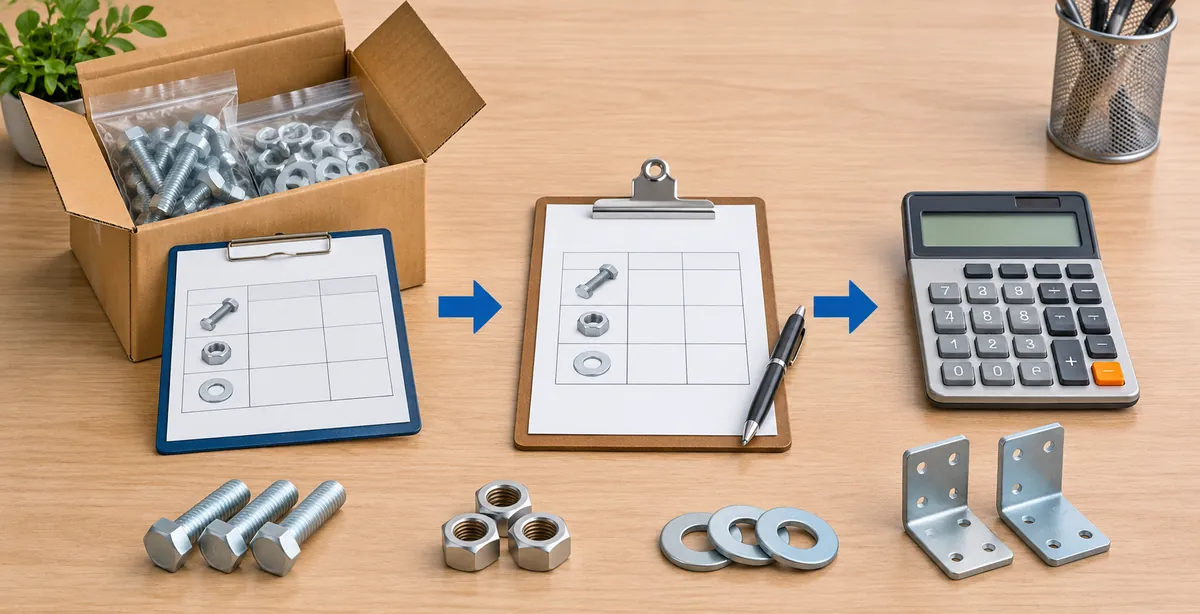
A system can help keep these steps distinct. Microsoft Dynamics 365 documentation describes an owner dimension and an ownership-change event for its manufacturing consignment workflow; that example is specific to its software and scenario. Odoo’s documentation shows owner-assigned stock and receipt/sale movements in its own inventory process. Neither product’s interface is a universal accounting rule, nor should a retail sell-through trigger be copied from a manufacturing example without review. Their useful lesson is narrower: identify the owner and record events explicitly. Refer to the actual versioned guides for Microsoft’s consignment inventory workflow e Odoo’s owner-assigned stock documentation.
What should the agreement define before consigned hardware arrives?
Do not treat a warehouse procedure as a substitute for commercial terms. Before the first shipment, the parties should define the products covered, item identifiers, approved locations, ownership treatment, permitted handling, sales channels, settlement trigger, reporting frequency, price basis, dispute method, unsold-stock treatment, and responsibility for inventory records. The purpose is not to create a one-size-fits-all contract. It is to reveal open decisions before physical stock creates mismatched expectations.
Scope the stock precisely. Identify product code, description, revision, finish, pack quantity, and any included components that distinguish one SKU from another. If the arrangement covers multiple variations, state how substitutions or engineering changes are approved and how a revised item is distinguished from remaining old stock. A title such as “bathroom basket” may be too broad if the parties handle several sizes, finishes, or mounting kits. Product identity should connect the contract schedule, warehouse record, order channel, and supplier statement.
Define where stock may be held and what transfers are allowed. Can the consignee move stock to a secondary warehouse? Can it send units to a retailer, marketplace fulfillment center, sample studio, or another company in its group? Who approves each move and which record must be provided? Do not assume that normal wholesale practices automatically apply when the stock belongs to another party. Third-party logistics providers may need clear instructions on owner, status, access, insurance, reporting, and release authority.
Describe how sales, use, and consumption are counted. For an importer selling hardware to retailers, a sale may be recorded when an order is shipped or when another agreed event occurs. For a manufacturer consuming supplied components, the trigger could be a production issue or another event. These examples differ; the parties should select their actual trigger and specify how partial shipments, cancelled orders, customer returns, and stock transfers are reflected. A settlement cycle should set a cutoff and a time for correcting errors.
Agree the price and adjustment basis. A settlement may use a fixed wholesale price per unit, an agreed fee, a deduction schedule, or another commercial formula. Define which currency, exchange reference if any, taxes or duties, freight, handling, shrinkage, promotions, and returns are included or excluded. Do not assume a supplier’s invoice, a marketplace report, and a warehouse export use the same unit of measure or cutoff. Reconciliation works only when both sides know how values are calculated.
Set out unsold-stock rules. Specify whether aging stock can be returned, transferred, discounted, repackaged, or destroyed; who must authorize the action; what condition is acceptable; and who bears transport or handling cost under the agreement. If the stock is discontinued or revised, state how the old and new revisions are separated. These decisions are particularly important for metal hardware assortments because visually similar parts can still differ in finish, mounting components, or packaging.
Clarify who insures and who must notify whom after loss, damage, or a count variance. Insurance coverage and risk allocation are contract and jurisdiction questions. A generic statement that a consignee “keeps stock safe” may not tell either party what evidence, notice period, or claim process applies. The parties should obtain professional advice on the actual arrangement and avoid publishing or relying on a rule inferred from a software workflow or exporter guide.
How can importers reconcile consigned inventory reliably?
Reconciliation compares the physical or system balance with the movement and settlement records over a defined period. Begin with an agreed opening balance by item and location. Add documented receipts, subtract sales or consumption according to the trigger, add accepted returns, and separately list transfers and adjustments. The closing balance should be explainable without blending stock with a similar buyer-owned SKU. If there is an unexplained variance, record it as unresolved until the parties agree on evidence and disposition.
Use a stable item identity. For each SKU, connect the supplier’s code, importer’s code, pack quantity, product revision, finish, and label. If case packs and eaches are mixed, convert them using an agreed unit of measure and verify the conversion at setup. Barcode scans can reduce manual entry but do not resolve a wrong mapping or mislabeled carton. The master-data owner should approve code changes, aliases, and replacement identifiers.
Set a practical cycle-count method. The appropriate frequency depends on inventory value, transaction volume, storage conditions, access, and the agreement. A fast-moving item may need more frequent checks than a slow-moving sample part. The count should distinguish unopened cartons from open packs, document the counted unit, and record who counted, when, where, and whether the count was blind or compared with the expected quantity. Do not call one count method universally adequate.
Define discrepancy thresholds and escalation. A variance may result from scanning errors, a unit conversion, unrecorded samples, returns awaiting inspection, damage, or an incorrect opening balance. The first response should be to trace transactions and recount the relevant location or SKU—not automatically assign fault. Keep the original record, corrected record, reason, evidence, and approval. If the amount is material or the cause is unclear, stop adjustments until the responsible parties review the evidence.
Use a settlement statement that can be reproduced. Each line should reference an item and transaction period, and any lump-sum adjustment should link to its supporting calculation. When a retailer report is the source, retain the report identifier or export date and note how cancellations and returns were handled. Where the supplier and importer use different systems, agree on an exchange file or report format before the first monthly close. A spreadsheet can be sufficient for a small program if it has controlled access, version history, and a named owner; an enterprise system does not guarantee clean data by itself.
Protect commercial and personal information. Reports may contain customer names, order references, pricing, or other sensitive data. Share only what is needed to establish the stock movement and settlement. Agree who can view the data, how it is transferred, how long it is kept, and whether identifiers can be masked. These decisions should follow the parties’ policies and applicable privacy or confidentiality requirements.
Which records help explain a variance?
A focused review may need the receipt record, carton or SKU labels, warehouse movement history, order or shipment transaction, return disposition, count sheet, and settlement calculation. Not every discrepancy requires every document. Begin with the item and period that do not reconcile, then request the smallest set of records that can explain the difference. If a unit was used as a sample or for photography, make sure that use has a traceable record rather than treating it as a sale by default.
How does consignment affect stock planning and replenishment?
Consignment can change the timing of a buyer’s cash commitment, but it does not remove the physical work of forecasting, storing, counting, and replenishing products. A buyer still needs a plan for lead time, demand variability, product revision, storage capacity, and stock aging. The arrangement may also shift inventory financing or operational risk between the parties, so both sides should compare total costs and responsibilities rather than focusing only on when the invoice is paid.
Set a reorder trigger that reflects usable stock, not just the system total. Exclude units reserved for orders, held for inspection, damaged, or in transfer. If consigned inventory is available to fulfill new sales, the responsible party should know who authorizes replenishment and who owns a forecast that proves inaccurate. Establish minimum and maximum quantities only after reviewing demand and lead-time evidence for the specific SKU.
Consider product lifecycle and assortment changes. A revised bracket, finish, fastener pack, or retail label may make existing stock unsuitable for new orders even when the core product looks similar. Define what happens to old revision stock when the buyer changes a drawing or packaging requirement. If a product is sold as a set, confirm whether every component is available at the same time and whether the set is physically prepacked or assembled by a downstream fulfillment partner.
Storage conditions and packaging should match the item. Metal components can be scratched or mixed when cartons are opened and replenished. Labels should identify SKU, revision, unit of measure, and ownership status where needed. If products require inner packs, dividers, or protective materials, define the acceptable condition for returned or rehandled stock. These details are operational rather than legal, but they influence whether stock remains saleable.
Compare scenarios. A wholesale purchase may simplify ownership records but require the importer to fund inventory earlier. A consignment model may defer a payment trigger but bring additional reconciliation, reporting, system, contract, and insurance work. A smaller trial order or scheduled delivery may address the same cash-flow concern with a simpler stock record. Each option depends on supplier capacity, buyer demand, order economics, and the parties’ willingness to administer the process.
Ask the supplier for realistic supply information before making a stock promise. Lead times, production sequence, packaging, and reorder quantities must be confirmed for the actual product and order. A supplier should not promise to replenish consigned inventory unless that capacity and commercial scope are agreed. Koitor’s established profile supports custom manufacturing discussions for bathroom and home storage hardware; it does not establish that Koitor offers consignment stocking or assumes local inventory ownership.
What mistakes should buyers avoid?
The first mistake is treating a consignment label as a complete process. A contract may use the word while leaving unresolved whether the trigger is shipment, sale, consumption, or another event. Ask for the event sequence and records before the first receipt. If the parties cannot explain a normal transaction from inbound carton to settlement, the process is not ready.
The second mistake is combining physical inventory and financial ownership into one status. Warehouse employees need an accurate location and condition; finance may need ownership and valuation records; accounts payable may need a payable trigger. These attributes should connect but need not be represented by one field. A warehouse count does not independently prove the ownership or accounting treatment.
The third mistake is assuming that a system example is a universal policy. Microsoft’s manufacturing workflow and Odoo’s inventory documentation show how a particular software design can record owners and movements. Their field names, invoice events, valuation behavior, and processes are version-specific. Use them as implementation examples, then have qualified professionals decide how the actual commercial model should be recorded.
The fourth mistake is settling from a sales report without reconciling units and returns. A retailer file may report orders, shipped items, delivered items, or net sales. It may use a product identifier different from the warehouse code and may update after the agreed cutoff. Define the source, event, unit, and correction window; preserve the report version used for each settlement.
The fifth mistake is ignoring unsold and obsolete stock. If the assortment changes, stock can remain physically present but no longer match the current label, mounting kit, or finish. Define how to handle aging, returns, repacking, and engineering changes before they occur. Do not wait until a product launch is delayed to decide who approves a substitute.
The sixth mistake is overlooking third-party custody. A marketplace fulfillment center, logistics provider, or distributor’s branch may hold goods, but each location needs the correct stock status, access permissions, movement visibility, and incident process. Confirm that the arrangement and records can follow stock across the actual route.
The seventh mistake is assuming that delayed payment equals free inventory. Consignment may introduce costs for reporting, insurance, stock counts, storage, handling, settlement disputes, or returns. Compare those administrative costs and risks with other purchasing arrangements. The best commercial structure is the one whose responsibilities both parties can perform and verify.

What should a hardware importer check before agreeing to a stock model?
Use the checklist below as a discussion guide for purchasing, operations, finance, and counsel. It does not replace professional contract, tax, or accounting advice.
- Identify each product, SKU, finish, revision, pack size, and supplier code.
- State who owns the inventory at each stage and which event changes that status.
- Record receipt date, condition, quantity, location, and reference documents.
- Define permitted storage locations, transfers, samples, use, and sales channels.
- Select the system or file that establishes receipt, sale, consumption, return, and adjustment.
- Specify the settlement trigger, cutoff, frequency, price basis, currency, and dispute path.
- Define cycle counts, discrepancy review, correction approvals, and record retention.
- Agree how returns, cancellations, discounts, damaged goods, and obsolete revisions are treated.
- Clarify insurance, loss notification, and third-party custody responsibilities with qualified advisers.
- Decide whether a wholesale order, smaller trial quantity, or staged delivery would meet the need with less administration.
Is consignment the same as vendor-managed inventory?
No. The terms can overlap in commercial discussions but describe different aspects. Consignment concerns an agreed ownership and settlement structure; vendor-managed inventory generally refers to a replenishment or planning responsibility. A program could combine features, but the buyer should define ownership, replenishment authority, order creation, and payment separately.
Does physical receipt mean the importer owns the stock?
Not necessarily. Receipt proves that goods arrived into a location or custody process. Whether title or ownership transfers depends on the agreement and applicable law. The importer should record receipt while maintaining the correct stock status and seek professional interpretation of the contract.
When is payment due for consigned hardware?
There is no universal trigger. The parties may define a sale, consumption, periodic settlement, or another event, subject to their contract and applicable rules. State the exact data source, cutoff, returns treatment, and correction process before stock arrives.
Can accounting software decide whether stock is consigned?
Software can record ownership dimensions, movements, and settlement data, but configuration does not establish the legal or accounting treatment by itself. Have the responsible finance and professional advisers map the contract to the system’s workflow and confirm that reports support the required records.
Does Koitor offer consignment stock for importers?
The reviewed company profile confirms Koitor’s OEM manufacturing focus for bathroom and home storage hardware, not a consignment inventory program. Buyers should ask about the specific order and commercial scope rather than assume a stock-holding arrangement is available.
Trabalhe com a Koitor Hardware
For bathroom or home storage hardware, share the product drawing or sample, item configuration, packaging requirements, and forecast scope for a manufacturing discussion. Any inventory ownership, local stocking, settlement, or consignment arrangement must be confirmed separately and is not implied by Koitor’s OEM manufacturing profile.
Discuss Your Hardware Project
OEM / MARCA PRÓPRIA
Transforme este guia de fornecimento num resumo do produto
Indique o produto pretendido, as dimensões, o acabamento, a quantidade a encomendar e os requisitos de embalagem. A sua equipa receberá uma análise prática da viabilidade de fabrico antes da apresentação do orçamento.


 English
 Español
 Português
 Français
 Deutsch
 العربية