
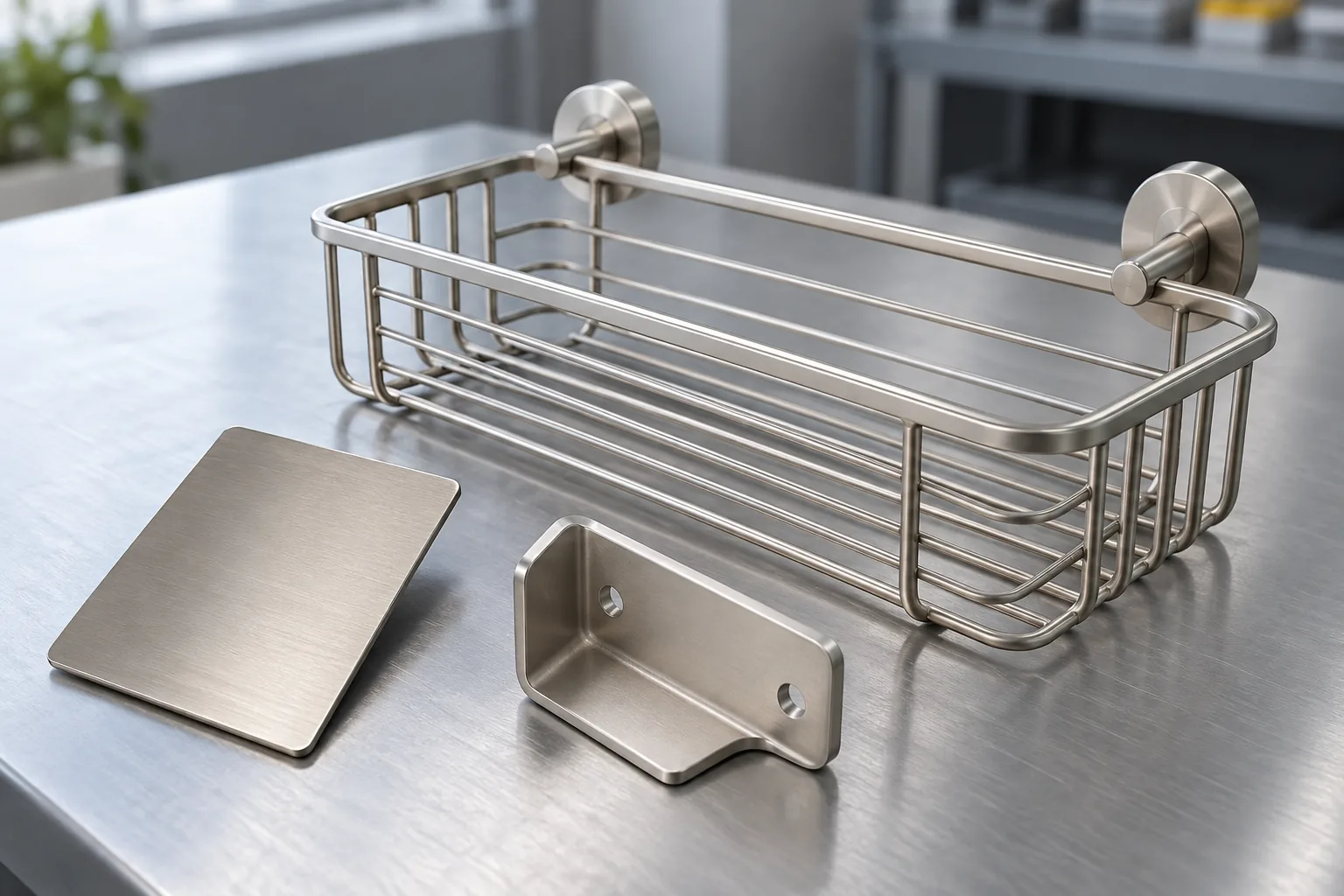
For coated bathroom hardware, electroless nickel phosphorus content corrosion hardness should be treated as a deposit-identification and evidence question, not as a single “better coating” choice. The buyer should identify the part, substrate, intended service, and required finish outcome, then ask the finishing supplier to state the proposed nickel-phosphorus deposit class and the evidence that applies to the production part. Phosphorus content, process condition, thickness, substrate preparation, and any post-heat treatment can all affect properties; none should be inferred from a bright appearance or the generic phrase “nickel plated.”
This is a buyer guide for a purchased or subcontracted finish on a relevant metal component. It does not imply that every bathroom basket or rack needs electroless nickel, or that Koitor operates a nickel-plating line. Koitor’s role is metal hardware manufacture and buyer coordination; the specialist finisher should confirm the proposed coating and provide the process-specific records. For a product made from wire, formed sheet, welded brackets, or a mixed assembly, the requirement must also be tied to the actual component and drawing revision.
Why do phosphorus content and deposit identity matter?
Electroless nickel is produced by chemical reduction rather than by applying external plating current. Engineering deposits commonly contain phosphorus, so the resulting nickel-phosphorus alloy is not one uniform material with fixed properties. ASTM B733 classifies coatings by phosphorus-related type, intended service condition, and post-plating heat-treatment class. Its public summary also explains that deposit properties vary primarily with phosphorus content and subsequent heat treatment, while bath chemistry and use can affect porosity and corrosion resistance. That is why a generic process name is not enough for a controlled purchase specification.
For an importer buying a coated bracket or basket component, the practical risk is a mismatch between what the drawing implies and what the supplier actually deposits. “Electroless nickel” may identify a broad process family, but it does not by itself tell the buyer the deposit composition, the thickness at a critical feature, the preparation applied to the substrate, or whether the deposit has received a heat treatment. If a supplier changes chemistry or post-treatment while preserving the same shorthand finish name, the finished part may no longer match the sample or the intended function.
The buyer’s task is not necessarily to select a phosphorus percentage from a generic chart. It is to state the end-use requirement and require the supplier to identify the applicable specification, deposit type, sampling plan, and acceptance evidence. If a recognized standard is named, the buyer and supplier should consult the current full standard and agree which clauses apply. An abstract or product brochure is not a substitute for the purchased specification or a qualified engineering decision.
For a supplier comparison, the phrase electroless nickel phosphorus content corrosion hardness should lead to four separate checks: deposit identity, stated service condition, property test basis, and representative part evidence. Keeping these checks distinct prevents a single chemistry label from standing in for the entire approval package.
What should the RFQ identify before a supplier proposes the deposit?
Begin with the actual part rather than the coating label. Include the part number and drawing revision, base material and known condition, geometry, critical faces, assembly interfaces, and any surfaces that must remain uncoated. A wire basket, folded bracket, fastener, and stamped plate can have different access, drainage, fit, and inspection needs even if the buyer calls all of them “bathroom hardware.” Mark recesses, narrow gaps, holes, threads, edges, and contact points that matter to appearance, corrosion exposure, or assembly.
Then describe the intended service and functional goal. Is the coating expected to protect a bought-in component from a defined environment? Is hardness relevant because the surface contacts another part or experiences abrasion? Is appearance the main concern? Does the component sit in a humid bathroom, or is it inside a dry cabinet? Avoid translating “bathroom use” into a universal corrosion rating: cleaning chemicals, water exposure, ventilation, handling, and maintenance differ. The buyer should state realistic conditions and have the qualified supplier determine whether the proposed deposit is appropriate.
If the request refers to hardness or corrosion resistance, define what evidence would be meaningful. A hardness value without a test method, location, coating condition, and post-treatment context can be difficult to compare. Likewise, a corrosion statement without a specified method, exposure, specimen, acceptance rule, and report scope can be ambiguous. Agree whether evidence is a supplier certificate, a test report, a production sample inspection, or an independent laboratory report. Do not assume the supplier owns an accredited lab or that a test on a flat coupon represents every complex finished part.
| RFQ input | Por que é importante | Provas a solicitar | Buyer caution |
|---|---|---|---|
| Part identity and revision | Keeps the finish proposal tied to the actual geometry | Drawing or marked sample with revision and critical surfaces | A generic product photo may omit recesses and interfaces |
| Substrate and preparation | Base material and pretreatment affect coating formation and adhesion | Material identification and supplier’s stated preparation route | Do not infer the substrate from color or magnet response alone |
| Deposit identity | “Electroless nickel” alone does not define composition or treatment | Applicable specification, deposit type/class, and supplier declaration | Do not select a class from an unverified marketing chart |
| Thickness and locations | Total build can affect fit, and accessible areas may differ from recesses | Agreed measurement method, locations, and representative sample | One easy-to-reach reading may not represent a critical feature |
| Hardness or corrosion objective | Makes the performance claim testable and relevant | Method, condition, acceptance rule, and report scope | A claim is not comparable without method and conditions |
| Change control | Prevents unapproved changes to the accepted finish | Notification and reapproval triggers for chemistry, treatment, or source | “Same finish name” does not prove identical process conditions |
How should buyers interpret phosphorus, hardness, and corrosion claims?
Treat each property as conditional on the proposed deposit and its process history. Phosphorus content is one descriptor of the deposit, but it is not an isolated guarantee of corrosion performance or hardness. Substrate condition, cleaning and activation, bath condition, porosity, thickness, part geometry, and post-plating heat treatment can matter. Even when a supplier states a composition range, the buyer still needs to know how it is established, whether the statement applies to the delivered lot, and what the acceptance tolerance means under the governing specification.
Hardness claims require similar discipline. Ask whether the claim is for the coating or a heat-treated deposit, how it is measured, what indentation or test method is appropriate for the layer thickness and substrate, and which sample represents the production route. A thin coating can be influenced by the substrate and test setup. The buyer should not compare numbers from different methods or treatment conditions as if they were interchangeable. Where hardness is not a functional requirement for the product, adding an arbitrary limit can increase cost without improving the buyer’s decision.
Corrosion protection also cannot be read from phosphorus content alone. ASTM B733’s public scope identifies service-condition categories and thickness requirements, but selecting a category requires the actual service and the full standard. The public summary notes that solution chemistry and use can affect porosity and corrosion resistance. For a coated bathroom rack component, the buyer should define the exposure and appearance expectations, then align the supplier’s proposed deposit, thickness, and verification method to those conditions. A salt-spray duration, if used in a project, should not be turned into a direct prediction of years in a bathroom.
Ask the finisher to explain the chain: proposed deposit identity → relevant process controls → measured or qualified evidence → acceptance decision. If any link is missing, record the gap instead of silently filling it with an assumption. For example, a quotation may state “high-phosphorus electroless nickel” but omit the applicable classification, test method, and whether that description applies to the actual production lot. The next step is a clarification question, not an unreviewed guarantee.
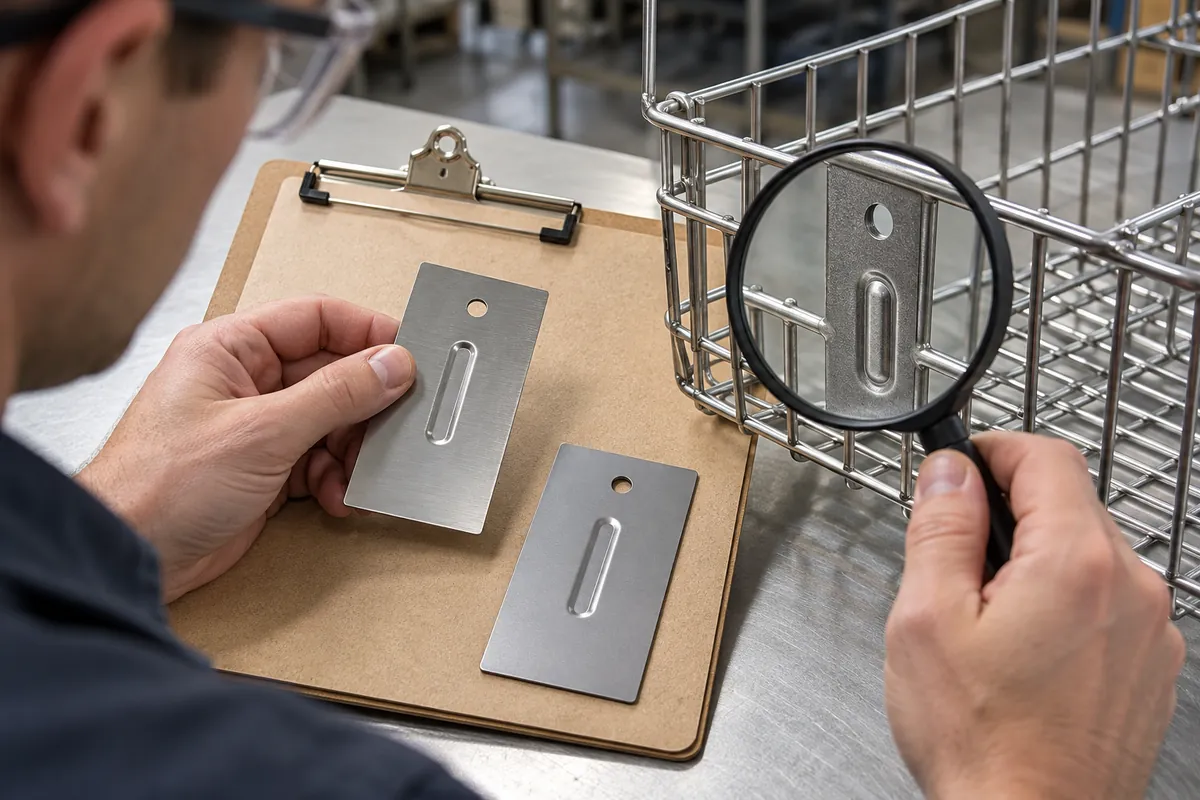
What sample and supplier records support an approval?
Use a sample plan that connects the evidence to the production part. A flat test coupon can help a supplier monitor a process, but it does not necessarily reproduce solution access, surface condition, edges, welds, recesses, or drainage on a formed basket bracket. If the feature matters, include a representative component or a deliberately selected sample location and have the supplier explain what the sample can and cannot demonstrate.
Before sample approval, record the part number, drawing revision, substrate, coating supplier, process route, stated deposit specification, thickness requirement, measurement locations, and any post-treatment. Label sample pieces so the approved reference is traceable. Preserve a control sample when practical. At receipt inspection, confirm that the lot paperwork refers to the same part and finish definition. If the certificate uses a supplier-specific product name, cross-reference it to the agreed requirement rather than assuming the name is self-explanatory.
The evidence package may include a supplier declaration of deposit identity, measurement records for agreed locations, method and instrument details, a test report when one is required, and a clear statement of deviations. The appropriate package depends on risk and purchase scope. A routine decorative component may not need the same qualification depth as a functional engineering part. Conversely, a buyer should not accept a broad corrosion or hardness promise when the requirement is critical and the supplier has supplied no corresponding method or report.
Separate approval evidence from ongoing lot control. A first sample shows whether a defined configuration is acceptable at that point; it does not guarantee that every future batch used the same bath condition, source, or treatment. Specify which process changes require notification and reapproval. Examples may include a change to coating source, deposit type, pretreatment, post-heat treatment, rack orientation, or an alternate substrate. Ask the finisher to identify relevant changes rather than inventing an exhaustive technical list without supplier input.
Which options should a buyer compare?
The useful comparison is not a league table of low-, medium-, and high-phosphorus deposits. Such labels can conceal differences in the applicable standard, chemistry control, substrate, treatment, and intended service. Instead, compare proposals against the product-specific requirement and evidence plan.
| Decision point | Proposal A: specified deposit with lot evidence | Proposal B: generic electroless-nickel description | Buyer decision |
|---|---|---|---|
| Deposit identity | Names the applicable specification/class and any relevant treatment | Uses a broad finish name only | Prefer the proposal that can be checked against the drawing and purchase order |
| Property claim | Connects hardness or corrosion claim to a method and condition | Gives a property adjective or unsupported number | Request method, sample basis, and acceptance rule before comparison |
| Geometry | Identifies representative surfaces or part features | Relies on a generic flat coupon | Decide whether the actual recess, edge, or interface needs separate evidence |
| Change control | Defines source/process changes requiring review | No change notification is described | Add a practical notification and reapproval clause |
| Commercial scope | Separates included documentation and optional testing | Leaves evidence responsibility unclear | Compare total cost only after scope and acceptance are aligned |
If both suppliers claim compliance, compare the exact editions, classes, methods, and sampling responsibilities. If one proposal is less documented, do not automatically reject it; ask whether the missing information can be supplied at a reasonable cost and whether the risk warrants it. The goal is a purchase decision that can be repeated, not paperwork for its own sake.
What should change control and incoming inspection cover?
The purchase specification should identify the approved deposit definition and the documents due with each delivery, when applicable. At incoming inspection, check lot identity, paperwork completeness, visible condition against the agreed sample, and any measurements assigned to the buyer. A receiving check cannot independently verify every chemical or mechanical property unless the buyer has the method, equipment, and qualified personnel. Put specialist testing responsibilities with a competent supplier or laboratory and define how results are reported.
When an appearance difference appears, first separate cosmetic variation from process identity and functional acceptance. Compare the part with the approved reference under consistent lighting and handling. If the discrepancy could indicate a changed deposit, source, or treatment, hold the lot and ask for traceable clarification. Do not use polishing or rework to hide an unknown condition without the responsible technical approval, because rework can alter dimensions or expose the substrate.
For repeat orders, preserve the accepted sample and its metadata: drawing revision, substrate, supplier, deposit definition, relevant treatment, and acceptance evidence. A sample without that context is only a visual reference. If the product design or supplier changes, review whether the original approval still applies. This discipline is particularly useful where the coated part is one element in a larger rack or accessory assembly and a fit or appearance change could affect the finished pack.
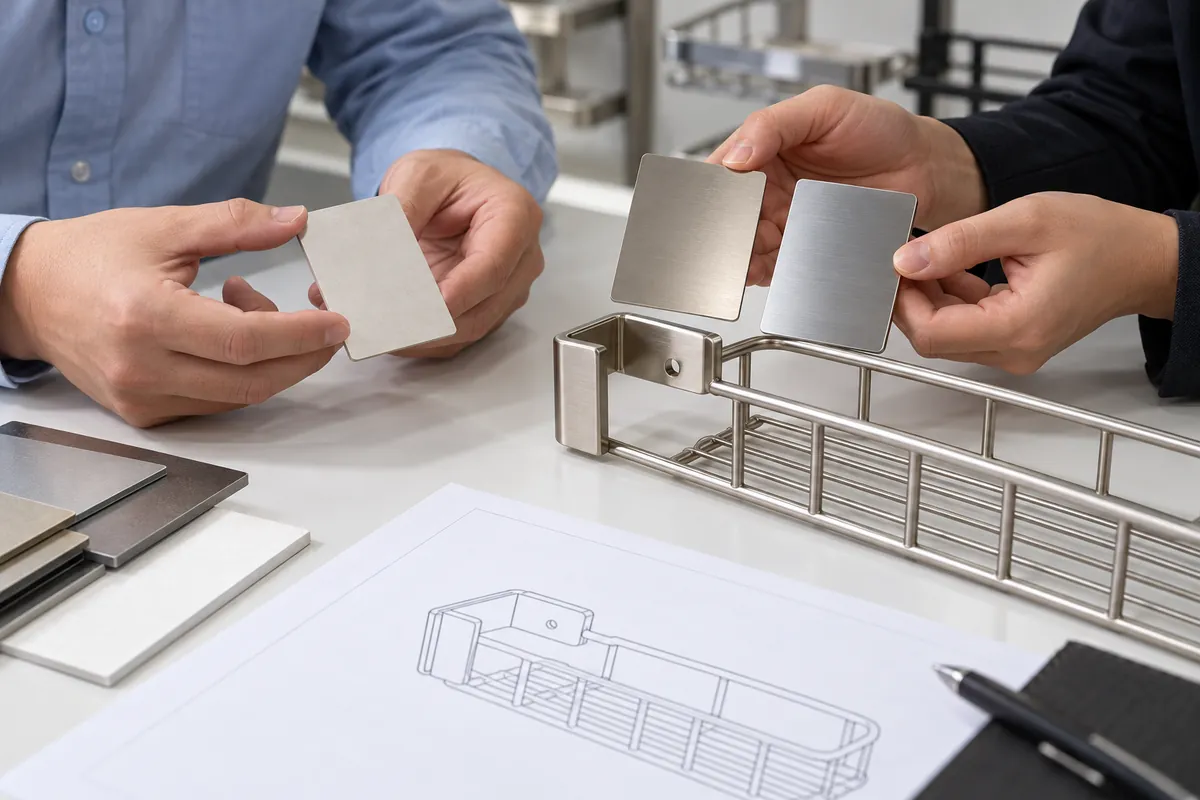
Buyer checklist and common questions
Before approving an electroless nickel proposal for hardware, confirm the part and drawing revision; base material and preparation assumptions; the named deposit specification and classification; whether a post-treatment applies; critical surfaces and thickness locations; the meaning of any hardness or corrosion claim; and the method, sample, and acceptance rule behind each claim. Also identify who provides the evidence, which changes require notification, and how an unapproved deviation is handled.
Does a phosphorus label prove corrosion resistance? No. It helps identify deposit composition, but corrosion behavior also depends on process condition, substrate, porosity, thickness, exposure, and any treatment. Require evidence aligned to the product requirement.
Should every bathroom rack specify electroless nickel? No. Finish selection depends on design, environment, appearance, cost, and intended function. A buyer should compare appropriate finish systems with qualified suppliers rather than adopt a process because it sounds more technical.
Can a flat coupon qualify a recessed bracket? It can provide useful process evidence, but it may not represent the geometry or solution access of the finished component. Decide whether a representative part or critical-feature sample is needed.
Can hardness or corrosion values from two suppliers be compared directly? Only when the methods, sample conditions, coating definition, and acceptance basis are sufficiently aligned. Otherwise request clarification before ranking proposals.
What if a supplier will not disclose bath chemistry? Buyers may not need proprietary formulation details. They do need an agreed deposit identity, process-control evidence, test scope, and change notification appropriate to the risk. If those cannot be provided, escalate the qualification decision.
A practical approval decision
For an OEM or private-label hardware program, the strongest specification is not necessarily the longest one. It is the one that names the purchased part and revision, states the required outcome, identifies the deposit class and treatment basis, and makes the supplier’s evidence and change responsibilities explicit. A sound electroless nickel phosphorus content corrosion hardness review ends with evidence that can be traced to the approved component and production route. Use the current full standard where a standard is selected; public summaries are useful for orientation but do not establish every acceptance clause.
Koitor can coordinate custom metal hardware development from buyer drawings or samples and help clarify the component, fit, finish appearance, and packaging context. Specialist coating selection and performance substantiation remain with the qualified finishing source and the buyer’s technical approval process. To review a bathroom or home-storage hardware drawing, sample, finish proposal, or OEM requirement, contacte a Koitor or learn about custom OEM home-storage hardware development.
Review a Finish Specification Before Production
Share the drawing revision, substrate, sample, intended service, and finish evidence requirements. Koitor can review the fabricated component and assembly context; the appointed finishing specialist should confirm the deposit and performance evidence.
OEM / MARCA PRÓPRIA
Transforme este guia de fornecimento num resumo do produto
Indique o produto pretendido, as dimensões, o acabamento, a quantidade a encomendar e os requisitos de embalagem. A sua equipa receberá uma análise prática da viabilidade de fabrico antes da apresentação do orçamento.

 English
  Español
  Português
  Français
  Deutsch
  العربية