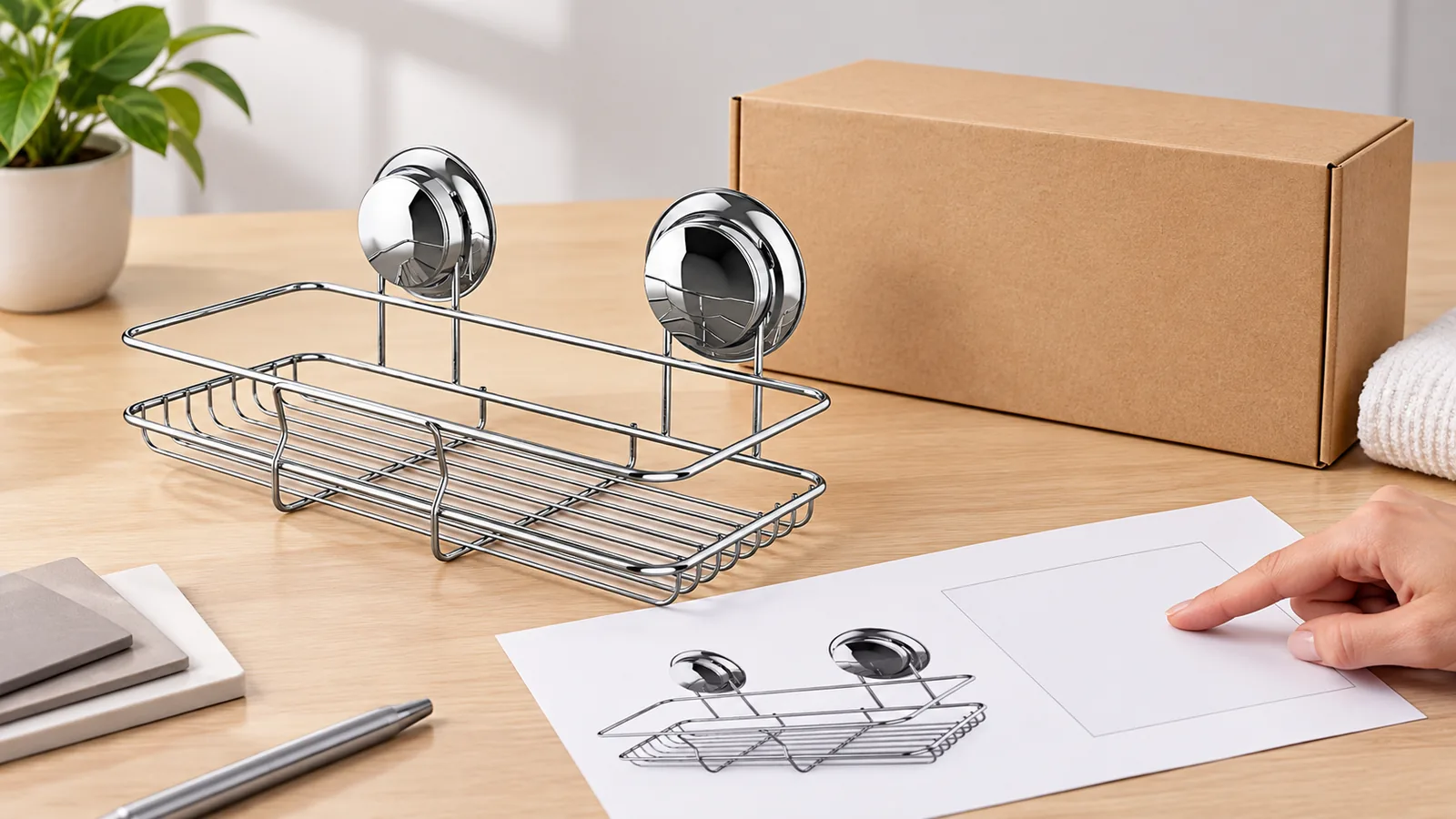
Private label bathroom hardware barcode artwork version control should connect each buyer-approved SKU and packaging file to a dated proof, a first-off physical pack check and the correct inner- and shipping-carton configuration. A product can be correct while its packaging carries an obsolete graphic or code, so a visual product inspection alone cannot release the retail pack. The buyer remains responsible for code assignment and retail-system requirements; a supplier can follow controlled files and verify that the approved version appears on the agreed packaging components.

Why can the right product still ship in the wrong package?
Packaging artwork often changes independently from the metal product. A buyer may revise a barcode, SKU identifier, color, language panel, warning, retailer mark or carton quantity while production is already being prepared. If a previous print file remains in a supplier’s folder or an old proof is mistaken for the approved version, the physical accessory can pass appearance checks while the pack is wrong for the buyer’s receiving or listing workflow. This is a document-control problem as much as a print-quality problem.
A bathroom hardware order may include a unit pack, an inner carton and a master shipping carton. These layers can carry different information and serve different handling purposes. The retail unit may show the consumer-facing product and code; an inner carton may identify a grouping; an outer carton may carry shipping marks or quantities. A buyer should map which file or marking belongs at each level instead of assuming a single artwork PDF governs every surface. Any code relationship must be confirmed by the buyer or the retailer’s authorized system.
Version confusion also happens when a supplier receives files through multiple channels: email attachments, shared folders, messaging apps or a late correction. File names such as ‘final’ or ‘final2’ do not establish approval. A release record should make the current revision unambiguous and identify what it replaces. That discipline is particularly useful when the product itself remains unchanged, because familiar hardware can make an incorrect package look plausible at a glance.
What should an artwork and SKU register contain?
A simple register can link the buyer’s SKU, product configuration, packaging level, artwork file name, revision, approval date and approving buyer contact or role. It should also state whether a proof is pending, approved or withdrawn. Keep the record limited to authorized information and avoid placing confidential commercial data into an uncontrolled worksheet. The critical outcome is that production staff can identify which revision is permitted for a specific order and that old files are clearly superseded.
The SKU-to-code mapping should be supplied or approved by the buyer. Confirm that each variation—such as size, finish, pack quantity or market-specific language—has the intended code and description. Do not let a supplier infer code assignments from a similar past order. Where one product has multiple packaging versions, identify which one is for each order or destination. Retail code allocation, database registration and legal product labeling remain buyer responsibilities unless a separate written scope says otherwise.
The proof itself should be checked at actual print size and on the intended material when relevant. Review placement, contrast, orientation, quiet space around code areas if the buyer’s specification includes it, and whether seams or folds interfere. The buyer should validate that the code decodes to the intended SKU using its accepted scanning method. A supplier may help perform a first-off scan or visual check when agreed, but this is not the same as certifying the code’s legal status or compatibility with every retailer system.
| Control point | Evidence to retain | Owner / boundary |
|---|---|---|
| SKU-to-code mapping | Buyer-approved mapping for each variation | Buyer assigns or confirms codes |
| Artwork revision | Dated proof and explicit approval status | Buyer approves content; supplier uses released file |
| First-off unit pack | Physical comparison and agreed scan result | Supplier checks execution; buyer verifies intended data |
| Inner/master carton | Count, destination marks and version match | Both parties confirm order configuration |
How should approval work across unit packs and cartons?
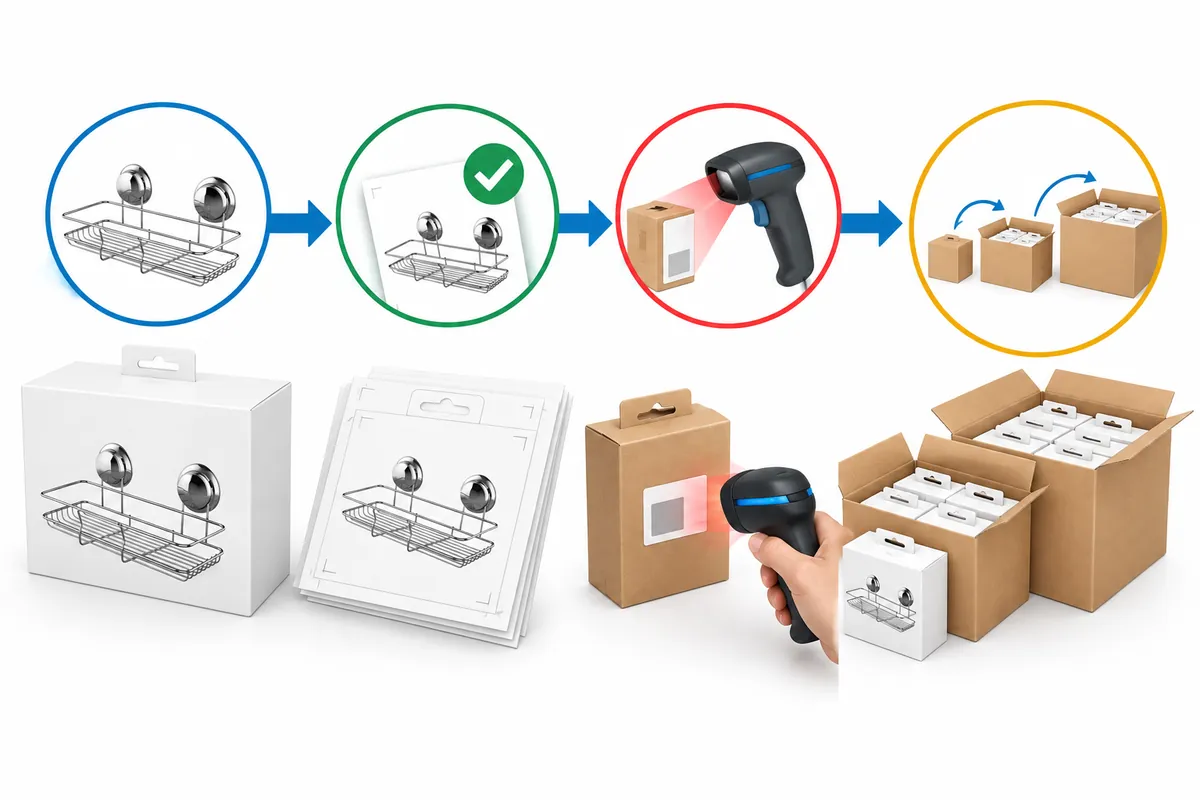
Treat each packaging level as a linked but separate object. The unit pack should match the approved product and SKU. If units are grouped into an inner carton, verify the intended count and marking. The shipping carton should agree with the purchase order, destination instructions and packing configuration. Create a packaging map or controlled checklist showing where identifiers appear and which source file controls each one. This helps prevent a correct unit label from being paired with an outdated carton mark.
Before a print run or packout, review a proof that reflects the actual production file, not a low-resolution screenshot or an earlier sample. The approving buyer should return a dated, clearly identified approval or correction. When a change is made, distribute the revised file through the agreed channel, remove or archive superseded versions from the active production location, and confirm receipt. If work has already started, the parties should agree how to identify and segregate material printed under the old version rather than silently mixing it.
The first-off pack check should compare a physical production sample to the approved proof at each relevant level. Verify orientation, text blocks and identifiers visually, then scan the barcode if that check is in scope and the buyer’s approved system is available. Confirm that the tested code resolves to the expected SKU in the buyer’s data. Record what was checked, by whom, on what date and against which revision. A first-off sample establishes a checkpoint; later changes or replenishment may require renewed confirmation.
A private label bathroom hardware barcode artwork version control workflow should also define how corrections are approved after a first-off check. A scan failure may come from print contrast, damaged stock, placement over a fold, an incorrect file or an incorrect SKU mapping; the visual symptom alone does not identify the cause. Hold the affected pack, compare the code with the buyer’s source data and inspect the physical print condition. Then record the authorized correction and repeat the check on a new first-off pack. This prevents teams from editing artwork informally or applying an unapproved substitute code just to keep packing moving.
What evidence should buyers request before bulk packing?
Ask for a compact release packet rather than a vague assurance that artwork is correct. It may include the approved revision register, final proof references, photos of the first-off retail pack and carton labels, and scan confirmation tied to the buyer-provided SKU mapping when scanning is agreed. Define whether the evidence is required before all units are packed or whether a sample review is sufficient for the project. The buyer’s risk process and retailer requirements should determine the level of control.
Photos should show enough detail to compare the physical pack with the proof, but images alone may not establish barcode readability. A scan record should name the device or method only when useful and should state the expected and observed SKU outcome, without exposing more buyer data than necessary. If the supplier cannot access the retail database, the buyer can provide an approved lookup or verify the scan itself. Never treat visual similarity between two barcode patterns as proof that they encode the same data.
Carton verification should include the number of units per inner or master carton, the correct destination marks and whether labels are placed on the required faces. Check for mixed SKUs, old labels beneath new labels and leftover packaging from a prior revision. If old inventory exists, decide whether it can be used, must be relabeled or must be segregated. That disposition should be authorized and traceable. A packaging release is therefore an agreement between buyer and supplier about an exact order configuration, not a general statement about the supplier’s entire packaging system.
How can repeat orders prevent artwork version leakage?
Reference the approved artwork revision in the purchase order or order specification, and ask the supplier to acknowledge the files that control the run. Do not rely on ‘same as last order’ if the buyer has changed a code, language panel, quantity or destination. Compare the current order’s SKU map with the previous approved configuration and note every difference. A repeat order can reuse a revision when it is still valid, but that decision should be explicit rather than inferred from a familiar product photo.
Set a clear cutoff for changes after approval. If artwork changes after printing begins, identify affected quantities, labels and cartons, then agree a disposition before packing continues. Keep obsolete files out of the active folder or mark them unmistakably as withdrawn. Suppliers should not need to determine which buyer code is legally or commercially correct; the buyer approves that data. The factory-side task is to build and pack to the controlled information it has received and to surface mismatches that are visible during agreed checks.
For projects combining product customization and retail packaging, document who approves the physical sample, who approves artwork, and who releases final packing. Those roles may sit with different people. Koitor’s private label bathroom accessories information can support a conversation about OEM packaging coordination. For product configuration and manufacturing context, see fabricante de acessórios personalizados para casas de banho. Neither page makes Koitor the authority for the buyer’s barcode assignment or retailer compliance decision.
Buyer approval checklist
A version-control routine should be easy for the teams that actually print, pack and inspect the order to follow. Use one agreed location or transfer channel, name the current file consistently, and record approval where production planning can see it. If multiple markets or language versions are involved, list them separately and identify which shipment uses each one. After a revision, confirm that obsolete stock is not accidentally mixed with new packaging. These small controls reduce ambiguity without implying that a supplier can replace the buyer’s own retail-data governance. Include a practical stop-and-escalate rule for a mismatch: pause the affected packing activity, identify the order and component involved, retain an example, and request buyer direction before relabeling or disposing of material. This keeps a rushed correction from creating a second uncontrolled version. A private label bathroom hardware barcode artwork version control log can also record whether the change affected only artwork or also a product variant, pack count, market or carton configuration.
- Map every buyer SKU and variation to an approved packaging file and code supplied or confirmed by the buyer.
- Record revision, approval date, packaging level and superseded-file status in one controlled register.
- Review actual-size proof and first-off physical unit, inner and shipping cartons separately.
- When agreed, scan the first-off code and reconcile the result with the buyer’s expected SKU record.
- Define late-change handling, old-stock segregation and who has authority to release artwork.
Frequently asked questions
Who should assign and approve the barcode?
The brand owner, importer or other authorized buyer should control the code assignment and its relationship to the SKU. The supplier should not invent or infer the buyer’s retail identifier.
Is a printed proof enough to approve a barcode?
No. A proof helps review placement and appearance. Where required, a first-off physical pack should also be scanned using an agreed method and checked against the buyer’s expected SKU data.
Should every carton have the retail barcode?
Not necessarily. Unit packs, inner cartons and shipping cartons may use different identifiers or markings. The buyer should define the intended packaging hierarchy and destination requirements.
Can the supplier reuse artwork from the previous order?
Only when the buyer confirms that the file revision remains approved for the current SKU, market and order. A product that looks unchanged may have a new code or packaging instruction.
Does this article establish Koitor barcode compliance certification?
No. It provides a buyer-supplier control workflow. Code allocation, legal labeling and retailer-system requirements remain with the responsible buyer unless separately agreed in writing.
Plan a buyer-ready product specification
Share your drawing, packaging file or target installation dimensions so Koitor can review the relevant manufacturing and sample questions.
OEM / MARCA PRÓPRIA
Transforme este guia de fornecimento num resumo do produto
Indique o produto pretendido, as dimensões, o acabamento, a quantidade a encomendar e os requisitos de embalagem. A sua equipa receberá uma análise prática da viabilidade de fabrico antes da apresentação do orçamento.
 English
  Español
  Português
  Français
  Deutsch
  العربية