

Single wall vs double wall corrugated boxes should be compared using the same metal hardware SKU, packed configuration, stacking conditions and distribution route—not selected by wall count alone. A double-wall board has an additional corrugated medium and liner, but that construction by itself does not prove that the complete package will protect a basket or rack in the buyer’s actual shipment. Ask for the board construction and agreed performance evidence, then compare representative packed-product samples against the same handling and acceptance requirements. Carton selection is a buyer-and-packaging-supplier decision; this guide does not claim that Koitor manufactures corrugated cartons or owns a packaging test laboratory.
What is the difference between single-wall and double-wall corrugated board?
Single-wall corrugated board has one fluted medium between two linerboards. Double-wall board has two fluted mediums separated by three linerboards. The Fibre Box Association’s corrugated construction overview defines these structures and explains that flute profile and box design also vary. These terms describe a board construction, not a complete export-packaging specification.
That distinction matters because two cartons described as “double wall” can still differ in liner grades, flute combination, box style, dimensions, joints, closure, manufacturing tolerances and condition after storage. Single-wall options can vary in those same ways. The wall label is only one line in the specification; it does not tell a buyer the exact board grade, converting quality or packed-product result.
For a buyer comparing single wall vs double wall corrugated boxes, that construction difference is a starting point for the RFQ—not the full approval decision.
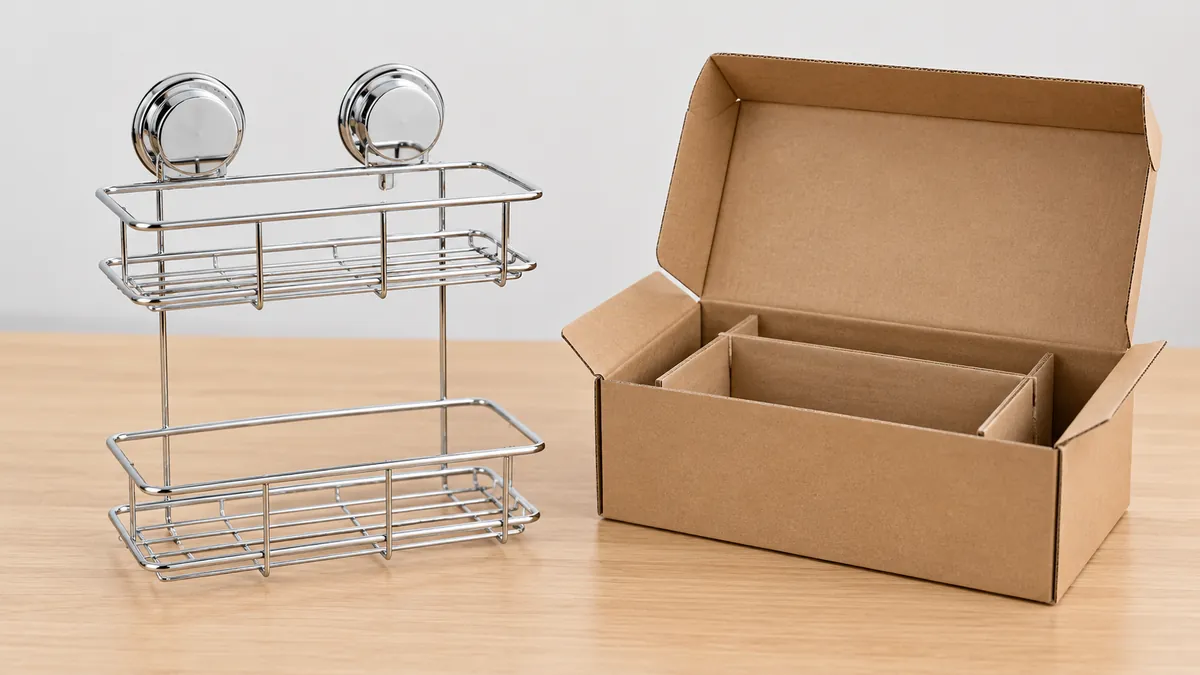
For a bathroom wire basket, a towel rack or a metal storage rack, the carton is only one part of the protective system. A product may be wrapped or bagged, separated by inserts, packed with mounting parts, placed in an inner box, and then consolidated into a master carton. Which parts are present depends on the actual design and packout. A buyer should use a current product drawing and packing list rather than assume every accessory is included.
Why does wall count alone not answer the packaging question?
A carton can fail to protect a metal product even when its board has more layers. Product movement inside the box, exposed wire ends, insufficient separation between finished surfaces, a poor fit, weak closure, unsupported pallet edges or a distribution route with different handling can become the controlling issue. Conversely, an appropriately specified single-wall option may be a viable candidate for a particular product and route if the complete packed system meets the buyer’s requirements. That is a question for comparison and validation, not a universal threshold.
Corrugated board is a structural material made from linerboard and fluted medium. The flute’s shape, the paper grades, combined-board quality and the way a box is designed interact. Box geometry also changes how loads are distributed through panels, corners and closures. A wall-count label cannot describe all these conditions, and no universal product-weight cutoff or carton grade can be recommended for every metal basket or rack.
The buyer should also distinguish board evidence from packaged-product evidence. A board test or declared grade may help the packaging supplier identify and compare material options. It does not prove that the actual product, its internal protection, closures and shipping configuration will arrive without damage. ISTA states that its procedures test a specific packaged-product system—the product together with the packaging—not an isolated material. The exact test method and acceptance criteria must be selected for the buyer’s distribution channel and use case.
This is why a heavier-sounding carton specification should not replace a clear damage-prevention objective. Define what must be protected: finish appearance, functional geometry, small components, retail presentation, or some combination. Then make sure the sample includes the same product revision, inserts, closures and shipping configuration proposed for production.
What product and shipping information should buyers provide before quoting?
Give the carton supplier the inputs needed to compare options fairly. A request that says only “quote a double-wall export carton” can produce a price for an undefined product and route. Share the actual product and packout information available, and identify any assumptions the supplier must confirm.
Useful inputs include:
- Product identity: SKU, drawing or sample revision, finish, accessories and intended quantity per inner or master carton.
- Packed configuration: product dimensions in the proposed packed position; whether the rack is assembled, folded, nested or disassembled; and the actual number and type of protective pieces.
- Sensitive areas: visible plated or coated surfaces, corners, hooks, cut wire ends, detachable parts or other features that could contact another item. These should be identified from the real product.
- Shipping unit: inner carton, master carton, palletized load or parcel shipment; state which packaging level the quote covers.
- Distribution route: intended transport modes, likely transfers, storage duration, handling channel and destination conditions known to the buyer.
- Stacking and support: planned load orientation, stacking arrangement, pallet footprint, overhang or support details and any retailer or carrier constraints.
- Acceptance criteria: what damage is unacceptable and what condition the product must meet on receipt. Separate cosmetic requirements from functional or dimensional requirements.
- Existing evidence: current carton drawing, board grade declaration, package test record or damage history, with the product revision and configuration each record covers.
Do not invent values where the buyer has not measured them. If mass, dimensions, stacking load or route details are unknown, label them as open inputs and decide how they will be established before approval. The supplier’s quote should list its assumed board construction, flute or grade information where specified, box style, dimensions, closure, internal protection and pack quantity so competing samples can be compared on the same basis.
How should buyers compare single-wall and double-wall carton proposals?
Compare two fully described proposals using one product revision and one packout. Keep the decision focused on the whole package rather than ordering the most layers by default. If the carton supplier recommends different box styles or inserts as well as different wall constructions, record those differences instead of attributing every result to the board alone.
| Comparison field | Single-wall proposal | Double-wall proposal | Buyer decision |
|---|---|---|---|
| Board identity | State liner and medium grades or the supplier’s agreed board designation | State the two-medium construction and declared grades | Are both alternatives specified clearly enough to quote and reproduce? |
| Flute/combined board | Identify flute combination and any agreed board evidence | Identify both flute profiles and combined-board evidence | Does the proposal match the carton supplier’s intended use and box design? |
| Carton design | Drawing, dimensions, box style, joint and closure | Drawing, dimensions, box style, joint and closure | Are non-board variables controlled for the comparison? |
| Product protection | Wrap, separators, inserts and accessory containment | Same protection, or list each change | Are metal surfaces and loose parts protected from movement and contact? |
| Shipment context | Product count, pallet pattern, route and stacking assumptions | Same shipment context | Are samples tested or reviewed in the intended shipping configuration? |
| Decision evidence | Sample results, inspection findings and cost/cube inputs | Same evidence categories | Does the selected option meet the written acceptance criteria? |
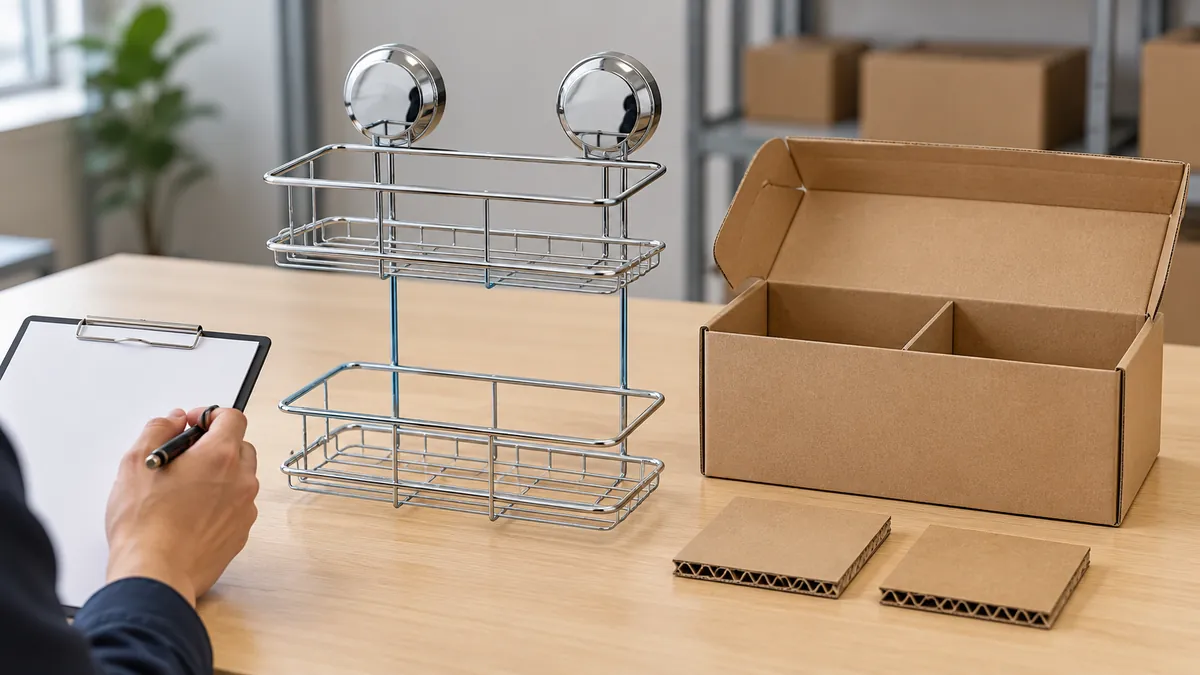
When possible, request a sample for each proposal and pack the same representative product revision. Check product movement, fit, closure, handling convenience, visible finish contact points and the resulting carton dimensions. Record the inspection method and result. A sample that is made with a different insert, closure or pack quantity is not a like-for-like comparison unless the buyer intentionally wants to compare complete alternative systems.
Board-performance terms also need context. The Fibre Box Association’s ECT application and reference guide describes ECT as a method used to measure corrugated box strength and discusses grade evaluation where stacking strength matters. Buyers may request the agreed board measure and supporting supplier documentation, but should avoid treating a single ECT number as a guarantee of transit performance. A board value does not by itself describe the product’s internal movement, the complete carton design, pallet support, moisture history, or every handling event.
What can packaging tests and sample checks actually prove?
Testing is most useful when the test sample matches the item and shipment decision. ISTA explains that packaged-product testing is conducted on the specific product-plus-packaging system because performance differs with the contents. A generic test on a corrugated box or material should therefore not be described as approval of every rack, basket or product revision that could fit inside it.
Before a test or formal sample review, document the product configuration, packaging components, carton drawing, board specification, pack quantity, closure, pallet or unit-load arrangement, route assumptions and acceptance criteria. Ask the test provider or packaging supplier to state which version was evaluated and what the result does and does not establish. Do not infer a guarantee against all carrier handling or every distribution environment from a pass under one defined protocol.
The same care applies to non-laboratory checks. A buyer can inspect an incoming carton sample for dimensions, visible defects, fit, assembly and consistency with the agreed drawing. That inspection can identify mismatch or workmanship issues; it does not replace an agreed performance test when the buyer’s risk assessment or customer requirement calls for one. Record the method, sample identity and observed result separately from the supplier’s general marketing claims.
After approval, retain one controlled reference set: carton drawing, board designation, internal protection, pack quantity, product revision, photos of the approved packout, review or test record, and the person who accepted it. The specific record set should fit the project and any retailer or carrier requirement. Do not mark a packaging system “ISTA certified” merely because a test was mentioned; ISTA notes that its procedures apply to the complete packaged product and packaging system, not an isolated material.
When should a buyer reapprove or retest the package?
Recheck the approved package when a change could affect performance. ISTA’s guidance on when a packaged product should be retested lists changes to product design, size, weight or materials; package configuration, size, materials or components; and process or distribution system. The exact need for retesting depends on whether the change may affect performance and the applicable test requirement, so the buyer should ask its packaging or test partner to make that determination.
For metal storage hardware, possible review triggers include a changed basket or rack geometry, a different finish protection, revised product orientation, a new insert, closure, strap or pallet arrangement, a changed pack quantity, a different carton grade or supplier, or a new parcel/pallet route. These are examples of changes to assess, not a claim that every change requires a full test. Where uncertainty remains, document it and ask the responsible packaging specialist.
A change-control record can capture the previous and proposed configuration, affected SKU and revision, the reason for the change, any sample comparison, updated supplier documents, and the approval owner. This prevents a board supplier substitution or cost-reduction proposal from silently becoming a different unqualified package. It also helps the buyer identify whether the evidence still matches the product currently being shipped.
What should an importer include in a carton RFQ and approval checklist?
Use a short, consistent checklist to request comparable quotes and retain the final decision:
- Identify the hardware SKU, drawing revision, finish and actual accessories.
- State pack quantity and whether the item is assembled, folded, nested or disassembled.
- Provide packed dimensions and mass when known; mark unknown values for measurement.
- Describe visible finish-protection needs and internal separators or component bags required.
- Identify the destination route, shipping mode, pallet or parcel unit, stacking context and known retailer/carrier rules.
- Request a complete carton proposal: wall construction, declared board grade, flute combination if applicable, dimensions, box style, closure and internal packout.
- Ask what supporting board data or packaged-product test record is available, and record the tested product/package revision.
- Compare representative samples against the same product, acceptance criteria and shipping configuration.
- Record the selected option, assumptions, unresolved risks, approver and changes that trigger review.
Koitor Hardware is a family-owned custom metal hardware manufacturer, not a corrugated-board producer or certified packaging laboratory. Buyers can discuss the product’s geometry, finish protection, packout and manufacturing-side requirements with a supplier, while carton construction and performance evidence should be confirmed with the responsible packaging supplier or test provider. For product scope and OEM coordination, see Koitor’s Informações sobre o fabrico de acessórios personalizados para casas de banho e private-label bathroom accessories page. The right carton is the option that fits the defined SKU and shipment requirements with evidence the buyer can reproduce—not simply the option with more layers.
Perguntas frequentes
How should buyers compare single wall vs double wall corrugated boxes for export?
Compare fully described alternatives with the same product, packout, route and acceptance criteria. Keep board construction visible in the comparison, but assess the carton and the packed product together.
Is double-wall always better for metal hardware?
No universal rule follows from the wall count. Double-wall board has an additional fluted medium and liner, but the packed result also depends on the board grade, carton design, internal protection, product geometry, closure, pallet support and route. Compare the complete alternatives against the buyer’s requirements.
Can a single-wall carton be used for export shipments?
That depends on the product, carton specification, packout, shipment configuration, destination requirements and supporting evidence. A buyer should not approve or reject a construction based only on the words “single wall” or “export carton.”
Does a higher ECT value guarantee fewer shipping damages?
No. ECT can be one piece of board information, but it does not independently prove the performance of the complete packaged product in every route or handling environment. Use the declared measure together with the exact carton design, packout and appropriate sample or test evidence.
Should the carton supplier test an empty box or a packed product?
Use the test setup required for the decision. ISTA states that its procedures test a specific packaged-product system rather than certifying an isolated packaging material. The buyer should confirm which product, packaging components and distribution assumptions were included.
When should the package be reviewed again?
Review it when product, package, process or distribution changes could affect performance. Identify the revision and ask the responsible packaging or test partner whether the change needs a sample check, test repetition or another documented approval.
Qualifying packaging for a metal hardware SKU?
Share the product drawing, finish, packout and intended shipping route for a manufacturing-side discussion. Carton construction and performance should be confirmed with the packaging supplier and relevant test provider.
OEM / MARCA PRÓPRIA
Transforme este guia de fornecimento num resumo do produto
Indique o produto pretendido, as dimensões, o acabamento, a quantidade a encomendar e os requisitos de embalagem. A sua equipa receberá uma análise prática da viabilidade de fabrico antes da apresentação do orçamento.


 English
 Español
 Português
 Français
 Deutsch
 العربية