
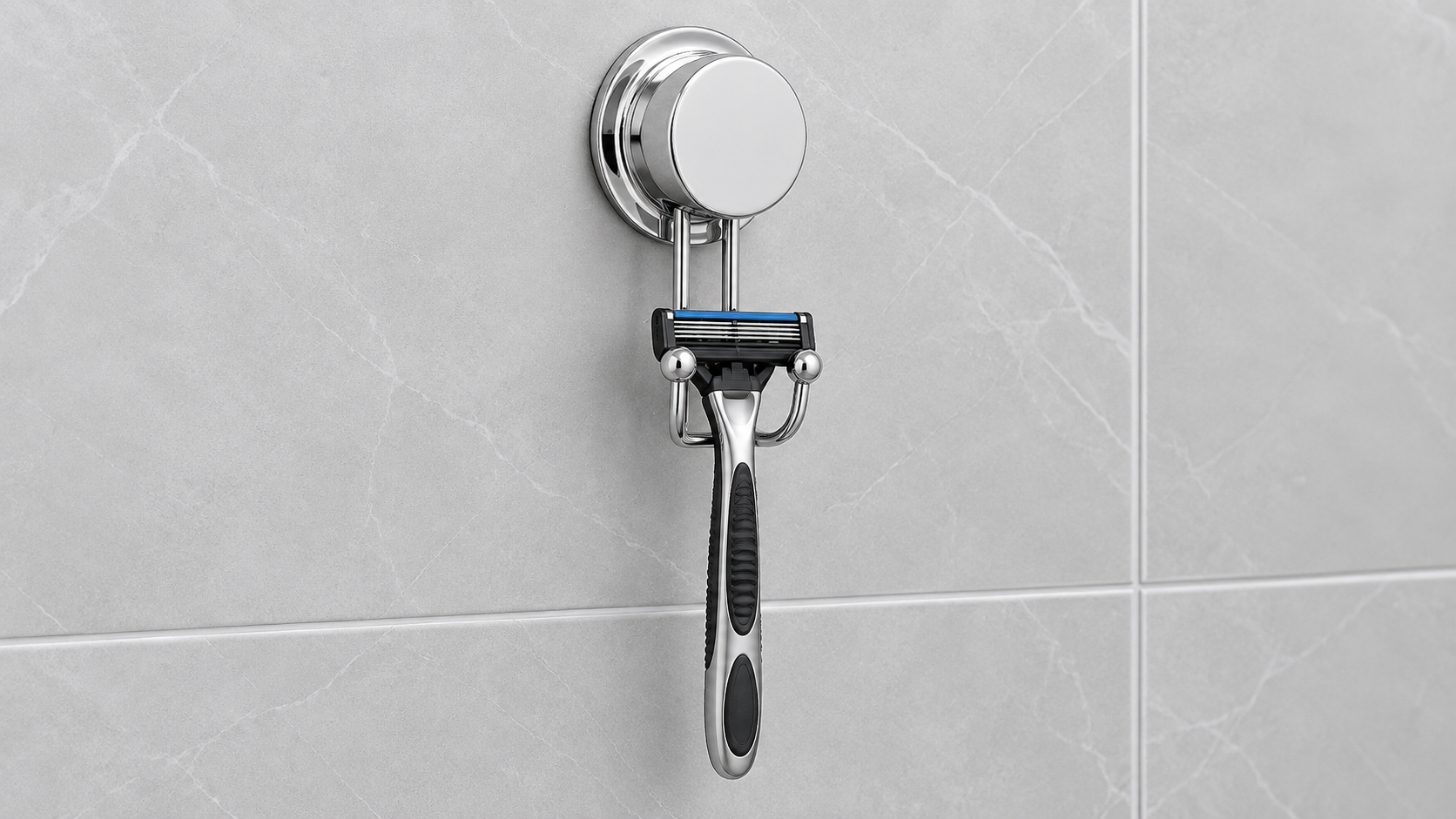
A suction cup razor holder manufacturer should be assessed on razor fit, cradle geometry, drainage, mounting integration, finish, sampling and packaging. A useful private-label holder does more than hang a razor near the shower. It must retain the intended handle or cartridge shape without trapping water, damaging the razor, interfering with access or using an unapproved mounting system.
Many razor holders begin as a custom adaptation of a suction-mounted metal hook or rail. For this reason, buyers should define the final cradle rather than assuming a standard hook will suit every razor. The mounting base, wire interface and terminal holder should be reviewed as one product system.
What Should Buyers Define Before Requesting a Razor Holder Quote?
Supply physical razor samples or measured gauges for every intended handle and cartridge. Identify the minimum and maximum neck width, handle thickness, head profile, preferred storage orientation and clearance below the cartridge. A U-shaped cradle may retain one handle family well but allow another to rock, bind or fall through.
Define the cradle gap, support depth, prong profile, drainage opening, wall offset, suction-cover diameter and overall height. Use the wall plane and suction centerline as drawing datums. If the holder is intended for a cartridge razor, state whether the cradle supports the neck, the handle shoulder or a controlled feature below the head.
Specify the visible material and finish direction, cosmetic zones and packaging requirements. The suction cup, internal connector, locating base, cover and metal frame should appear in a bill of materials. Similar covers or hooks are not automatically interchangeable because their internal retention features can differ.
Surface conditions must also be specified. Smooth glazed tile and glass require a different review from textured tile, porous stone, grout lines or uneven walls. Koitor’s no-drill bathroom accessories page gives a relevant starting point for discussing suction-mounted product development.
Which Razor Holder Structures Should OEM Buyers Compare?
| Estrutura | Potential advantage | Approval point |
|---|---|---|
| U-shaped two-prong cradle | Defined neck retention and drainage opening | Gap, prong radius and fit range |
| Single hook | Simple metal form | Rotation and handle stability |
| Ring or loop cradle | Supports some handle profiles | Entry opening and head clearance |
| Single suction mount | Compact wall footprint | Wall offset and rotation control |
| Two-mount bracket | Wider support arrangement | Mount center distance and complexity |
A vacuum suction shaver holder OEM project should not use a generic J hook when the intended product requires positive cradle retention. A hook may be suitable for towels or loofahs, but it can let a wet razor rotate. A purpose-designed U-shaped cradle can control the neck position, provided its gap and edge condition are approved with real samples.
Drainage is a geometry question. The holder should not create a pocket that retains water around the cartridge. Review the lower opening, prong spacing and wall offset. This is not a claim that a holder sterilizes or dries a razor; it is a practical design review to reduce trapped-water areas and improve cleaning access.
How Should Cradle Fit and Suction Alignment Be Approved?
Use a fit matrix rather than one razor photo. Test the largest, smallest and most restrictive intended samples. Record whether each one enters the cradle, rests at the intended point, clears the wall and can be removed with one hand. The product should not require bending the prongs or forcing the cartridge through an opening.
Measure the cradle gap and depth from a defined centerline. Check prong symmetry, tip radius and the relation between the cradle and the suction center. The two support wires should enter the approved mount interface without twisting the terminal holder. The decorative cover may hide the connection, but it must not conceal an uncontrolled assembly.
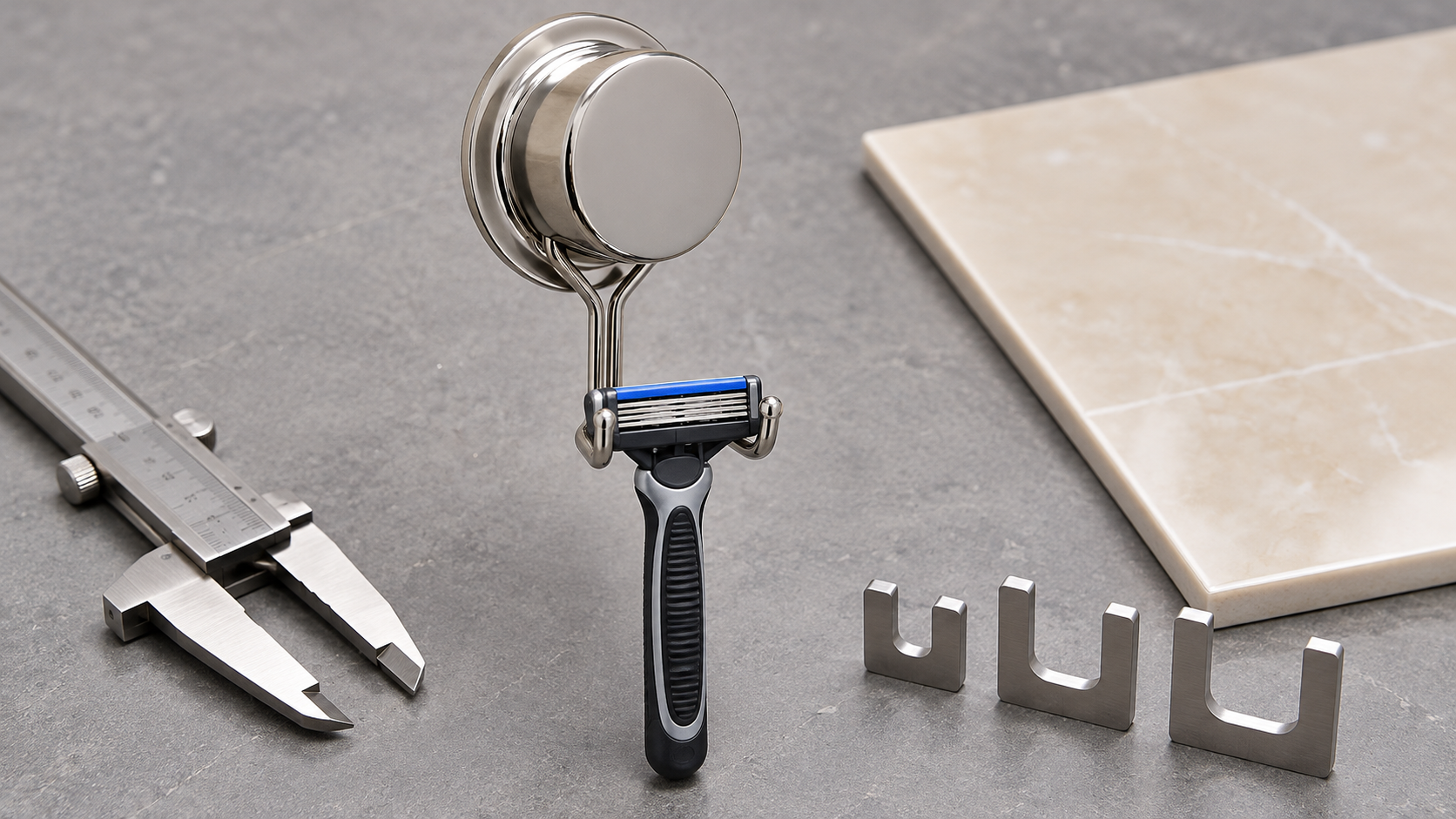
Install samples on agreed smooth surfaces and record cleaning, installation and observation conditions. Do not turn one installation result into a universal retention or wall-suitability claim. Retail wording should correspond to the approved configuration and evidence.
What Should the Approval Sample and Factory Review Cover?
- Confirm the intended razor samples and permitted fit range.
- Measure cradle gap, depth, prong symmetry and drainage opening.
- Check cartridge, handle and wall clearance during insertion and removal.
- Inspect tips, bends, joints and all hand-contact edges.
- Confirm the suction cup, base, cover and connector against the bill of materials.
- Measure wall offset and the relation between cradle and mount centerline.
- Review finish under consistent lighting against the approved sample.
- Install on representative smooth surfaces using documented conditions.
- Inspect the complete retail pack and component count.
The manufacturing route can include cutting, forming, fixture loading, joining, grinding, polishing or coating, suction assembly and packaging. Buyers should ask how first-piece cradle geometry is held and how sharp edges are prevented after finishing. For a small holder, a slight bend error can affect every intended razor.
Koitor Hardware is a family-owned custom metal hardware factory specializing in bathroom and home storage hardware. Koitor can review drawings or physical samples, discuss manufacturability and support flexible small-batch OEM development. MOQ can start from 100 pieces for some products, while actual quantity and timing depend on the final structure, finish, purchased mounting parts and packaging.
For broader custom metal development, review fabrico de acessórios personalizados para casas de banho and provide the actual razor samples early in the sampling process.
Which Quality and Packaging Checks Reduce Sourcing Risk?
Inspection should follow the product’s functional risks: cradle fit, smooth edges, finish, mounting assembly and packed condition. Incoming inspection confirms the right suction components. First-piece checks confirm the formed cradle. Final inspection confirms correct assembly, appearance and packaging.
Use this checklist for a private label shower razor holder order:
- ☐ Approved razor samples or gauges define the fit range.
- ☐ Cradle gap, depth and prong shape match the drawing.
- ☐ Razor heads, handles and cartridges clear the wall.
- ☐ Drainage opening and cleaning access are reviewed.
- ☐ All tips, bends and joints are smooth.
- ☐ Support wires and cradle are aligned to the mount centerline.
- ☐ Cup, base, cover and connector match the approved bill of materials.
- ☐ Finish matches the approved reference.
- ☐ Installation instructions state surface assumptions.
- ☐ Packaging protects metal finish and rubber contact faces.
- ☐ Any fit, finish or component change requires reapproval.
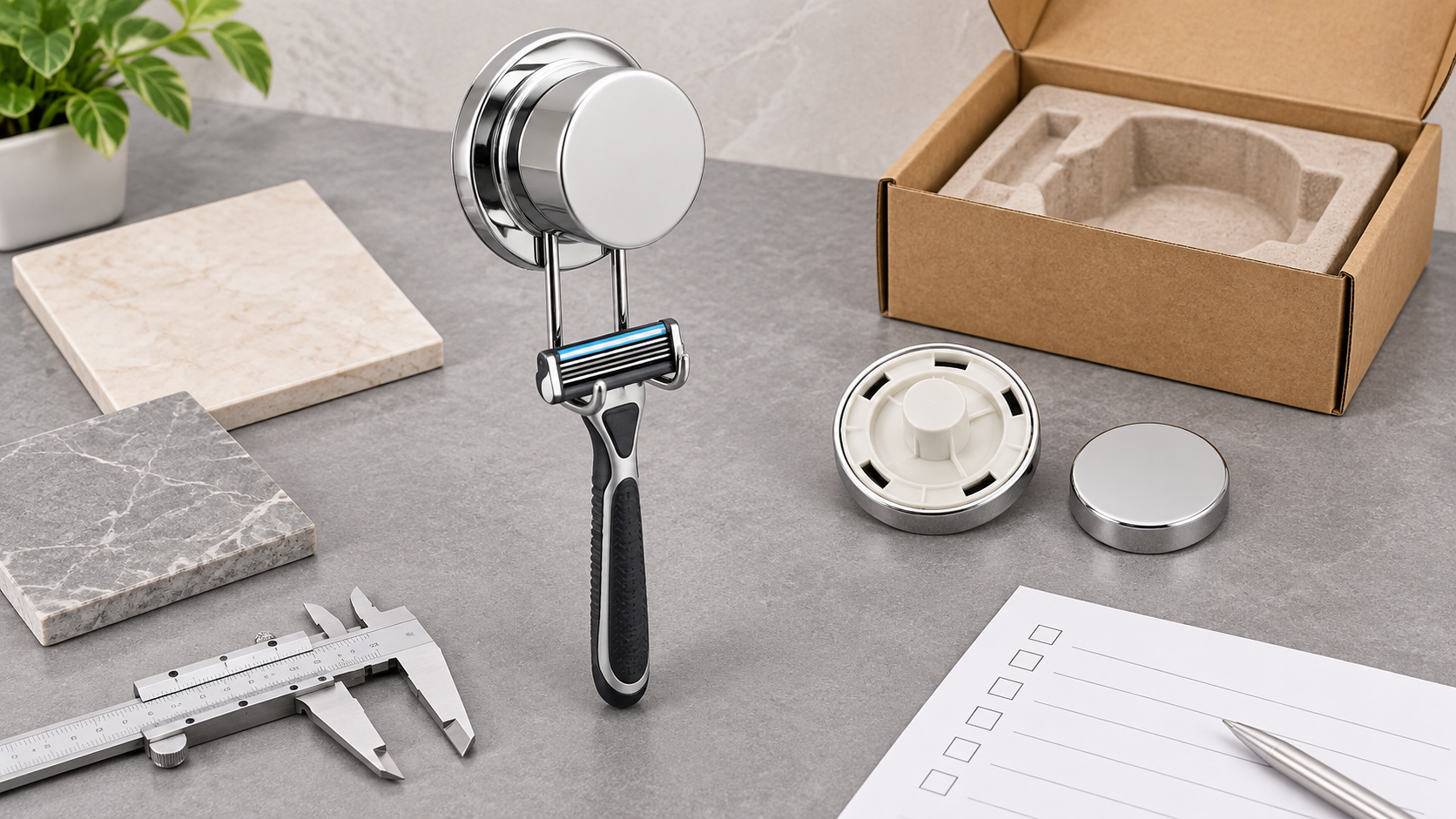
Packaging should stop the cradle from being bent by the suction cover, caliper-like parts or other components. Use a packed reference sample to define orientation, separation and any protective sleeve. Keep rubber working faces clean and avoid direct metal-to-metal contact.
Common mistakes include using a towel hook as a razor holder, approving one razor only, overlooking cartridge clearance, leaving prong tips unspecified, treating the cover as a generic component and making broad wall or load claims without agreed conditions.
For repeat orders, compare the current drawing, mounting-component source, finish reference and packing sample with approved records. Ask the suction cup razor holder manufacturer to confirm its assumptions on fit range, mounting parts, inspection and packaging before production release.
Quotation comparison should separate the metal cradle and support frame, the complete suction assembly, finish, sample cost, fixture assumptions, retail insert, packaging and delivery basis. A lower price can describe a different fit range, a generic hook rather than a cradle, or less protection around the terminal metal feature. Ask suppliers to list exclusions and alternatives clearly.
Sample approval should control the drawing revision, razor samples or gauges, cradle dimensions, mounting bill of materials, finish reference and packed configuration. Keep photographs of the front, side, cradle opening and mounting interface. This gives the buyer a reference if the target razor line changes or if a retailer requests a different finish later.
For repeat production, compare component sources as well as outside appearance. A suction cover that looks identical can have a different internal locating feature, and a metal forming change can shift the cradle gap. Any substitution should be declared before assembly and the affected fit, alignment, finish and packaging checks repeated.
Field feedback should be recorded with a production lot, surface condition and the actual razor used. Separate issues such as cradle fit, finish scratches, missing mounting parts, installation guidance or suction behavior. Clear symptoms help product teams identify whether the corrective action belongs in the metal drawing, purchased component, instructions or pack.
If the holder will be sold with several other no-drill accessories, keep the product identity clear. A common cover style can support a coordinated range, but a razor cradle must retain the intended razor, and it should not be represented as a towel hook or a universal appliance holder in artwork or instructions.
A practical buyer file contains the current drawing, intended razor samples, cradle fit record, material and finish direction, mounting bill of materials, inspection points, packaging reference and commercial assumptions. Give each controlled item a revision date. This gives the factory a complete basis for feasibility review before sampling begins.
Resolve sampling questions in a controlled order. Confirm fit range and cradle geometry before requesting a cosmetic change; confirm mount alignment before approving packaging. Document every approved deviation so the production team does not return to an older image or use a generic hook that was only considered during early development.
Retain one approved sample for receiving inspection. Compare delivered cradle gap, support alignment, cover, finish and packaging with that reference under similar conditions. A retained sample does not replace an agreed inspection plan, but it gives import teams a usable point of comparison and helps them report differences precisely.
Retail teams should decide what belongs in the carton artwork and what belongs in the installation insert. The insert should state the intended smooth-surface condition, cleaning preparation and approved installation sequence. Do not use a generic performance claim that is not connected to the sample, surface and validation method reviewed for this product.
When the buyer is developing a matching range, keep the razor holder’s function distinct from towel hooks and general utility hooks. A coordinated cover or finish can create a consistent line, but the cradle should remain a controlled fit feature. The bill of materials and instructions should describe it as a razor holder rather than relying on broad language.
Before shipment, review unit orientation, protective sleeves, inner separation and carton handling risks. The cradle can be bent by a small impact even if the cover remains undamaged. Confirm that the packed reference sample protects the terminal feature, the finish and the rubber working face during normal transport and unpacking.
Keep the final approval sample, inspection notes and packing photographs linked to the production lot. This makes future sourcing decisions more evidence-based: the buyer can distinguish a drawing issue, a purchased-component change, a handling problem or a packaging issue without relying on memory. It also supports clearer communication if a retailer asks for a revision to the cradle, finish, instructions or assortment after the first delivery.
Use the same evidence trail when approving corrective actions and subsequent production samples.
Perguntas frequentes
What should buyers send to a suction cup razor holder manufacturer?
Send physical razor samples or measurements, a drawing or holder sample, finish requirement, mounting concept, packaging format, expected quantity and approval criteria.
Why is a U-shaped cradle useful?
It can define the supported neck position more clearly than a general hook. The gap and radius must still be approved with the intended razor range.
Can one holder fit all razors?
No. Cartridge shapes and handle dimensions vary. Define a fit range and test representative samples before release.
Can Koitor develop a custom razor holder?
Koitor can review buyer drawings or physical samples within its supported manufacturing scope. The final cradle, mounting, finish and packaging should be documented before approval.
Trabalhe com a Koitor Hardware
Planning a Custom Suction Razor Holder?
Send Koitor your drawing, razor samples, fit requirements, finish target, mounting concept, packaging idea and expected quantity. The team can review manufacturability and a practical small-batch OEM route before quotation.
OEM / MARCA PRÓPRIA
Transforme este guia de fornecimento num resumo do produto
Indique o produto pretendido, as dimensões, o acabamento, a quantidade a encomendar e os requisitos de embalagem. A sua equipa receberá uma análise prática da viabilidade de fabrico antes da apresentação do orçamento.
 English
  Español
  Português
  Français
  Deutsch
  العربية