

Wet sanding vs dry sanding is a comparison of whether a compatible liquid is used with the abrasive during a defined surface-preparation method. Dry sanding uses an abrasive without an added liquid; wet sanding uses a liquid only when the abrasive, substrate and process are designed for that method. For a metal bathroom accessory, the decision should be made with the abrasive maker’s instructions and the next cleaning, finishing or coating step in view. “Wet” does not automatically mean smoother, cleaner, safer or better, and a product labeled waterproof is not permission to wet any abrasive or powered tool.
For an importer or product manager, the useful question is not simply which method sounds more advanced. The buyer needs to know what the supplier intends to do to the surface, what consumable is compatible, how residue will be controlled, and how the part will be prepared for the following operation. Those details matter because a surface-preparation step sits inside a wider manufacturing route. A change in liquid or abrasive can affect handling and cleaning without proving the final finish or coating performance.
What is the difference between wet sanding and dry sanding?
Dry sanding is performed without an added liquid at the abrasive contact. Wet sanding uses an appropriate liquid with an abrasive and method intended for that use. The abrasive’s construction and manufacturer instructions matter: waterproof backing or a wet/dry product designation describes a product feature, not universal compatibility with every workpiece, fluid, tool or operation.
3M’s product page for its Pro-Pak Wetordry sanding sheets identifies the product as designed for wet or dry sanding and says water or cutting oil can reduce clogging for those sheets. It also describes a particular backing and intended uses. Those statements are specific to the named product. They do not establish that any abrasive paper can be used with water, that every metal part should be wet-sanded, or that a particular fluid is suitable for a separate process.
The distinction is easiest to keep clear when the buyer separates four variables:
| Variable | Dry sanding | Wet sanding | Buyer’s review question |
|---|---|---|---|
| Added liquid | None at the abrasive contact | A compatible liquid is present | Does the selected abrasive maker allow the proposed method and fluid? |
| Abrasive construction | Must suit the substrate and operation | Must suit the substrate, liquid and operation | Is the exact product identified rather than just a generic grit? |
| Residue | Dust, detached material or abrasive debris may remain | Liquid and suspended residue may need collection and cleanup | What condition is required before the next operation? |
| Downstream step | Surface may proceed to cleaning, inspection or finishing | Surface may need liquid removal and a defined subsequent condition | Who confirms readiness for coating, plating or assembly? |
This table is a buyer conversation map, not a process instruction. It does not select an abrasive, fluid, grit, pressure, speed or acceptance limit.
What does the liquid change during sanding?
The liquid changes the contact and residue environment for the specific abrasive process. A suitable liquid may reduce loading for a product designed for it; 3M’s description of its Wetordry sheet is one product-specific example. That does not mean liquid always improves a result. A liquid can also create a cleanup requirement, affect later handling, or be unsuitable for a particular abrasive, surface, equipment setup or downstream treatment.
Buyers should ask the manufacturing supplier to identify the actual consumable and method rather than treating “wet” as a complete process note. Relevant questions include whether the abrasive manufacturer permits the intended liquid, which surface is being prepared, how the liquid is introduced and removed, and what condition is needed before the next operation. If the supplier uses a proprietary or controlled procedure, the buyer should review the agreed process evidence at the scope appropriate to the product.
The liquid does not by itself define a finish quality. It does not specify the scratch pattern, surface roughness, appearance, coating adhesion, corrosion behavior or part acceptance. Those outcomes depend on the whole process and the applicable product requirements. A buyer should not infer that wet sanding makes a surface “mirror finished,” that dry sanding leaves it rough, or that either option guarantees a coating result.
For a hypothetical metal towel-rack bracket, sanding might be discussed as one surface-preparation step before a subsequent finish. The example does not establish that Koitor uses wet sanding on its products or that a particular abrasive is suitable. The supplier should explain the actual manufacturing route. The buyer can then ask what the preparation is intended to change and what evidence supports readiness for the next specified operation.
How should a buyer select an abrasive for a wet or dry method?
Identify the exact abrasive product and read its instructions for the intended method, substrate and tool. Do not choose from the words “wet,” “dry” or “waterproof” alone. Products with similar appearance may have different backing, grain, bond, intended use and limitations. A generic statement such as “use sandpaper” leaves too much unsaid if the method affects a controlled finish or coating sequence.
Ask for the information that governs the actual decision:
- Manufacturer and product identifier for the abrasive, when it is a controlled consumable.
- Whether the product is designed for dry use, wet use or both.
- The substrate and operation for which the product is proposed.
- Any fluid specified by the abrasive manufacturer for that product and use.
- Whether the method is hand-applied or uses equipment, without assuming the tool is compatible with liquid.
- What cleaning, drying or other surface condition is needed before the next step.
- How the supplier will identify or control a change in abrasive product or method.
These points are a sourcing checklist, not a recipe. They avoid transferring one manufacturer’s product note to another abrasive or process. 3M’s page provides product-specific examples of backing and fluid use; the buyer should go to the current technical information for the exact item selected and ask the manufacturing supplier to confirm the job-specific method.
For a small hardware component, a surface-preparation change can be difficult to notice in a finished photograph. That makes the approved sample, drawing and process description important. If the surface appearance is critical, define the viewed area and expected result with the responsible supplier. Do not replace a missing acceptance method with a grit number copied from a different part.
How do wet and dry methods affect the next finish?
The next finish determines what surface condition must be achieved and verified; the words wet and dry do not answer that question. A surface that will be coated, plated, painted or assembled may have different requirements from a surface that will be inspected as a final visible face. The buyer should identify the next operation and ask the supplier how the part is prepared for it.
If a liquid is used, the supplier should explain how it is removed or managed before the following process, where that is relevant. If a dry method is used, the supplier should explain how residue is controlled. These questions are about sequence coordination, not a universal claim that water damages a part or that dry debris always contaminates a finish. The actual material, chemistry and process need product-specific review.
A useful approval record can list the surface state before sanding, the selected abrasive and method, any specified liquid, the cleanup step and the next process. If the coating supplier has its own required preparation or acceptance method, use that supplier’s current documentation. Do not state that sanding alone proves coating adhesion, corrosion resistance or compliance with a test specification.
| Downstream need | What the buyer can clarify | What sanding alone cannot prove |
|---|---|---|
| Visible appearance | Which face, sample and lighting condition are used for review? | A universal gloss or scratch-free result |
| Coating preparation | Which preparation and cleaning steps are specified by the coating process owner? | Adhesion or coating life without the required evidence |
| Assembly interface | Which surfaces must remain clean or dimensionally controlled? | Fit, clearance or functional performance |
| Reorder consistency | Which consumable and process changes require review? | That every future batch will match without process controls |
The purpose of these questions is to keep the process description connected to the result the buyer actually needs. A comparison page cannot replace a finish specification or a supplier’s technical review.

What should importers check on a sample?
A sample review should focus on the agreed surface, the visible result and the information needed to repeat the approval. It should not rely on the assumption that a wet or dry label means the same method across every supplier. Ask the supplier what the sample represents and whether the process and finish shown match the intended production route.
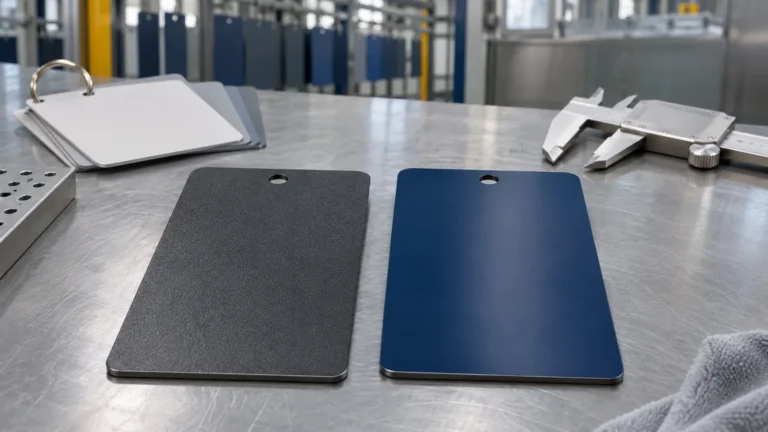
During review, identify the sample revision and finish area. Check whether the surface appearance is consistent with the buyer’s approved drawing, color or finish reference. Where a coating or plating follows, confirm that the sample has passed through the agreed downstream step before treating it as representative of the finished product. If the sample is a raw or intermediate piece, label it accordingly so it is not mistaken for a finished approval sample.
The buyer can also record whether the supplier’s method changes between sample and production. If the sample used a different abrasive or preparation process, ask whether that change matters to the specified appearance or downstream operation. The correct answer depends on the supplier’s technical assessment and the agreed acceptance requirements. Do not infer an undocumented method from a photograph of the finished surface.
For a custom bathroom accessory, review the cosmetic face and less-visible regions separately if the specification treats them differently. The drawing may define a visible surface, fit area or contact interface. A sample review should call out the relevant area rather than applying one visual expectation to every surface. This is a buyer-side clarity measure; it does not establish a formal inspection standard.
What mistakes make the comparison unreliable?
The main mistake is treating the process label as a complete instruction. A purchase order that says only “wet sand” may not identify the abrasive, liquid, product surface, cleaning step or next finish. A note that says “use waterproof paper” may still fail to identify the exact product and its approved use. The same problem occurs when a buyer compares outcomes from different samples without knowing whether the materials and downstream steps were equivalent.
Avoid these conclusions:
- Waterproof means any use is acceptable. It is a product feature; follow the exact abrasive maker’s instructions.
- Wet sanding always leaves a better finish. The method alone does not establish the surface result.
- Dry sanding always creates unacceptable dust. The actual method and collection controls must be reviewed by the responsible supplier.
- The abrasive grit determines the whole process. Backing, grain, substrate, tool, liquid and following steps also matter.
- A smooth-looking surface proves coating performance. Visual appearance does not prove adhesion or service performance.
- The same fluid is appropriate for all materials. Confirm compatibility for the particular abrasive and process.
- A sample finish proves the production method. Ask what process and revision the sample represents.
The corrective action is to write a bounded process question and request a supplier response. If the buyer needs a controlled surface condition, define the appropriate inspection or evidence with the responsible technical owner. Avoid turning a general comparison into an unverified factory instruction.
How can Koitor support a surface-finish discussion?
Koitor Hardware is a family-owned custom metal hardware factory specializing in bathroom and home-storage hardware. The company can review product drawings or physical samples and discuss manufacturing topics such as structure, welding locations, grinding, polishing, surface finish, assembly and packaging preparation. Those capabilities support a product-specific conversation; they do not mean every sanding method discussed here is used at Koitor or that Koitor makes a particular claim about coating performance.
For an OEM towel rack or basket, a buyer can share the drawing, material and finish target and ask which surfaces need a defined cosmetic review. That information can help the supplier identify where a manufacturing question needs clarification. It does not substitute for the coating maker’s process instructions or a buyer’s approval criteria.
When a quote compares alternatives, keep the process note, sample condition and finish requirement aligned. If a supplier proposes changing a surface-preparation step, ask what requirement the change addresses and whether the approved sample or inspection plan needs revision. Koitor can discuss a custom metal hardware project based on the buyer’s product information, while product-specific technical evidence remains the responsibility of the relevant process supplier.
Related background is available on Koitor’s custom bathroom hardware manufacturing page e o custom towel rack manufacturing page. These pages describe Koitor’s product and OEM scope, not a universal surface-preparation specification.
How should a supplier document a change in sanding method?
A change from dry to wet sanding, or the reverse, should be treated as a process change when the method is part of the approved product route. The buyer does not need to control every shop-floor action, but should understand whether the change affects the surface state, cleaning step, finish appearance or downstream operation. The supplier should say what changed and whether the previously approved sample still represents the proposed production method.
Use a short change record with the part number, drawing revision, affected surface, previous method, proposed method, abrasive identity if controlled, any liquid if specified, and the next process. Include the supplier’s reason for the change and the evidence used to judge it. That evidence may be a sample review or a defined inspection, depending on the requirement. A short explanation is more useful than a bare note saying “new sanding process,” because it allows the buyer to determine whether the change affects the agreed product condition.
The buyer should also separate process change approval from a product claim. A supplier’s choice of a wet method does not prove a better appearance, and a dry method does not prove a defect. The disposition should compare the sample against the actual drawing, finish reference and acceptance criteria. If those criteria are not stated, resolve them with the product owner before assuming that a method change is acceptable.
How can a sample review remain useful without inventing a grit recipe?
A useful sample review compares a known surface state with the intended next operation. The buyer can identify whether the piece is raw, sanded, cleaned, coated or otherwise processed, and label its stage. If two samples are compared, note whether they use the same material, geometry and downstream finish. Otherwise, a visible difference may come from several changed variables rather than the wet or dry condition alone.
Photographs can record overall appearance and highlight the reviewed area, but they should not be described as proving roughness or coating performance unless a suitable method supports that claim. If a numerical surface requirement matters, the design or finish owner should identify the measurement approach and acceptance limit. This article intentionally does not prescribe a universal grit progression, pressure, pass count or surface roughness target.
For a buyer working with a metal hardware supplier, a practical sample note can say: “This sample represents the approved material and finish. The preparation method is described by the supplier separately. Visual acceptance is limited to the identified faces and reference sample; coating or service performance remains subject to the applicable technical evidence.” The exact wording should be adjusted to the project, but the principle is to avoid asking a photograph to prove more than it can.
The same approach supports reorder consistency. Keep the accepted sample, drawing revision and relevant process note together. If a new abrasive or liquid is proposed, ask whether the technical owner considers it equivalent for the stated product condition. Do not assume the supplier must retain every consumable forever; instead, identify which changes require communication or approval for the project.
For a buyer asking “wet sanding vs dry sanding?”, this checklist should be applied to the named sample, assembly or supplier record.
Buyer checklist before approving a sanding method
- Identify the metal part and the surface area under review.
- State the finish or next manufacturing operation.
- Name the abrasive product or require the supplier to identify it.
- Confirm whether that product is designed for the proposed wet or dry use.
- Record the liquid only if the product instructions and supplier method specify one.
- Clarify residue removal, drying or cleaning as applicable to the next step.
- Review the sample’s surface condition and identify its production stage.
- Confirm whether the approved sample uses the intended process and finish.
- Define any controlled appearance or inspection requirement with the responsible technical owner.
- Record which process or consumable changes require reapproval.
Perguntas frequentes
A useful “wet sanding vs dry sanding?” answer states the comparison boundary and points to the product-specific evidence.
Is wet sanding always better than dry sanding?
No. The comparison does not establish a universal winner. The abrasive product, substrate, liquid compatibility, residue handling and next finish determine which method is appropriate for a particular operation.
Can I use any waterproof sandpaper with water?
No. Follow the manufacturer’s instructions for the exact abrasive product and intended use. A waterproof backing does not automatically make every tool, fluid or process suitable for wet operation.
Does wet sanding guarantee a smoother metal surface?
No. The word “wet” describes a process condition, not a guaranteed surface roughness or appearance. Define and inspect the required result using a method appropriate to the product.
Does dry sanding prove that a coating will adhere?
No. Sanding alone does not prove coating adhesion or service life. The coating process owner’s requirements and the agreed validation evidence must govern.
Should an importer specify a grit number in every RFQ?
Not automatically. Ask the supplier which abrasive and method are appropriate for the defined surface and finish requirement. Include a grit only when it is supported by the process owner and is part of the controlled specification.
Does this comparison tell Koitor’s exact factory process?
No. It explains buyer terminology and review questions. A specific Koitor process or product claim must be confirmed for the project rather than inferred from this general article.

Source note
Product-specific examples are drawn from 3M’s Pro-Pak Wetordry sanding-sheet page. Its backing and liquid-use descriptions apply to the named product. This article does not extend those instructions to other abrasives, tools or substrates.
Trabalhe com a Koitor Hardware
Review a Custom Metal Hardware Finish
Share your product drawing, sample, material and finish target with Koitor. The team can discuss the metal hardware structure and manufacturing scope while you confirm abrasive and coating instructions with the responsible process suppliers.
OEM / MARCA PRÓPRIA
Transforme este guia de fornecimento num resumo do produto
Indique o produto pretendido, as dimensões, o acabamento, a quantidade a encomendar e os requisitos de embalagem. A sua equipa receberá uma análise prática da viabilidade de fabrico antes da apresentação do orçamento.

 English
 Español
 Português
 Français
 Deutsch
 العربية