
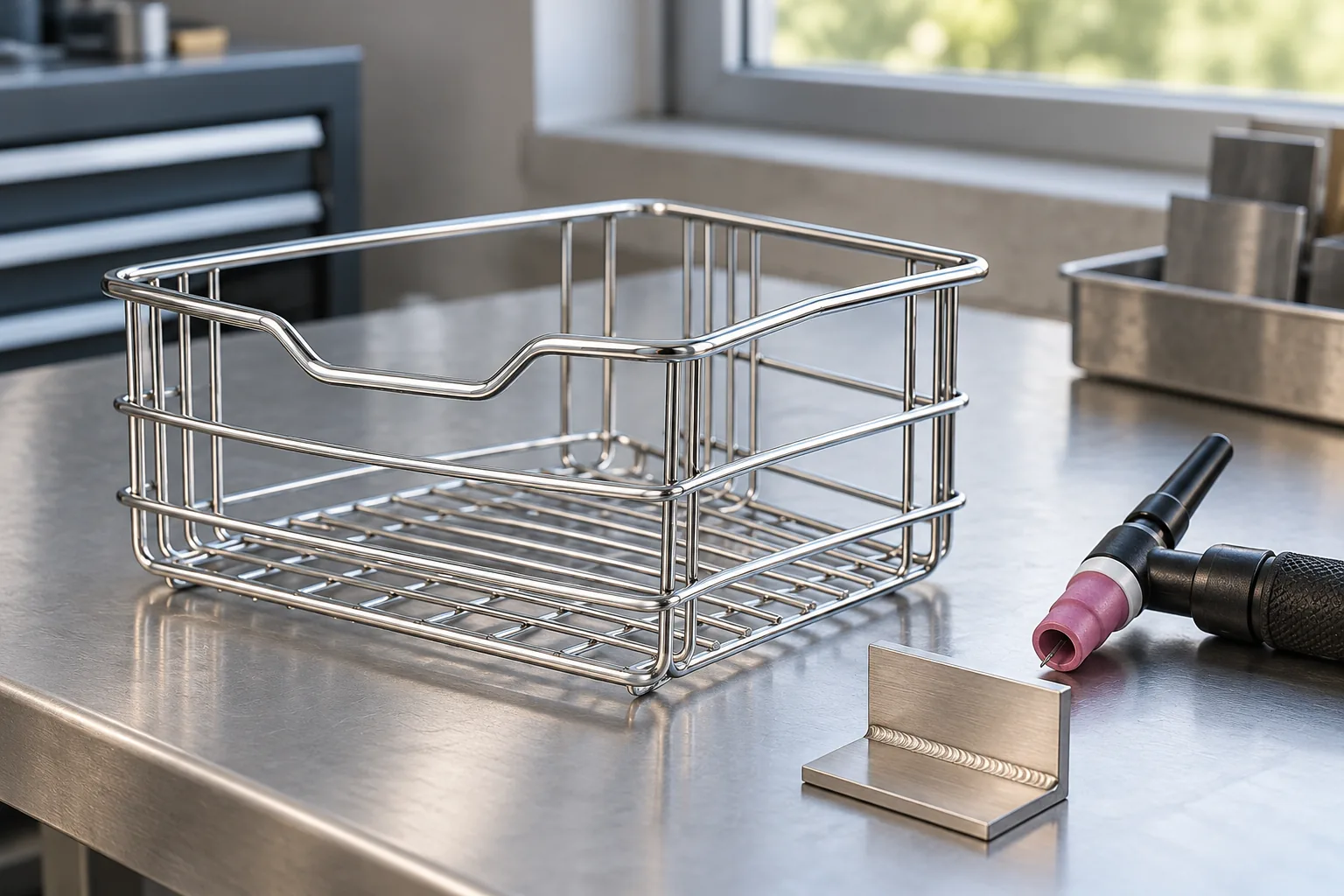
TIG shielding gas excessive flow turbulence is a reason to review the complete shielding arrangement rather than assume that turning up the gas improves a hardware weld. Excessive flow can disturb coverage and draw surrounding air into the shielding stream. A buyer should ask the supplier to identify the gas, torch setup, measurement point and actual joint access, then compare controlled samples. The approval decision belongs to the finished joint and documented process evidence, not a universal flow value copied from a troubleshooting page.
Why can more shielding gas create a sourcing problem?
Shielding gas is intended to protect the welding region from the surrounding atmosphere. For a supplier-quality buyer, the practical issue is whether the proposed arrangement provides suitable coverage at the actual joint throughout the operation. Increasing the flow setting is not proof that this condition has been achieved.
Miller’s TIG shielding guidance explains that gas leaving a nozzle can develop turbulence and entrain atmospheric gases. It identifies higher flow and an initial surge from a long gas line as possible contributors. The guidance also discusses how torch consumables and surrounding conditions influence coverage. These observations support a review of the application; they do not establish a Koitor process setting, defect history or acceptable flow for a particular basket joint.
A bathroom-hardware buyer may receive a sample with discoloration, porosity concerns or inconsistent appearance and be told that the supplier will increase the gas. That proposal needs a basis. The same symptoms can have several possible causes, so the buyer should ask what was observed and which evidence makes shielding flow a credible factor. Avoid diagnosing a weld solely from a photograph.
For a basket or frame assembly, neighboring wires, brackets, fixtures and restricted torch access can affect the proposed setup. A successful flat coupon may not represent the same joint access. The buyer should identify the product location being approved and require the supplier to explain whether the sample represents that location.
The central sourcing question is whether the supplier controls a repeatable shielding condition. This guide addresses flow and air entrainment. Preflow/postflow timing and gas-lens selection have their own roles, but neither topic should replace the specific question of whether the selected flow is appropriate at the joint.
Which gas-flow information should the supplier provide?
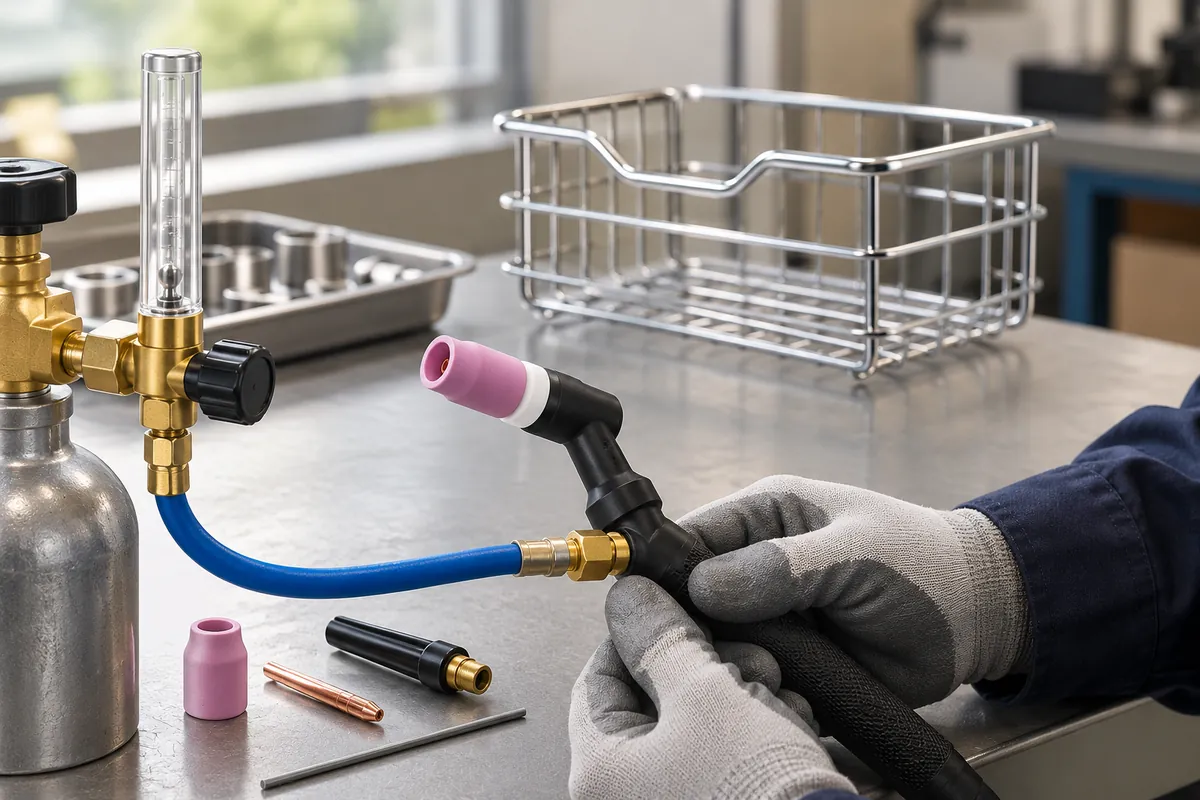
Ask for a clearly identified flow record tied to a specified gas and torch configuration. A number without units, gas basis, measurement location and operating condition may be difficult to interpret. The buyer should not treat a regulator photograph as an independent measurement of coverage at the workpiece.
Start by identifying the gas designation or mixture proposed for the material and joining route. Request the relevant supplier specification if it is needed for the project. This is material information, not a requirement to invent a gas purity limit. If the actual gas or supply condition is unknown, keep it as an unresolved input.
Then establish where the flow is set or checked. A record may refer to a regulator, an inline meter or a suitable check at the torch. Ask the supplier to explain the measurement method and whether the reading represents an open gas circuit, an operating condition or an initial transient. These conditions should be identified before comparing two readings.
The torch record should include the cup/nozzle configuration, relevant electrode extension, torch orientation and access to the joint. Include hose or connection details when they are relevant to a flow surge, leak or restriction investigation. The purpose is to make a comparison reproducible, not to require every buyer to operate welding equipment.
Keep measurement units and equipment basis explicit
Record the unit shown and the meter’s intended gas basis. Different units or instruments should not be compared by their displayed number alone. If conversion or correction is required, ask the responsible technical party to document it. This article provides no calibration claim or universal instrument correction.
The buyer can also ask whether the record reflects the same equipment used for the sample. A supplier may prepare a development coupon at one station and manufacture the hardware at another. That is not automatically unacceptable, but the difference should be disclosed and the production-intent condition should be reviewed.
How can controlled comparisons isolate a flow issue?
Compare samples in which the relevant setup is documented and the proposed change is clearly identified. If several variables change together, a better-looking weld cannot demonstrate which change mattered. The supplier should describe what it held constant and what it evaluated.
A useful trial might compare the supplier’s proposed flow conditions with the same gas, material, joint geometry, torch configuration and workpiece preparation. The supplier should choose and justify the conditions; the buyer should not prescribe arbitrary low and high values. Record each sample and the observation or test used to evaluate it.
| Comparison record | What it can clarify | What remains uncertain | Buyer follow-up |
|---|---|---|---|
| Regulator setting alone | The indicated supply-side setting | Actual flow and coverage at the joint | Identify unit, gas basis and measurement point |
| Flow check at the stated point | Flow under the documented check condition | Coverage during a different operating condition | Link the check to the intended setup |
| Controlled coupon trial | Effect of the identified change in that trial | Transfer to restricted product access | Request a relevant assembly sample |
| Product-location sample | Result at the actual geometry reviewed | Other joints or changed setups | Define which joint groups the approval covers |
| Finished-joint evidence | Compliance with the agreed product criterion | Root cause without process records | Retain the trial and inspection link |
The trial should not be reduced to a visual “clean versus dirty” ranking. Appearance may be important, but it can be affected by material, preparation, torch angle, heat conditions and other inputs. Where joint integrity is a concern, agree an appropriate evaluation method with qualified personnel. A visual improvement does not establish a structural requirement.
Review the initial condition as well as steady operation
If the concern appears around starts, ask whether the observed gas behavior changes at initiation. The supplier can explain how the supply system, hose arrangement and control sequence are managed. Do not assume a stable meter reading later in the cycle represents the initial release of gas.
Record the location and timing of the observed issue in plain language. A defect at a start, stop, corner or confined location can direct a more useful investigation than a broad statement that the weld is “bad.” The record should preserve observations before proposing a cause.
How should buyers evaluate sample and production evidence?
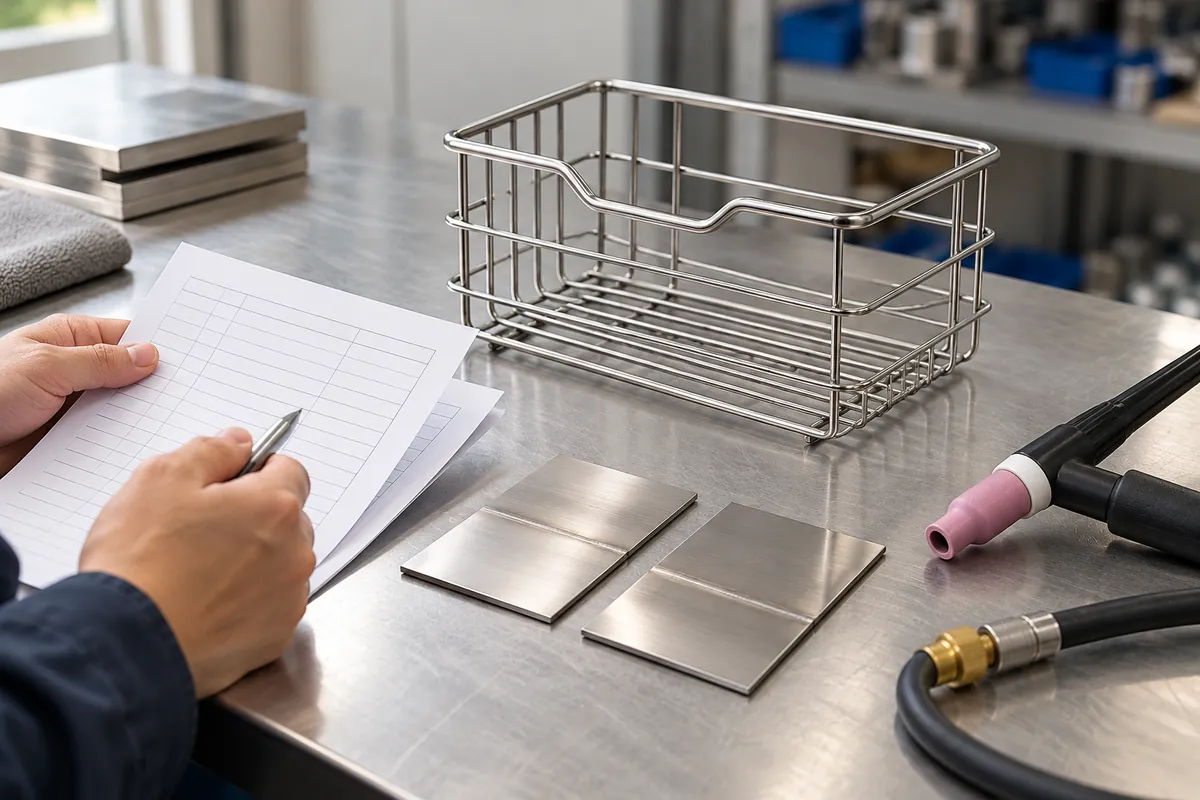
Evaluate the actual joint requirements separately from the proposed shielding explanation. The supplier should show which sample was produced using which setup and which finished-product criterion was checked. The buyer can then decide whether the evidence is adequate for sample approval or whether further review is needed.
Identify the product drawing revision, sample material and finish route. For a visible basket or towel-frame joint, define any appearance-sensitive face and the stage at which the surface is reviewed. If polishing occurs later, preserve enough pre-finish evidence to understand the joining trial rather than relying only on the final polished image.
For dimensional requirements, use agreed datums, support and measurement methods. For integrity requirements, establish a suitable test or examination method, its sample plan and its acceptance basis. No flow setting, surface color or isolated sample photograph can replace that agreement.
Sampling should address the actual question. If the buyer is concerned about different joint access, evaluate relevant locations or joint groups. If setup changes between operators or stations are the concern, ask how those conditions are represented. If repeated production is the concern, choose a proportionate plan that covers that condition. There is no universal sample count in this article.
Use a focused corrective-action record
Where a sample issue is found, ask the supplier to record the observation, suspected causes, checks performed, change proposed and confirming evidence. An entry saying “more gas applied” lacks the relationship between cause and result. An entry identifying a changed flow condition and the associated sample evaluation is more useful, provided other relevant inputs are disclosed.
If evidence conflicts, first check sample identity, setup, measurement point and evaluation method. A flow record from another station or a photograph after a different finishing route may not be comparable. Resolve the discrepancy before declaring that the shielding arrangement is approved.
Keep the record honest about unknowns. If turbulence was suspected but not observed directly, state that it is a proposed mechanism supported by the trial and other evidence. Do not claim a direct measurement of gas coverage or a confirmed cause if only a finished sample was inspected.
What should enter the RFQ and approval checklist?
An RFQ concerning TIG shielding gas excessive flow turbulence should ask for a justified shielding arrangement and representative finished-joint evidence. The buyer should define the product and requirements while the supplier’s qualified personnel establish the process conditions.
- Product drawing, joint location and assembly revision.
- Known material, delivered surface condition and intended finish route.
- Product function and the appearance, fit or joint requirement being evaluated.
- Proposed gas designation and any specification required by the project.
- Torch cup/configuration, access and orientation relevant to coverage.
- Flow units, measurement method, measurement point and check condition.
- Any relevant supply, hose, connection or initial-flow concern.
- Identified trial samples and a statement of variables changed or held constant.
- Finished-joint evaluation method, sample plan and acceptance responsibility.
- Changes that require notification or renewed approval.
Compare costs using the actual approved approach
Gas usage, consumable selection, setup, inspection and rework can all affect the production decision. Ask the supplier to identify the implications of its proposed change. Avoid assuming that a higher flow is justified by quality or that a lower flow is justified by savings before the sample evidence is reviewed.
A development trial has a cost and may be necessary to establish the route. Separate one-time evaluation from recurring production work. If a supplier proposes another torch arrangement or an altered fixture for access, compare its product effect and evidence requirements as well as its quoted cost. No generic guide can establish savings for a specific hardware program.
Record the approved setup and change triggers
An approved setup record should connect the gas, torch configuration, joint access and relevant flow check to the sample and acceptance decision. The buyer and supplier should agree which routine adjustments fall within supplier control and which changes need review. A new gas, torch configuration, hose arrangement, station or joint access may warrant attention depending on the validated route.
Koitor Hardware is a family-owned custom metal hardware factory supporting TIG welding and other approved processes for bathroom and home storage products. Exact gas arrangements and project-specific results require confirmation. Buyers can discuss custom metal storage basket production and OEM home storage hardware using a drawing or physical sample and a clear statement of the joint question.
Frequently asked questions
Should a buyer always ask for more shielding gas?
No. The suitable condition depends on the gas, torch setup, surrounding conditions and joint access. Ask the supplier to establish and document an appropriate arrangement, then verify the relevant finished-product requirements.
Does a flowmeter reading prove that the joint is shielded?
It documents a reading at a particular point and condition. It does not independently establish coverage at every joint location. Clarify the method and relate it to the actual assembly sample.
Can discoloration establish excessive gas flow as the cause?
No. Several inputs can affect appearance. Treat it as an observation requiring investigation, and ask what evidence supports the proposed cause. Avoid diagnosing the process from a photograph alone.
Is this the same as selecting a gas lens?
No. Torch distribution hardware is one input. This guide focuses on whether the selected flow and supply behavior are suitable and how the supplier demonstrates that condition at the joint.
What should the buyer approve?
For TIG shielding gas excessive flow turbulence, approve the product sample against its requirements with a documented and representative shielding setup. Retain the basis of the decision so repeat orders do not rely on an unexplained gas adjustment.
Review Your Hardware Drawing and Sample Requirements
Send Koitor the drawing or physical sample, known material and finish, joint location and the approval evidence your buyer team needs. Our family-owned factory can discuss manufacturability and small-batch OEM options; specialized routes and results require project confirmation.
OEM / PRIVATE LABEL
Turn this sourcing guide into a product brief
Share your target product, size, finish, order quantity and packaging requirements. Your team receives a practical manufacturability review before quotation.

 English
  Español
  Português
  Français
  Deutsch
  العربية