

If a supplier has not confirmed a hardware purchase order, the importer should first establish whether the correct PO and revision reached the intended recipient. Then ask what information or decision is still pending and request an explicit response for the affected lines. A sent email, delivery receipt, acknowledgement of receipt and commitment to a quantity, price or date are different events. Silence alone does not confirm that production has started, that a slot is reserved or that a shipment date is agreed. This guide treats unconfirmed hardware purchase orders as a defined buyer decision and ties the review to the specific product, configuration and evidence available.
What does “unconfirmed” mean in a PO workflow?
“Unconfirmed” can describe several different states. The buyer may have sent the document but lack evidence that it was delivered. The supplier may have received it but be checking a drawing, sample, finish or price. The supplier may have acknowledged receipt but not accepted every line or requested date. The supplier may have replied with a partial response that leaves important details open. A useful follow-up begins by separating these situations rather than treating them as one status.
Procurement systems also distinguish an acknowledgement from a confirmation. Infor describes a purchase-order acknowledgement as a vendor notification verifying receipt, while Cargill’s supplier guidance describes confirmation as a written response about specified materials or services and order details. These are examples from specific systems and company procedures, not a universal legal or contractual taxonomy. See Infor’s PO acknowledgement documentation and Cargill’s PO confirmation guidance.
For buyer tracking, use simple operational states that keep facts separate:
- Sent: the buyer transmitted a named PO revision to the intended address or portal.
- Receipt verified: the supplier or system confirmed that the document was received.
- Clarification pending: one or more details, approvals or line items still need resolution.
- Explicit response recorded: the supplier responded to the relevant order details, and the buyer has documented any accepted changes or remaining conditions.
These labels help a team manage its work; they are not a universal standard or a statement about contract acceptance. The parties’ actual terms and applicable law govern legal effect. This article is a communication checklist, not legal advice.
How should a buyer verify receipt of the correct PO?
Start with the buyer’s own record. Confirm the PO number, revision/date, supplier name, buyer entity, currency, line items, quantity, price, requested delivery window and supporting files. Check that the email or portal submission went to the address or account the supplier uses for purchase orders. If the buyer recently changed a drawing, quote or recipient, identify which version was transmitted.
Then ask the supplier to confirm receipt of that exact document. Include the PO number and revision in the subject line, attach the current copy if appropriate, and state which response is needed. If an automated delivery receipt exists, retain it, but do not describe it as supplier confirmation unless it actually reflects a supplier response. A sent message or read indicator does not reveal whether every attachment opened or whether the correct order version was reviewed.
Before resending the full PO, check whether the supplier already created a second order reference or received a prior version through another channel. Repeatedly sending documents without reconciling them can create duplicate or conflicting orders. If the supplier says the order is missing, confirm the correct recipient, channel and document version; then resend once with a clear note superseding or replacing the earlier version only if the buyer’s authorized process permits that action.
Keep the receipt proof with the order record: date and channel sent, exact PO revision, attachments, recipient, supplier reference and written response. If different supplier contacts handle sales, engineering and production planning, identify who is authorized to respond on the order. The buyer should not assume that a technical question answered by one person means the commercial PO was confirmed by another.
Which hardware-order inputs may still be unresolved?
Ask for a line-level explanation rather than a general “please confirm.” For bathroom and home-storage hardware, a supplier may need confirmation of the product drawing, physical sample, material, finish, packaging revision, quantity, labels, included hardware or requested timing. These are examples of possible project inputs, not a claim about a standard Koitor process or every factory’s requirements.
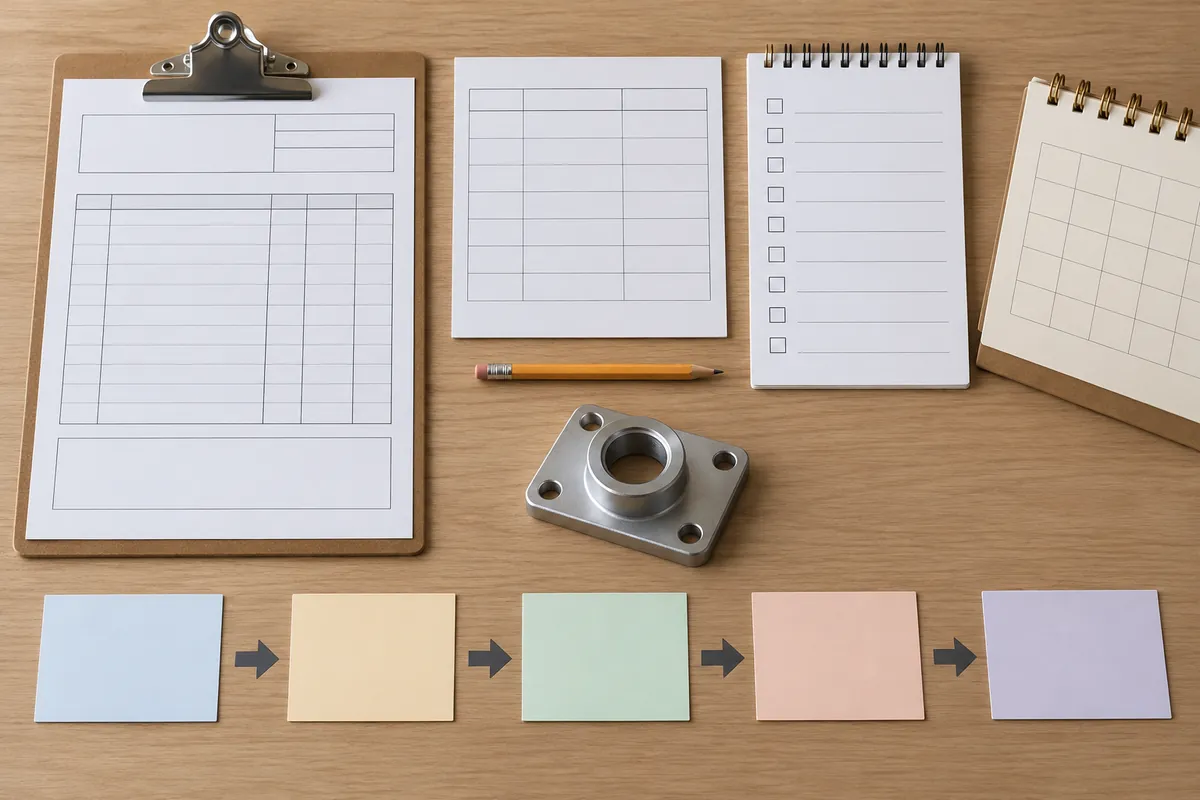
Use a pending-items table that identifies the question, affected PO lines, person responsible, evidence needed, buyer decision and next follow-up. Keep supplier-provided facts distinct from buyer assumptions. For example, if the supplier says the finish sample has not been approved, record that statement and who must approve it. Do not change the order status to “production started” based on a different line’s confirmation.
| Possible open item | What the buyer can ask | What should be recorded |
|---|---|---|
| Product definition | Which drawing, sample or model revision is being quoted? | File name/revision and affected lines |
| Material/finish | Is the specified material and finish understood and available for this order? | Supplier response and any approved alternative |
| Quantity | Is the order quantity clear by SKU and pack level? | Confirmed quantity or discrepancy by line |
| Packaging | Which packaging instruction or artwork version applies? | Approved revision and unresolved inputs |
| Requested timing | Which date is a target and which date is an explicit supplier response? | Date, owner and conditions stated |
| Commercial detail | Are price, currency, included items or other charges understood? | PO comparison and buyer approval needed |
The purpose is to expose dependencies, not to build an invented factory workflow. A supplier may have a different process, and a buyer may already have approved some inputs. Ask what is actually pending for this order. If no response arrives, keep the item open and escalate according to the project’s real decision deadline and agreed contact path.
How should the buyer request a useful supplier response?
Make the request specific, neutral and easy to answer. Identify the PO and version, state the line or question, and ask the supplier to reply with one of: confirmed as shown, clarification needed, or proposed deviation. Ask for the supplier’s own order reference if one is created. If the supplier proposes a different quantity, material, finish or date, request the affected lines and the condition behind the change.
For timing, distinguish the buyer’s requested date from the supplier’s explicit response. A target delivery date in the PO can be a request; it is not evidence that the supplier accepted it. Ask which dates are being discussed—sample approval, production start, completion, cargo-ready, pickup or delivery—and who owns each. Do not compress different milestones into one “lead time” answer.
If the supplier confirms only some lines, capture the confirmed scope and list the rest as pending. If the supplier says “received” but gives no line response, treat that as receipt evidence only until the parties’ actual process indicates otherwise. If the supplier responds with an alternative, route it to the buyer who can authorize the change rather than editing the PO informally in an email thread.
Other organizations publish their own confirmation rules. Cargill’s page, for example, specifies a confirmation process, response timing and required details for Cargill suppliers, with country-specific statements. Those instructions are specific to Cargill and must not be copied as a deadline, contractual effect or legal rule for a different buyer or supplier. See Cargill’s supplier PO guidance. Your own contract, supplier portal, purchasing procedure and project decision deadline control the appropriate follow-up.
When the buyer sends the request, include a clear next action: who must answer, what information is needed and what the buyer will do if the response remains incomplete. Do not threaten penalties or declare a breach based solely on a delay unless the authorized contract owner has reviewed the terms and facts. A concise escalation should identify the unresolved decision and operational consequence without assigning motive.
How should exceptions and follow-up be tracked?
Keep one order-status record with the source evidence attached. Useful fields include PO number and revision, sent date/channel, recipient, receipt proof, supplier reference, response date, confirmed lines, pending lines, proposed deviations, responsible buyer, next action and follow-up date. Record when the status changed and why. If a deadline matters, tie it to an actual project event, such as a planned launch review or booking decision, rather than using an arbitrary standard interval.
If no response arrives, follow the buyer’s approved communication path: verify contact details, resend or use the supplier portal when appropriate, involve the authorized account contact, and alert the internal buyer responsible for schedule decisions. The project team can decide to hold planning, seek clarification or consider another option. This article does not recommend a universal escalation timeline or say that silence means acceptance.
Keep this pre-production question distinct from later reporting about production milestones. Once the order’s scope and supplier response are established, the buyer may track sample approval, material readiness, fabrication, finishing, inspection and cargo-ready status under its normal process. Do not use an article about missing PO confirmation to duplicate the separate production milestone tracker or delivery-performance metric process.
If the supplier reports that the PO conflicts with the final quote or approved drawing, pause the affected lines until an authorized buyer resolves the discrepancy. Retain the original and revised documents, mark which version is active and make the supplier response traceable to it. A changed file name without a revision note can leave both parties believing different orders are current.
What should be confirmed before planning production or shipment?
Before treating the order as ready for downstream planning, confirm the status of each material point that the buyer needs. The supplier’s written response should identify the PO or order reference and any conditions or exceptions. The buyer should compare that response against the current PO and route differences to the right approver. If a production date, cargo-ready date or shipping arrangement has not been explicitly addressed, do not infer it from a receipt acknowledgement.
The buyer may use this checklist:
- Current PO number, revision, buyer entity and intended supplier recipient.
- Proof that the correct version and its required attachments reached the supplier.
- Supplier receipt response and any supplier-side order reference.
- Line-by-line response for product, quantity, price and included items that need confirmation.
- Named open drawing, sample, material, finish, packaging or label inputs.
- Buyer owner authorized to approve any proposed deviation.
- Clear distinction between requested, estimated and explicitly confirmed dates.
- Any conditions the supplier states before it can proceed.
- Next action owner, project-specific follow-up date and escalation route.
- Duplicate-order check before creating or resending an order reference.
The control is complete when the buyer can explain what is confirmed, what remains open, who will resolve it and which version governs the discussion. That is a more reliable planning basis than a vague “order sent” status. It also gives the supplier a concrete chance to identify missing information without presuming that a delay reflects unwillingness or misconduct.
Does an email delivery notification prove the supplier accepted the PO?
No. It may show that a message reached a system or mailbox. Ask the supplier to confirm receipt of the exact PO revision and respond to the order details required under the buyer’s process.
Does a receipt acknowledgement confirm a production date?
Not necessarily. Receipt and schedule commitment are separate questions unless the parties’ documented process says otherwise. Ask for a specific response about the date and any conditions.
Should the buyer treat silence as acceptance?
Do not assume that silence means acceptance. The legal effect depends on the applicable agreement and rules; have the authorized contract owner or qualified adviser review any dispute.
How long should a supplier have to respond?
Use the project’s actual terms, purchasing procedure and decision deadline. Other buyers publish their own service levels, but those are not universal deadlines for a different order.
What if a supplier confirms only part of the order?
Record the confirmed lines and keep the rest pending. Ask which details or approvals are still open and who must resolve them before the buyer relies on the remaining scope.
Keep unconfirmed hardware purchase orders tied to the named product or order configuration, and record which revision and requirements the supplier actually reviewed.
When comparing unconfirmed hardware purchase orders, state the open assumptions and approval owner in the project record rather than generalizing beyond the evidence.
Work With Koitor Hardware
Discuss a Hardware Product Requirement
Share the current product drawing or sample, quantity, finish, packaging and target timing for a project-specific discussion. Koitor can clarify metal-hardware manufacturing questions within its confirmed scope; order acceptance, dates and commercial terms must be explicitly confirmed for the individual project.
OEM / PRIVATE LABEL
Turn this sourcing guide into a product brief
Share your target product, size, finish, order quantity and packaging requirements. Your team receives a practical manufacturability review before quotation.


 English
 Español
 Português
 Français
 Deutsch
 العربية