
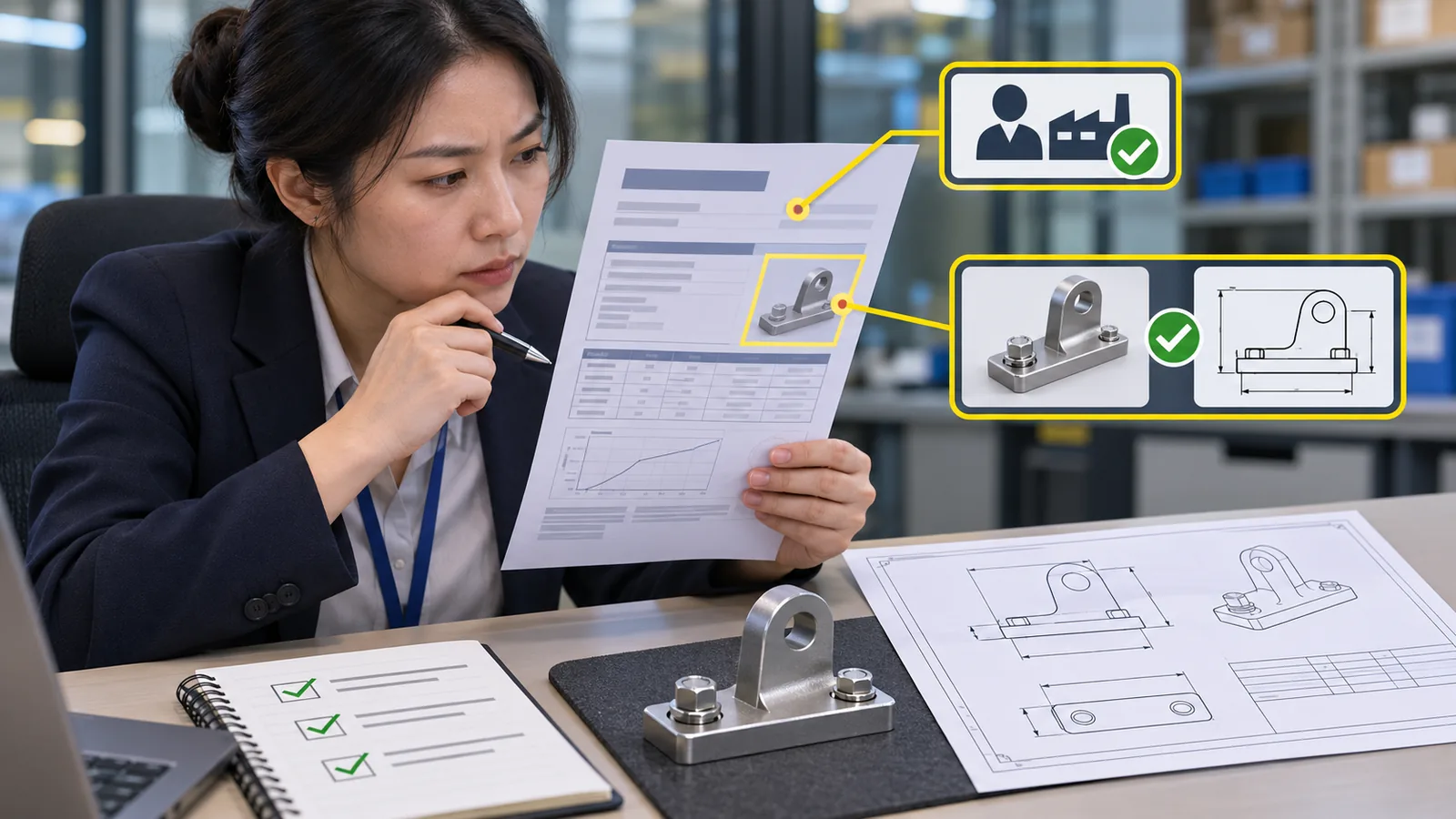
To verify supplier test report authenticity, contact the named issuer through its current official verification channel and follow that issuer’s instructions. Then make a separate assessment of whether the report’s sample, method, product identity, and revision support the claim being made about the hardware order. A genuine document can still relate to a different model, configuration, test method, or claim. An unsuccessful automated check does not by itself prove that a report is fraudulent; ask the issuer to clarify the result and have qualified technical or compliance reviewers assess applicability. To verify supplier test report authenticity, use the issuer’s official channel and preserve its response. Verify supplier test report authenticity separately from the report’s technical applicability to the ordered configuration.
Why are authenticity and applicability separate checks?
Authenticity asks whether the named organization issued or recognizes the document. It concerns the origin and integrity of the record. The issuer may verify a report number, complete document, signature, QR code, or another identifier through a process specific to that organization. A logo, scan, forwarded email, or file name alone does not establish issuance. Buyers should independently find the issuer’s official website and use the current channel it provides.
Applicability asks a different question: does the evidence in the report support the buyer’s intended claim for the actual product configuration? A report can be authentic but relate to another model, material, finish, sample preparation, component, manufacturing revision, or test method. The document may prove a result for the tested specimen without proving the same property for every related product. The person approving the claim should compare the report’s stated scope to the exact order and intended use.
These two checks should not be collapsed into one “certificate verified” status. A buyer can record issuance as confirmed, pending, or unresolved; separately record applicability as supported, limited, or unresolved. This distinction prevents an authentic but irrelevant report from being treated as proof of a claim it does not cover. It also avoids labelling an incomplete digital check as evidence of fraud.
SGS publishes a document verification FAQ describing its own process for checking SGS documents, including cases where an automated check may be incomplete or require further confirmation. SGS also provides a document verification form. These instructions are specific to SGS and may change; they are not a universal procedure for every test laboratory. Buyers should confirm the current route directly with the named issuer. See SGS’s document verification FAQ and SGS’s verification form.
| Review lane | Buyer question | Useful record | What it does not prove by itself |
|---|---|---|---|
| Issuer authenticity | Did the named issuer create or recognize this document? | Issuer response or verification record | That the tested item matches the purchased product |
| Sample identity | What specimen, model, lot, and revision were tested? | Report details and sample description | That all future production has identical configuration |
| Method and result | What method and outcome does the report state? | Full report and referenced method | That the method supports a broader claim |
| Configuration match | Does material, finish, assembly, and component scope match the order? | Drawing/BOM/report comparison | That a buyer’s legal or technical claim is approved |
| Claim scope | What exact claim is supported and under what conditions? | Qualified technical review | Universal performance or compliance beyond scope |
A report can contain confidential or commercially sensitive information. Buyers should not upload full reports to an unverified third-party form, publish them, or forward them broadly unless authorized. Use the issuer’s official process, share only what is required, and follow the buyer’s confidentiality rules.

How should a buyer verify the named issuer?
Begin by preserving the received document exactly as provided. Record the file name, date received, sender or source, document title, report number if present, and any revision or issue date. Do not edit, merge, compress, or crop the only original copy before verification; alterations can remove context or metadata that an issuer may need. If a working copy is necessary, retain the original separately and document the derivative.
Find the verification route independently. Navigate to the named laboratory or certification organization’s official website using a known domain, then search for its document verification instructions. Do not rely only on a QR code, phone number, email address, or hyperlink printed inside the report, since those may direct to an unintended destination. The buyer can compare the organization name and relevant contact path with its official site.
Follow the issuer’s exact process. Some issuers may accept a report number or full document; others may require a form, authorized login, customer consent, or direct contact. Do not assume a process from one lab works for another. SGS’s published guidance applies to SGS documents and should not be generalized to a different issuer. If the report is incomplete, scanned, or fails an automated check, ask the issuer what additional information or method is required.
Record what the issuer actually confirmed. Capture the date, channel, report identifier, response, and any limitation or follow-up. A confirmation that a report exists is not necessarily confirmation that every page, attachment, result, or sample description is correct. If the issuer verifies only part of the document, state that boundary. Avoid translating a narrow confirmation into “all claims verified.”
If the issuer cannot confirm immediately, keep the status pending. Common causes can include incomplete data entry, a file format problem, a report not being searchable in a public tool, or a need for manual review; the buyer should not assume any one cause. Ask the issuer how to proceed. A missing result in a public search tool does not, on its own, establish that a document is false.
Be cautious about third-party verification services. Confirm who operates the site, whether the issuer recognizes it, what data it collects, and whether the supplier or report owner has authorized disclosure. If the buyer’s organization has a legal or compliance team, follow its document-handling policy. Do not send client names, personal information, confidential drawings, or protected product data when the official process does not require them.
How should the report be matched to the hardware order?
Read the full report, not only a cover page or summary screenshot. Identify the tested product, model, part number, sample description, material, finish, test method, preparation, date, result, limitations, and any referenced standard or protocol. Record what is absent or ambiguous. A report title may be broad while the actual tested specimen is narrowly defined.
Build a simple mapping from the report to the buyer’s product configuration. Relevant fields may include:
- Buyer SKU and factory part number.
- Drawing revision and date.
- Bill of materials and component identities.
- Base material or grade as stated in the report.
- Finish or coating system and sample preparation.
- Welded, assembled, or joined configuration.
- Bought-in screws, anchors, pads, or other components if part of the claim.
- Test specimen identity, quantity, and conditioning where stated.
- Test method, acceptance criteria, result, and limitations.
- The exact claim the buyer intends to make.
The point is not to demand that every report contain every field. The report should be compared against the claim and product. If a report concerns base material only, it may not answer a corrosion question about a welded, finished assembly. If a report covers one coating or revision, it may not automatically support another. If a mounting claim depends on a separate anchor or adhesive, a report about the metal body alone may not cover that component.
Connect the report to the tested configuration, not just to a product family name. Two products may share a title or catalog family while differing in size, mounting method, finish, wall thickness, fastener, or manufacturing process. The technical reviewer should determine which differences matter to the reported property and whether the evidence remains relevant. Do not treat any difference as automatically invalidating the report; assess it with the issuer or a qualified reviewer.
Check whether the stated test method fits the intended claim. A result is meaningful only in relation to what was tested and how. The buyer should identify whether the report addresses corrosion, load, coating, material composition, packaging, or another characteristic. A result for one characteristic does not demonstrate unrelated performance. If the buyer needs a legal or regulatory conclusion, involve the responsible qualified professional; a blog checklist is not a compliance determination.
Document the mapping in a table with status for each row: matched, different with rationale, not stated, or unresolved. For example, the report may identify the material and method, while the current product drawing has a later finish revision. That does not automatically mean a retest is required; it means the technical owner should determine whether the revision affects the claim, and whether the issuer or another competent party should advise.
What should buyers do when the product or claim changes?
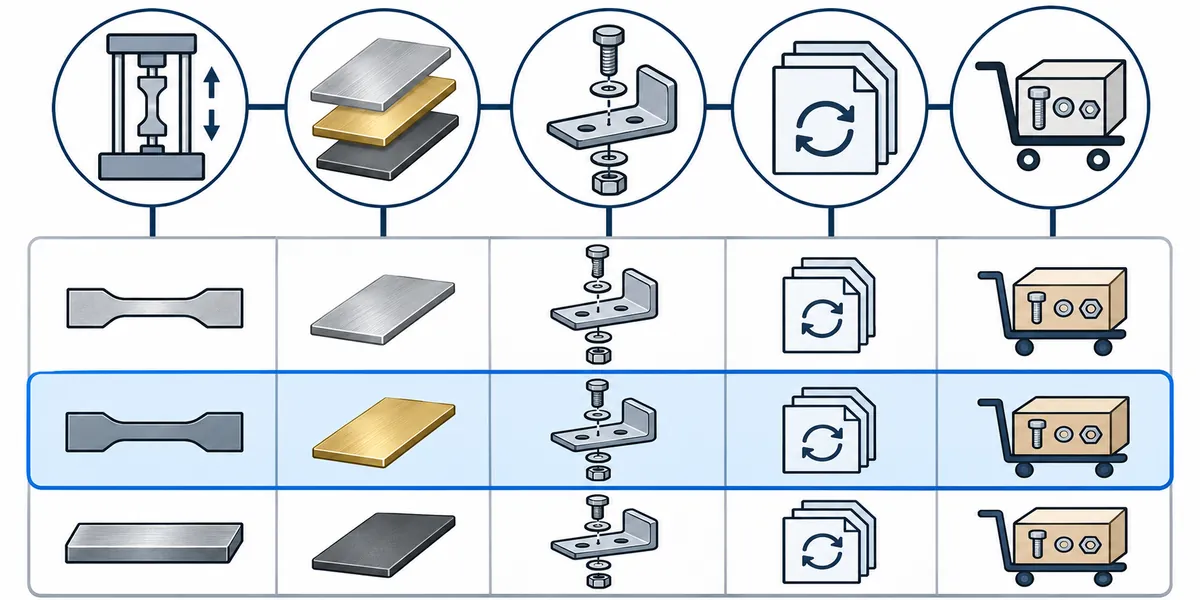
A configuration change should trigger a focused applicability review. Changes may include material, supplier, wall thickness, forming method, weld design, finish, coating thickness, assembly, fasteners, packaging, or the intended use environment. Identify what changed and which characteristic or claim the existing report is being used to support. The decision may be that the current report remains applicable, supports only a limited claim, or does not answer the new question. Do not assume that every change requires new testing or that no change matters.
Ask the issuer or qualified technical reviewer the narrow question. Provide the report identifier, the original tested configuration, the revised configuration, and the exact claim. For example: “Does the report’s tested specimen and method cover the finish revision shown in drawing X?” is more answerable than “Is the product compliant?” Avoid requesting a broad endorsement that exceeds the issuer’s role or the evidence.
If further testing is recommended, define the specimen and method with the reviewer. The sample should represent the actual product and configuration relevant to the claim. The buyer should record who selected the sample, the sample identity, any preparation, and how the result will be used. Testing is not an automatic response to every engineering change; it is a decision based on technical scope and intended claims.
Keep old and new evidence linked to the right revisions. A report may remain valid for a legacy product while a new version is under review. Mark the revision range and claim scope in the internal file, product data sheet, and approval record. Avoid using the newest report for an older model if it does not apply, or retaining an old claim after the product configuration has changed.
If the report is genuine but incomplete for the buyer’s claim, communicate the limitation accurately. The supplier can help identify product details and the buyer’s technical team can determine the next evidence needed. A genuine report is not a marketing authorization for any wording. Product claims should remain within the scope of the tested specimen, method, and documented result.
How can procurement organize report review and approval?
Assign distinct owners. The supplier or manufacturer can provide the product identity, drawing, BOM, finish, sample, and change history. The named issuer is the source for its verification process and report interpretation within its scope. The buyer’s quality or engineering team evaluates configuration mapping. Compliance or legal professionals review applicable market claims where required. Procurement coordinates records and avoids treating the report as self-approving.
Use a controlled record with two status fields: authenticity and applicability. Add a third status for claim approval if the buyer needs to publish product statements. An example record might say “issuer verification: confirmed through official portal on date X; sample scope: model A, finish B, revision C; order match: finish differs; technical review pending; public claim: not approved.” This is clearer than an undifferentiated green check mark.
Keep the source documents together. Preserve the original PDF, verification response, report attachments, matching drawing/BOM, change review, and final decision. Use access controls for confidential documents. Record the file hash only if the buyer’s document-control process uses it; do not imply that a hash proves the issuer issued the report. A hash can help identify a file version but not verify its origin.
A buyer can use a review checklist:
| Review step | Evidence to keep | Owner |
|---|---|---|
| Preserve original | Original received file and source/date | Procurement or document control |
| Find official route | Issuer’s current official verification guidance | Procurement/compliance |
| Verify issuance | Issuer result, date, reference, and limitations | Document owner |
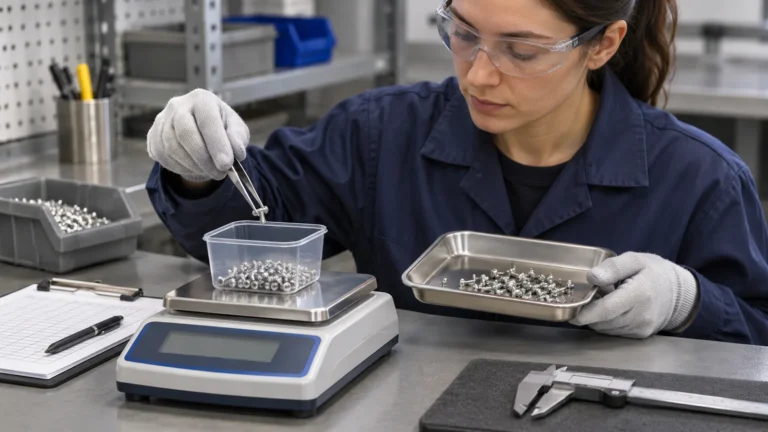
| Identify tested object | Sample, model, revision, materials, finish | Supplier and product engineer |
| Map method to claim | Method, conditions, result, and stated scope | Qualified technical reviewer |
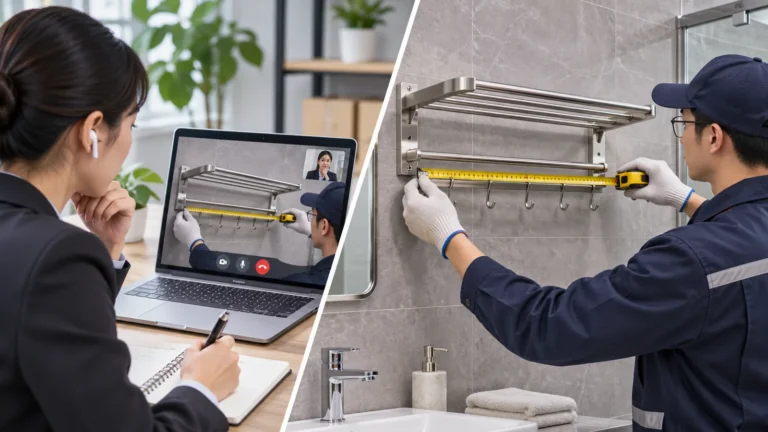
| Compare order configuration | Current drawing, BOM, approved sample | Product/quality owner |
| Approve wording | Claim text and supporting evidence | Authorized claims/compliance owner |
| Recheck changes | Change record and applicability disposition | Engineering and quality |
Maintain a report-to-product applicability matrix
For recurring hardware programs, a short matrix can make report review repeatable. Useful fields include report issuer, report number and issue date, document revision, test laboratory or subcontractor if stated, sample name, model and revision, material and finish description, tested configuration, test method and revision, result scope, and the exact product claim the report is intended to support. Record the buyer’s conclusion and reviewer rather than copying a laboratory result into marketing text without context.
Keep the evidence chain intact. Store the original file received from the supplier, the channel through which it arrived, and any issuer verification response. If the issuer confirms a report number but not the product sample, note that distinction. If the supplier sends a revised document, preserve both versions and identify which one was reviewed for the purchase order. A renamed file or screenshot may be useful context but should not replace the original document when the issuer’s process requires the full report.
A change to the order should trigger a scope check. Compare the report’s sample to the item being purchased: geometry, model, component source, material grade where relevant, finish, coating process, assembly, and intended use. Not every difference invalidates a report, and not every similarity makes it applicable. The technical or compliance owner should decide whether the difference matters under the stated test method and claim. If the report does not identify a characteristic clearly, ask the issuer or supplier for clarification instead of filling the gap by assumption.
Separate document authenticity from technical interpretation in the approval workflow. Procurement can confirm supplier identity and document receipt; an issuer can confirm whether it issued a record; engineering can assess whether the tested configuration matches the product; and compliance or legal reviewers can assess whether a proposed market claim is permitted. One person may hold several roles, but the evidence and decision should remain explicit.
If verification is inconclusive, use a neutral disposition such as “issuer confirmation pending” or “scope not yet established.” Contact the issuer through details found independently on its official site, following its stated process. Ask the supplier for the original file, sample identity, and test request details. Do not label a document fraudulent solely because an automated lookup fails, a QR code is unreadable, or the issuer has not responded yet. Escalate concerns through the buyer’s established supplier and compliance process.
What mistakes should buyers avoid?
The first mistake is checking only the logo or report number. These identifiers are not a substitute for the issuer’s official verification process. Use the channel the named organization currently provides.
The second mistake is treating an automated failure as proof of fraud. A verification tool can return an incomplete or unclear result for reasons that require the issuer’s explanation. Keep the status unresolved and ask the issuer before making an accusation.
The third mistake is verifying issuance but skipping scope. A genuine report for another sample or revision may not support the buyer’s current claim. Map both report and order configuration.
The fourth mistake is relying on a cover page or excerpt. The test method, sample description, limitations, or attachments may change how the result should be interpreted. Review the full document with qualified technical support.
The fifth mistake is assuming a material certificate proves finished-product performance. Material identity, finish, welds, assembly, components, and the test method may all affect what a report demonstrates. Match evidence to the specific claim.
The sixth mistake is making a broad public claim from a narrow test. A result for one specimen under one method does not necessarily prove lifetime performance, universal compliance, or suitability in every environment.
The seventh mistake is uploading sensitive documents to an unverified portal. Use the actual issuer’s official process, confirm authorization, and protect customer, supplier, and product data.
The eighth mistake is treating Koitor or a supplier as the report issuer. Unless the issuer is specifically named and confirms the report, manufacturing communication does not constitute laboratory verification or certification. The supplier can help map the product configuration; the issuer and qualified reviewers handle their respective roles.
Buyer checklist and frequently asked questions
Before relying on a supplier test report, confirm:
- Original file, source, issue date, and document revision are preserved.
- Named issuer and its current official verification route are independently identified.
- Verification response, date, reference, and limitations are recorded.
- Full report and attachments have been reviewed.
- Test specimen, model, revision, material, finish, and assembly are identified.
- Method, conditions, result, and limitations match the intended claim.
- Current order drawing and BOM are compared with the tested configuration.
- Any change is assessed by a qualified technical reviewer.
- Authenticity and applicability are tracked as separate decisions.
- Claim wording is limited to approved evidence.
- Confidential report handling follows the organization’s process.
If an online verification tool cannot find a report, is it false?
Not necessarily. The result may be incomplete or require a different issuer process. Contact the named issuer through its official channel and record the response before drawing a conclusion.
Can a genuine report be irrelevant to the order?
Yes. A genuine document can cover another model, sample, revision, material, finish, method, or claim. Verify issuance and applicability separately.
Does a report for the base metal prove a finished bathroom product’s corrosion performance?
Not automatically. The report’s sample and method should be compared with the finished product and the specific claim. Ask a qualified technical reviewer whether the evidence is adequate for the intended purpose.
Does every product change require new testing?
Not necessarily. Assess whether the change affects the property and claim supported by the report. The issuer or a qualified reviewer may recommend that existing evidence remains sufficient, is limited, or needs additional work.
Does Koitor authenticate supplier or laboratory reports?
The reviewed company profile does not establish a laboratory, certification, or report-authentication service. Koitor can discuss product configuration and manufacturing information for a specific OEM project; the named issuer should confirm its report.
Work With Koitor Hardware
For an OEM product review, share the current drawing, BOM, material and finish scope, and the claim or buyer requirement the report is intended to support. Koitor can help clarify manufacturing configuration for its confirmed product scope; issuer verification and technical acceptance remain with the named issuer and the buyer’s qualified reviewers.
Discuss Your Hardware Project
OEM / PRIVATE LABEL
Turn this sourcing guide into a product brief
Share your target product, size, finish, order quantity and packaging requirements. Your team receives a practical manufacturability review before quotation.
 English
 Español
 Português
 Français
 Deutsch
 العربية