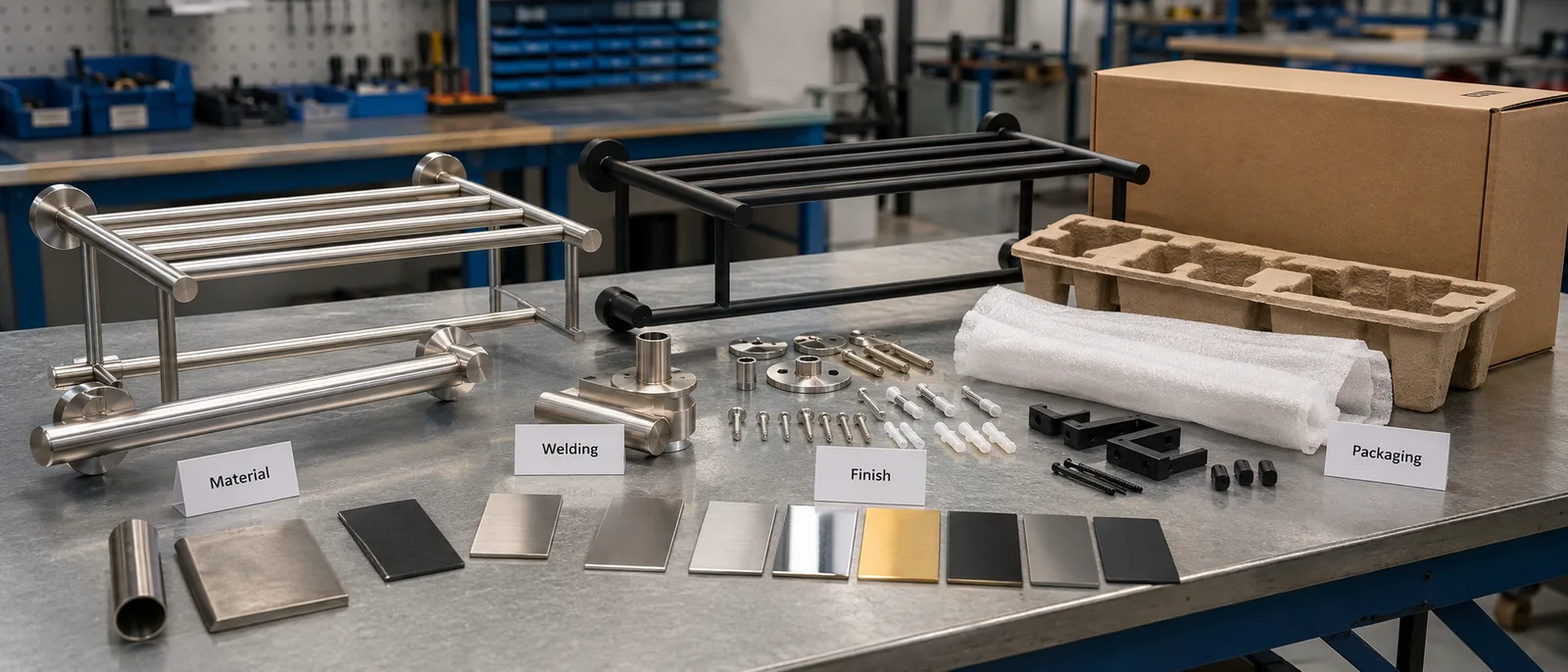
Bathroom towel rack rust prevention starts before production, not after the product reaches the buyer’s warehouse. Importers should review material choice, welding points, surface finish, drainage exposure, mounting hardware and packaging protection before approving samples. No bathroom hardware supplier should promise that a towel rack is free from rust risk in every environment, but a good OEM process can reduce risk by matching material, finish and structure to the target market. The safest approach is to confirm a real sample, inspect high-risk areas and lock the approved finish and packaging before bulk production.
Why Do Bathroom Towel Racks Rust?
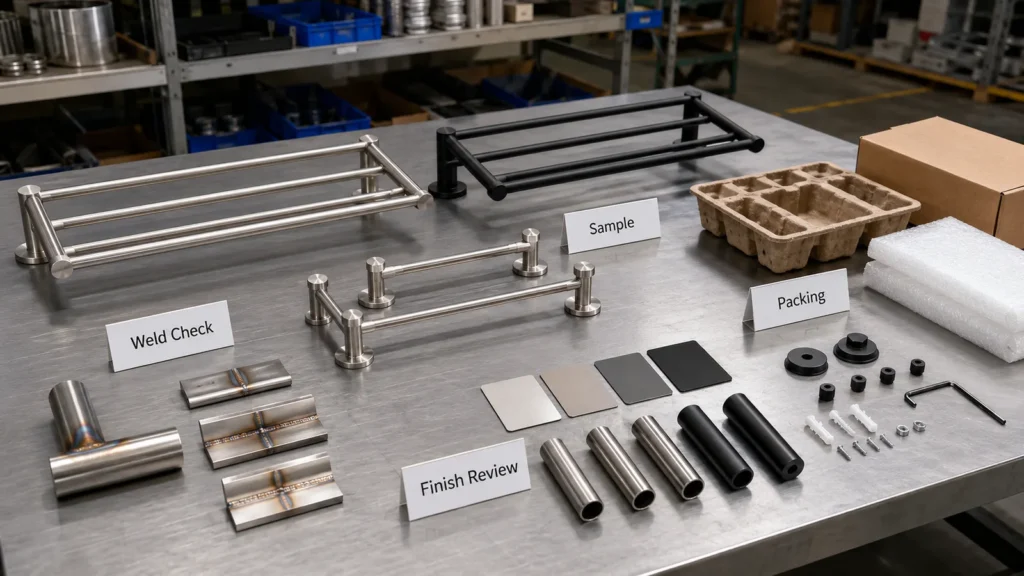
Bathroom towel racks work in a difficult environment. They may face moisture, cleaning chemicals, wet towels, poor ventilation, scratches during installation and long-term contact with mounting hardware. Rust risk often appears when the product material, surface finish or packaging is not suitable for the buyer’s use case.
For importers, rust is not only a technical issue. It can become a retail return problem, a customer review problem and a repeat-order problem. A towel rack may look acceptable in a catalog photo, but the real risk is hidden in weld joints, tube ends, drilled holes, screw contact points, coating edges and places where water can sit after use.
Koitor Hardware’s custom bathroom towel rack manufacturing page is the most relevant reference for buyers who need to discuss material, structure, finish and sample development before placing an OEM order.
Which Material Choices Affect Rust Risk?
Material is the first question buyers usually ask, but it should not be the only question. Stainless steel, powder-coated steel and other metal options can all be used in bathroom storage hardware when the product design and finish are suitable. The wrong assumption is to treat the material name alone as a complete quality answer.
For stainless steel bathroom hardware, buyers should confirm the material assumption, surface finish and all mixed components. A rack body may be stainless steel while screws, wall plugs or decorative caps use another material. If those parts are not reviewed together, corrosion complaints may still happen around contact points.
For a powder-coated steel towel rack, buyers should review the base metal, coating preparation, coating thickness consistency, weld coverage, corner coverage and packaging protection. Powder coating can support strong retail color options, but damaged coating or weak coverage around welds can expose risk areas.
An anti rust towel rack should be discussed as a risk-control project, not as a slogan. Buyers should ask how the material, finish, structure and packaging work together for the target bathroom environment.
For buyer teams comparing several suppliers, the material conversation should be written into the RFQ. Ask each supplier to quote the same material assumption, same finish requirement, same mounting hardware and same package. This makes the price comparison more useful and keeps the discussion focused on real bathroom towel rack rust prevention decisions instead of general marketing language.
How Do Welding, Structure and Surface Finish Matter?
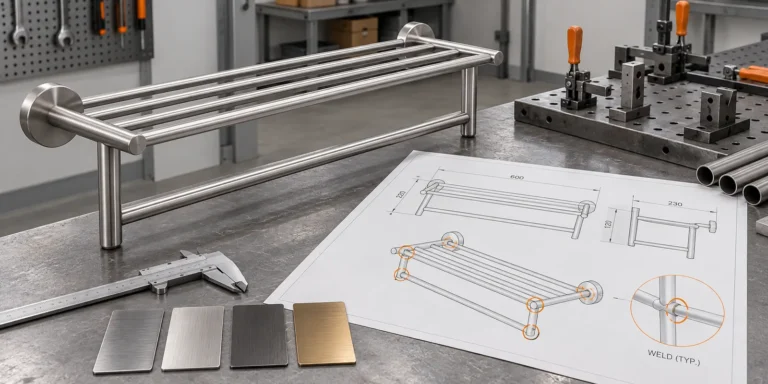
Rust often begins around details that are easy to miss: welded joints, punched holes, tube ends, sharp corners, screw holes and places where coating coverage is thin. These points can be more important than the large flat visible surfaces. A sample review should therefore include close inspection of hidden and high-contact areas.
Structure also affects water behavior. A wall-mounted towel rack should allow water to drain and air to circulate. If the design traps moisture inside a tube end, under a bracket or between parts, surface finish alone may not solve the problem. The mounting method, tube layout and bracket design all matter.
| Risk Area | What Buyers Should Check | Why It Matters |
|---|---|---|
| Weld joints | Clean weld area, no rough high-risk edges, finish coverage after welding | Rust complaints often begin around poorly finished weld points |
| Tube ends and holes | Openings, drilled holes, water-trap points and edge treatment | Moisture can collect where the structure is not reviewed carefully |
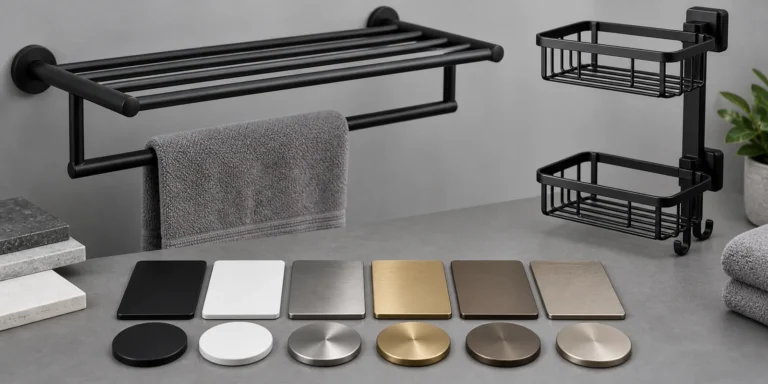
| Surface finish | Stainless finish, powder coating coverage, color chips and sample consistency | Finish quality affects appearance and corrosion-resistance potential |
| Mounting hardware | Screws, wall plugs, caps and contact between different materials | Small accessories can create visible complaints even when the rack body is acceptable |
| Packaging | Scratch protection, part separation, carton pressure and handling risk | Surface damage during transport can expose risk before installation |
Buyers sourcing rust resistant bathroom hardware should therefore ask for practical sample photos and physical samples, not only a material name. The product must be reviewed as a complete system.
What Should Importers Check During Sample Approval?
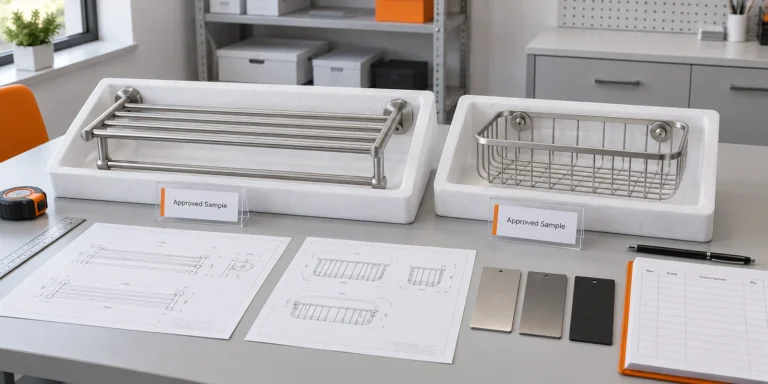
Sample approval is the most important stage for bathroom towel rack rust prevention. A buyer should not approve a sample only because the general shape looks correct. The sample should be checked for structure, finish, packaging fit and the way all accessories are supplied.
Importers should inspect the towel rack under normal light and from several angles. Look at weld points, mounting brackets, screw holes, tube ends and edges. For stainless steel products, check whether the finish is consistent and whether there are rough areas around welds. For powder-coated products, check whether coating reaches corners and hidden areas.
Packaging should also be reviewed at the sample stage. A towel rack may leave the production line with a good finish, but scratches from poor separation, tight packing, unprotected screws or carton pressure can create surface damage before the product reaches the buyer. For e-commerce and retail orders, packaging protection should be treated as part of the product specification.
If a buyer plans to build a full bathroom storage series, the same approval logic should be applied across towel bars, hook racks, shower caddies, tissue holders and wall shelves. A consistent material and finish strategy helps reduce mixed-quality feedback across the product line. It also helps the supplier prepare repeat orders with fewer unclear changes.
For broader OEM bathroom hardware manufacturing topics, buyers can also review Koitor’s custom bathroom hardware manufacturer page.
What Common Sourcing Mistakes Increase Rust Complaints?
The first mistake is asking for the lowest price without confirming the full specification. Lower cost may come from a different material, thinner tube, simpler finish, weaker mounting hardware or less protective packaging. A low price is not useful if it creates repeat complaints later.
The second mistake is treating “anti-rust” as a fixed product label. Real risk control depends on material, finish, welding, structure, installation environment and packaging. Buyers should ask suppliers to explain what is being controlled instead of accepting a broad promise.
The third mistake is approving only the visible front surface. Rust and finish complaints often begin at edges, welds, screw holes and hidden surfaces. A buyer checklist should include these areas before bulk production starts.
The fourth mistake is changing material or finish after sample approval without rechecking packaging and appearance. A brushed stainless finish and a matte powder coating may need different handling. Changing finish can also change the way scratches or rubbing marks appear.
The fifth mistake is ignoring mounting hardware. Screws, plugs, caps and contact points can affect the final customer experience. If the towel rack body is acceptable but the mounting hardware stains, scratches or looks mismatched, the buyer may still receive complaints.
How Can Koitor Help Reduce Rust Risk in OEM Projects?
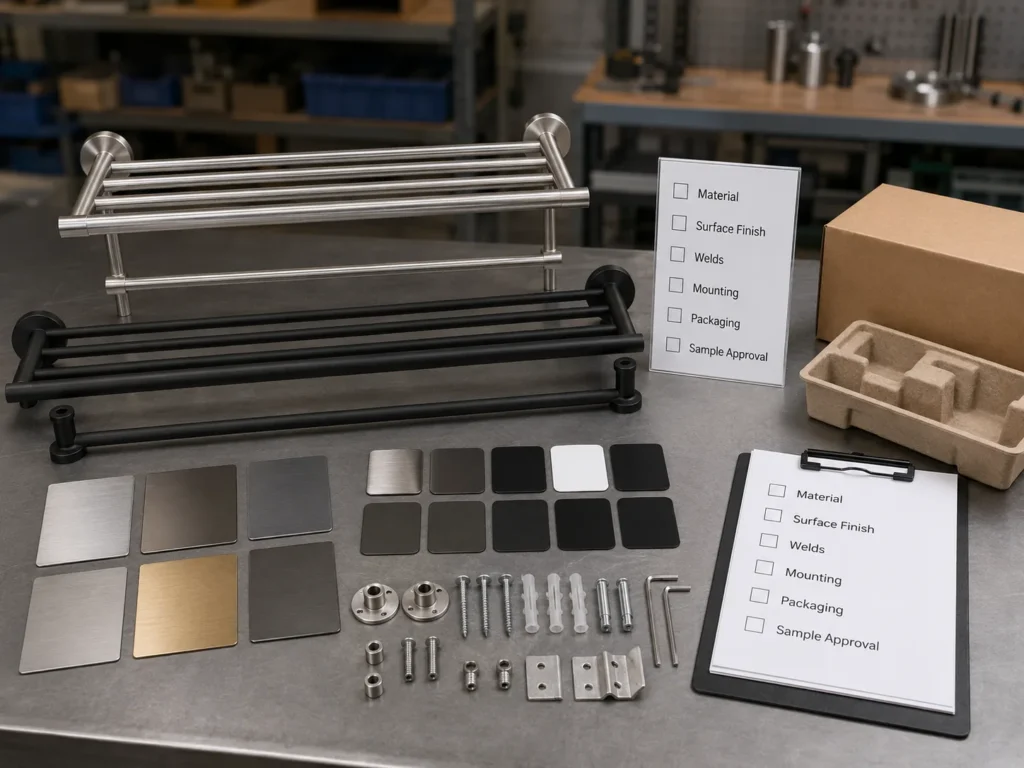
Koitor Hardware is a family-owned custom metal hardware factory specializing in bathroom and home storage hardware. For towel rack projects, Koitor can review drawings, physical samples, material preferences, finish expectations, mounting details and packaging ideas before quotation. This helps buyers avoid unclear assumptions before sampling.
Koitor’s practical manufacturing review can include welding points, tube or wire layout, bracket structure, powder coating concerns, stainless finish expectations and packaging protection. For small-batch OEM projects, this review is useful because buyers can test a product direction before committing to larger repeat production.
Samples usually take 5-7 working days after the main details are confirmed, depending on product structure, material and finish. MOQ can start from 100 pcs depending on product structure, material, finish and packaging. Bulk production usually takes 4-6 weeks depending on order quantity, material availability, finish and packaging details. These details should be confirmed for each project instead of treated as fixed promises.
For importers, the value of a direct factory discussion is practical detail. Instead of asking only for an anti rust towel rack price, buyers can ask Koitor to review where rust complaints may start, which finish options fit the target price level and how packaging should protect the surface. That makes bathroom towel rack rust prevention part of the development process rather than a late-stage quality argument.
For related sourcing guides and future quality topics, use the approved Koitor resources page.
Before bulk production, buyers should keep one approved sample, one approved package reference and clear photos of key finish areas. These records help both sides compare later production against the same agreed standard.
Buyer checklist before requesting a quotation:
- Product type: towel rack, towel bar, towel shelf, hook rack or wall-mounted bathroom rack.
- Target material: stainless steel, powder-coated steel or another confirmed option.
- Bathroom rack surface finish: brushed, polished, matte powder coating or custom color.
- Product size, tube diameter, wall bracket design and mounting method.
- High-risk areas to inspect: welds, tube ends, holes, edges and screw contact points.
- Mounting hardware requirements, including screws, plugs, caps and instruction sheet.
- Packaging method, including part separation, surface protection and carton layout.
- Target market, sales channel and expected bathroom use environment.
- Sample approval plan for structure, finish, mounting and packaging.
- Target MOQ, trial order quantity and possible repeat-order plan.
Frequently Asked Questions
Can any bathroom towel rack completely avoid rust in every environment?
No. Bathroom conditions, cleaning chemicals, scratches, installation and maintenance can all affect metal hardware. A better sourcing goal is to reduce rust risk through suitable material, finish, structure and packaging choices.
Is stainless steel always the best choice for towel racks?
Not always. Stainless steel can offer strong corrosion-resistance potential, but powder-coated steel may fit projects that need color, cost control or a specific retail style. The right material depends on the buyer’s market.
What should buyers check on powder-coated bathroom racks?
Check surface preparation, coating coverage, weld joints, corners, screw holes and packaging protection. Coating damage or weak coverage around high-risk areas can increase complaint risk.
Why does packaging matter for rust prevention?
Packaging can protect finished surfaces from scratches, rubbing and pressure during transport. If the finish is damaged before installation, corrosion risk and appearance complaints can increase.
Can Koitor review a towel rack sample before quotation?
Yes. Koitor can review a drawing, physical sample, photo, material idea, finish requirement and packaging concept before quotation and sample development.
Work With Koitor Hardware
Need Help Reviewing Towel Rack Finish Options?
Send Koitor your drawing, sample, size target, material preference, finish requirement, packaging idea or expected order quantity. Our team can review the structure, manufacturability, surface finish and small-batch production options before quotation.
OEM / PRIVATE LABEL
Turn this sourcing guide into a product brief
Share your target product, size, finish, order quantity and packaging requirements. Your team receives a practical manufacturability review before quotation.
 English
  Español
  Português
  Français
  Deutsch
  العربية