

Incoterms ownership payment risk hardware order decisions should be recorded as separate milestones. Incoterms® rules allocate specified delivery obligations, costs and risk between buyer and seller; they do not set the payment schedule or determine when title or ownership passes. Buyers should identify the agreed event, contract clause and evidence for each question rather than treat a shipping term, invoice or paid deposit as a complete answer to all three.
This guide explains an order-record workflow, not legal, tax, banking or insurance advice. The applicable contract, chosen rule, named place, governing law and facts of a transaction matter. Have qualified advisers review the actual terms where ownership, title, insolvency, payment or loss exposure carries material consequences.
Why are the three milestones different?
A hardware order can involve at least three distinct questions. First, what payment is due, when and against which documents? Second, where and when does delivery occur and risk of loss transfer under the agreed Incoterms® rule? Third, under the contract and applicable law, when does ownership or title transfer? The answers may relate to different events and evidence.
The U.S. International Trade Administration’s Know Your Incoterms guidance explains that Incoterms® allocate seller and buyer responsibilities involving tasks, costs and risks, and expressly lists payment timing and title transfer among matters they do not determine. The ICC’s Incoterms® and Commercial Contracts Q&A makes the same central distinction: the rules are not a complete sale contract and do not deal with payment timing or transfer of property/title/ownership. These primary sources explain the scope boundary; they do not interpret a buyer’s specific contract.
The operational problem is that order teams often place these events in different systems. Procurement may store an Incoterm and named place on the purchase order; finance tracks deposits and balance payments; warehouse staff record when goods are packed or released; logistics tracks carrier handover; and legal maintains the sales contract. If the order record does not connect them, a team member may assume that payment means the goods are owned, that risk transfer means ownership transfer, or that the factory can release goods whenever a payment clears. Those assumptions need not match the signed terms.

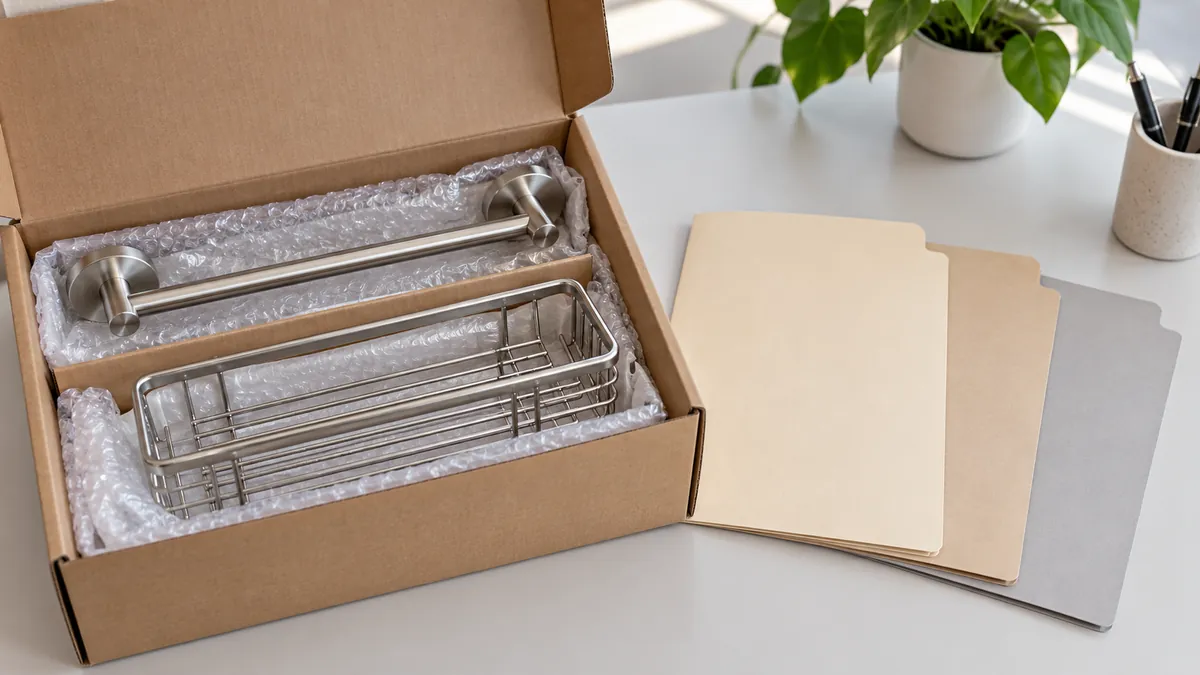
The image shows a recordkeeping concept, not a legally valid form. The buyer’s actual contract and governing rules control. Its purpose is to keep each milestone visible for the people who administer the purchase.
What should the payment record say?
The payment record should identify the amount or calculation, currency, due event, invoice or document that supports it, payment route and responsible approver. A schedule might include a deposit, a balance before shipment or payment against agreed documents, but those are commercial options to negotiate, not a universal template. The parties should describe the actual trigger in the contract or purchase documents and confirm which document evidences it.
Avoid a vague entry such as “balance before delivery” if “delivery” has multiple meanings in the order. Does it mean production completion, readiness notice, carrier pickup, arrival at port, or receipt at the buyer’s warehouse? A payment trigger should name the agreed event and the document used to confirm it, such as a specified inspection record or shipping document if the parties have chosen one. Do not assume that a document guarantees the underlying condition of goods beyond what it actually shows.
Finance and procurement should reconcile the payment record with the sales contract, purchase order and invoice. If a payment depends on a document, define who issues it, what information it must contain, how corrections are handled and what happens when it is delayed. If any retainage, credit, deposit application or disputed amount is contemplated, have advisers review the specific language and applicable payment rules.
How should delivery risk be recorded?
Record the exact Incoterms® rule, version and named place or port agreed by the parties, along with the sales contract or purchase order that incorporates it. The named location matters: the ICC explains that the place specified with the rule is central to identifying the delivery point and risk allocation, and that for some rule groups the carriage destination and delivery point differ. Therefore, copying three letters without the location and version can leave an important part of the term unclear.
The rule does not by itself tell the buyer whether the products match the approved drawing, when payment is due, or who owns the goods. It addresses defined delivery obligations, costs and risk matters. A buyer’s logistics record should connect the chosen rule with the planned transport mode, carrier handover, insurance arrangements agreed separately where needed, and the documents expected from each party. Ask a freight professional or legal adviser to review any unusual route, carrier structure or contract.
A useful order file keeps three records linked but separate:
| Question | Record to consult | Evidence to preserve |
|---|---|---|
| When is payment due? | Sales contract, invoice and agreed payment schedule | Payment instruction, receipt and document that triggers the due date |
| When does delivery/risk transfer occur? | Incorporated Incoterms® rule, version and named place | Delivery or handover record and relevant transport documents |
| When does ownership/title transfer? | Applicable contract clause and governing law | Agreed title clause, payment/acceptance evidence and adviser review as appropriate |
This is an administration matrix, not a determination of legal effect. The record should link to the operative clause and identify the person who can interpret it. If a team member cannot find the clause, that is a document-control gap to resolve before shipment rather than an invitation to infer a result.
What separate ownership or title evidence may be needed?
The buyer should not infer ownership solely from an Incoterm, a transfer of risk, a payment receipt or physical possession. The ICC’s title-transfer Q&A notes that title is outside the Incoterms® rules and that property transfer is not internationally harmonized in one universal way. It discusses the need for specific contractual provision and specialist advice because applicable law may matter. This is why a general article cannot say when title passes in a particular sale.
The parties may wish to record which contract language addresses title, whether an event or condition is intended, which goods or lots it covers, and what documents identify those goods. Any clause should be reviewed by legal advisers familiar with relevant jurisdictions. An invoice, payment ledger, warehouse label or inspection report can help establish operational facts, but its legal significance depends on the actual agreement and applicable law.
For metal hardware orders, lot identification can be especially important. A purchase may contain several SKUs, production batches, cartons, samples or replacements. The buyer can ask the supplier to identify the relevant lot, quantity, packing state, storage location and release status in order records. That practice improves traceability but should not be represented as transferring title or risk unless the contract says so and advisers confirm the effect.
How should the parties connect documents without mixing them?
Use a document map. List the purchase order, sales contract, specification and approved sample, invoice, payment schedule, inspection record, packing list, carrier document and release authorization. For each, record its owner, revision or date, the milestone it supports, and the person responsible for reconciliation. A source document can evidence a fact; it should not be treated as changing a contract unless the parties have agreed that it does.
A change to quantity, shipment date, named place, payment trigger or lot split may affect more than one record. Require written change control so the parties can identify which documents must be updated and whether a new approval is needed. If the amount paid changes but the shipment lot does not, the payment ledger and inventory record may no longer match. If a shipment is divided, verify that every transport document and invoice points to the correct portion of the order.
The order owner should prepare a short exception path for common differences: a corrected invoice, a quantity variance, a delayed carrier pickup, a disputed inspection result or a buyer request to hold finished goods. The workflow should say who can pause release and how approval is documented. Do not use an informal chat message as a substitute for whatever written notice the contract requires.
For procurement teams searching Incoterms ownership payment risk hardware order, the combined query masks three different documentary questions that require separate answers.
What questions should an importer ask before signing?
Ask which Incoterms® rule and version are incorporated, and what exact named place is intended. Ask which party arranges and pays for each transport leg, which documents are expected, and whether insurance arrangements need separate terms. Confirm that finance has a payment schedule with defined triggers. Ask the appropriate legal adviser where the contract addresses ownership or title and how the clause interacts with relevant law.
The importer should also test the record flow with a concrete order scenario. If a deposit is paid before production, what does that payment evidence? If goods are ready but the buyer changes the shipment date, which agreement covers storage and release? If risk transfers at a point before destination, who coordinates the insurance arrangement? Each answer belongs in its appropriate contract or operating record.
Koitor’s company site provides context about its hardware business, not financial or legal advice. Buyers can use contact Koitor to clarify order documentation or product information within the agreed supplier relationship. Contract interpretation, ownership clauses and allocation of loss should be taken to qualified advisers rather than inferred from a product supplier’s operational response.
What mistakes create order disputes?
One mistake is treating the Incoterm as the entire sale agreement. The ICC says the rules address a limited set of obligations and do not replace the sale contract. Product specification, price, payment, title, breach remedies and other matters need their own agreed treatment.
Another mistake is omitting the named place or the Incoterms® version. The buyer may know which three-letter abbreviation appears in a quote while different teams assume different delivery points. Put the rule, location and version in the operative document and reconcile them across the order file.
A third mistake is equating payment with ownership. A deposit can be a payment event under the schedule without, by itself, answering title questions. Confirm the governing contract clause and seek legal review.
A fourth mistake is assuming that risk and title move at the same time. They are separate concepts; the applicable contractual and legal analysis matters. Record the agreed risk point and ownership clause independently.
A fifth mistake is relying on an operational document to resolve a legal gap. A packing list or warehouse record can identify goods and status but does not automatically amend a contract. Get the contract clarified in writing.
Treat Incoterms ownership payment risk hardware order as a search query, not a single legal rule; record delivery risk, payment and title separately.
What should the buyer checklist include?
Before an order is signed, confirm the sales contract, incorporated trade rule and version, named place, payment schedule, title clause, product and lot identification, document responsibilities, insurance questions, change control, shipment records and release authority. Assign an owner for every document and a route for legal or finance questions.
Before payment or shipment milestones occur, reconcile the approved order, current invoice, relevant lot record, agreed trigger and supporting document. If a document is missing or inconsistent, escalate through the contract process. Do not infer a rights transfer or release condition from a payment status alone.
Does an Incoterm decide when the buyer owns the goods?
No. ICC and Trade.gov guidance state that Incoterms® do not determine title or ownership. The contract and applicable law require separate review.
Does paying a deposit prove that the order is owned by the buyer?
Not by itself. The payment schedule and title provisions are separate matters. Review the actual agreement and relevant law.
Is the named place optional if the Incoterm is known?
The named place or point is an important part of the agreed rule. The parties should identify it precisely and use the correct version.
Is this framework legal advice?
No. It is an order-recording framework. Have a qualified legal adviser review the actual contract and jurisdictions involved.
Official references: U.S. International Trade Administration — Know Your Incoterms; ICC Digital Library — Incoterms® and Commercial Contracts; ICC Digital Library — transfer of title Q&A.
Clarify hardware-order documentation with Koitor
For product specifications, order references or supplier-side documentation, share the specific question and purchase record. Contract and legal interpretation should be reviewed by qualified advisers.
OEM / PRIVATE LABEL
Turn this sourcing guide into a product brief
Share your target product, size, finish, order quantity and packaging requirements. Your team receives a practical manufacturability review before quotation.



 English
 Español
 Português
 Français
 Deutsch
 العربية