
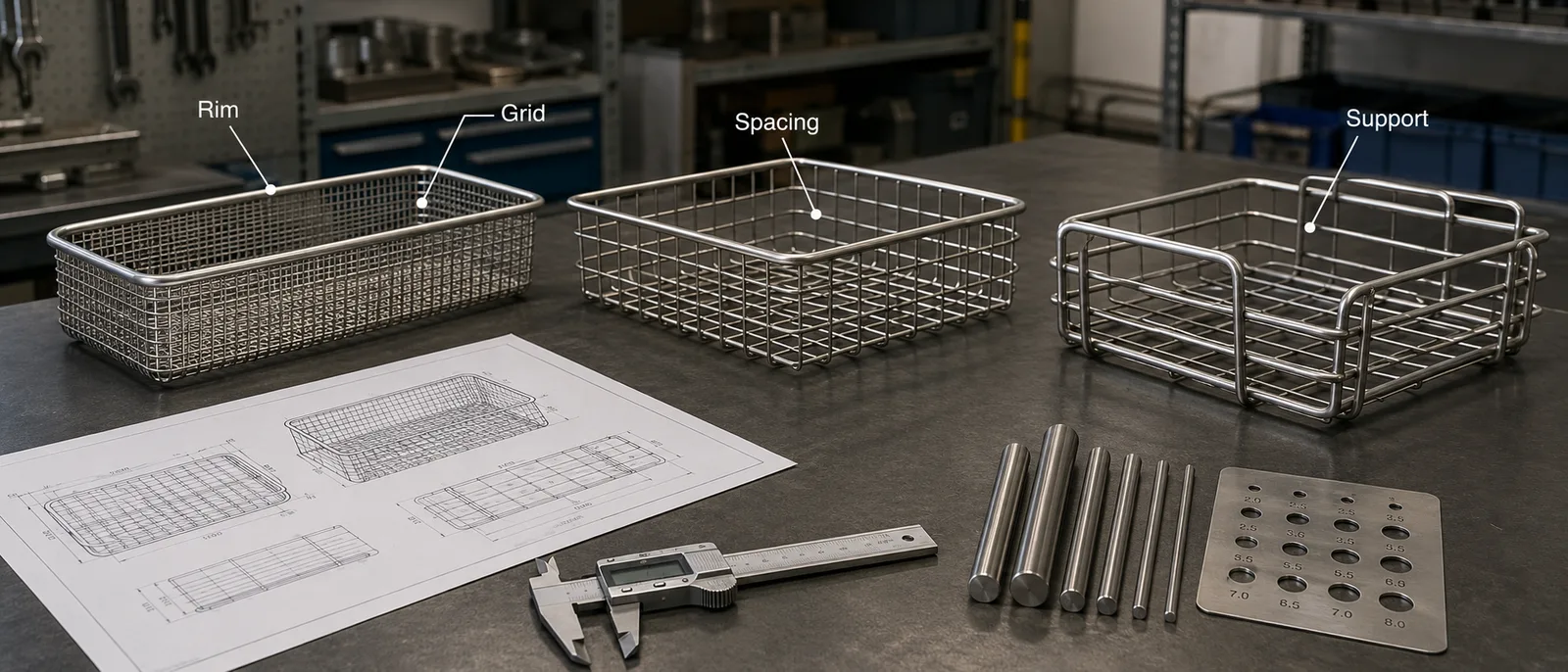
Wire diameter for metal baskets affects stiffness, product weight, weld area, forming difficulty, finish usage, packaging weight and unit cost, but it does not determine basket strength by itself. Importers should select wire size together with span, spacing, rim structure, base support, weld layout, mounting method and intended contents. The correct choice must be confirmed on the complete sample rather than copied from an unrelated basket.
A thicker wire can reduce flex in some structures, yet it may also increase material cost, product weight and manufacturing difficulty. A well-supported basket using a practical combination of rim, grid and weld points may perform better than a heavier design with long unsupported spans or weak mounting interfaces.
What Does Wire Diameter Mean in a Metal Basket Design?
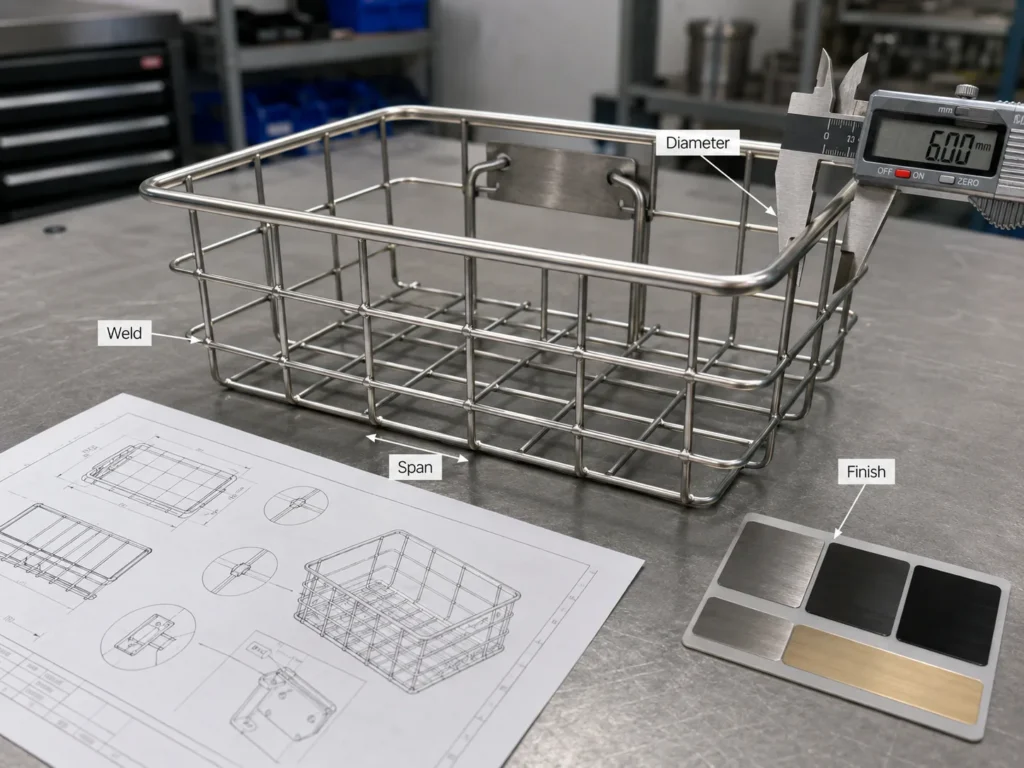
Wire diameter is the measured thickness of a round metal wire used for a basket rim, base grid, side grid, guard or support. A single basket may use more than one diameter because each component performs a different structural and visual task.
The rim often controls the basket opening and supports the surrounding grid. Base wires carry stored items toward the rim, feet or mounting brackets. Side wires contain products and resist local bending. Cross braces, handles or wall brackets may use another size or a formed component rather than simple wire.
Buyers should mark wire size by component on the drawing. A phrase such as “heavy wire basket” is not measurable and can be interpreted differently by each supplier. The drawing should also show center-to-center spacing, overall dimensions, rim construction, joints and visible surfaces.
Wire diameter is usually discussed with material and finish. Steel wire intended for powder coating has different visual and process considerations from a polished stainless design. Surface treatment adds appearance and protection but should not be treated as a substitute for a suitable structure.
For custom projects, review Koitor’s custom metal storage basket manufacturing process when preparing drawings, samples and basket-structure questions.
How Does Wire Diameter Affect Basket Structure and Use?
Wire diameter affects local stiffness and resistance to bending, while the complete basket geometry determines how forces travel through the product. Buyers should evaluate diameter as one variable inside the structure, not as a universal rating.
| Design choice | Possible structural effect | Possible cost or process effect | Buyer check |
|---|---|---|---|
| Increase all wire diameters | May reduce flex and create a heavier visual appearance | More material, weight and forming effort | Is every component carrying meaningful structural work? |
| Use a stronger rim with lighter infill | Can support shape while keeping the grid visually open | Requires suitable joints between rim and infill | Check rim distortion, weld layout and base support |
| Reduce wire spacing | May improve containment and distribute contact | Adds wire, weld points, finish area and weight | Confirm target-item size and cleaning access |
| Add a brace or support | Can shorten an unsupported span | Adds forming, welding and visible joints | Check interference, weld appearance and packaging |
| Change mounting interface | Can change how the basket transfers force to the wall or frame | May require new brackets, fixtures or hardware | Validate the complete installed system |
Long base wires tend to flex more than short, well-supported spans using the same diameter. Wide wall baskets can place more leverage on brackets than compact baskets. Freestanding baskets depend on base geometry and floor contact, while mounted baskets depend on bracket and hardware interfaces.
Wire spacing also affects use. Closely spaced wires help contain small items but increase material and weld count. Wide spacing reduces weight and creates a more open appearance, yet bottles, cosmetics or pantry items may tilt or fall through. Test with representative contents.
How Do Rim, Weld and Mounting Details Interact With Wire Size?
Rim, weld and mounting details determine whether the selected wire sizes work together as a stable basket. A thicker grid cannot compensate for incomplete load paths, poorly positioned welds or weak brackets.
The rim should hold the opening shape and connect side and base wires. Round, rectangular or formed rims create different contact areas and visual results. Corners, handle openings and bracket joints deserve attention because they concentrate geometry changes.
Welding should be planned around wire size, access and visible surfaces. Resistance welding can suit many wire intersections, while other joint designs may use laser or TIG welding where practical. The correct process depends on material, component shape, joint location and appearance requirements.
More weld points do not automatically produce a better basket. Weld layout should connect structural components without creating unnecessary distortion, rough visible areas or excessive cleanup. The factory should review fixtures and the sequence used to maintain alignment.
Mounted baskets need a defined interface between the basket frame, bracket, screws or other mounting components and the target surface. Any load requirement should be tested on the complete project-specific system. An isolated wire measurement cannot establish bathroom basket load stability.
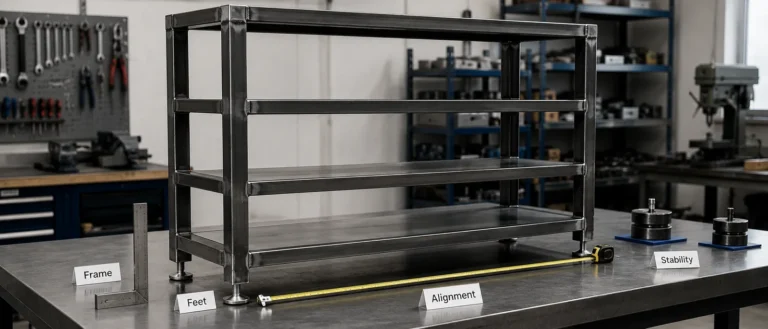
For larger or multi-tier structures, buyers can compare custom metal storage rack structures, where shelf spans, frame stiffness, feet and assembly interfaces become additional design variables.
How Does Wire Diameter Affect Manufacturing Cost?
Wire diameter affects manufacturing cost through material usage, product weight, forming, welding, finishing, handling and freight. Buyers should compare total design cost rather than assuming that the lightest or thickest wire is automatically the most economical choice.
Thicker wire adds material weight directly. It may also require different bending force, larger radii, fixture adjustments or more joint preparation. If every wire is increased without structural need, the product may become expensive and heavy without creating proportional buyer value.
Smaller wire is not automatically cheaper in the finished design. A light wire layout may need closer spacing, additional braces or more weld points. This increases component count, processing time, finish area and inspection work.
Finish consumption and preparation can change with total surface area and joint count. Powder-coated baskets need suitable surface preparation and coverage around intersections. Polished stainless baskets need consistent visible treatment and handling protection. Complex grids create more contact points during packing.
Packaging and freight should be included in the comparison. Heavier baskets increase shipping weight, while structures that cannot nest may use more carton volume. Aggressive nesting can scratch visible surfaces unless separators or sleeves are added.
Buyers should also consider product-range economics. A brand may use one rim diameter, one finish and several basket widths to create a coordinated family. Shared materials and repeatable fixtures can simplify purchasing and production, but only when each size still meets its own structural requirements. The widest or deepest basket may need an additional brace even if smaller products do not.
Cost comparisons should use the same commercial basis. One proposal may include a stronger rim, protective separators and complete retail packaging, while another quotation covers only the unfinished basket. Ask suppliers to separate material, tooling, finish, accessories and packaging assumptions so a design change can be evaluated without rebuilding the entire quotation.
A value-engineering review should begin with the intended use. If the basket stores light towels, the design priorities may be appearance, containment and wall fit. If it stores bottles or pantry items, base span and mounting may deserve more attention. The goal is not to remove metal everywhere; it is to place material where it supports function, repeatability and the target price.
A practical quotation should state the proposed wire sizes, material, finish, packaging and quantity basis. Koitor Hardware can discuss alternative rim, grid and support layouts before sampling, helping buyers compare manufacturability and cost without relying only on material reduction.
How Should Buyers Approve Samples and Test Basket Stability?
Buyers should approve samples by checking measured structure, intended contents, mounting or base stability, workmanship, finish and packaging. Testing must reflect the actual basket geometry and use case rather than a generic wire-strength assumption.
Begin with a controlled drawing showing each wire diameter, spacing, rim, brace, bracket and critical dimension. Record material and finish references. When the sample arrives, measure representative components and compare them with the approved revision.
Place the intended bottles, towels, pantry items or other contents in the basket. Check containment, access, base deflection, side movement and product balance. For mounted baskets, use the intended bracket, hardware and reference surface. For freestanding baskets, use a flat reference surface and check feet or base contact.
Any numerical load or durability requirement should have a project-specific method, fixture, mounting condition and acceptance criterion. Koitor does not apply one universal capacity to baskets that differ in span, weld layout or installation.
Review several units during a trial order to evaluate repeatability. Measure critical dimensions, compare alignment and inspect weld and finish consistency. Record issue type, quantity and location so corrective action can focus on the relevant process.
Changes after approval should trigger a structured review. Increasing basket width, reducing wire spacing, changing a wall bracket or switching material can alter how the same wire layout behaves. The buyer and factory should identify which dimensions, fixtures, weld points, packaging contacts and test conditions are affected. A revised drawing and representative sample provide a clearer basis than assuming an earlier result remains valid.
Repeat-order records should preserve the approved wire specifications and component sources. Incoming wire size, rim construction and support layout can be checked against the controlled revision before full production proceeds. This helps prevent a purchasing substitution or drawing mismatch from becoming a batch-wide structural difference.
Packaging should be included in sample approval because wire structure can create transport risks. Projecting handles, feet and brackets may press against nearby baskets or carton walls. Nested baskets save volume but can lock together or rub at welds and rims. Review the complete pack with separators, sleeves and hardware bags in place, then record orientation and pack count.
Inspection records should distinguish measurement from functional observation. A caliper can confirm wire diameter and spacing, while a flat table can reveal base contact and a representative-use check can show containment or flex. Keeping these results separate makes corrective action clearer: material size, fixture alignment, weld sequence and packaging each require different responses.
Samples usually take about 5-7 working days after details and materials are confirmed. MOQ can start from around 100 pieces for some projects, depending on structure, material, finish and packaging. Bulk production often takes about 4-6 weeks depending on complexity, quantity and approvals.
What Should Be on a Wire Basket Design Checklist?
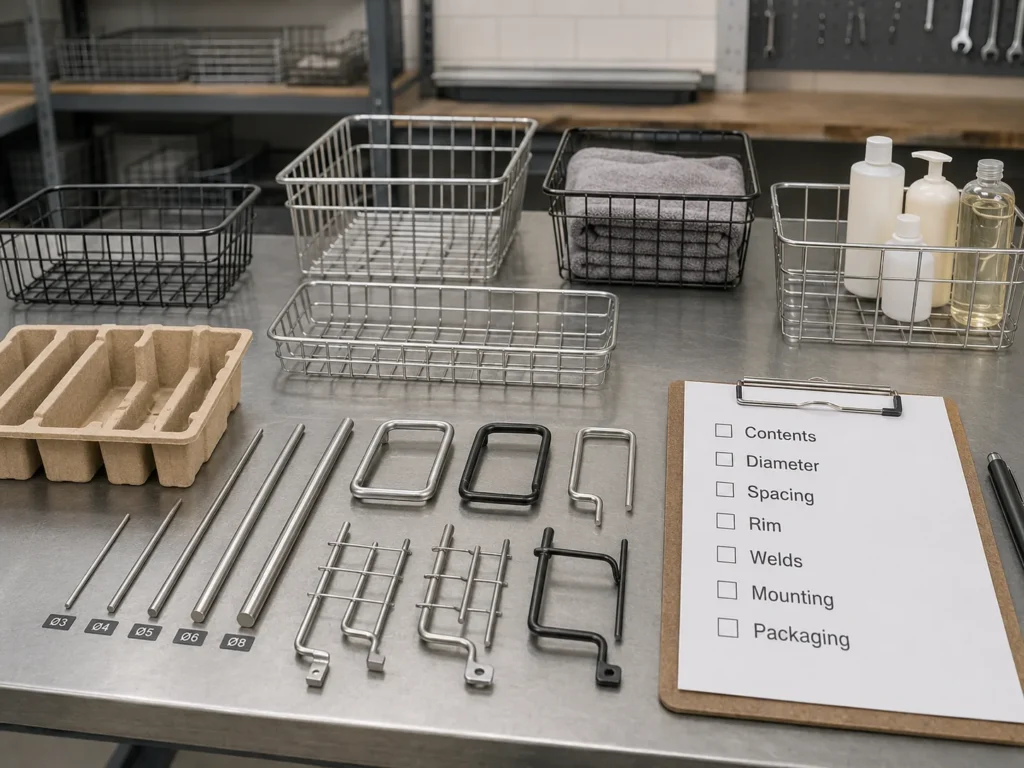
A wire diameter for metal baskets checklist should connect intended contents, overall dimensions, wire sizes, spans, spacing, rim, welds, mounting, finish and packaging. Buyers using the checklist can compare structural proposals without reducing the decision to one diameter.
- Product application and target stored items
- Overall basket length, width, depth and usable space
- Wire diameter identified for rim, base, sides and braces
- Wire spacing and small-item containment
- Unsupported spans and planned support points
- Rim shape, corners, handles and openings
- Weld positions, visible joints and cleanup expectations
- Wall bracket, feet, frame or other mounting interface
- Material and finish reference
- Target contents and project-specific test method
- Complete sample and drawing revision approval
- Trial-order inspection across representative units
- Nesting, separators and visible-surface protection
- Carton weight, volume and pack count
- MOQ, sample timing and production dependencies
The checklist should distinguish mandatory functional requirements from preferences. Incorrect mounting centers, excessive deflection for the defined use, sharp edges or unstable feet require closure before shipment. A small visual variation may follow a different agreed decision rule.
A wire diameter for metal baskets decision should be documented by component and revision. If the basket dimensions, spacing, material, bracket or use changes, the earlier sample result may no longer apply.
Frequently Asked Questions
Does thicker wire always make a basket stronger?
No. Thicker wire may increase local stiffness, but basket performance also depends on span, spacing, rim, braces, welds, mounting and intended contents. The complete design must be evaluated.
Can one wire diameter be used throughout a basket?
It can be used in some designs, but many baskets use a stronger rim or support with lighter infill. The suitable combination depends on geometry, appearance, manufacturing and cost targets.
How does smaller wire affect cost?
Smaller wire may reduce material weight, but it can require closer spacing, more braces or more weld points. Buyers should compare the complete structure, finish, packaging and freight basis.
How should basket load stability be tested?
Use a project-specific method based on the approved basket, intended contents, mounting system or base condition, fixture and acceptance criteria. Do not apply a capacity from an unrelated product.
What information should be sent for a basket quotation?
Send a drawing or sample, overall dimensions, intended contents, preferred material and finish, mounting method, expected quantity, packaging idea and any project-specific functional requirements.
Work With Koitor Hardware
Need Help Reviewing a Metal Basket Structure?
Send Koitor your drawing, physical sample, target contents, size, material, finish, packaging idea and expected quantity. Our team can review wire layout, rim, welds, supports and small-batch production options before quotation.
OEM / PRIVATE LABEL
Turn this sourcing guide into a product brief
Share your target product, size, finish, order quantity and packaging requirements. Your team receives a practical manufacturability review before quotation.
 English
  Español