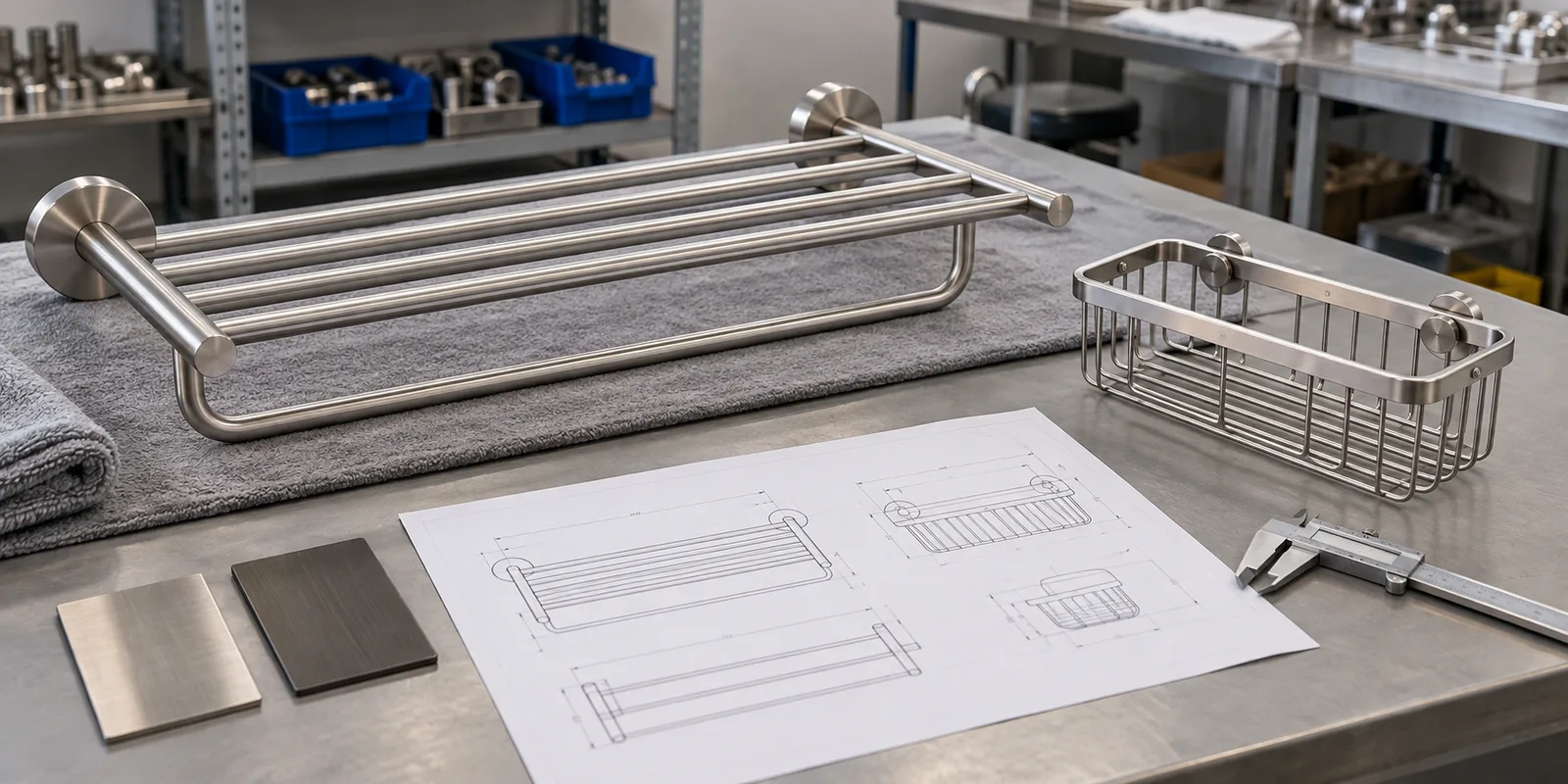
Bathroom hardware sample development should begin with a written agreement on what the sample must prove, which product details are fixed, and how the buyer will review the result. Before a factory makes a towel rack, shower caddy or tissue holder sample, confirm the drawing revision, material, finish, mounting arrangement, included parts and packaging scope. Separate an early structural sample from a finished sample intended to guide production. This gives importers and private-label buyers a clear basis for requesting changes and approving the next step.
What should a bathroom hardware sample prove?
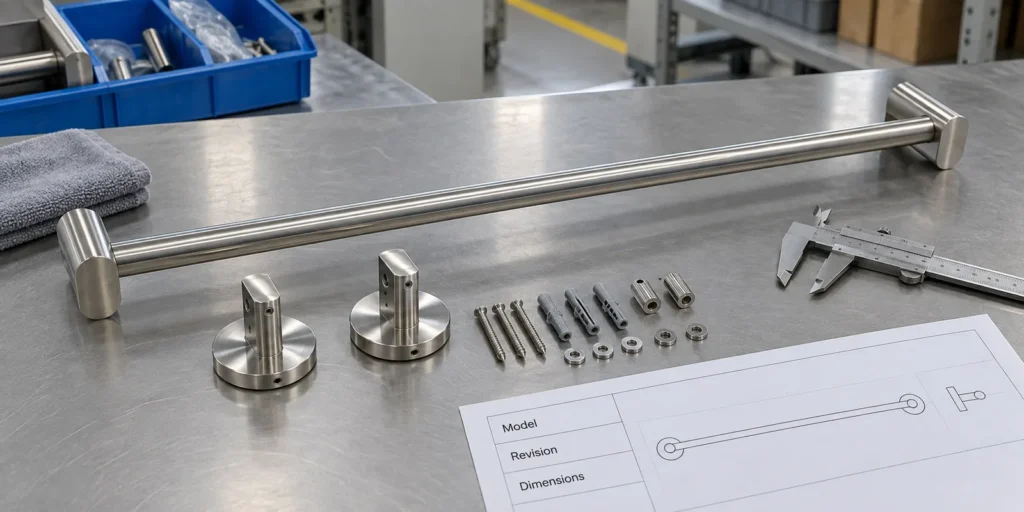
A bathroom hardware sample should answer a defined development question, such as whether the structure fits the intended space or whether the finish matches an agreed reference. One physical item should not be treated as evidence for details that were excluded from its preparation.
A prototype is an early representation used to explore or verify a design. A pre-production sample is intended to represent the agreed product before bulk manufacturing begins. Suppliers may use these terms differently, so describe the required purpose and included features instead of relying on the name alone.
For example, a towel rack prototype may demonstrate wall clearance and mounting access while using a temporary finish. That can be useful during structural review, provided the temporary finish is identified. The same item should not automatically become the reference for final color or surface appearance.
Agree who will review each aspect. A product manager may approve dimensions and usability, while a packaging buyer checks the retail presentation. Naming one person to collect the final decision helps prevent conflicting messages from several reviewers.
| Sample purpose | Main buyer decision | Details to identify | What remains separate |
|---|---|---|---|
| Structure review | Does the geometry and assembly suit the intended use? | Dimensions, mounting points, components and temporary features | Final finish and packaging if excluded |
| Finish review | Does the appearance match the agreed reference? | Material, color, texture, gloss and reference identification | Performance claims and production consistency |
| Packaging review | Does the complete product fit and remain appropriately separated? | Included parts, inserts, labels and packing sequence | Distribution testing unless separately arranged |
| Pre-production approval | Is the documented specification ready for the next production step? | Approved revision, final components, finish and packaging status | Inspection of the eventual production batch |
This table describes practical review purposes, not mandatory industry sample stages. A straightforward product may combine several decisions in one sample, while a more complex rack may need separate reviews. The sequence should follow the unresolved questions rather than a fixed number of rounds.
Which product details should buyers confirm before sampling?
Confirm the dimensions, material, structure and installation details that determine whether the bathroom accessory will work as intended. Identify unresolved choices explicitly so the factory can review them before making the sample.
Dimensions and reference points
Provide overall size and the dimensions that control fit. On a towel bar, overall width and usable hanging length are different measurements. On a shower basket, external depth does not describe the usable space inside the front rim. State which measurement the drawing requires.
A datum is a reference point, edge or surface used for measurement. Buyers and factories should measure from the same references, particularly for mounting-hole locations and clearances. A tolerance is an agreed allowable variation around a specified dimension; the appropriate value needs project-specific review.
Do not add tight tolerances to every dimension merely to make a drawing look complete. Identify where variation affects assembly, installation or use, then ask the factory to review feasibility and measurement methods. Cosmetic proportions and mounting alignment may need different acceptance criteria.
Material, structure and included components
State the requested material grade and relevant wire diameter, tube size or sheet thickness where known. When a detail is undecided, mark it for review rather than letting different sample makers select different assumptions. A material change needs explicit approval before it becomes the production specification.
List the parts supplied with each product, including brackets, caps, feet and fasteners where applicable. A custom hardware sample assembled using temporary components can conceal an issue with the parts intended for the customer package. Ask the supplier to identify substitutions.
Installation requirements also need context. For a wall-mounted holder, check access for fastening and whether the product can be assembled in the intended sequence. State the intended mounting conditions and arrange suitable project-specific evaluation before making installation or capacity claims.
Manufacturing review
Koitor Hardware can review product structure, welding points, surface finish and packaging before sample production. This can reveal questions such as whether a connection obstructs assembly or whether a packaging insert needs clearance around a bracket. Buyers can review Koitor’s custom bathroom hardware manufacturing scope when preparing a sample request.
How should buyers specify finish and packaging samples?
Specify finish and packaging as separate approval items even when they are supplied with the same sample. A correct metal structure does not automatically confirm the color reference, accessory packing or final retail presentation.
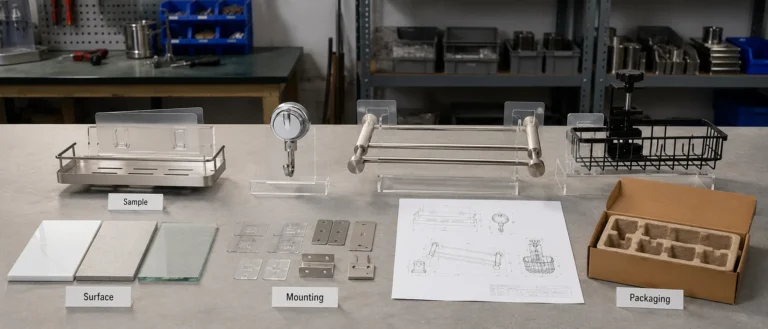
For appearance, provide an identifiable reference that both parties can compare. This might be an agreed physical sample or finish swatch, supported by written color, texture and gloss requirements. Photographs help communicate differences, but lighting and screen settings can change how a surface looks.
Record which surfaces matter to the review. A towel rack may have visible front faces, less visible rear connections and contact areas where parts meet. Discuss acceptable appearance at those locations rather than approving the entire product from a single front photograph.
Ask whether the sample finish represents the planned production route or is temporary. If it differs, document the difference and the additional confirmation required. A visually attractive prototype should not support unverified rust-resistance or durability statements.
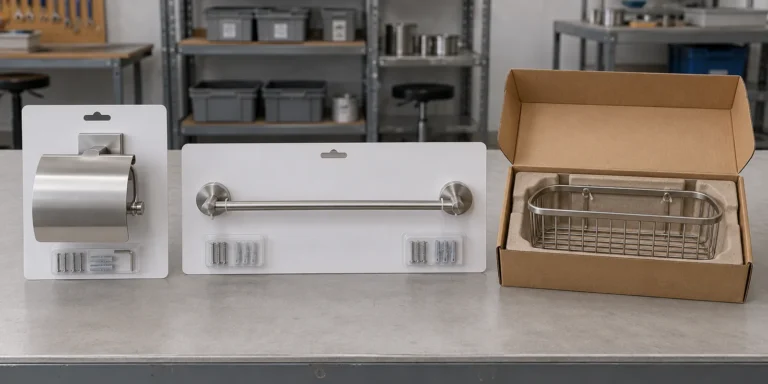
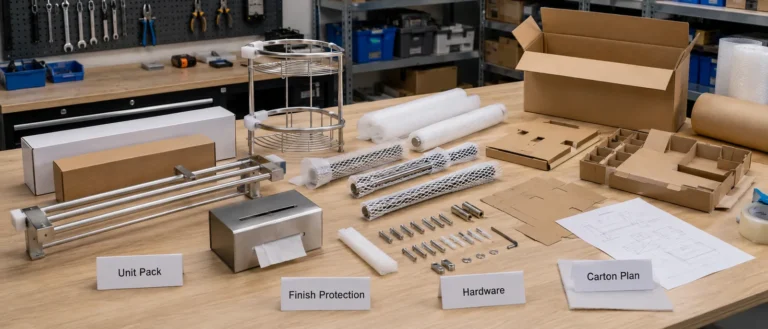
Packaging review should use the complete product and accessory set. Check how the item is oriented, where metal components can touch, whether small parts remain contained, and how the buyer removes the product. Compare the packed contents with the bill of materials, which is the list of components required for one complete item.
Distinguish a shipping package used to send the sample from the proposed retail or distribution package. A heavily protected courier parcel may keep the sample intact without showing how the eventual sales unit will perform during distribution. The factory and buyer should agree which package is being evaluated.
For private-label development, mark artwork and instruction status clearly. Draft artwork can be sufficient for a layout review, but the text, model identification and approved package files still need a final check. Any required distribution testing should be planned separately with agreed methods and acceptance criteria.
How do you review a sample and request useful revisions?
Review the sample against the agreed specification and return one consolidated correction list. Each requested change should identify the feature, the observed result and the required next action.
Start by recording the sample identifier, drawing revision, arrival condition and included parts. Photograph the item before assembly and retain the packing materials until the packaging review is complete. This helps distinguish a manufacturing question from damage or missing contents noticed during unpacking.
Check dimensions using the agreed reference points. Record actual measurements rather than simply writing “size wrong.” For assembly, note the sequence followed and the step where an issue occurs. A short video can clarify access or fit problems that are difficult to describe in one photograph.
Use a revision log with one row per issue. Include the affected drawing reference, evidence, requested outcome, responsible person and resolution status. Keep comments factual: “bracket covers the fastening access shown in the drawing” is more useful than “design needs improvement.”
Separate a correction from a new requirement. A correction brings the sample into line with the agreed specification. A new requirement changes that specification, such as adding a hook or increasing usable basket depth. Both may require work, but their effect on price and timing should be discussed differently.
When reviewers disagree, resolve the conflict before instructing the factory. For example, a larger basket may satisfy the product team but no longer fit the intended retail box. Ask for a combined decision on the structure and package rather than issuing successive changes to different contacts.
Close each item explicitly after the revised sample or evidence is reviewed. Do not assume an unanswered message means acceptance. The final approval should identify what is approved, what remains open and which next activity may proceed.
A useful rule for bathroom hardware sample development is to review the consequences of every change. Moving a mounting point can affect the drawing, assembly instructions, included parts and packaging. Update the related records together so an old detail does not return during production.
What should be agreed about sample cost and lead time?
Agree the sample scope, charges and timing assumptions before preparation starts. The schedule should distinguish factory preparation from buyer review, revisions and transport.
A sample quotation should state what will be supplied and what the fee covers. Ask about material, finish, purchased parts, packaging mockups and delivery costs where relevant. If the project needs dedicated preparation or tooling, request a separate explanation of its purpose and commercial terms.
Clarify how additional rounds are handled. Some changes may be corrections to the original brief, while others introduce new work. Confirm any revised charge before proceeding and keep that decision with the relevant drawing revision. Do not assume a sample fee is refundable or credited against a later order unless agreed.
At Koitor, samples usually take 5-7 working days after the design and materials are confirmed. This is a planning reference that depends on the project, not a guaranteed delivery date. Special materials, finish decisions, packaging preparation or design changes may require the timing to be reviewed.
When discussing sample lead time for bathroom accessories, ask what starts the preparation period and what information is still missing. Also confirm whether the estimate ends when the item is ready for dispatch or when it arrives at your office. These are different milestones.
Build time into your own review process. A sample can arrive on schedule and still wait while several departments arrange a meeting. Name the reviewers in advance, circulate the current brief and prepare the measurement or assembly information they need.
Bulk production is a separate commitment. Koitor’s usual planning reference is 4-6 weeks depending on quantity, complexity, material availability, finish and packaging. MOQ can start from 100 pieces depending on the product requirements. Reconfirm the quotation and production timing against the approved design before placing the order.
What belongs in the final sample approval checklist?
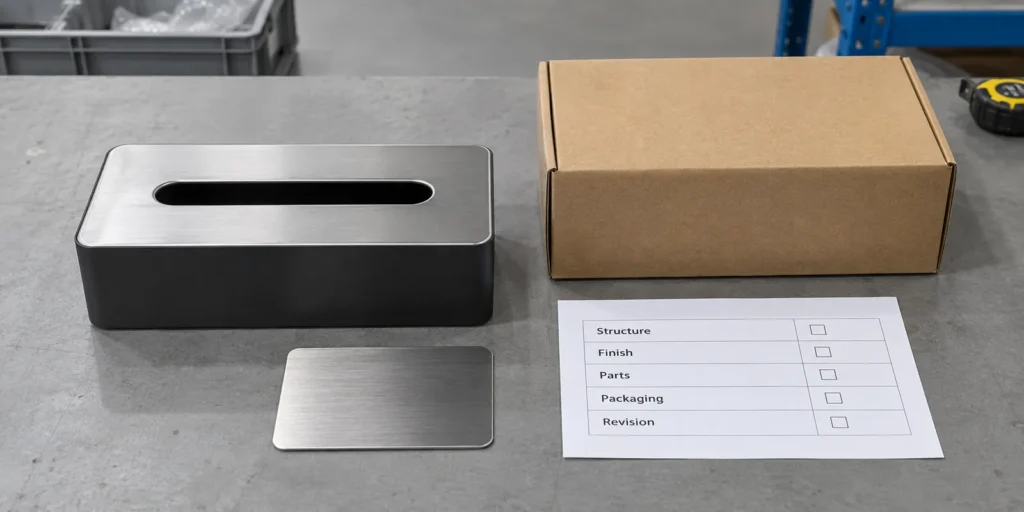
The final sample approval record should connect the physical reference to the current drawings, component list, finish requirements and packaging files. That record makes the buyer’s decision usable by the production and inspection teams.
- Sample identification: record a unique identifier, model code, revision and review date.
- Purpose: state whether the decision covers structure, appearance, packaging or the complete pre-production specification.
- Dimensions: confirm critical measurements, reference points and agreed tolerances.
- Material: record the agreed specification and any evidence or further verification required by the project.
- Connections and assembly: confirm the intended parts, connection locations and assembly sequence.
- Finish: identify the accepted reference and any appearance conditions that need written clarification.
- Packaging: confirm product orientation, protective separation, accessory containment and current artwork status.
- Open items: list unresolved questions and the action needed before the relevant production step.
- Reference retention: agree who keeps the approved sample and how both parties identify the matching records.
- Release decision: name the buyer approver and state the exact revision and scope authorized.
An approved reference sample is sometimes called a golden sample. The name is less important than whether it is clearly identified and supported by current records. A worn or modified sample should not silently replace the approved reference.
Sample approval does not replace inspection of the manufactured batch. One reviewed item cannot establish the consistency of products that have not yet been made. Agree what will be checked during production and before shipment, based on the final specification and project requirements.
Retain unresolved items as visible conditions, not informal comments scattered across messages. If packaging is still awaiting approval, say so explicitly and define what work may proceed. This helps avoid a broad “approved” message being interpreted as acceptance of every product detail.
Frequently asked questions about custom hardware sampling
Custom hardware sampling works best when purpose, specification and approval responsibilities are agreed before the first item is made. These answers address common decisions for bathroom and home storage hardware buyers.
Can a factory develop a sample from photographs alone?
Photographs can begin the discussion, but they may not show dimensions, hidden connections or assembly details. Provide drawings or a physical sample where possible. If a dimension must be proposed by the factory, review and confirm it before treating the resulting item as an accurate reproduction.
Does every design need several sample rounds?
No. The number of rounds depends on unresolved questions and the completeness of the initial brief. A straightforward item with confirmed materials and finish may need fewer reviews. A new structure or packaging arrangement may need revisions before the buyer can approve the production specification.
Can buyers approve a sample through photos and video?
Photos and video can support review, especially for visible changes, but they do not replace every physical check. Decide which decisions can be made remotely and which require measurements, assembly evaluation or direct finish comparison. Record the limitations of a remote approval.
What if the approved sample differs from the drawing?
Resolve the difference before production release. Identify which feature is intended, update the drawing or sample as needed, and issue a consistent approval record. Do not leave the production team to choose between conflicting references, particularly for fit, mounting or included components.
How can buyers reduce repeated sample revisions?
Use one current brief, identify essential requirements, collect feedback from all reviewers and submit one prioritized correction list. Record the effect of each change on structure, finish and packaging. Confirm that the next sample addresses the agreed list before adding unrelated design preferences.
Plan your sample review with Koitor Hardware
Koitor Hardware supports bathroom hardware sample development from buyer drawings or physical samples, with review of structure, welding, finish and packaging. The family-owned China OEM manufacturer specializes in bathroom and home storage hardware, including towel racks, shower caddies, wire baskets and tissue holders.
Prepare a Clear Brief for Your Next Sample
Send Koitor your drawing or sample, critical dimensions, finish reference, packaging requirements and target order quantity. Our team can review manufacturability and discuss the sample scope before quotation.
OEM / PRIVATE LABEL
Turn this sourcing guide into a product brief
Share your target product, size, finish, order quantity and packaging requirements. Your team receives a practical manufacturability review before quotation.
 English
  Español