

A rubber vs silicone comparison becomes useful only after the supplier names the alternative compound.
Rubber vs silicone is not quite a comparison between two unrelated material classes: silicone rubber is itself a synthetic elastomer, while the word “rubber” may refer to a broad family or to a specific compound such as EPDM or nitrile. A buyer should name the proposed material and compound before comparing a gasket, pad, foot or other component. Formulation, cure, geometry and service conditions affect how an actual part behaves. Color, feel or a broad family label cannot establish suitability.
What does “rubber vs silicone” mean?
“Rubber” is often used casually to mean a flexible, elastic material. In a technical or purchasing context it can refer to natural rubber, a synthetic elastomer family, or a supplier’s particular formulated compound. Silicone rubber is a synthetic elastomer made from silicone polymer systems. Therefore the phrase “rubber versus silicone” may compare silicone against a different rubber family, but the alternative needs to be named before the comparison is meaningful.
The Elkem silicone rubber FAQ describes silicone elastomers as formulated systems rather than a single universal material. Its silicone rubber product overview presents a manufacturer’s product scope. These sources support the need to identify an actual compound and formulation. They do not establish that every silicone compound has identical properties, nor do they prove Koitor uses or manufactures a particular material.
For example, a buyer may be comparing silicone with EPDM, nitrile rubber, natural rubber or another supplier-defined elastomer. Those alternatives are not interchangeable labels. The correct comparison depends on what the component must do, what it contacts, how it is attached and which evidence the product owner needs. A color such as black or translucent does not identify the polymer family by itself.
Start the sourcing conversation by asking the supplier to expand the word “rubber.” Request the material family, compound designation or controlled part specification. If the supplier cannot disclose a proprietary formulation, ask what performance data, material declaration or sample-level evidence it can provide for the agreed requirement. The goal is to compare named alternatives without assuming every ingredient is public or every compound behaves the same.
Which properties matter for the actual component?
The relevant properties depend on the component’s function. A cabinet foot, a wall-contact pad, a gasket and a suction component may all be flexible, but their functions and failure concerns differ. A material selected for one task is not automatically suitable for another. Define the component, mating surface, exposure and required behavior before comparing supplier claims.
| Component role | Questions to define | Evidence to consider |
|---|---|---|
| Protective foot or pad | What surface does it contact? Does it need grip, cushioning or replaceability? | Named compound, dimensions, attachment and sample review for the intended surface |
| Gasket or seal | What interface is it intended to seal, and what is the acceptance criterion? | Supplier specification and an application-specific method defined by the product owner |
| Spacer or bumper | What gap or contact is intended, and what shape must remain after assembly? | Drawing, compound identity and representative assembled sample |
| Suction or adhesion component | What surface, installation and use conditions apply? | Product-specific qualification and instructions; family name alone is insufficient |
| Cable or flexible interface | What movement, bend or routing does the design require? | Component-maker data tied to the actual construction and operating conditions |
The table is a decision organizer, not an engineering approval. It does not give a numeric hardness, compression set, temperature limit or load rating. The product’s design owner should state the required property and the method or evidence needed to check it. The supplier should identify the specific product and the conditions under which its data apply.
A property sheet can be useful only when the buyer checks its scope. Does it describe the compound supplied, a raw material test specimen or a finished molded part? Which temperature, exposure, cure and test method apply? If the component is bonded, compressed, bent or exposed to cleaning agents, has the evidence been tied to those conditions? A number copied from a general chart may not answer the finished-part question.
For example, a buyer reviewing a rack foot should first describe whether the foot is intended to protect a surface, reduce sliding, level the product or combine those functions. The receiving surface and installation condition should be identified as part of that requirement. A gasket reviewer asks a different question about the interface and the intended sealing result. These examples show why there cannot be one material score that ranks silicone and all other rubbers for every component. The part’s purpose determines which evidence is relevant.
If a supplier shares only a family-level brochure, ask whether it can identify the offered compound more precisely or provide a part-specific declaration. A buyer does not always need the full proprietary formulation, but should be able to connect the supplier’s evidence to a defined item and revision. Where the supplier cannot provide enough information to verify a critical claim, the product team can narrow the claim, request a different evidence route or select an alternative with clearer documentation. Do not treat missing data as confirmation that the material meets the requirement.
Do not combine the most favourable values from different supplier pages and present them as a direct contest. The sources may describe different grades, geometries, methods and conditions. Keep each data point attached to its source and identify the proposed part to which it applies. If the values are not comparable, say so and request a common test or a common set of supplier declarations.
How should buyers compare two elastomer compounds?
Compare candidates that serve the same component role and are evaluated against the same requirement. If one proposal is a generic rubber item and another is a named silicone component, first resolve what compound the first supplier means. Then ask whether the part shape, dimensions, attachment and intended exposure are equivalent. Without that common basis, a comparison table can create a false winner.
Use this sequence:
- Define the component and the function it performs in the product.
- Name the relevant receiving surfaces, mating parts and attachment method.
- Ask each supplier to identify the material family and offered compound or product grade.
- State the actual exposure, contact, cleaning and environmental conditions.
- Identify the properties that matter to the product decision and how evidence will be reviewed.
- Compare finished-part dimensions, geometry, color and production revision.
- Review supplier data for the exact material and conditions rather than a family-level slogan.
- Approve a representative sample against explicit fit, appearance and performance criteria.
- Record which supplier controls the compound and how a material change will be communicated.
This method avoids turning “silicone is better” or “rubber is cheaper” into an unsupported rule. Cost depends on the specific compound, geometry, tooling, production route, finishing, quantity and supplier terms. A silicone product may be appropriate for one requirement and an alternative elastomer for another. Neither broad category guarantees a lower delivered cost or a longer service life.
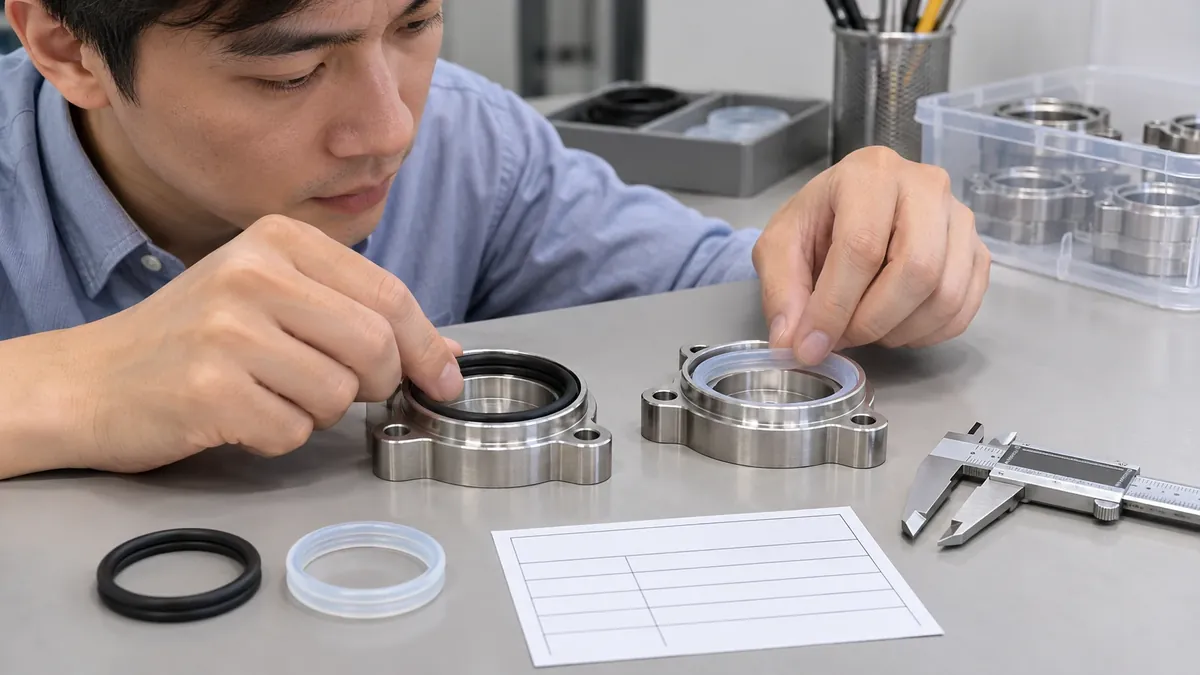
Sample review should include the assembled condition where practical. A loose piece can show color and basic dimensions but may not reveal compression, retention, alignment or contact with the mating part. Record what the sample review actually demonstrates. If a property requires a controlled test, define the method, specimens, condition and acceptance criterion with the qualified supplier or test owner.
Keep the control sample protected and labelled. Record the supplier, part number, compound or declaration reference, drawing revision and date of approval. If the sample is cut, cleaned or exposed during a review, note that too, because the reviewed condition may no longer match a retained reference. Photographs should show the relevant interfaces and scale, but do not replace a written specification. When a production lot is checked, tie the sample selection and inspection record to that lot and the agreed acceptance plan.
The product developer should also consider how the component is changed or reordered. A supplier may reformulate a compound, change a molding source or substitute a nominally similar material. If the elastomer affects fit or performance, the purchase specification should require notification and approval before a change. Preserve the accepted drawing, compound designation, sample and revision so the next order can be compared with the original decision.
Can color, smell or feel identify silicone?
Appearance and touch can help describe a sample but should not be treated as definitive material identification. Different elastomer families can share colors or surface textures, and additives or coatings can change appearance. Odor is also not a dependable universal identification method. A buyer should use the supplier’s controlled part information and agreed material evidence when the family matters to the product requirement.
If a product listing says “silicone,” the buyer should be able to connect that claim to the actual component and supplier record. A translucent gasket is not automatically silicone. A black pad is not automatically EPDM. Photographs and color chips support appearance review, but they do not prove polymer chemistry, formulation or performance. Do not label the product with a material claim that the responsible supplier has not substantiated.
If exact material identity is confidential, the buyer can still define practical evidence requirements without asking for a proprietary recipe. For example, the buyer may require a supplier declaration tied to a part number, specified performance data or a suitable independent verification method. The appropriate route depends on the claim and the product’s risk. The responsible product owner should decide what evidence is necessary before release.
What common errors lead to a poor material choice?
Comparing a family name with a compound. “Rubber” is too broad to stand beside a named silicone product. Clarify the actual proposed elastomer first.
Choosing by color. A black, white or translucent appearance does not prove the polymer family. Keep appearance and substrate as separate fields.
Using a generic property table as a guarantee. A published value may describe one compound under one condition. Confirm that it applies to the actual component.
Ignoring the component’s role. A pad, gasket and suction part solve different design tasks. Define the function before selecting material.
Assuming all silicone is equal. Formulation, cure and product construction vary. Request data for the actual compound and finished component.
Treating one sample as broad performance proof. A visual or fit review has limited scope. State what the sample confirms and what needs another form of evidence.
Changing compound without change control. A substitute may affect appearance, fit or function. Record material identity and require approval for changes.
Overpromising in a product listing. Do not claim universal chemical resistance, food contact, medical suitability, temperature range or lifetime unless the exact product has current supporting evidence.
These controls help an importer ask better questions without pretending to be a compound formulator or test laboratory. If a requirement depends on a specialized elastomer property, involve the component supplier and qualified technical owner. The article’s comparison is a sourcing framework, not a substitute for application engineering.
How do elastomers fit into bathroom and storage hardware?
Elastomer components can appear at contact points between a metal product and a wall, shelf, countertop or other part. They may protect a surface, reduce movement, fill a gap or support a defined sealing function. Which of those functions applies must be stated for the actual design. A material family should not be selected solely because the finished product is used in a bathroom.
Describe the environment precisely. A dry vanity, a humid room and a routinely wetted shower area are different conditions. Cleaning products and frequency may also matter. If a product’s care instructions refer to an elastomer component, confirm that the instruction comes from the component or finish supplier and applies to the complete assembly. Do not infer chemical resistance from the word silicone or from an attractive image.
Installation and maintenance can affect the intended result. A pad may rely on a clean contact surface or a specific attachment feature, while a gasket may be compressed between two designed surfaces. This guide does not prescribe installation preparation, adhesive, suction or service procedures. Use product-specific instructions and assign the correct supplier responsibility for each component.
If the metal part is designed or fabricated by one supplier and the elastomer is purchased from another, coordinate the interface. Drawings should show the component location, dimensions and mating surface. The BOM should identify which supplier controls the material designation. The buyer should preserve the sample and approval record across both sides of the interface.
How can Koitor support a project review?
Koitor Hardware is a family-owned custom metal hardware factory focused on bathroom and home-storage products. In an OEM project, Koitor can discuss the metal product’s drawing, the elastomer’s position in the assembly, sample coordination and packaging scope. This does not mean Koitor compounds or molds every rubber or silicone part. A purchased elastomer’s formulation and technical documentation remain the responsibility of its component supplier unless the project agreement says otherwise.
For a useful review, share the assembly drawing, elastomer part number or supplier description, mating surfaces, required function, intended environment and unresolved questions. Identify who owns material evidence and who approves the complete product. If the project needs a specific seal, grip or load result, define the acceptance method with the responsible technical owner before sample review.
For a trial order or private-label product, freeze the component identity and drawing revision alongside the finished sample. If the supplier changes the compound or manufacturing source, the buyer can then decide whether a re-review is needed. Small-batch production flexibility does not make undocumented substitutions safe; controlled records are what make a repeat order comparable.
See the Koitor OEM home-storage hardware page for confirmed product scope, or contact Koitor with the drawing and component information. Project timing, quantity and production scope depend on the actual product and are confirmed during quotation.
What should the elastomer specification checklist include?
The checklist should connect the broad material word to the real part. Include a supplier-controlled identity, the component’s role and the conditions that matter. Keep unknowns visible, and do not approve a material just because it resembles the previous sample.

Before a quote, sample or reorder, record:
- Component name, part number, drawing revision and supplier.
- Material family and named compound or controlled grade where available.
- Finished dimensions, geometry, attachment and mating components.
- Functional purpose: contact, cushioning, spacer, seal or other defined role.
- Exposure, cleaning and use conditions relevant to the application.
- Required property evidence, its test condition and acceptance owner.
- Color and finish reference as separate appearance requirements.
- Sample ID, review date and the specific observations approved.
- Change notification for formulation, supplier, tooling or process changes.
- Packaging, replacement and instruction needs for the component.
- Open questions, responsible party and decision date.
This information makes two supplier quotations easier to compare and helps prevent a finished-product claim from outrunning its evidence. If a field is not relevant, document that decision. If it is not yet known, do not fill it with a generic material assumption.
How should a buyer handle samples and material changes?
When samples from two suppliers arrive, label each one before comparing. Include the supplier, part or compound reference, date and the question the sample is meant to answer. If one sample is identified only as “rubber,” keep that identity gap visible; do not let its color or feel turn into a guessed compound. Ask the supplier to clarify the material or provide a suitable declaration before making a comparison that depends on identity.
Review the component in its intended assembly and record the observations that matter. A foot may need to sit evenly, align with its mounting feature and contact the named surface. A gasket may need to fit its designed groove. These checks help evaluate the part but do not prove all material properties. The supplier’s data and the product owner’s acceptance criteria should cover claims that cannot be observed in a simple sample review.
At approval, identify the sample as a reference for a particular revision. Keep one retained control sample if the project’s quality plan calls for it, protect it from contamination or aging, and record where it is stored. If a subsequent delivery differs in color, hardness feel, dimensions or assembly fit, compare the delivered item with that reference and the written requirement. Do not assume that a changed appearance means the compound changed, or that unchanged appearance proves it did not.
Before a supplier changes compound, source, cure or molding route, require the agreed notification and review. Some changes may not affect the buyer’s criteria, while others may change fit or function. The responsible technical owner can decide which checks need repeating. A clear change trigger avoids redoing every review for a harmless revision while still protecting decisions that depend on the elastomer.
Frequently asked questions
Is silicone a type of rubber?
Silicone rubber is a synthetic elastomer, so it belongs to the broad rubber family. In a buyer comparison, name the alternative compound rather than using “rubber” as if it were one specific material.
Is silicone always better for bathroom products?
No universal ranking applies. The right compound depends on component function, exposure, geometry, supplier data and required evidence. Evaluate the actual finished part.
Can I identify silicone by its color or feel?
Color and feel are not definitive material tests. Use the supplier’s controlled component information and agreed evidence when the material family matters.
Is every black rubber foot EPDM?
No. Appearance alone does not establish the compound. Request the supplier designation or material record for the actual part.
Does a sample prove chemical resistance?
A sample appearance or fit review does not establish resistance to a specific cleaner or environment. Define the exposure and evidence needed with the qualified supplier.
Can a supplier substitute a similar elastomer without review?
If material identity affects the approved product requirement, a substitution should be controlled. Link the purchase specification to the part number, revision and required change approval.
Sources and further reading
- Elkem: What is silicone rubber?
- Elkem silicone rubber product overview
- Non-staining rubber feet for metal racks
- Parker O-Ring Handbook
Work with Koitor Hardware
Name the component before selecting an elastomer
Share the assembly drawing, elastomer supplier reference, mating surfaces and intended function so the OEM discussion can stay tied to the actual product and its documented requirements.
OEM / PRIVATE LABEL
Turn this sourcing guide into a product brief
Share your target product, size, finish, order quantity and packaging requirements. Your team receives a practical manufacturability review before quotation.


 English
 Español
 Português
 Français
 Deutsch
 العربية