

The galvanized vs galvannealed powder coating decision for storage shelves must begin with the exact coated sheet, forming route and coating system—not a generic claim that one substrate always paints better. Galvanized sheet carries a zinc coating; galvannealed sheet has a zinc-iron alloy coating produced by an additional heat treatment. Buyers should identify the material designation, coating specification, fabrication sequence, pretreatment and powder system, then approve a finished sample made through the intended route.
What do galvanized and galvannealed mean on an RFQ?
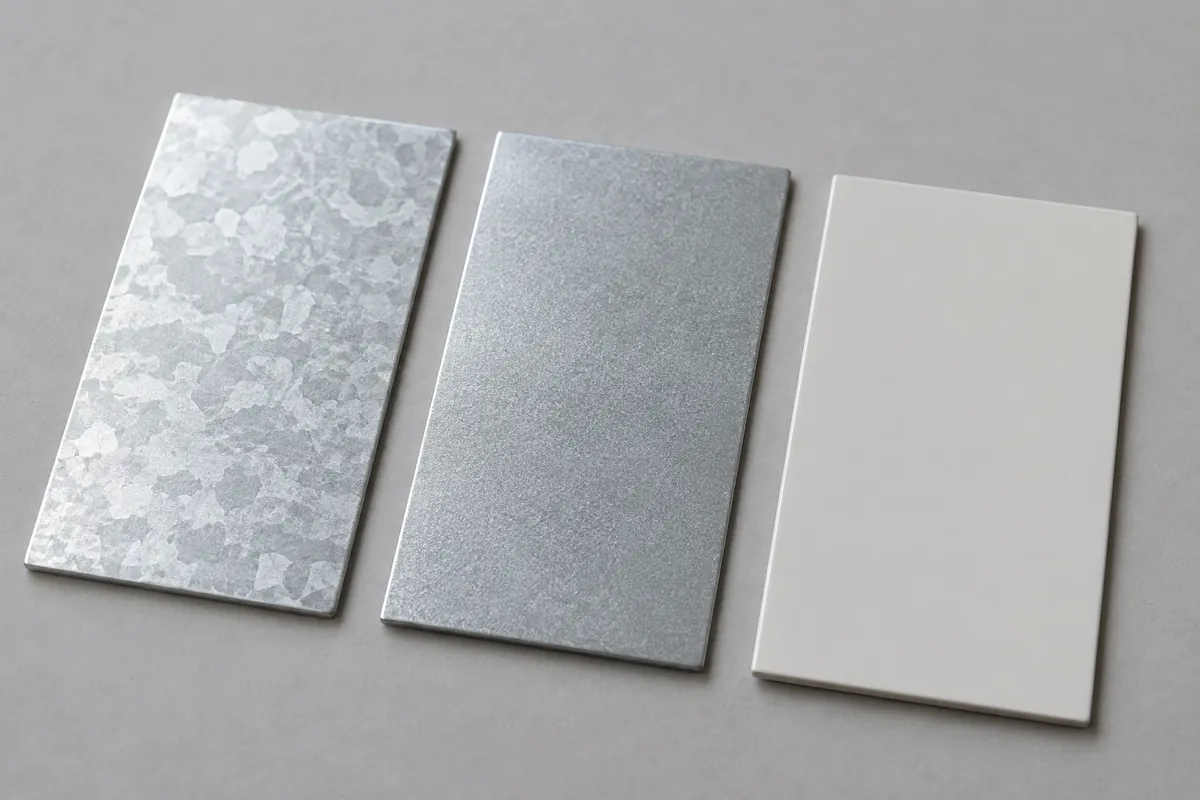
Galvanized sheet generally describes steel sheet protected with a zinc coating. Galvannealed sheet is zinc-coated steel that receives a further heat treatment converting the coating toward a zinc-iron alloy. The resulting surface appearance can differ, but a buyer should not identify material solely by color or visible pattern. Record the mill designation, applicable product standard, coating type and coating mass or class required by the project, as confirmed by the material supplier.
These sheet products must not be confused with batch hot-dip galvanizing after a finished steel assembly is fabricated. In that route, an assembled part is immersed and receives a different coating process and surface condition. Powder-coating recommendations for batch hot-dip galvanized parts are not automatically interchangeable with guidance for continuously coated sheet. This distinction matters for a shelf made from pre-coated sheet because bends, welds, edges and coating sequence create a different manufacturing context. When evaluating galvanized vs galvannealed powder coating, name the coating process and substrate form in the same specification so a supplier does not quote one route while the buyer expects another.
The phrase galvanized vs galvannealed powder coating is a shorthand for a larger sourcing question: which substrate and finishing route can meet the buyer’s appearance, corrosion, forming and cost requirements? The coating family alone does not specify the powder chemistry, pretreatment, film build, cure conditions or acceptance criteria. A supplier quote should state what material and finishing scope it assumes rather than substitute a broad label for a controlled specification.
How does the coating interact with forming and fabrication?
A storage shelf may include bends, punched features, edges, welds or formed returns. A substrate selected before the part geometry is settled can behave differently through the final fabrication sequence. Ask the material supplier and fabricator to review the specified grade and coating condition against the intended bend, punch and joining operations. Do not assume the same tooling, surface preparation or appearance will work for every coating mass, sheet thickness and geometry.
Galvannealed surfaces are often described as matte or gray, while some galvanized sheet has a more visibly crystalline zinc pattern. These are general appearance cues, not reliable lot identification. Surface texture and coating condition can influence how pretreatment and powder application are managed, but neither appearance proves adhesion, corrosion protection or finished quality. Identify the cosmetic face and review representative parts after forming and coating, not only flat stock swatches.
Welded areas and cut edges deserve separate review. Fabrication can expose base metal, alter local surface condition or create a joint that requires a defined cleanup and finishing route. The exact result depends on the part and process. For a shelf, mark where welds and edges remain visible, where the coating must cover, and which locations are hidden after assembly. Ask the finishing supplier to explain how the actual part geometry will be prepared and inspected.
What should the pretreatment and powder-coating discussion cover?
Powder adhesion depends on a system, not merely a substrate name. Clarify cleaning, surface conditioning or conversion pretreatment, rinse and drying controls, application, cure, handling and any masking or rack-contact points. The selected powder supplier should confirm compatibility with the specified zinc-coated surface and process window. Do not copy an unrelated pretreatment recipe or assume that a successful panel coupon proves the formed shelf will behave the same way.
Where zinc-coated material is involved, communication between the steel supplier, fabricator and coater matters. Surface oils, passivation, storage condition and time between operations can influence the preparation route. The buyer should specify whether material is supplied with a treatment and require disclosure of material or process substitutions that change coating compatibility. Record which party owns each operation so an adhesion issue is not passed between vendors without a shared sample history.
Outgassing is a potential concern with some zinc-coated parts and powder systems, but the relevance and mitigation depend on the substrate and coating route. Do not promise that a particular cure or preheat eliminates defects. Ask the coater whether the actual sheet and geometry require a process trial, what observable defects will be reviewed and how the trial will be documented. The project must define acceptable appearance and evidence before production approval.
Which buyer trade-offs should be compared?
The following comparison is a question framework, not a universal material recommendation. Galvanized and galvannealed sheet differ in coating characteristics, and selection should follow the required material standard, forming demands, powder system, service exposure and approved supply route. For low-volume or custom orders, availability and minimum order conditions may also affect the choice. Ask for equivalent quotes that state material, coating, pretreatment and final finish assumptions. The galvanized vs galvannealed powder coating choice should be reviewed after the buyer knows which differences matter for the intended shelf, not chosen from surface color alone.
A substrate change may affect forming, tool wear, appearance and finishing requirements as well as raw material cost. Compare the complete route: sheet sourcing, storage, cutting, bending, joining, edge preparation, pretreatment, powder application, inspection, packaging and rework exposure. Avoid comparing the price of bare galvanized coil with a finished galvannealed sample, or attributing a difference to substrate when the process variables changed too. A fair RFQ should state the target application and request each supplier to list the material designation, coating class, pretreatment, powder specification and finish condition included in its price. This allows the buyer to see whether a quotation difference reflects stock availability, extra preparation, a secondary vendor, minimum order quantities or a genuinely different manufacturing step. Keep freight and packaging assumptions visible as well, especially where samples and production lots may use different routes. Do not turn a price comparison into a performance conclusion without matching the same part geometry, coating process and agreed acceptance criteria.
Define the exposure environment and desired appearance without using vague terms such as rustproof or outdoor grade. If the product has a corrosion or adhesion performance requirement, write the test method, specimen preparation, evaluation, acceptance level and responsible lab or supplier into the project. Do not infer a numeric service life from a substrate label. A qualification test must represent the finished part and its actual coating system as closely as the agreed method allows.
How should a buyer qualify a finished sample?
Build the sample through the intended production sequence using the nominated material and powder-coat system. Record material identification, supplier, lot or coil reference when available, coating designation, part revision, pretreatment route, powder code and sample date. A flat coupon can help compare surface appearance, but it cannot represent every shelf edge, return, weld, corner or handling contact. Include the geometry that presents the most important appearance and fabrication risks.
Review the finished sample under consistent lighting and from agreed viewing distances. Inspect broad faces, edges, bends, weld neighborhoods, holes and rack marks. Check for visible contamination, pinholes, blisters, uneven texture or other conditions against the buyer’s documented acceptance criteria. These observations identify whether a sample needs review; they do not by themselves establish a root cause or a quantified coating property.
If the requirement includes adhesion, corrosion or coating thickness, define the method and specimen before requesting a result. The test provider, substrate preparation, conditioning and pass/fail rule must be appropriate to the order. Keep test evidence distinct from visual approval. A sample record should state whether it is approved as a visual reference, a process trial, a tested qualification specimen or only an interim development sample.
What must the RFQ and change-control record include?
State the substrate family and exact material/coating designation, thickness range, source expectation, fabrication sequence and cosmetic surfaces. Identify powder system requirements, pretreatment responsibilities, approved color/gloss or texture reference and the requested inspection records. If the buyer has not selected the substrate, state the performance and appearance question to resolve and request alternate quotes with transparent assumptions instead of silently accepting a supplier’s default.
A useful purchase specification separates mandatory requirements from items the supplier proposes. For example, the buyer can define the surface appearance and finished-part acceptance while asking the material or coating supplier to recommend a suitable pretreatment route, subject to written approval. Identify who issues the material certificate or coating record, what document revision applies and how the buyer will trace it to a production lot. If a finish sample is used as a visual standard, label it with the substrate and process route instead of keeping an unlabeled color chip. This prevents a later reviewer from treating samples made from different sheet types or coating systems as interchangeable. If the factory is responsible only for fabrication and the coating is outsourced, make that boundary explicit in the quote and inspection plan. The buyer can then direct technical questions to the party controlling each operation and keep responsibility for final acceptance clearly assigned.
Ask the supplier to flag conflicts early: forming limitations, coating availability, bend or weld appearance, pretreatment access, masking needs, coating thickness at interfaces or packaging contact. Koitor can discuss custom metal-hardware drawings and manufacturing routes within confirmed project capability, but the actual material source, coating provider and equipment must be confirmed for each order. Do not treat general factory positioning as proof that a particular substrate or test is currently offered.
Use formal change control for the steel mill or grade, coating type, coil treatment, powder supplier/code, pretreatment, fabrication source or cure route. For each change, identify affected surfaces and decisions, then agree whether to inspect a targeted sample, repeat a process trial or requalify the finished part. Preserve the superseded sample record and show the approved revision on the drawing, purchase specification, quality plan and packaging instruction.
Substrate and finishing comparison
| Buyer topic | Galvanized sheet | Galvannealed sheet |
|---|---|---|
| Coating description | Zinc-coated steel sheet; specify product and coating class | Zinc-iron alloy-coated sheet; specify exact designation |
| Appearance cue | Can show a visible zinc pattern or other surface | Often matte gray; verify from documentation |
| Fabrication review | Confirm forming, joining and edge treatment on actual part | Confirm forming, joining and edge treatment on actual part |
| Powder finish | Agree pretreatment and compatible powder system | Agree pretreatment and compatible powder system |
| دليل الموافقة | Finished sample, traceable substrate record and defined tests | Finished sample, traceable substrate record and defined tests |

Buyer qualification checklist
- Record the steel designation, coating type/class, thickness, source and lot evidence.
- Distinguish continuously coated sheet from post-fabrication hot-dip galvanizing.
- Show formed features, welds, edges, cosmetic faces and masking interfaces on the drawing.
- Agree the cleaning, pretreatment, powder and curing responsibilities with the coater.
- Approve a production-intent sample and define any adhesion/corrosion method separately.
- Set change-control triggers for material, coating supplier, pretreatment and cure route.
الأسئلة الشائعة
Is galvannealed always easier to powder coat?
No universal conclusion follows from the name. Surface condition, pretreatment, powder system, forming route and supplier controls all matter; qualify the actual finished part.
Does a galvanized appearance prove the steel grade?
No. Appearance is not a reliable substitute for material identification and the supplier’s documentation.
Is continuous galvanized sheet the same as a hot-dip galvanized finished assembly?
No. The products and process routes differ. Make sure any guidance or test evidence matches the actual substrate and manufacturing sequence.
Should buyers test flat coupons or finished shelves?
Coupons help isolate a surface comparison, but the production-intent formed and finished geometry is needed to review bends, edges, welds and handling effects.
Can Koitor guarantee powder adhesion for either substrate?
No blanket guarantee is claimed. Define the project scope, coating supplier, qualification method and acceptance criteria with the responsible parties.
For an OEM manufacturing context, see Koitor’s home-storage hardware page أو contact the team with a drawing, material specification and sample acceptance requirements. For general material terminology, consult the American Iron and Steel Institute glossary and the GalvInfo Center; confirm current supplier documentation for project decisions.
اعمل مع شركة «كويتور» للأدوات
Review a Coated-Sheet RFQ
Share the shelf drawing, steel designation, finish target, sourcing volume and sample evidence needed so the material and manufacturing route can be discussed.
OEM / العلامة التجارية الخاصة
حوّل دليل التوريد هذا إلى موجز منتج
يرجى إطلاعنا على المنتج المستهدف، والحجم، والتشطيب، وكمية الطلب، ومتطلبات التغليف. وسيتلقى فريقك تقييمًا عمليًّا لإمكانية التصنيع قبل تقديم عرض الأسعار.
 English
 Español
 Português
 Français
 Deutsch
 العربية