
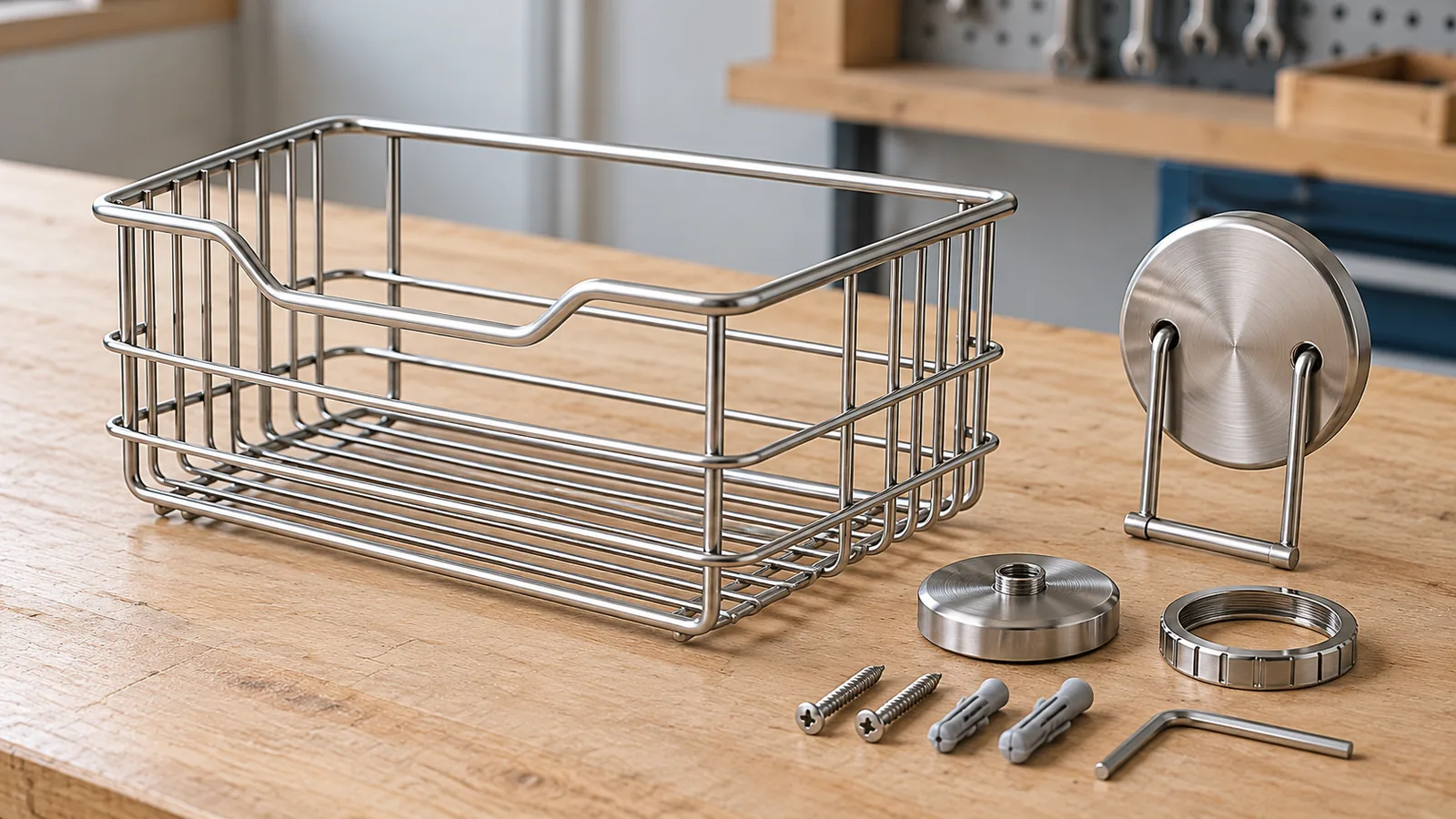
Soluble salt contamination Bresle conductivity before coating is a specific surface-preparation question, not a synonym for checking rinse-water conductivity or general cleanliness. The Bresle method is used to extract soluble contamination from a defined surface area for subsequent measurement; conductivity can be used to assess the extracted solution under a specified method. A hardware buyer should ask whether this evidence is relevant to the product, where and when a sample is taken, and what project criterion governs acceptance. Do not assume one reading proves every contaminant is absent or that a universal limit applies to every bathroom rack.
The method is often discussed in corrosion-protection work on prepared metal surfaces. DeFelsko’s technical explanation of the Bresle method outlines the extraction and conductivity measurement concept. This can help an importer understand a supplier report, but it does not establish that every powder-coated wire basket needs this test, that a result applies to an entire production lot, or that a particular threshold is appropriate for the finish system. Those decisions require a product-specific specification and qualified technical review.
What does a Bresle conductivity reading tell the buyer?
A conductivity reading from an extraction solution indicates the combined electrical conductivity of soluble material collected from the defined test area under the method conditions. It is a measurement of the extracted solution, not a direct visual cleanliness score for the whole product.
The method uses a patch or cell to define an area, introduces a known extraction liquid, recovers that liquid and measures its conductivity. The exact steps, calculations, equipment and reporting should follow the applicable method and the laboratory or supplier’s documented procedure. Buyers should not treat a summary value without context as self-explanatory.
Conductivity is not a chemical fingerprint. A result alone does not identify every ion or establish that the contamination is specifically chloride. It also does not measure oil, grease, dust, silicone or other non-soluble materials in the same way. If the buyer’s concern is a particular contaminant, define whether another method or inspection is needed.
| سؤال من المشتري | What the reading may support | What it does not prove by itself |
|---|---|---|
| Was soluble material extracted from the sampled area? | A method-based indication for the specified sample location | Cleanliness of every surface or every part in the order |
| Is the extracted solution conductive? | An aggregate conductivity observation under the chosen method | The identity or source of each dissolved species |
| Is a process condition acceptable? | Comparison with a project-defined criterion, if applicable | A universal coating outcome or service life |
| Did the rinse stage work? | Not directly; this method samples the surface rather than the process bath | Rinse-water quality or process control without separate evidence |
For buyers, the key is to connect the reported number or result to the surface location, sampling time, test method, units and acceptance basis. If any of these are missing, ask for clarification before using the result to approve or reject a supplier.
How is surface salt testing different from rinse-water conductivity?
Soluble salt contamination Bresle conductivity before coating describes a surface extraction question. Rinse-water conductivity measures liquid in a process stage, while the Bresle approach samples soluble material on a defined solid surface. The two measurements answer different questions and cannot substitute for one another without a validated process relationship.
A rinse bath or final rinse sample may help a finisher monitor process water. It does not necessarily show what remains on a particular coated rack component after draining, drying, handling and storage. Conversely, a surface extraction from one panel does not characterize the conductivity of a rinse tank. The timing and sampling location are different.
This distinction is especially important for powder coating. A buyer may see “conductivity check” in a supplier document and assume it refers to the surface just before coating, even when the supplier measured a rinse stage. Ask what material was sampled: process water, a final rinse, or an actual product surface. Ask when the sample was taken and whether the part had already been handled or dried.
The methods can be complementary where a coating specification or risk plan requires both process monitoring and finished-surface evidence. But a buyer should not automatically request both on every order. Define the product risk, the failure concern and the role of each result. That keeps quality checks tied to a purchasing decision rather than adding measurements without interpretation.
When might a buyer request a surface salt extraction?
Consider the method when the coating specification, exposure risk, supplier process or previous evidence makes soluble surface contamination a relevant concern. The request should name the product, location and decision it supports.
For a bathroom rack, possible discussion points include a part exposed to moisture, a coated substrate with a defined preparation requirement, a process change, or a buyer investigation into coating defects. These are reasons to evaluate whether a test is suitable; they are not proof that the product needs a particular method or threshold. The coating supplier or qualified corrosion specialist should help determine whether surface salt sampling fits the actual system.
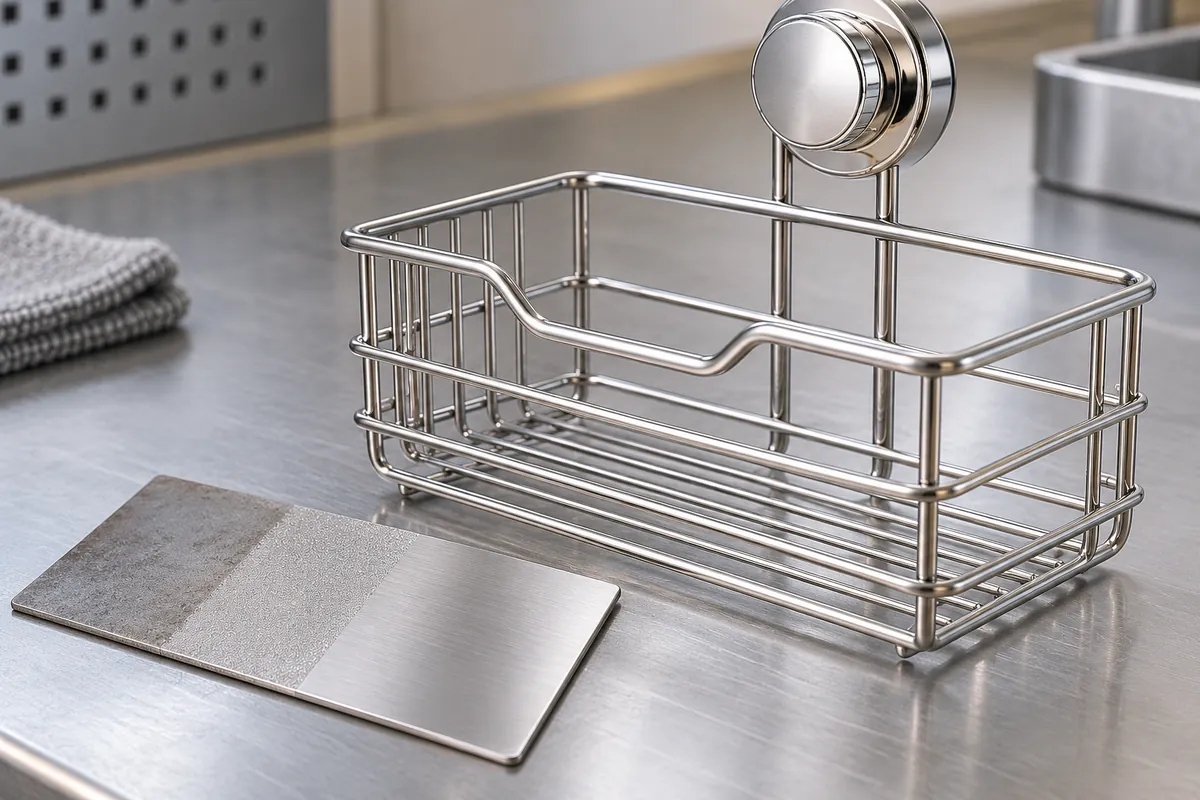
Sampling geometry can complicate a wire product. A patch method designed around a defined area may be difficult to apply consistently to narrow wires, curved rails, joints or a small basket corner. A flat coupon may simplify sampling but may not represent every production surface. If a coupon is used, document how it relates to the actual product and process.
Ask the supplier or laboratory to explain the sample location and representativeness. Is the sample taken from a production part, a witness coupon, or a prepared flat panel? Does it reflect the same substrate, preparation, handling and timing? Does the measurement correspond to the specific coating concern? This context determines what the evidence can support.
Avoid applying an acceptance value from a marine or heavy-industrial coating specification to a bathroom product without review. Different substrate conditions, coating systems, exposure environments and customer requirements can lead to different criteria. A number without a stated source and application can create false confidence.
What should be documented in the supplier report?
A useful report identifies the method, sample, location, timing, result and decision criterion. Without those fields, a result may be impossible to compare across suppliers or orders.
Ask for the product or coupon identification, drawing revision, process stage and date sampled. Record the exact surface location and whether the sample was taken from the actual part or a witness coupon. Identify the measurement method and units, the extraction area or relevant calculation where applicable, and any preparation or handling before sampling. Include the acceptance criterion and its source if one was specified.
The report should also state who performed the test and what equipment or procedure was used at a level appropriate to the buyer. Do not assume the supplier owns a certified laboratory or that a reading has external accreditation. If accreditation is required, verify the laboratory’s scope separately and confirm that the method and sample type are covered.
If the result is outside the agreed criterion, define the next step before retesting. The supplier may need to check preparation, handling, rinse or drying conditions, but the cause should be determined from evidence. Repeatedly sampling a different location until a passing value appears is not a meaningful corrective action. Record the sample selection and any rework before a new test is interpreted.
How should buyers interpret a result without overstating it?
Treat the result as evidence about the sampled surface and method conditions, then decide whether that evidence meets the project criterion. Do not turn one result into a blanket claim about all parts, all contaminants or long-term corrosion performance.
Check that the sampling location represents the area of concern and that the tested part followed the relevant production sequence. Compare like with like across suppliers. A result from a cleaned flat coupon cannot be compared directly to a curved wire joint after assembly unless the method and sample preparation establish comparability.
If the buyer has no criterion, ask a coatings or corrosion specialist to help define one before testing. The objective is not to select the lowest possible number; it is to establish a relevant and repeatable decision rule. A criterion should match the actual surface, coating system, exposure and sampling method.
Do not infer that a lower conductivity result guarantees stronger adhesion, more corrosion resistance or a longer service life. Those properties depend on multiple material and process factors. Likewise, a reading above an unspecified reference does not automatically mean the hardware is defective. Keep the interpretation tied to the documented acceptance basis.
How can buyers place the check in a coating approval plan?
Place surface salt testing within a broader approval plan that identifies material, preparation, coating, handling and final inspection. The test should close one defined question without replacing other controls.
For an OEM bathroom or home-storage product, the plan may include a representative finish sample, drawing revision, visible-face criteria, packaging review and any required supplier evidence. If soluble contamination is relevant, add the sampling location and timing before the supplier begins production. If the product geometry makes direct sampling impractical, discuss an appropriate witness specimen and its limits.
Koitor’s approved capabilities include powder coating and packaging preparation for metal hardware, but this does not establish that the factory performs Bresle testing or operates an accredited laboratory. Buyers should confirm who will conduct the measurement and whether an external specialist is involved. The supplier can still help identify which part and process stage the buyer wants evaluated.
Changes can affect representativeness. A new substrate, surface preparation, coating supplier, handling step or production location may require the buyer to review whether prior evidence still applies. Define those change triggers in the order or quality plan. This is more useful than repeating an unnecessary test while ignoring a changed process.
What should buyers ask before requesting the test?
Before requesting soluble salt contamination Bresle conductivity before coating, confirm the reason, method and decision rule with the supplier and technical partner:
- Which product defect or coating concern is the test intended to address?
- Is the proposed sample process water, a witness coupon or an actual product surface?
- Does the geometry allow repeatable sampling at the relevant location?
- When will sampling occur relative to cleaning, drying, handling and coating?
- Which method and units will the report use?
- What project criterion and source will determine acceptance?
- Who will perform the measurement, and is any required laboratory scope verified?
- What happens if the reading is outside the agreed criterion?
- Which process changes require the buyer to review the evidence again?
If the buyer cannot answer these questions, first clarify the coating specification and failure concern. A targeted supplier discussion often prevents a test result from being mistaken for proof it cannot provide.
Frequently asked questions
Does Bresle conductivity identify chloride specifically?
No. Conductivity is an aggregate response from soluble material in the extracted solution. It does not identify each chemical species. Use an appropriate additional method if the buyer needs chemical identification.
Is surface conductivity the same as rinse-water conductivity?
No. One measures an extraction solution from a defined surface, and the other measures process water. They relate to different process questions and should be labeled clearly in supplier records.
Can one sample approve every rack in a batch?
Not automatically. Representativeness depends on the product, process, sampling plan and lot. The buyer and supplier should define how the sample relates to production and whether further inspection is needed.
Should every bathroom hardware order include a Bresle test?
No universal requirement is implied here. Request it when the coating specification or risk review makes it relevant, and use a criterion suited to the product and method.
Does a low reading prove the coating will not corrode?
No. It supports a limited observation about soluble contamination at the sampled location. Coating performance depends on other factors, and one reading does not guarantee service life.
Clarify Surface Evidence Before Coating Approval
Share your drawing or sample, finish requirements, process-stage question and the evidence your buyer team needs. Koitor can discuss the metal hardware development route and small-batch OEM options after project details are confirmed.
OEM / العلامة التجارية الخاصة
حوّل دليل التوريد هذا إلى موجز منتج
يرجى إطلاعنا على المنتج المستهدف، والحجم، والتشطيب، وكمية الطلب، ومتطلبات التغليف. وسيتلقى فريقك تقييمًا عمليًّا لإمكانية التصنيع قبل تقديم عرض الأسعار.

 English
  Español
  Português
  Français
  Deutsch
  العربية