
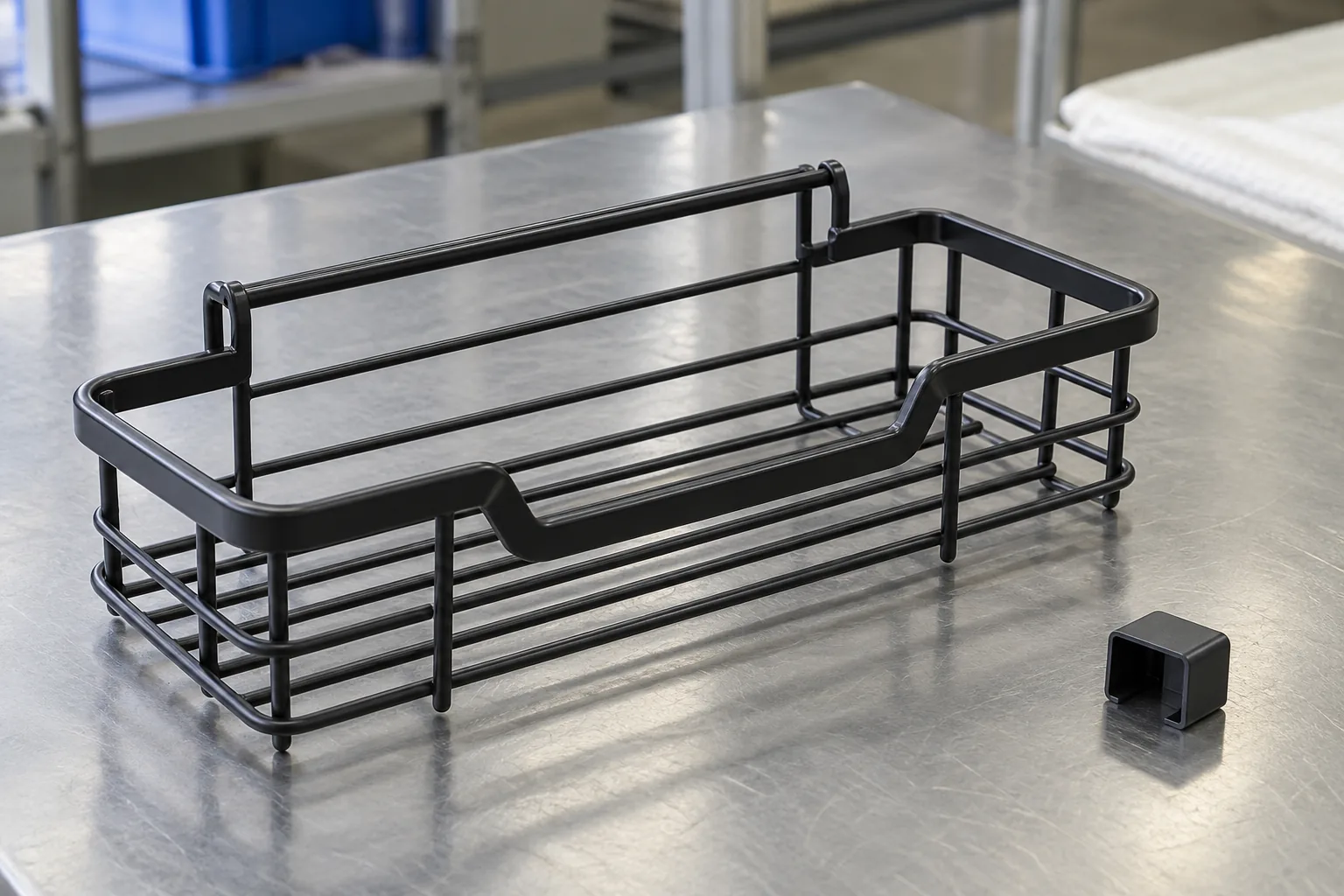
For an importer buying a molded cap, trim cover, or protective insert for a metal bathroom or home-storage product, a test report is useful only if the compared results describe compatible tests. The plastic notched unnotched impact Izod Charpy comparison is not a simple ranking exercise: a notched specimen, an unnotched specimen, an Izod configuration, and a Charpy configuration do not automatically measure interchangeable outcomes. Before approving a supplier, alternate resin, or tooling change, align the method, specimen, conditioning, reporting basis, and part-level requirement.
This article is about supplier evidence for bought-in plastic components used with metal hardware. It does not imply that Koitor molds plastics, operates an impact laboratory, or certifies material performance. The buyer’s practical task is to decide whether a report is relevant to the purchased component and what additional sample evidence is needed for the actual assembly.
Why can two impact numbers be incomparable?
Pendulum impact tests use a controlled specimen and a defined support/impact arrangement to report energy absorbed or a related normalized value. The result is shaped by the specimen geometry, notch, material, fabrication history, conditioning, test configuration, and machine setup. If two suppliers use different combinations, a higher number does not necessarily mean the component is more resistant to the buyer’s real handling or service event.
ASTM’s current D256 listing describes standardized Izod pendulum methods and notes that notched specimens concentrate stress. It also cautions that fabrication method, notch preparation, specimen dimensions, and environmental conditioning can significantly affect results. The standard’s listed methods are not a generic permission to compare any two impact values. The buyer should request the exact test method and reporting basis, not only a line reading “impact strength.”
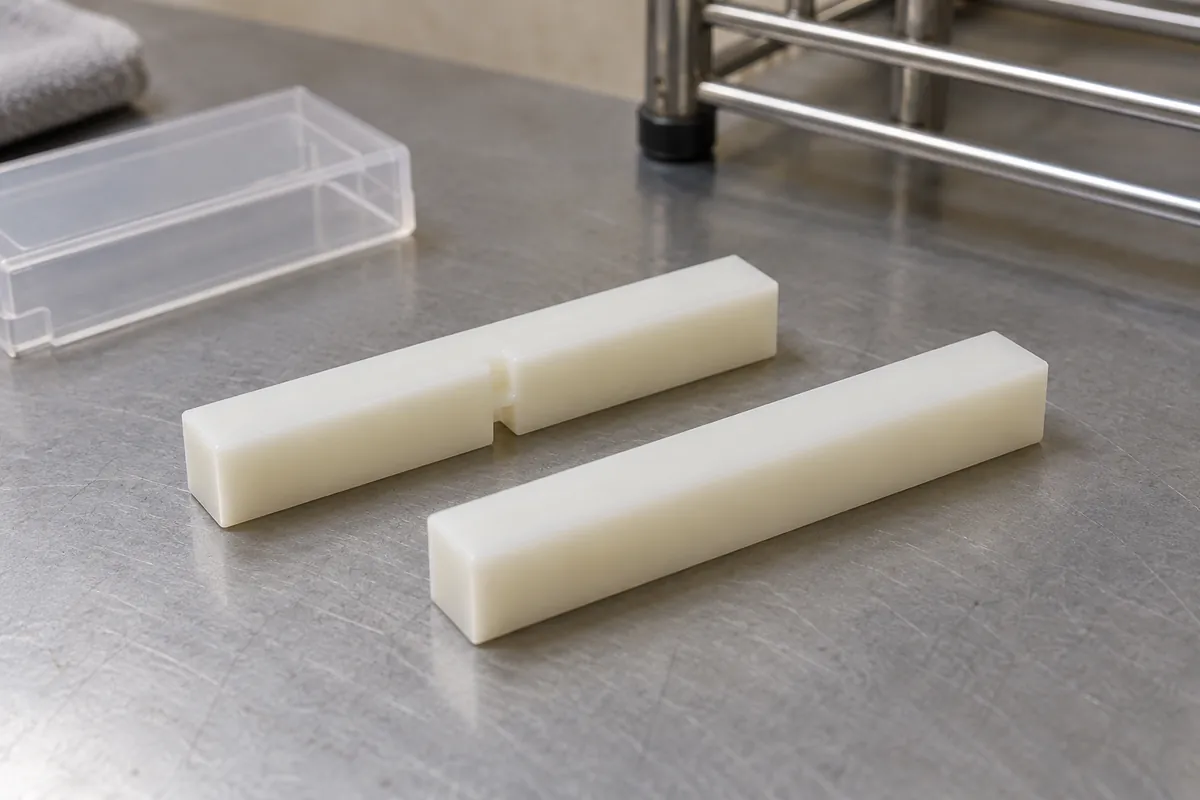
An unnotched result answers a different question from a notched result. Removing the notch changes where stress concentrates and how a crack may initiate. A high unnotched value cannot be translated into an equivalent notched value through a simple conversion. The product may also have ribs, corners, snap features, holes, weld lines, or sharp transitions that create local stress conditions unlike a smooth laboratory bar.
Izod and Charpy describe different specimen support and impact arrangements. ASTM D4812 is an unnotched cantilever-beam method; ASTM D6110 addresses notched Charpy specimens. Their standards and result bases are distinct. A buyer should not treat the words “Izod” and “Charpy” as branding variations for one shared test. The question is whether the selected test represents the decision being made and whether supplier results are comparable under that same method.
Which variables should the buyer align first?
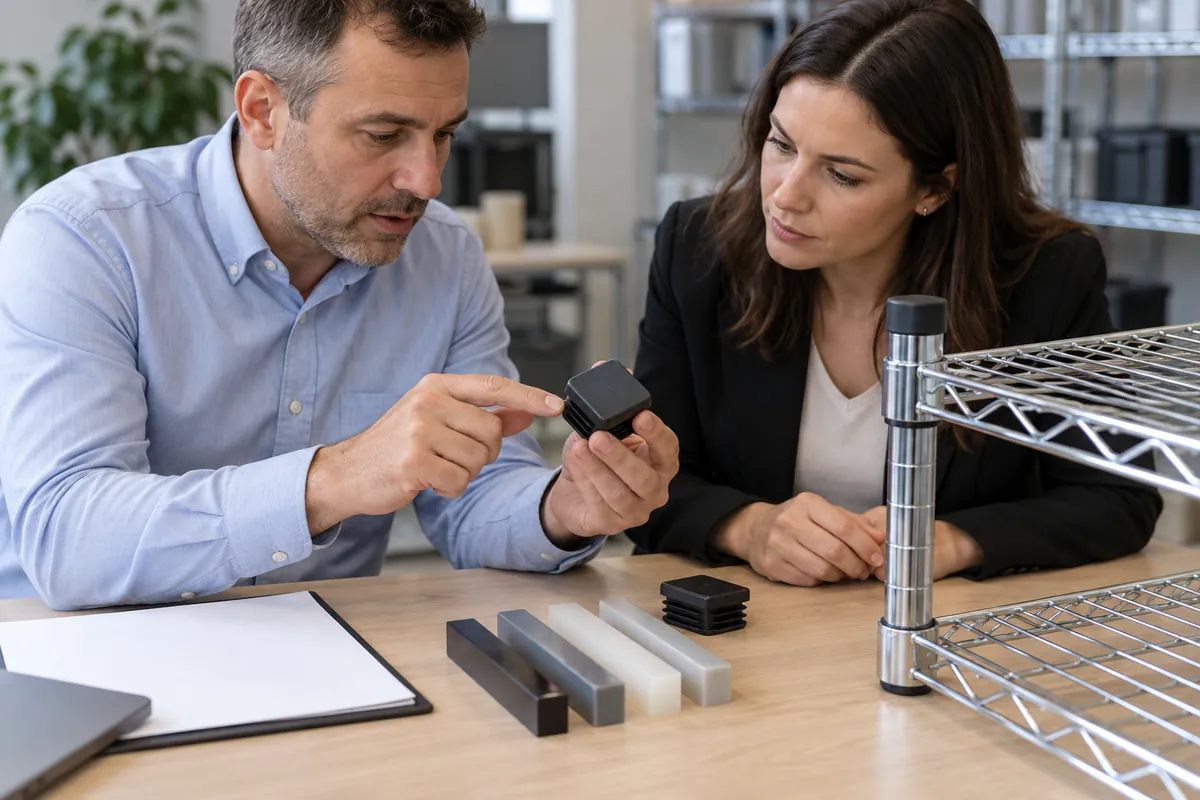
Start with the document and part identity. Record the component part number, revision, supplier, resin or compound identification as declared by the supplier, and the lot or production date associated with the report. A report for a resin grade is not automatically evidence for a molded component produced with a different colorant, filler, regrind content, mold, gate arrangement, wall thickness, or processing window. Buyers should treat those as configuration questions to resolve with the responsible component supplier rather than assume they are immaterial.
Next, compare the test method and specimen details. A buyer can request the standard designation and edition, notched/unnotched condition, specimen dimensions, notch geometry where applicable, specimen preparation route, conditioning, test temperature, pendulum capacity or configuration when reported, number of specimens, individual results, average, and failure descriptions. The exact required record should follow the governing material specification or customer requirement. Do not invent a universal list of settings or acceptance levels for every polymer.
| Report field | Buyer comparison question | Why it matters |
|---|---|---|
| Standard and edition | Are both reports based on the same named method and edition? | Similar test names can refer to different specimen and support configurations. |
| Notch condition | Is the specimen notched or unnotched, and how was the notch made? | A notch changes stress concentration and crack initiation. |
| Specimen source | Was it molded, machined, or cut from a production component or plaque? | Processing history and molded features can influence the response. |
| Dimensions and orientation | Are dimensions and specimen orientation equivalent? | Geometry and flow direction may affect the observed break behavior. |
| Conditioning | Were temperature, humidity, and conditioning time controlled and recorded? | Polymer response can vary with conditioning and environment. |
| Reporting basis | Are results reported in the same units and normalized to the same dimension? | Values cannot be safely ranked when the calculation basis differs. |
| Lot traceability | Can the report be linked to the bought-in component and production lot? | A generic data sheet may not demonstrate the supplied lot’s condition. |
| Individual results | Are spread, specimen count, and failure modes visible? | An average alone can hide inconsistent or non-comparable observations. |
When any key field is missing, label the comparison “not established” rather than estimating equivalence. Ask the supplier for the original report or a clarification. If a second source is being qualified, specify one agreed method, specimen source, conditioning, and reporting format for both sources before collecting new data.
When does notched versus unnotched testing help?
A notched method may be useful when the buyer needs a standardized comparison under a controlled stress concentration. It can make fracture behavior more repeatable for some materials, but it also makes the quality and geometry of the notch important. The test result remains a property of the defined specimen and procedure, not a direct prediction of a finished cover’s drop resistance or service life.
An unnotched method may be considered when the intended comparison is for specimens without a deliberate notch or when the relevant material specification selects that method. A result from an unnotched specimen should not be used as proof that a molded corner, clip, or thin wall will tolerate impact. If the purchased component has a stress-concentrating feature, a buyer may need production-intent component tests, assembly trials, or a project-specific impact evaluation in addition to material data.
This is why a plastic notched unnotched impact Izod Charpy comparison needs to be made in layers. First ask whether the reports use the same method. Then ask whether the material and specimen are representative of the supplied part. Finally, ask whether the defined test correlates to the buyer’s actual handling, packaging, installation, or use risk. A laboratory comparison may be suitable for screening a material change, while a component or assembly test may be more informative for validating a snap-fit cover or protective cap.
How should a buyer connect a report to a hardware component?
Map the plastic item’s function in the assembly. Is it decorative trim, an end cap, an edge protector, a spacer, a clip, or a load-bearing interface? Identify the failure that matters: visible cracking during packing, breakage during assembly, a clip that will not engage, a part that loosens after a drop, or a cover that cannot be removed for service. Those are different buyer questions and may require different evidence.
Then define the relevant product condition. A cover tested as a loose part may behave differently from the same cover installed on a metal bracket. The supporting metal geometry, assembly force, interference, fastener position, and contact surfaces may affect how impact loads reach the plastic. Record whether the part is tested alone or in the production-intent assembly, and whether the sample uses the approved metal component and revision.
Use a staged approval plan. A supplier data sheet can screen candidate materials. A controlled lab report can compare sources when the methods are aligned. A production-intent sample can reveal fit, snap engagement, handling damage, and visible fracture behavior. A final pack-out or drop simulation may be appropriate if shipment damage is the concern. The buyer should choose tests proportionate to the failure risk and approve the acceptance rule before results arrive.
| Buyer concern | Evidence to consider | Important limit |
|---|---|---|
| Compare two resin options | Same-method, same-conditioning material reports | Does not establish finished-part performance by itself |
| Approve a new supplier | Traceable report plus samples from the offered process | A lab specimen may not share production molding history |
| Validate a snap feature | Production-intent assembly samples and defined fit/engagement checks | Do not use a generic impact number as a substitute for fit review |
| Investigate transport breakage | Packaged-product evidence and damage-location records | A material bar test does not recreate the shipping system |
| Review a color or process change | Change record plus a decision on whether testing must be repeated | Colorants and process changes require supplier-specific review; no effect should be assumed without evidence |
What should enter the RFQ or supplier approval file?
The request should be specific enough that suppliers return comparable information. Identify the part and drawing revision, the function of the plastic component, the selected material requirement if known, the method and edition to be used, specimen source, conditioning, reporting units, number of specimens, traceability, and the approval decision the evidence supports. Where the buyer lacks a preferred method, ask the supplier to propose one with a technical rationale and obtain buyer approval before testing.
A plastic notched unnotched impact Izod Charpy comparison is defensible only when the report fields are aligned and the buyer understands what the specimen represents. If the methods differ, preserve each result as separate evidence and request a controlled comparison rather than asking a supplier to make a conversion that the test standards do not establish.
Avoid asking for “the highest impact strength” without naming how it is measured. That can encourage a supplier to submit a favorable but irrelevant data sheet. Instead ask the supplier to identify the test method, notched condition, sample source, and whether data are typical, lot-specific, or qualification-only. Clearly distinguish a material manufacturer’s published value from a test report tied to the actual component production lot.
For an alternate source, create a side-by-side comparison sheet. Keep the methods in separate rows if they differ; do not combine unlike values into one ranking column. Add a column for missing information and a disposition such as “comparable,” “additional evidence required,” or “not comparable.” This makes uncertainty visible to product, sourcing, and quality teams before a decision is made.
Retain the approved report with the sample reference and change-control record. If the supplier changes material grade, formulation, pigment, molding site, process conditions, tooling, or component geometry, the buyer should determine whether the qualification evidence still applies. The change does not always require a full retest, but it should trigger a documented review based on component risk and customer requirements.
Common comparison mistakes to avoid
Comparing only the headline number. The value has little meaning without the method, specimen, conditioning, and reporting basis. Check the test details first.
Treating Charpy as a synonym for Izod. Both are pendulum impact approaches, but the specimen support and impact configuration differ. Confirm the named standard and setup.
Mixing notched and unnotched results. The notch changes stress concentration and failure behavior. Do not create a conversion factor unless a qualified technical basis exists for the specific material and conditions.
Using a resin data sheet as proof for a production part. Published data may be useful for screening, but the actual molded part may differ in geometry, processing, conditioning, and lot traceability.
Assuming the component is made by the metal-hardware factory. A metal OEM may coordinate or assemble bought-in plastic items. Buyers should identify who controls the polymer material, molding process, and test report. Koitor’s metalworking scope does not establish plastic molding or impact-laboratory capability.
Turning a lab result into a use-life promise. A standardized specimen result does not guarantee a cover will survive a particular number of drops, installations, or years. Those claims require defined product-level conditions and supporting evidence.
A practical buyer decision path
- Identify the plastic part, function, drawing revision, and failure risk.
- Check that the report is tied to the offered material and component source.
- Align standard, edition, notch, specimen preparation, dimensions, conditioning, and result units.
- Mark unlike methods as non-comparable instead of ranking them.
- Decide whether material data are enough or a production-intent assembly evaluation is needed.
- Record the acceptance rule, sample identity, and change conditions before approval.
For bathroom and home-storage OEM programs, a sourcing team can share the metal drawing, plastic component interface, approved sample, and the evidence required for the next supplier decision. Koitor is a family-owned custom metal hardware factory and can discuss metal-part manufacturability, assembly interfaces, and sample-based OEM development within a confirmed scope. The plastic component supplier remains responsible for its material and molding evidence unless a project agreement explicitly assigns another responsibility. Start a project discussion through the OEM hardware page or contact Koitor.
Buyer checklist for impact-report comparability
- Is the report for the exact bought-in component, material, or a clearly identified reference specimen?
- Are standard and edition named, current for the buyer’s requirement, and the same across the comparison?
- Does the specimen use a notch? If yes, is the notch method and geometry recorded?
- Are Izod and Charpy configurations kept separate rather than treated as equivalent?
- Are specimen dimensions, preparation, conditioning, temperature, and orientation stated?
- Are units and normalization basis consistent?
- Can the result be traced to the supplier, component lot, and sample revision?
- Does the test answer the buyer’s actual risk, or is component/assembly evidence also needed?
- Are change triggers and approval responsibilities recorded?
Is an unnotched impact result always better than a notched one?
No. They describe different specimen conditions and cannot be ranked as interchangeable product performance. Use the method selected for the material specification and buyer decision.
Can a buyer compare ASTM D256 with ASTM D4812 directly?
Not by the method names alone. D256 covers standardized Izod methods with notched specimens required for its standard tests, while D4812 is an unnotched cantilever-beam method. Align the full procedure and technical purpose before comparing.
Does an impact report for plastic pellets prove the molded cover will not crack?
No. Pellet or resin data can support material screening. The final molded component has geometry and processing factors that may not be represented by a standard specimen.
Should each alternate supplier repeat every impact test?
The buyer should use a risk-based qualification plan agreed with the supplier. It may include existing material data, a controlled comparison, production-intent samples, or additional testing when a meaningful change occurs.
Review Your Hardware Component and Supplier Evidence
Share the metal drawing, plastic component interface, approved sample, and evidence needed for your next sourcing decision. Our family-owned factory can discuss metal-part manufacturability and assembly interfaces within a confirmed project scope.
OEM / العلامة التجارية الخاصة
حوّل دليل التوريد هذا إلى موجز منتج
يرجى إطلاعنا على المنتج المستهدف، والحجم، والتشطيب، وكمية الطلب، ومتطلبات التغليف. وسيتلقى فريقك تقييمًا عمليًّا لإمكانية التصنيع قبل تقديم عرض الأسعار.
 English
  Español
  Português
  Français
  Deutsch
  العربية